Planning guide
What should an event lighting and sound company's website include?
An event lighting and sound company's website is read by planners, venue managers, and corporate clients who need confidence before they send a floor plan. It should show real work, explain services without jargon, describe how you plan, and make enquiries complete enough to quote. Here is how we plan the pages, what to show, and how the site helps you get found.
Pages organized by service and event
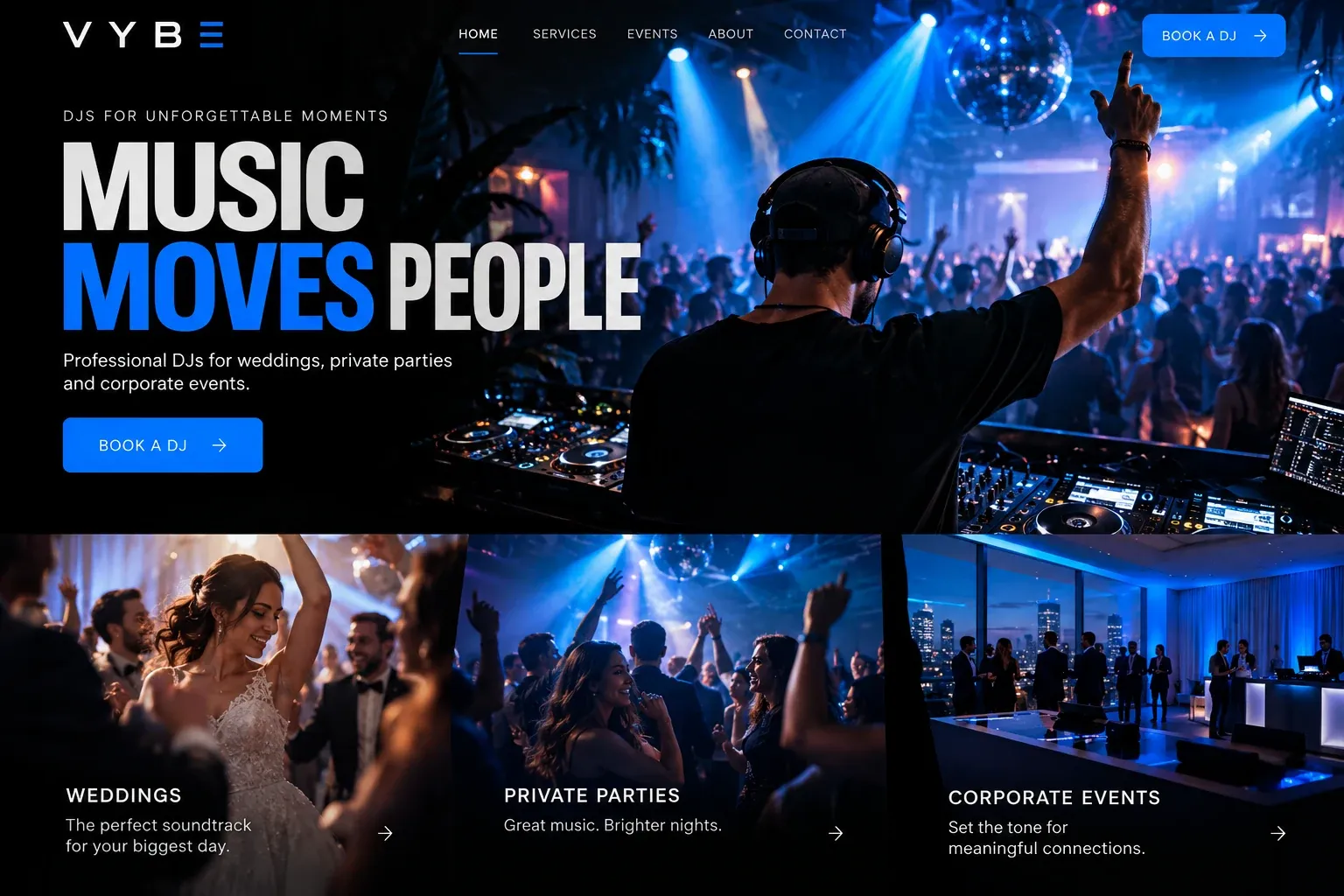
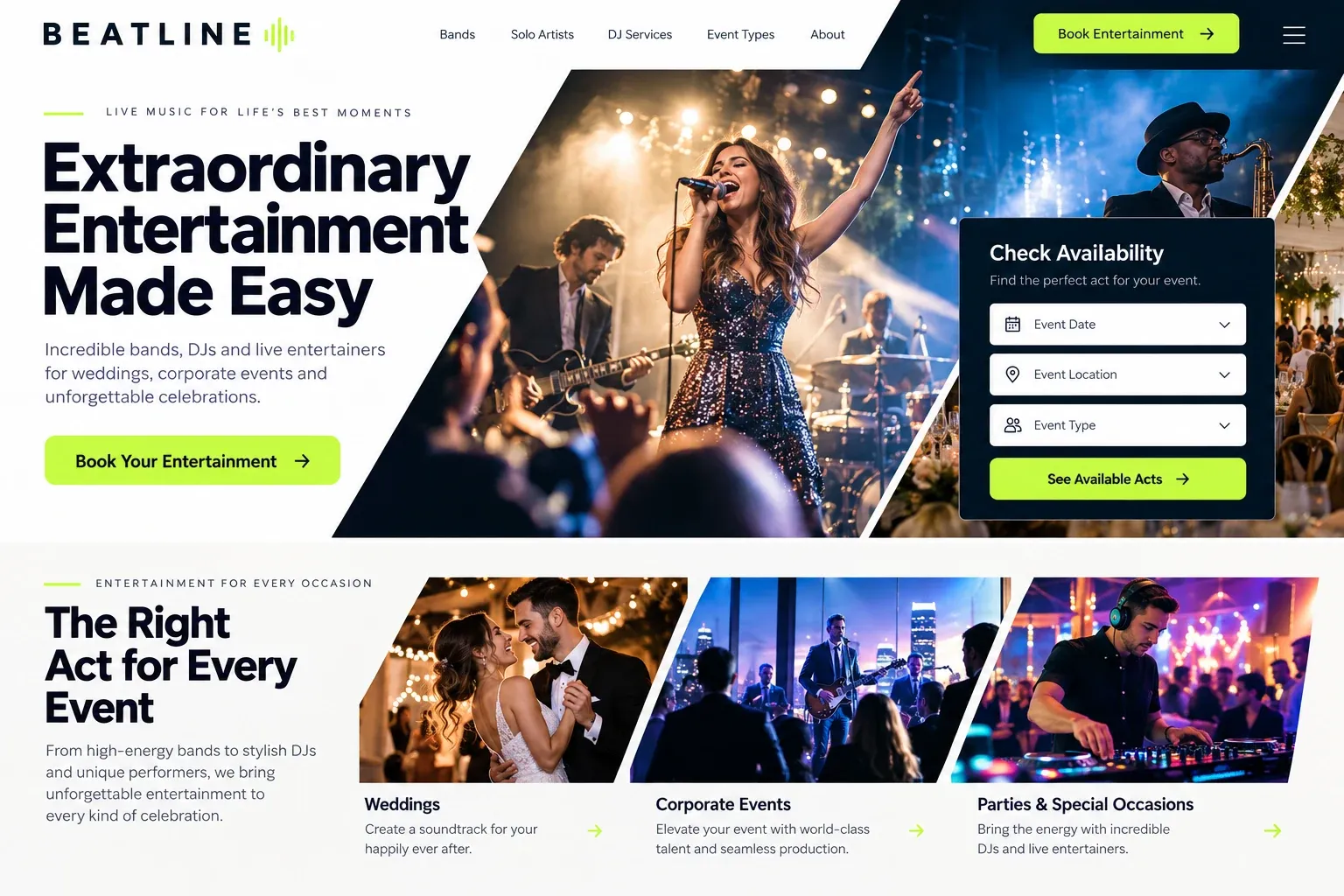
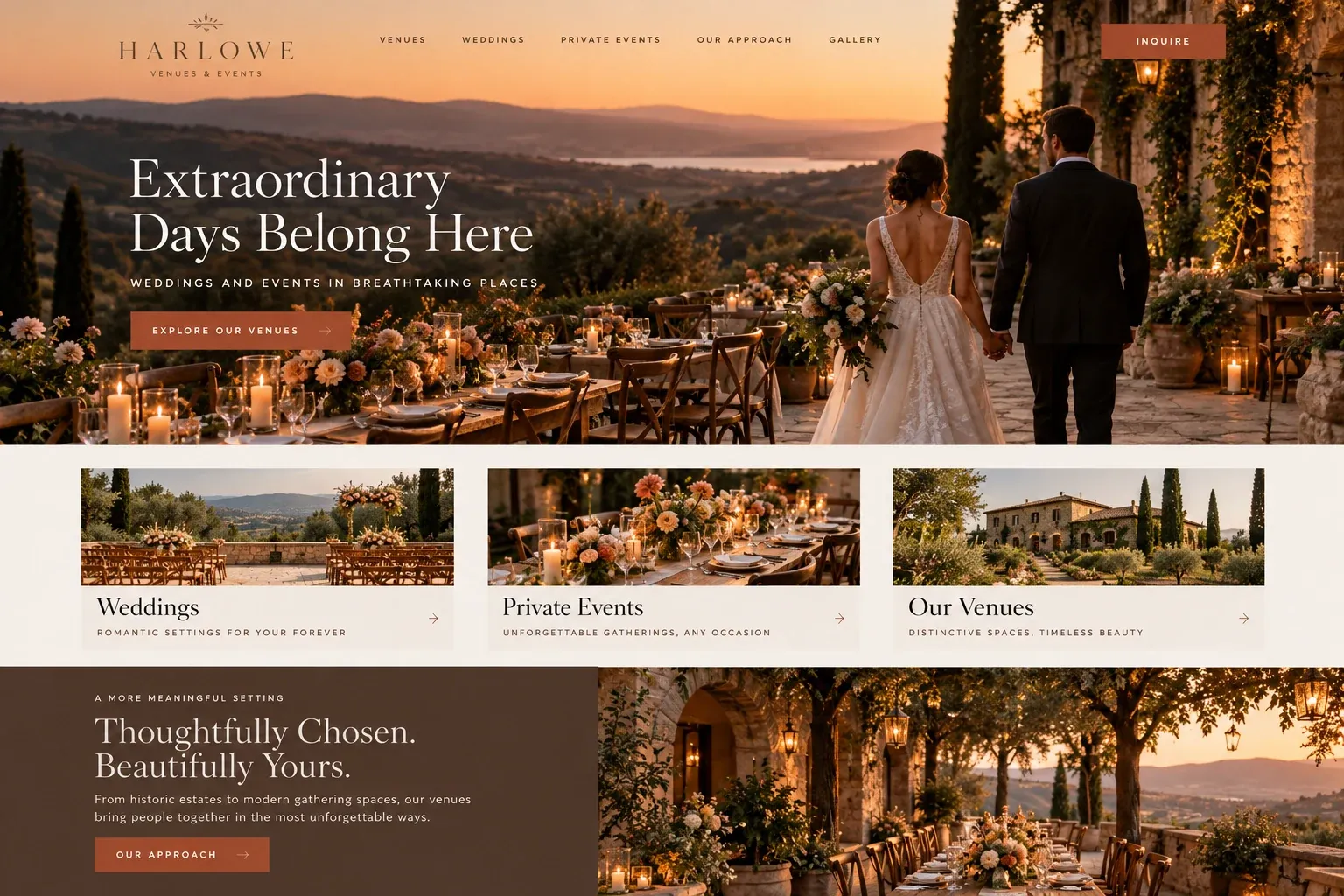
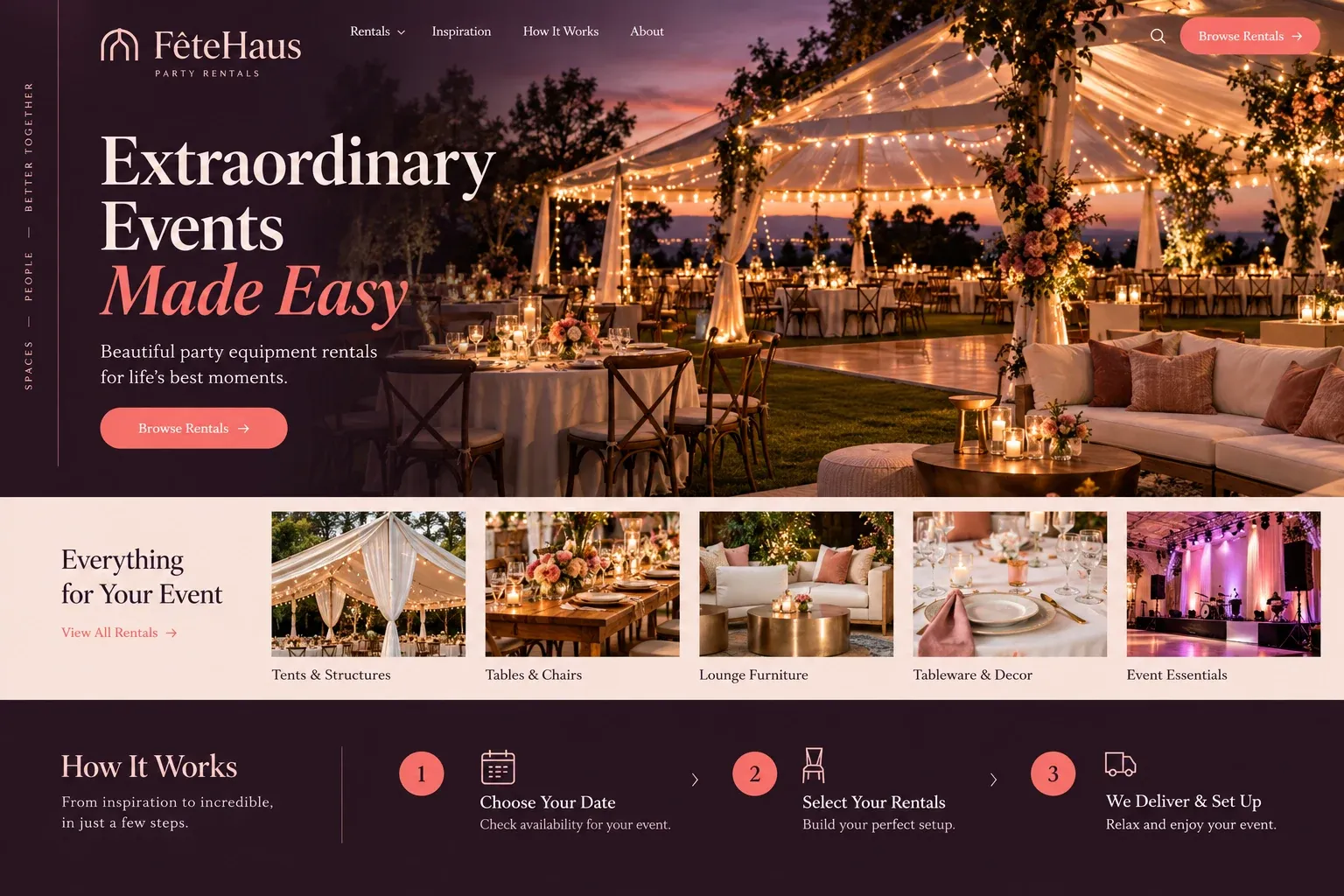
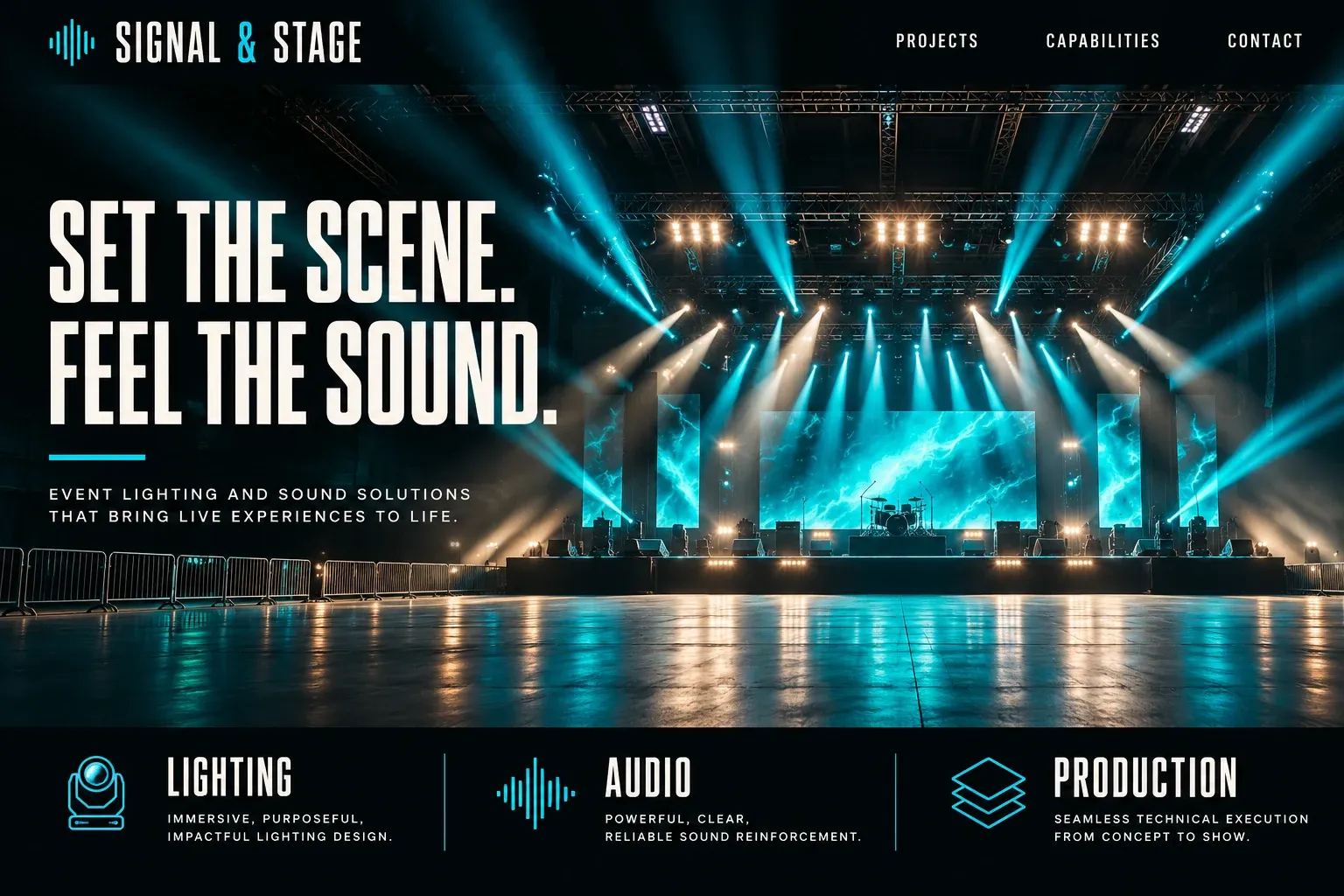
Start with a home page that shows your strongest productions and the events you serve, then a page for each service: lighting, sound, staging, video, and power. Add an event gallery, pages for event types such as weddings, galas, corporate meetings, and concerts, a planning process page, an about page introducing the crew, and a production enquiry form with a contact page.
Show real productions and explain them
Photos and short clips from your own events, shared with the client's permission, are your strongest proof. Add a sentence or two to each: the venue, the size of the crowd, and what you supplied. Planners are rarely audio or lighting experts, so describe results in plain words: clear speeches at the back of the room, a dance floor that feels alive. Avoid invented client logos or event counts.
Make enquiries useful from the start
A production enquiry should collect what you need to scope the job: date, venue, load-in window, program, guest count, power availability, and uploads for floor plans or stage plots. Send it straight to your team. Say how quickly you reply and whether a site visit is part of your process, so planners know the next step before they even pick up the phone.
Venue managers and planners often work with the same crew again and again. Pages for the venues you know well, with notes on rigging points, power, and loading docks shared as the venue allows, show your experience and help planners feel confident booking you for a room they have never used themselves.
Help planners find you
Planners search for event lighting near me, audio visual rental, wedding uplighting, or stage and sound rental in their city. A page for each service and event type gives search engines specific content to match. Keep your details consistent with your Google Business Profile, add event photos there, and ask clients for reviews after each production. Rankings are never promised, but specific, honest pages help.