Web design for roofing companies

Websites that show homeowners what is happening overhead.

Homeowners almost never see their roof up close. They notice a ceiling stain or a missing tile after a storm, and then they have to trust a stranger's word about what is happening above their heads.

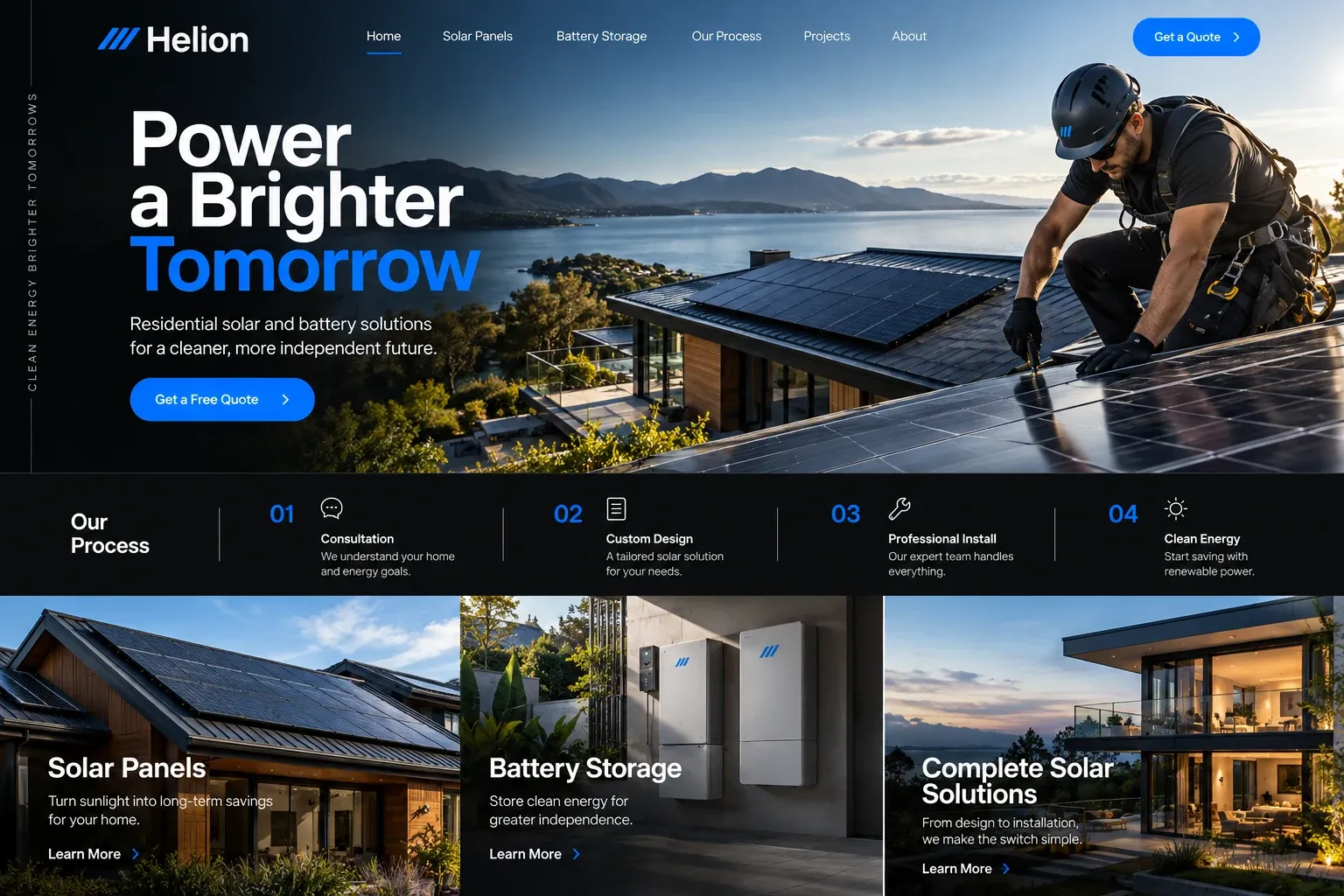
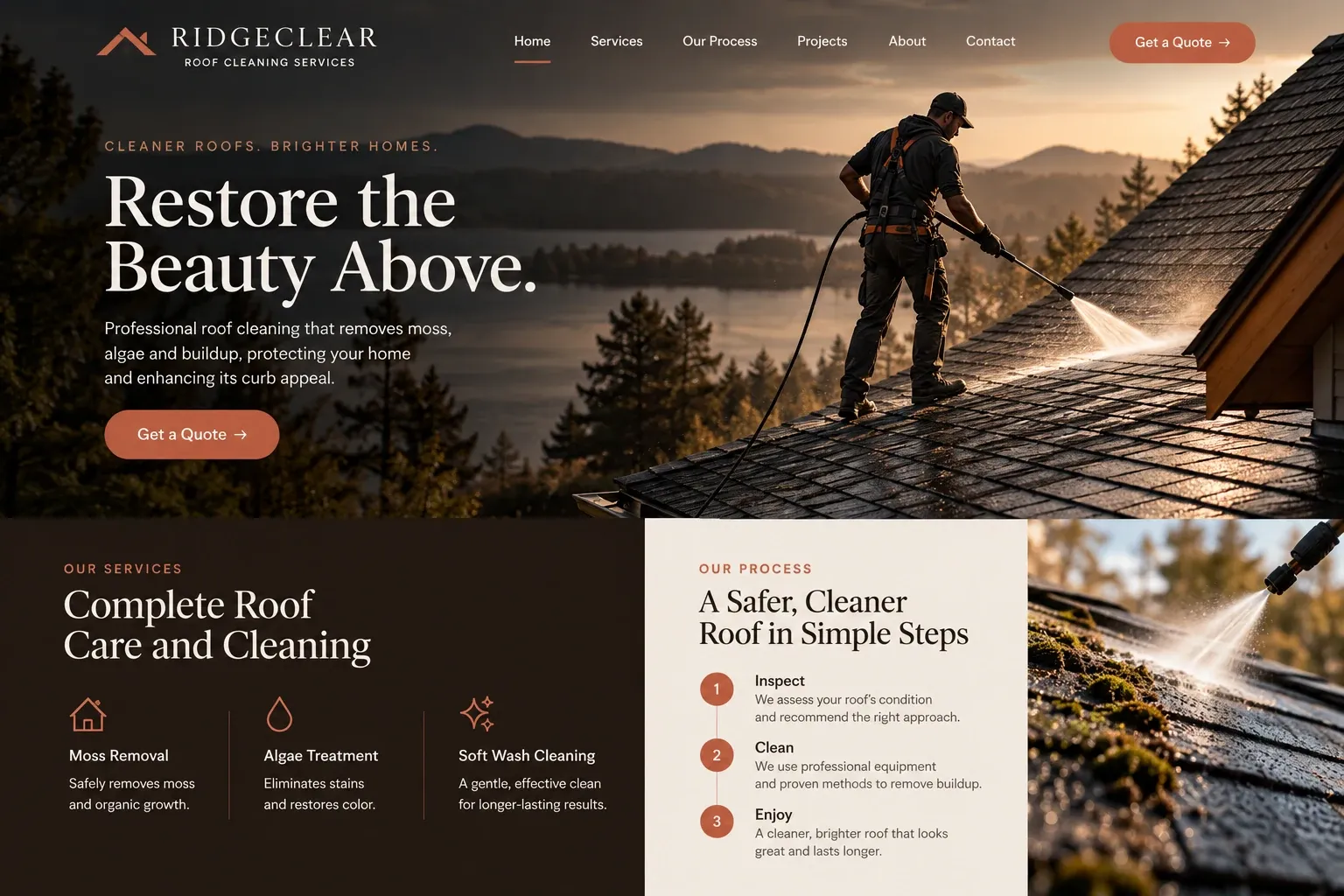
Fictional roofers website homepage design concept
A design concept for a fictional brand. Your site is designed from scratch around yours.

Your customer's story

A brown ring on the bedroom ceiling

Two days after the tropical storm passes, Graciela is folding laundry when she notices it: a pale brown ring on the bedroom ceiling, about the size of a dinner plate. She goes outside and stares up at the barrel tile. Everything looks the way it always has. Her neighbor says it is probably nothing. Her sister says to call the insurance company. Graciela decides to find a roofer first.

Her search fills with ads and with names she has never seen in the neighborhood before. One site says every storm means a new roof. Another has no address at all. The one she keeps open shows captioned photos from local jobs, a cracked tile here and lifted flashing there, and a short page explaining how the company inspects a roof, photographs what it finds, and separates repairs from replacement.

She books an inspection through a short form and attaches her photo of the ceiling. What earned her trust was not a big promise. It was a website that treated a small stain as a small question, showed what a careful inspection looks like, and listed a real local office and license number. A roofer's site should make the unseen part of the house feel understandable.

Why it matters

Why roofing companies need a website.

Roofing customers meet a contractor at the worst moment to judge one: right after a storm, when every driveway has a flyer and every ad sounds urgent. They search for repairs, compare a few companies, and look hard for signs of a real local business, such as an address, a license number, and reviews from neighbors. A social media page shows a few drone shots, but it cannot explain inspections, materials, or the difference between patching and replacing.

We build roofing websites that slow the decision down to a comfortable pace. Repair and replacement get separate pages, each with captioned photos of your own work. Tile, shingle, metal, and flat roofs each get a page in plain language. An inspection request form collects the address, the roof type, and a photo of any interior damage. Your license number, insurance, and office address stay visible on every page, wherever a visitor lands.

What your customers search for

  • roof leak repair near me
  • roofers in Miami
  • tile roof repair
  • roof inspection after hurricane
  • metal roof installation
  • flat roof replacement

Your customers

What homeowners want to know before anyone climbs a ladder

  • Is this a repair or a whole new roof?

    Separate repair and replacement pages, plus an explanation of how your inspection decides between them, so a small leak is not presented as a crisis.

  • Are you local, or here because of the storm?

    Your office address, license number, insurance, and reviews from nearby neighborhoods, visible without scrolling through the whole site to find them.

  • What will you show me after the inspection?

    A page describing your inspection report, with photos of what you found and notes on what needs attention now versus later.

  • Which material suits my house?

    Pages for concrete and clay tile, shingle, metal, and flat roof systems, each with your own project photos and plain notes on upkeep.

What we build

What a website for roofing companies should include.

  • Repair versus replacement pages

    Two clearly separate paths, so a homeowner with one leak does not land on a page selling an entire reroof.

  • Captioned project photos

    Each image says what was found and what was done, from cracked tiles and failed flashing to a completed metal reroof.

  • Roof material guides

    Tile, shingle, metal, and flat roof pages written for homeowners, with your photos and honest notes on how each holds up here.

  • Inspection request form

    Address, roof type, the age if known, and an optional photo of the stain or damage, sent straight to your inbox.

  • Storm response notice

    A banner we switch on after a hurricane, with your current call volume and how you are scheduling inspections.

  • License and office details

    Your license number, insurance, and physical address on every page, which helps homeowners tell you apart from crews passing through.

Planning guide

What should a roofing contractor put on its website?

A roofing website has to win trust about work most customers will never see in person. It should explain inspections, separate repairs from replacements, and prove the company is local and licensed, all while staying easy to use on a phone. Below is how we plan a roofing site, from page structure to the details that help it show up nearby.

Build pages around roof types and problems

Homeowners search for what they have and what went wrong: tile roof repair, flat roof leak, metal roof installation, roof inspection after a storm. A page for each roof type you work on, plus separate pages for repairs, replacements, and inspections, lets those searches find you. If you also handle commercial flat roofs, give that work its own section with its own photos, since a building manager reads differently than a homeowner.

Make the hidden work visible

Most of a roof's story happens out of sight, so photographs carry more weight here than in most trades. Caption each one: lifted tiles along a ridge, rusted flashing around a vent, the underlayment going down on a reroof, the finished roof from the street. Before and after pairs are especially useful. Use only your own photos, and leave out any figure or claim you cannot document.

Explain how your inspection works and what the homeowner receives at the end, whether that is a written report, a set of photos, or a walkthrough on the phone. Say plainly that not every leak means a new roof. That sentence alone sets you apart from the door knockers who arrive after a storm.

Ask for the right details up front

An inspection form should take a minute: name, phone, address, roof type, approximate age if known, and what they noticed, with room to attach a photo of a stain or a fallen tile. Keep a tap-to-call button on screen for active leaks. After a storm, a short notice at the top of the site can explain how you are scheduling, which saves your office a lot of repeated calls.

Prove you are local to Google and to neighbors

Roofing searches are local and often surge after weather. A consistent business name, address, and phone on the website and the Google Business Profile, a list of the cities you work in, and recent reviews from homeowners nearby all help. Project pages tagged by neighborhood give search engines more to match. None of this promises a ranking, but it gives an established roofer a better chance than a crew that arrived with the storm.
In your market

Roofing under South Florida weather

South Florida roofs face hurricane winds, heavy summer rain, intense sun, and salt air. Miami-Dade and Broward sit in the high-velocity hurricane zone of the Florida Building Code, so permits and approved products carry real weight, and insurers ask about roof age and wind mitigation. Barrel tile, flat concrete tile, metal, and flat roofs are all common. We write pages about these local materials and rules in plain words and can add a Spanish version for bilingual homeowners.

Questions

Questions roofing companies ask us.

How should a roofing company show photos of jobs nobody can see from the street?

Take them during the work: damaged areas before repair, the underlayment and flashing going in, then the finished roof from the ground and from above if you use a drone. We caption each photo with what was found and done, and group them by roof type and neighborhood.

Can homeowners request a roof inspection online?

Yes. The inspection form asks for the address, roof type, approximate age, and what they noticed, and lets them attach photos of any interior stains. It arrives in your email at any hour. For active leaks, a call button stays at the top of the screen on every phone.

What should a roofer's site say after a hurricane?

A short, honest notice: that you are taking inspection requests, how you are scheduling them, and what homeowners can do in the meantime, such as photographing damage for their records. We can switch the notice on and off as you need it. Avoid promises about insurance outcomes, which you do not control.

Do we need separate pages for tile, metal, and flat roofs?

If you install all three, yes. Homeowners search by material, and each has its own questions about cost factors, upkeep, and how it handles wind and sun. A page per roof type, with your own projects, answers those questions and gives Google a specific match for each search.

Let's talk

Ready for a website built for roofing companies?

Tell us about your business and we will come back with a clear recommendation and a fixed quote. No pressure, no jargon.

Trades we design for

See all 226 trades

226 trades

  • Plumbers website design concept
CallFree quote