Web design for artists

Website design for working artists.

Collectors, curators, and interior designers rarely decide on one visit. They come back, look closer, check what is still available, and want to know who made the work before they write.

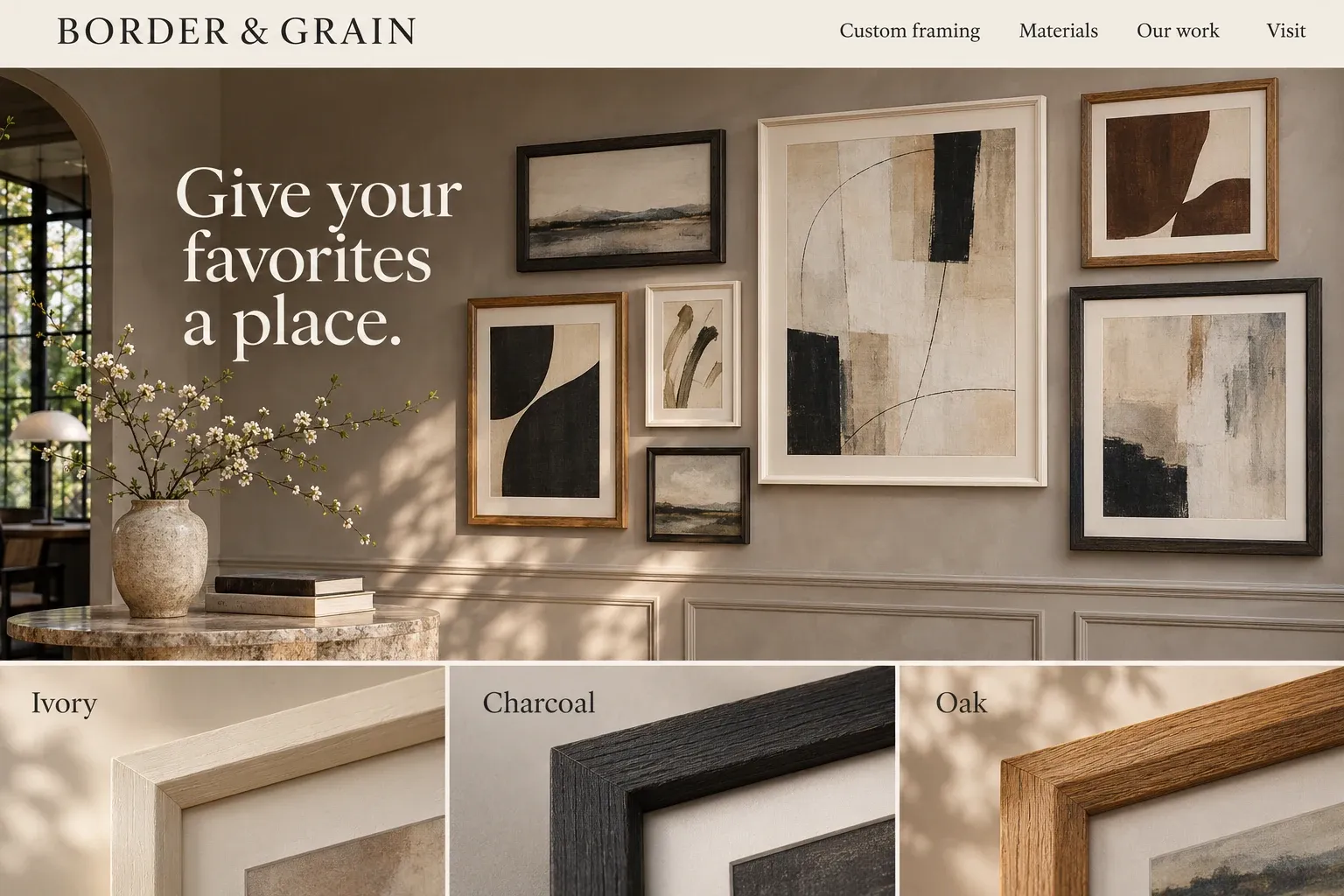
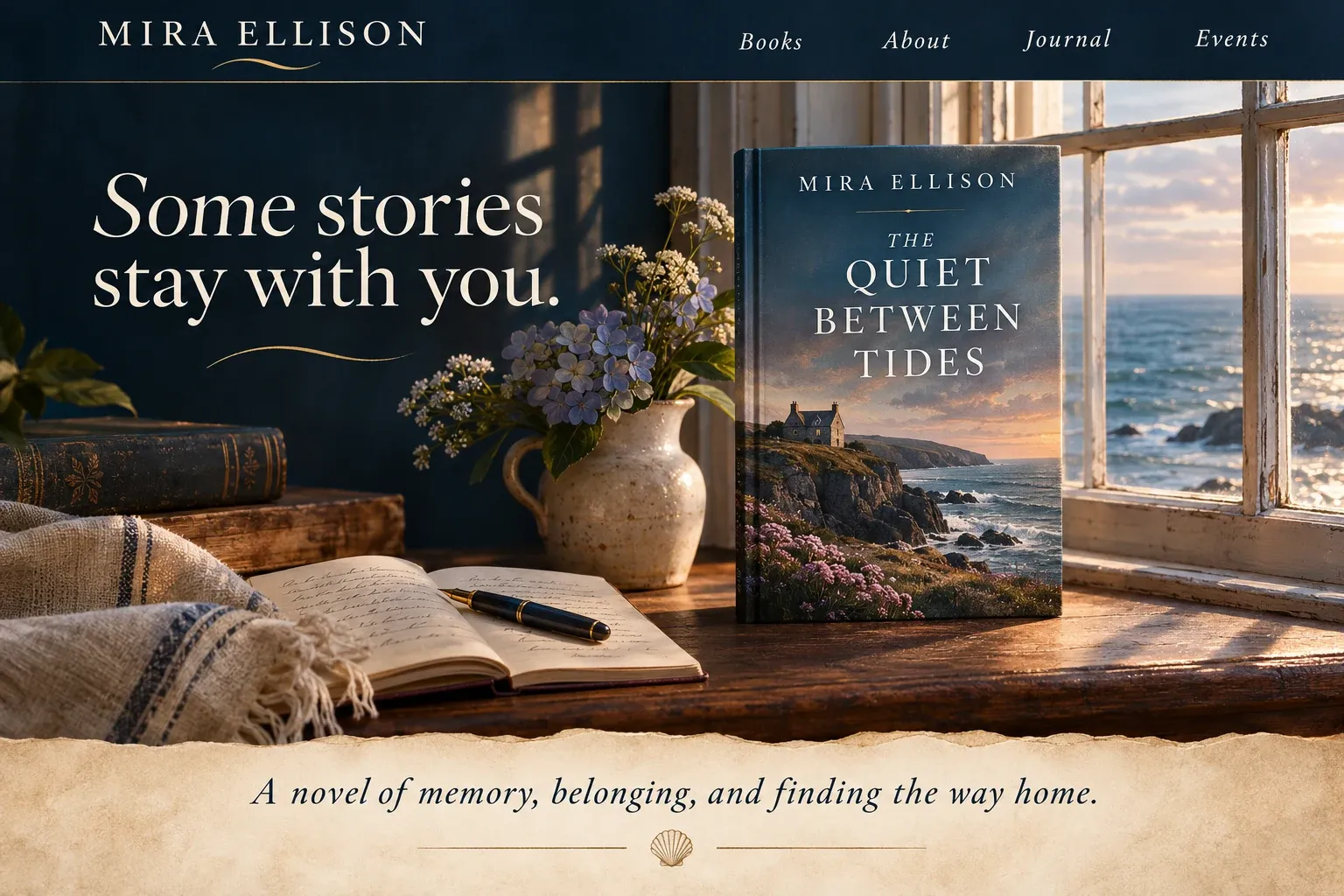
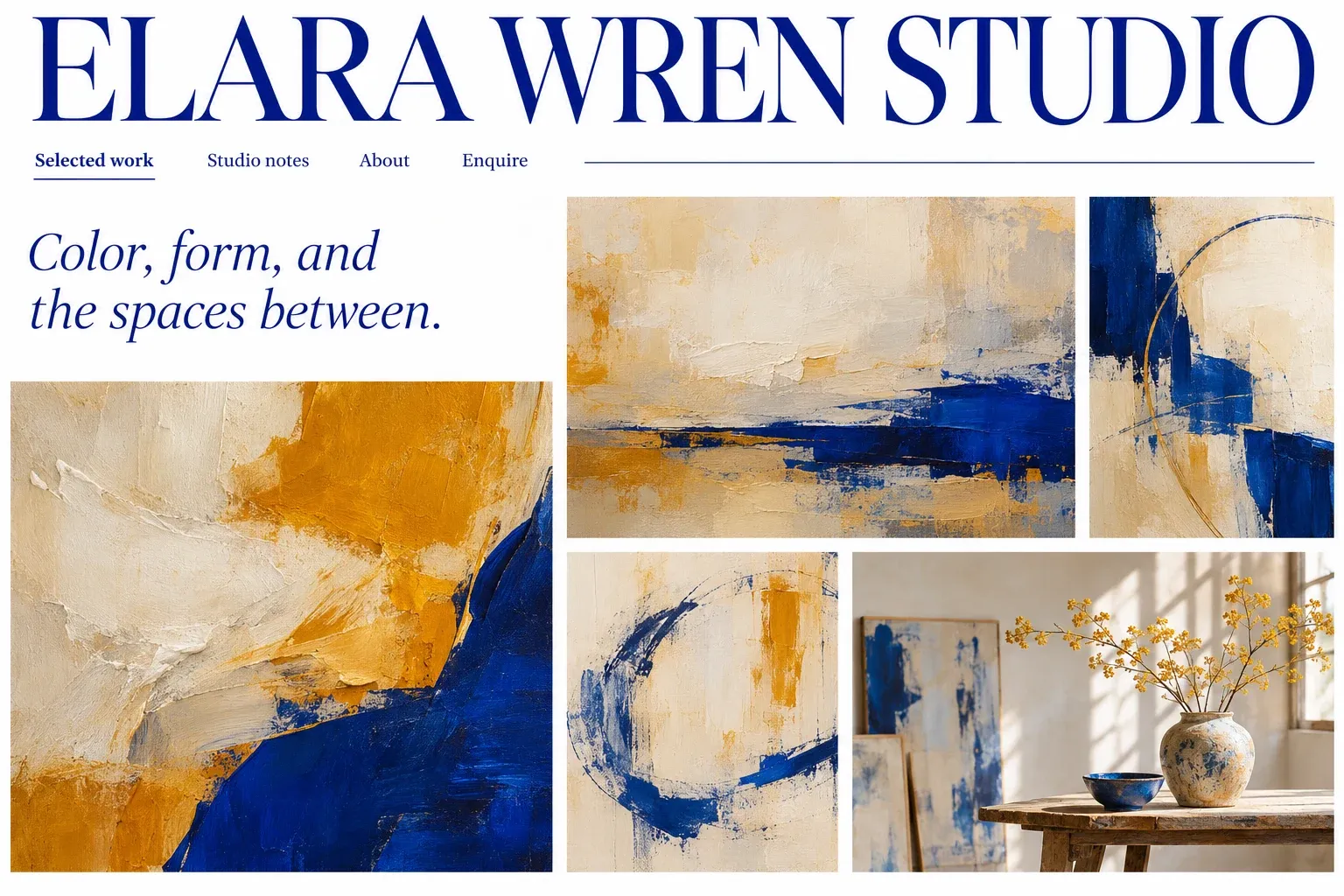
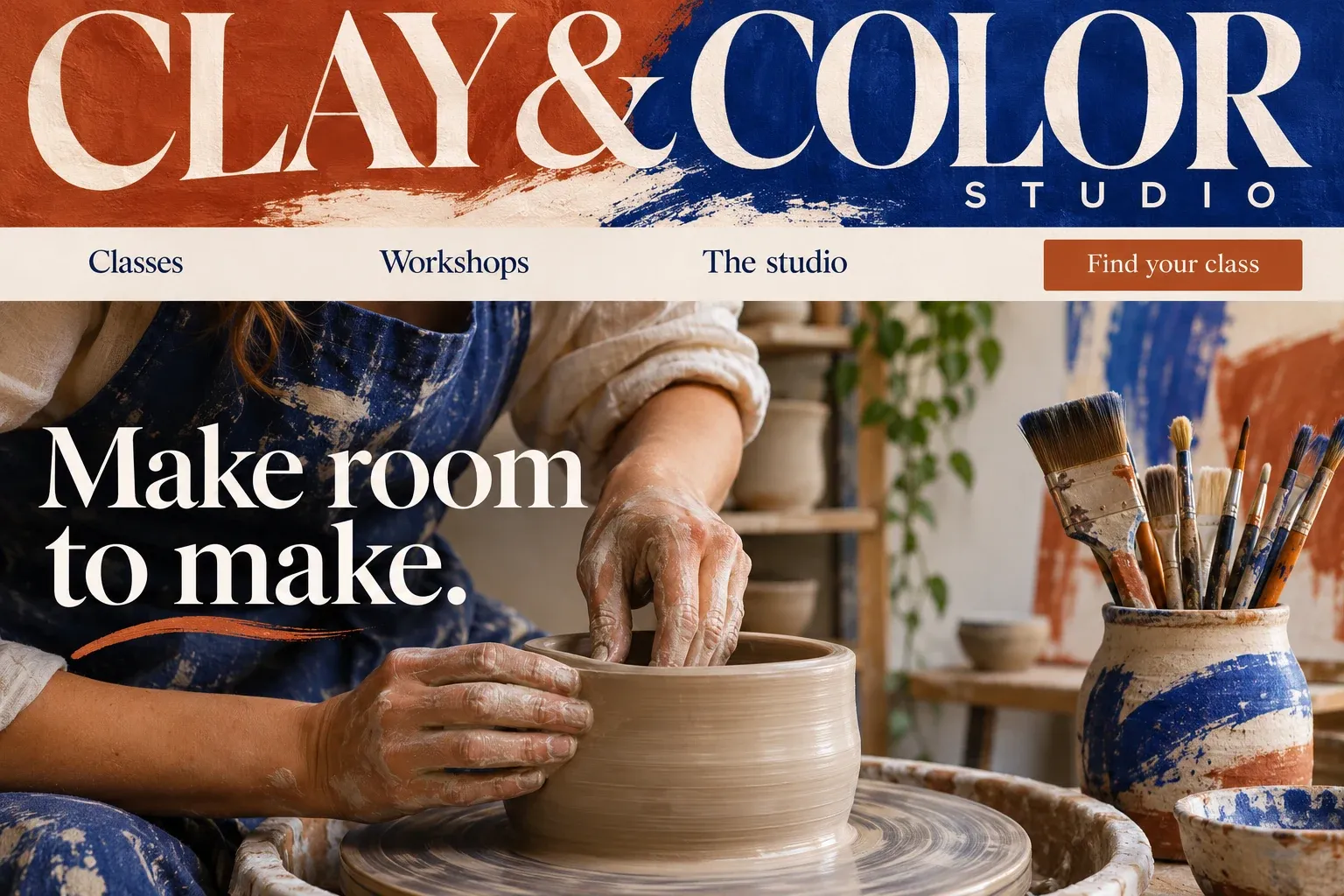
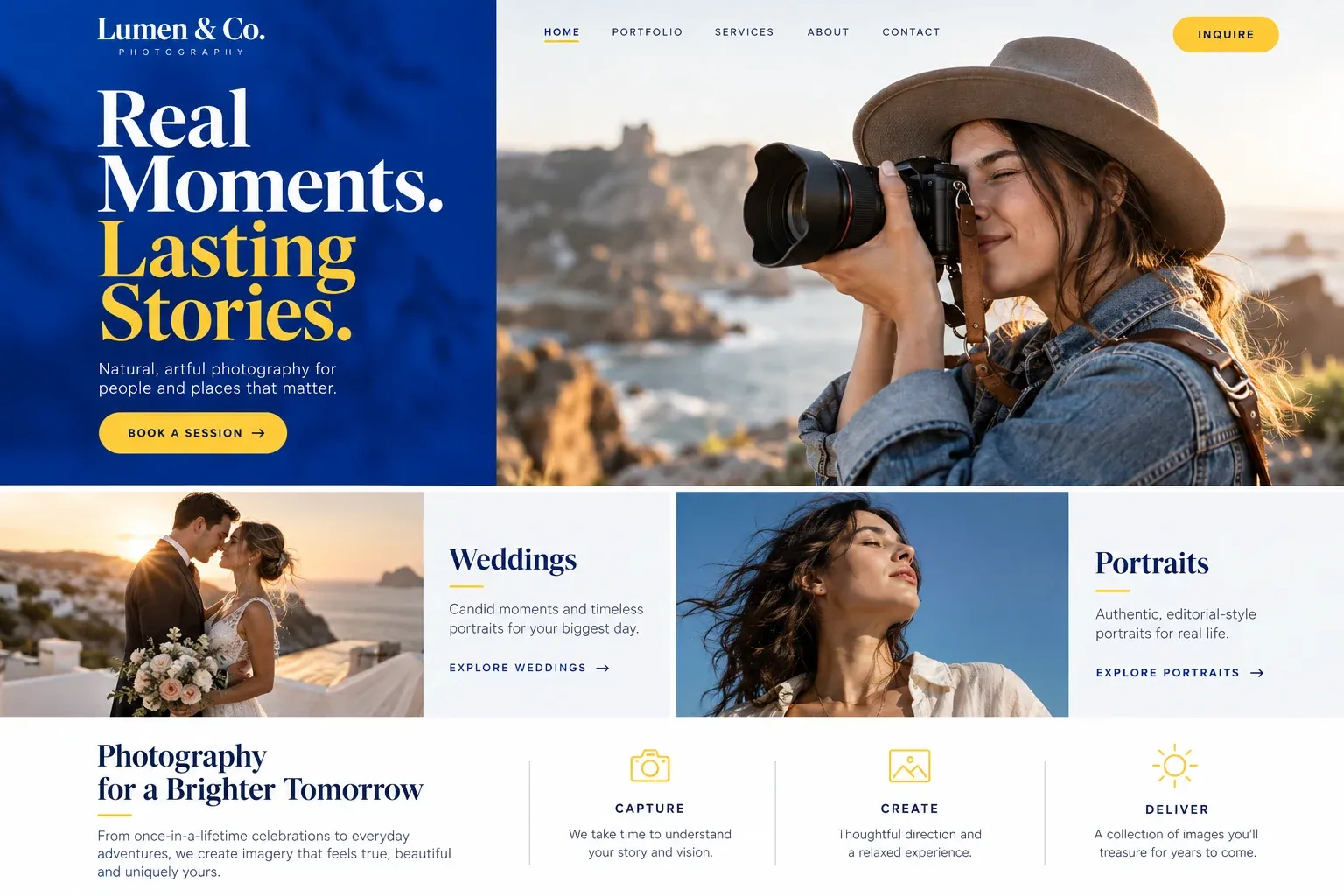
Website design concept for artists, an illustration
Illustration only: the design, business name and logo are made up to show the kind of website we can build. Not a real business or client website. Yours is designed from scratch around your brand.

Your customer's story

A painting seen once, then searched for

Claire sees a small abstract painting at a friend's apartment, all deep blues and a single orange line, and cannot stop thinking about it. Her friend remembers only the artist's name and that she bought it at an open studio event. Back home, Claire types the name into her phone, hoping to find more work like it, maybe something larger for the wall above her sofa.

The first result is an Instagram account with hundreds of posts, studio selfies mixed with finished pieces and no sizes anywhere. A gallery listing shows two old works, both sold. Then she finds the artist's own website: a clean gallery by series, each piece with its medium, dimensions, and whether it is available, a short biography, upcoming shows, and a form to ask about a commission.

She asks about a larger piece in the blue series and gets a reply with photos of two works in progress. The artist did not need to sell anything. The website let Claire find the body of work, understand it, and start a conversation at her own pace. That is what an artist's site is for: a calm, permanent home for the work, with the facts collectors look for.

Why it matters

Why artists need a website.

Social media is where many people first see an artist's work, but it is a poor place to study it. Posts scroll away, captions get cut short, and a collector who wants sizes, availability, or the story behind a series has to dig or send a message and wait. Galleries and marketplaces show a slice of the work under their own name. Your own website is the only place that holds everything, organized the way you think about it.

We build artist websites that put the work first. Large, fast-loading images are grouped by series or year, each with title, medium, dimensions, and availability, written by you. A biography and statement in your own voice, a page for exhibitions and press you can verify, and an inquiry form for purchases, commissions, and studio visits come straight to your email. A link to your online shop or gallery can sit beside it.

What your customers search for

  • abstract painter for commission
  • buy original art online
  • contemporary artist portfolio
  • commissioned portrait artist
  • mural artist for hire
  • original paintings for sale

Your customers

What collectors look for on an artist's website

  • Is this piece still available?

    Each work shows its status clearly, available, sold, or on loan, so a collector knows whether to ask about it or look for something similar.

  • How big is it, and what is it made of?

    Title, medium, dimensions, and year under every image, plus a detail shot or a view on a wall so the scale makes sense.

  • Who is the artist behind the work?

    A biography and artist statement in your own words, with a portrait in the studio and the shows, residencies, and collections you can name.

  • Can you make something for my space?

    A commission page explaining how you work, what you need to know about the space, and how the process moves from sketch to finished piece.

What we build

What a website for artists should include.

  • Gallery by series

    Your work grouped by series, medium, or year, with large images that load quickly and zoom on a phone.

  • Availability on every piece

    Available, sold, reserved, or on loan, shown beside each work and easy for us to update when you tell us.

  • Biography and statement

    Your story and the ideas behind the work, shaped from your notes and approved by you line by line.

  • Exhibitions and press

    Past and upcoming shows, open studios, fairs, and articles, each with dates and links where they exist.

  • Commission inquiry form

    Room size, preferred colors, and photos of the space, sent straight to your inbox so you can reply personally.

  • Mailing list signup

    A simple signup linked to the email tool you use, so collectors hear first about new work and shows.

Planning guide

What should an artist's portfolio website include?

An artist's website is part portfolio, part archive, and part studio door. It should show the strongest work clearly, give collectors and curators the facts they need, and make it easy to ask about a piece or a commission. Here is how we plan an artist's site, what to show on it, and how people find it.

Choose the work and organize it

Fewer, stronger images beat everything you have ever made. Group the work by series, medium, or period, and lead with the body of work you most want to be known for now. Each piece needs a title, year, medium, dimensions, and status. Older series can live in an archive section, so curators can see how the practice has developed without crowding the main gallery or slowing a first-time visitor down.

Photograph the work properly

Good photographs matter more on an artist's site than on almost any other. Shoot paintings straight on in even light with true color, and add a detail shot and a view of the piece on a wall for scale. Sculpture and installation need several angles. A few honest studio photos, with the artist at work, help visitors connect the person to the pieces they are looking at.

Make inquiries feel easy

Many collectors hesitate to ask. A short inquiry button beside each available piece removes that hesitation, because it already knows which work the visitor means. A separate commission page should explain how you take on commissions, what you need to know, and how you like to work with a client, in your own words. If you sell prints or smaller works through an online shop or gallery, link it clearly.

Keep a mailing list signup on every page. Collectors who love your work often wait a long while before they buy, and a short note about a new series, an open studio, or an upcoming show is the gentlest way to stay in touch. Write only when there is real news, and the list stays warm.

Help curators and buyers find you

People search for artists by name, by medium, and by subject: abstract painter, ceramic artist, commissioned portrait, mural artist. Use your full name in page titles, write a few words about each series in plain language, and give every image a description. Link the site from your social profiles and from galleries that show your work. Over time, those links and a clear exhibitions page help search engines connect your name to your work.
In your market

Built for artists selling beyond their city

An artist's audience is rarely limited to one place. A collector in another state, a curator abroad, or an interior designer furnishing a hotel can all find the same website and ask about the same piece. We design artist sites for that wider audience, with clear shipping and framing notes you approve and an optional Spanish version. We work with artists anywhere by phone, video, and email, and artists based in Miami can meet us the same way.

Questions

Questions artists ask us.

How do new paintings get added to my artist website?

Send us the photos with the title, medium, size, and status, and we add them to the right series. If you prefer to post work yourself, we can link a shop or portfolio tool you manage. Many artists send a batch after each series, and we mark sold pieces as soon as you tell us.

Can my artist website sell prints or originals?

Yes, by linking or embedding the shop you already use, or by building an online store on Shopify for prints and smaller works. Originals often sell better through an inquiry, because collectors want to ask questions first, so we usually give larger pieces an inquiry button instead of a cart.

What if my artwork photos are not very good?

Then that is the first thing to fix, because the photos are the work on screen. We can advise on simple lighting and framing for phone photos, or suggest a photographer for key pieces. We size and color-balance every image carefully so the site stays fast without losing detail.

Should my artist statement be on the website?

Yes, alongside a shorter biography. Curators and writers often quote both. We help shape the statement from your notes so it sounds like you and stays clear, and you approve every line. A plain, honest statement is more useful to readers than a dense one full of art theory.

Let's talk

Ready for a website built for artists?

Tell us about your business and we will come back with a clear recommendation and a fixed quote. No pressure, no jargon.

Trades we design for

See all 436 trades

436 trades

  • Plumbers website design concept
CallFree quote