Web design for dive shops and scuba schools

Website design for dive shops and scuba schools.

New divers want to know how certification works and whether they will feel safe. Certified divers want trips, conditions and gear service. Your website has to welcome both and make the next booking obvious.

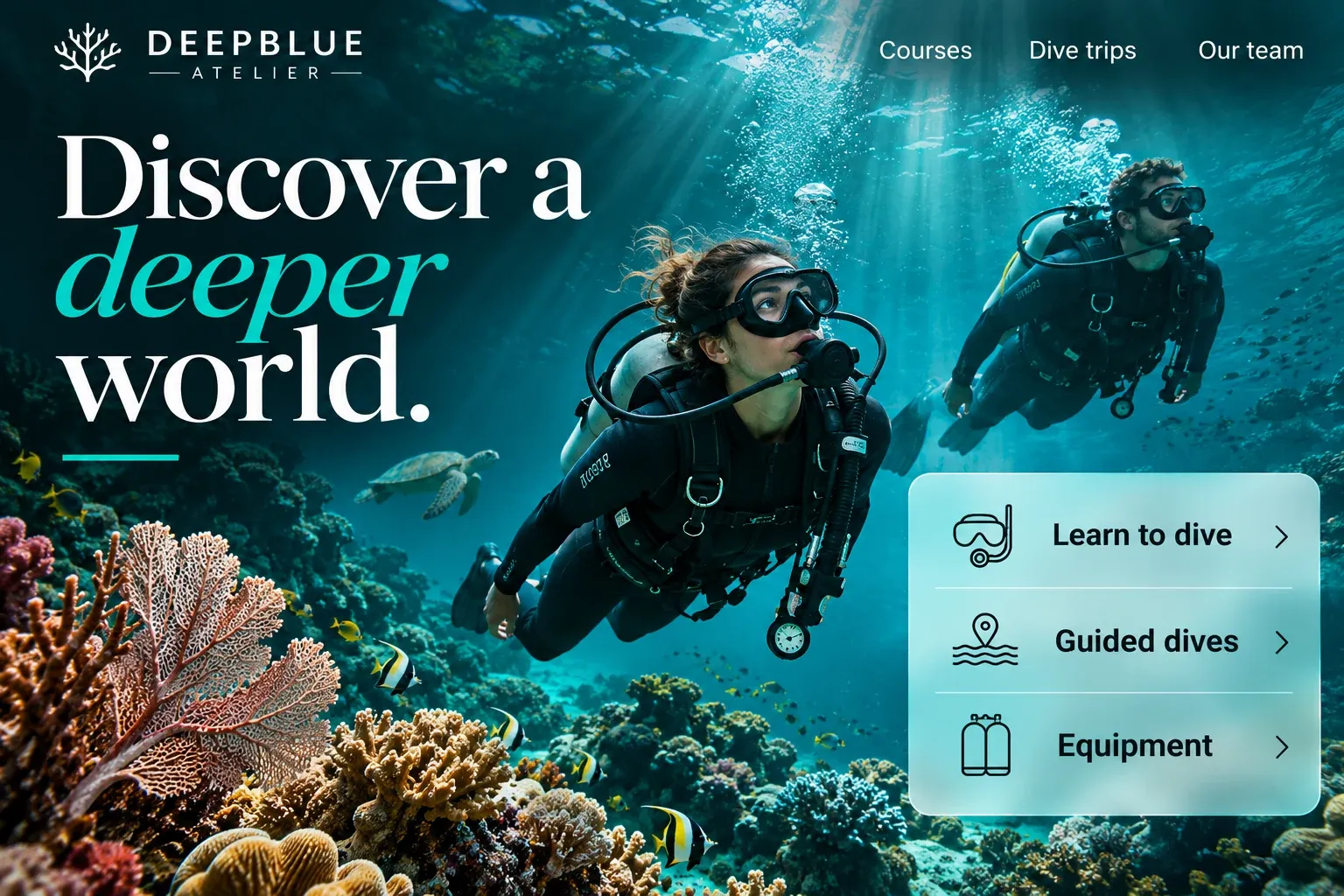
Website design concept for dive shops and scuba schools, an illustration
Illustration only: the design, business name and logo are made up to show the kind of website we can build. Not a real business or client website. Yours is designed from scratch around your brand.

Your customer's story

Getting certified before the trip to Cozumel

Natalie and her boyfriend booked a trip to Cozumel for August, and everyone tells them the reefs are best seen on scuba. Neither has ever dived. It is early May, and they want to get certified at home in Miami first. One evening on the couch, Natalie searches for scuba certification near her and opens several dive shop sites.

She needs to understand the steps, the online part, pool sessions and open water dives, plus what gear to buy and what the shop provides. One shop explains its open water course step by step, shows the pool and the boat, lists course dates, explains the medical questionnaire, and links to the training agency's online study.

It also has a calm page for nervous beginners. Natalie signs them both up for June. A dive shop website earns new divers by making a course that sounds intimidating feel structured and safe, and it keeps certified divers coming back with a clear trip calendar and honest dive site information.

Why it matters

Why dive shops and scuba schools need a website.

Dive shops serve two very different visitors. Beginners research for weeks, nervous about breathing underwater, medical questions and gear. Certified divers want trip dates, dive sites, conditions, rental gear and equipment service. Both compare shops closely, and a social media page shows great photos but cannot hold a course path, a trip calendar or the clear safety information a nervous beginner needs before booking.

We build dive shop websites with a clear course path from first try to professional levels, each course on its own page with steps, schedules and what is included. A trip calendar lists local reef, wreck and night dives, and gear sales, rental and service each get a page. Course and trip requests are short, and medical forms stay with the training agency or your secure process, never an ordinary contact form.

What your customers search for

  • scuba certification near me
  • dive shop Miami
  • open water course Miami
  • wreck diving trips
  • regulator service near me
  • scuba diving Key Largo

Your customers

What divers ask before booking with a dive shop

  • How do I get certified?

    An open water course page with each step, online study, pool sessions and open water dives, plus dates and what is included.

  • Is it safe if I am nervous?

    A page for beginners on instructors, class sizes, the pool, and how the shop handles nerves, written honestly from your teaching approach.

  • Where are we diving this weekend?

    A trip calendar with local reef, wreck and night dives, the required certification level, and how to reserve a spot.

  • Can you service my regulator?

    A gear page with sales, rental and service, what you work on, and how long service usually takes, as the shop confirms.

What we build

What a website for dive shops and scuba schools should include.

  • Course path by level

    From try dive and open water to advanced, rescue and divemaster, each course with steps and what is included.

  • Dive trip calendar

    Upcoming reef, wreck, night and travel trips, with certification levels and a booking link or request form.

  • Dive site guides

    Short pages on the local sites you visit, with depths, conditions and marine life divers can expect.

  • Gear sales and service

    Brands you carry, rental equipment and regulator or BCD service, with how to drop off gear for servicing.

  • Beginner questions page

    Answers on ears, breathing, swimming ability, age and nerves, written honestly from your instructors' own teaching experience.

  • Medical form guidance

    How the dive medical questionnaire works, linked to the training agency, with no health details taken by the site.

Planning guide

What should a dive shop and scuba school website include?

A dive shop website has to help a nervous beginner and an experienced diver in the same visit. It should explain courses clearly, show trips and dive sites, cover gear, and make booking easy. Here is how we plan the pages, what to show, how divers book, and how the site helps your shop get found.

Pages for courses, trips and gear

Give each course its own page, from try dive and open water to advanced, rescue and professional levels, with steps, schedules and what is included. Add a trip calendar, dive site guides, gear sales, rental and service pages, a beginners page, an about page introducing instructors, and a contact page. Beginners and certified divers should each find their path from the home page.

Show the water, the boat and the people

Photos of your own classes, pool sessions, boat, crew and dives on local reefs and wrecks beat stock underwater shots. Introduce instructors with their certifications and teaching approach, written with their approval. If you show students and divers, use photos they agreed to share. Mention the training agencies you teach under, as the shop confirms.

Reviews from new divers who were nervous carry a lot of weight for the next beginner. Feature some genuine ones on the course pages and link to the full set on Google. Leave out claims about safety records or course outcomes you cannot back up, and let your instructors check every line about training before the site goes live.

Booking courses and trips simply

If you use a booking tool for courses and boat trips, the site links to it from every course and trip page. Otherwise short request forms ask for names, preferred dates, certification level and experience, and send them to your email. The dive medical questionnaire belongs with the training agency or your secure process, so the website form never asks about health. Put the shop hours, the dock or meeting point for boat trips, and what to bring on dive day where divers can find them the night before.

Help divers and visitors find your shop

Divers search for scuba certification near them, dive trips in a city, or a named reef or wreck. Course pages, dive site guides, a trip calendar, and a Google Business Profile with consistent details give search engines clear matches. Reviews help too. None of this promises a position, but it gives a well-run dive shop a fair chance to be found.

In your market

Built for diving in South Florida

South Florida divers have reefs and wrecks close to shore, drift dives along the coast, Biscayne National Park nearby and the Keys a short drive south. Visitors want quick certification or a single boat dive, locals want regular trips, and summer storms and winter fronts change conditions. We can write dive site pages for your area, a trip calendar that is easy to update, and a Spanish version for bilingual divers and visiting families.

Questions

Questions dive shops and scuba schools ask us.

Should our dive shop website collect the dive medical questionnaire?

No, not through an ordinary contact form. We link to the training agency's form or explain how your shop handles it securely and in person. The website asks only for names, dates and experience, and you approve the wording before it goes live.

How do divers book courses and boat trips through our site?

If you use a booking tool, we link to it from every course and trip page. Otherwise short request forms collect names, preferred dates, certification level and experience, and send them to your email. The trip calendar stays easy for your team to update.

What photos work best for a dive shop and scuba school site?

Your own photos: students in the pool, the boat and crew, divers on local reefs and wrecks, and your gear room. Underwater photos from your instructors or customers, shared with permission, show the sites honestly. Each set goes on the matching course, trip or site page.

Can our dive shop website sell gear online?

Yes. A full online store is built on Shopify and can sit alongside the dive site, or we can show the brands you carry and invite divers to visit or call. Equipment service and rental get their own pages either way.

Let's talk

Ready for a website built for dive shops and scuba schools?

Tell us about your business and we will come back with a clear recommendation and a fixed quote. No pressure, no jargon.

Trades we design for

See all 436 trades

436 trades

  • Plumbers website design concept
CallFree quote