Planning guide
What should a fishing charter website include?
A fishing charter website sells a single day to people who often live far away and have never met you. It should show the boat and captain, explain each trip, answer the practical questions, and lead to booking. Here is how we plan the pages, what to show, how guests book, and how the site helps your charter get found.
A page for every trip you run
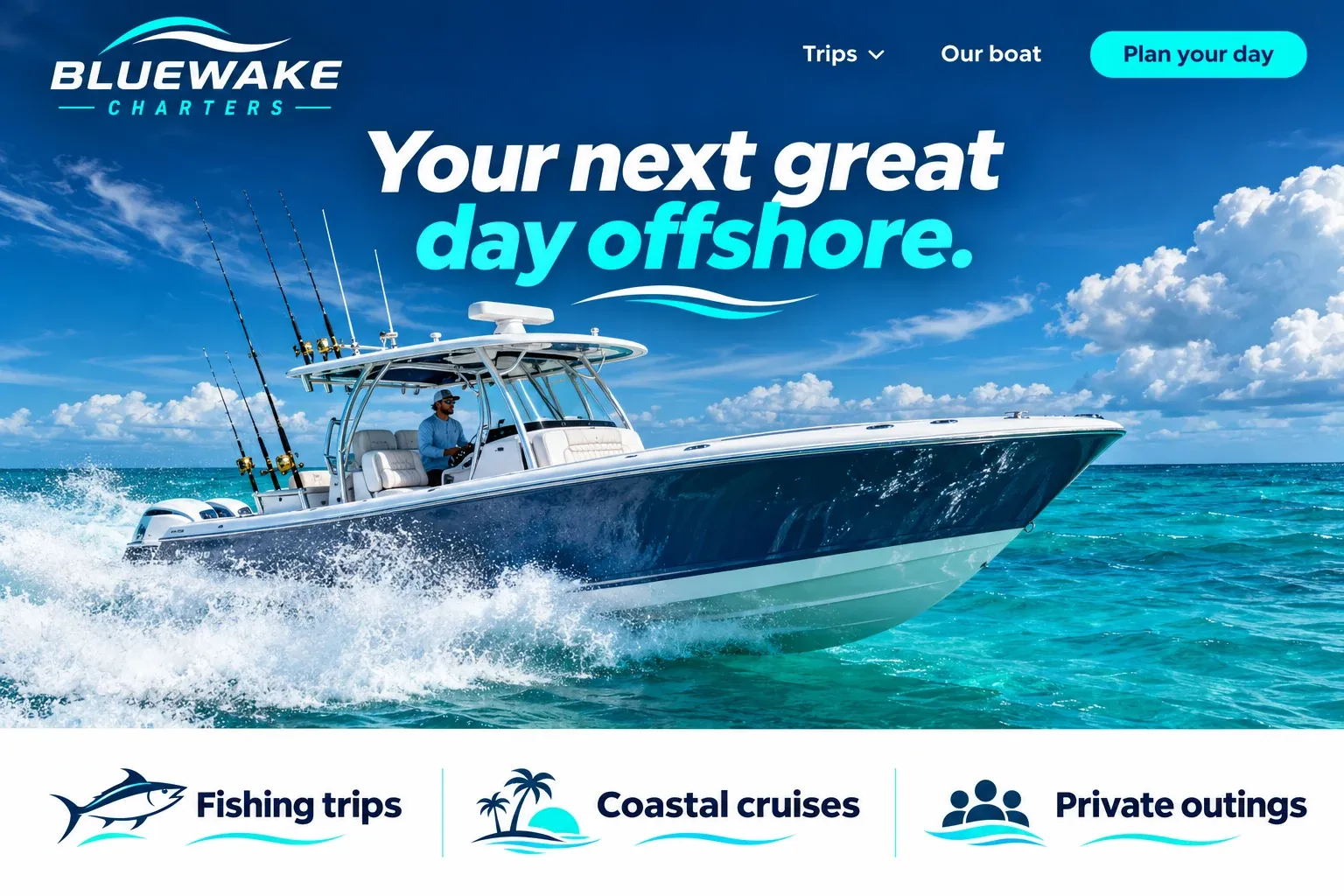
Start with a home page that shows the boat, the captain and a booking button. Give each trip its own page: half day, full day, offshore, reef, night fishing, or private sandbar cruises if you run them. Add a species by season page, an about page for the captain and boat, a what to bring page, and a contact page with the marina map.
Show real boats, real fish and real days
Guests can spot a stock photo. Show your own boat from the dock and on the water, the deck, shade and restroom, and real catches held by real guests who agreed to be shown. A short video of a day on board helps too. List the captain's Coast Guard license and the safety gear on board, as the captain confirms.
Reviews matter more in charters than in most trades, because guests are trusting a stranger with their vacation day. Show real reviews from your booking platform or Google and link to the full lists. Leave out catch claims you cannot back up. A guest who reads that the captain was patient with a seasick child or a first-time angler learns more than any record fish could tell them.
Booking and the day itself
Most charters already use a booking tool for deposits and calendars. The site links to it from every trip page, so guests reserve in a few taps. A short contact form handles group and private questions, sent straight to your email. Put the meeting point, arrival time, parking, weather policy and what to bring where guests can find them the night before.
Help visiting anglers find your boat
Guests search for fishing charters in a city, a species like sailfish or tarpon, or a trip type like deep sea fishing. Trip pages, a species guide, your marina name, and a Google Business Profile with consistent details give search engines clear matches. Reviews help too. None of this promises a ranking, but it gives a good captain a fair chance to be found.