Web design for event planners

Websites that show how an event gets run.

Corporate clients do not hire an event planner for the centerpieces. They hire someone who can take a goal, a date, and five opinions and turn them into a plan that runs on time.

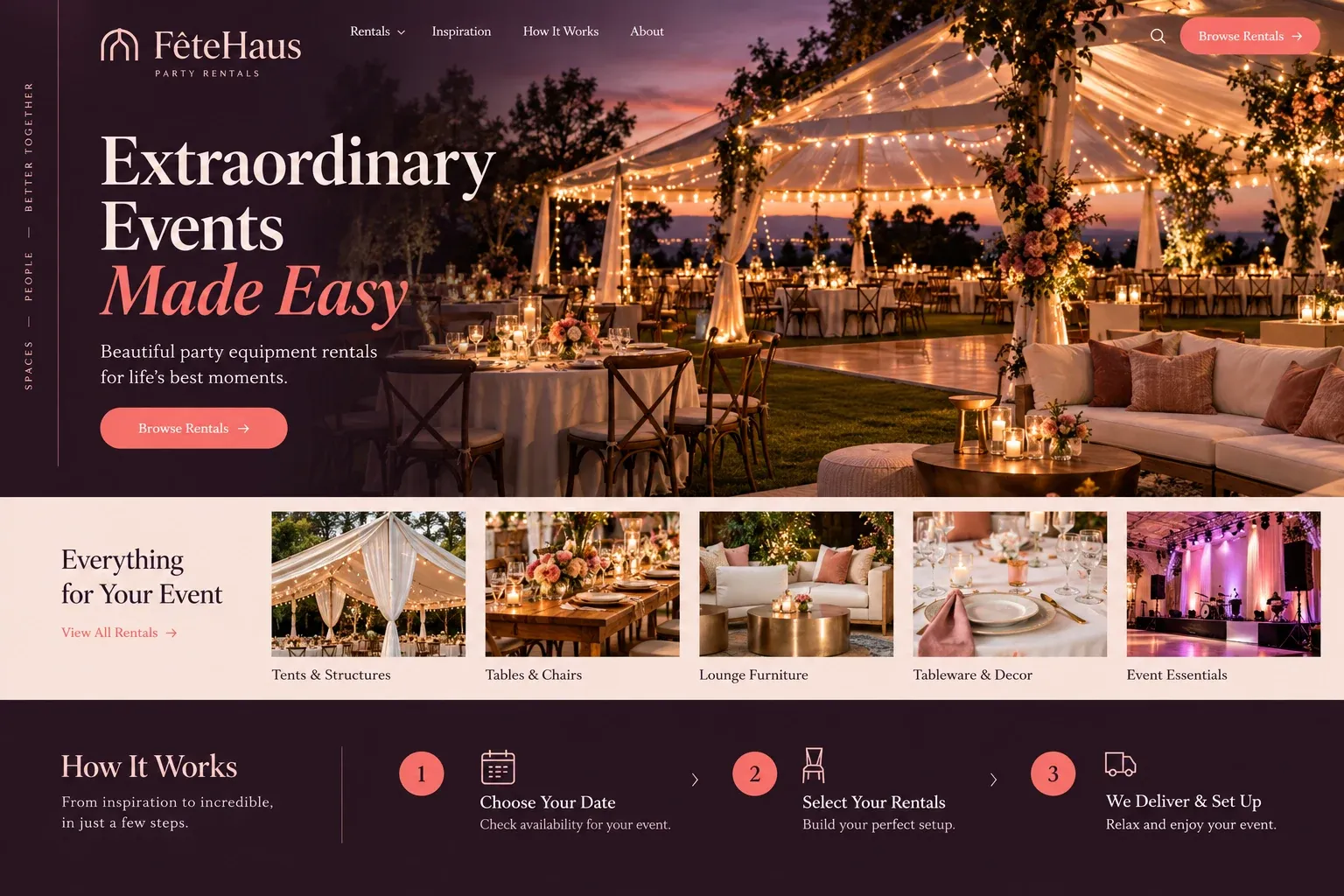
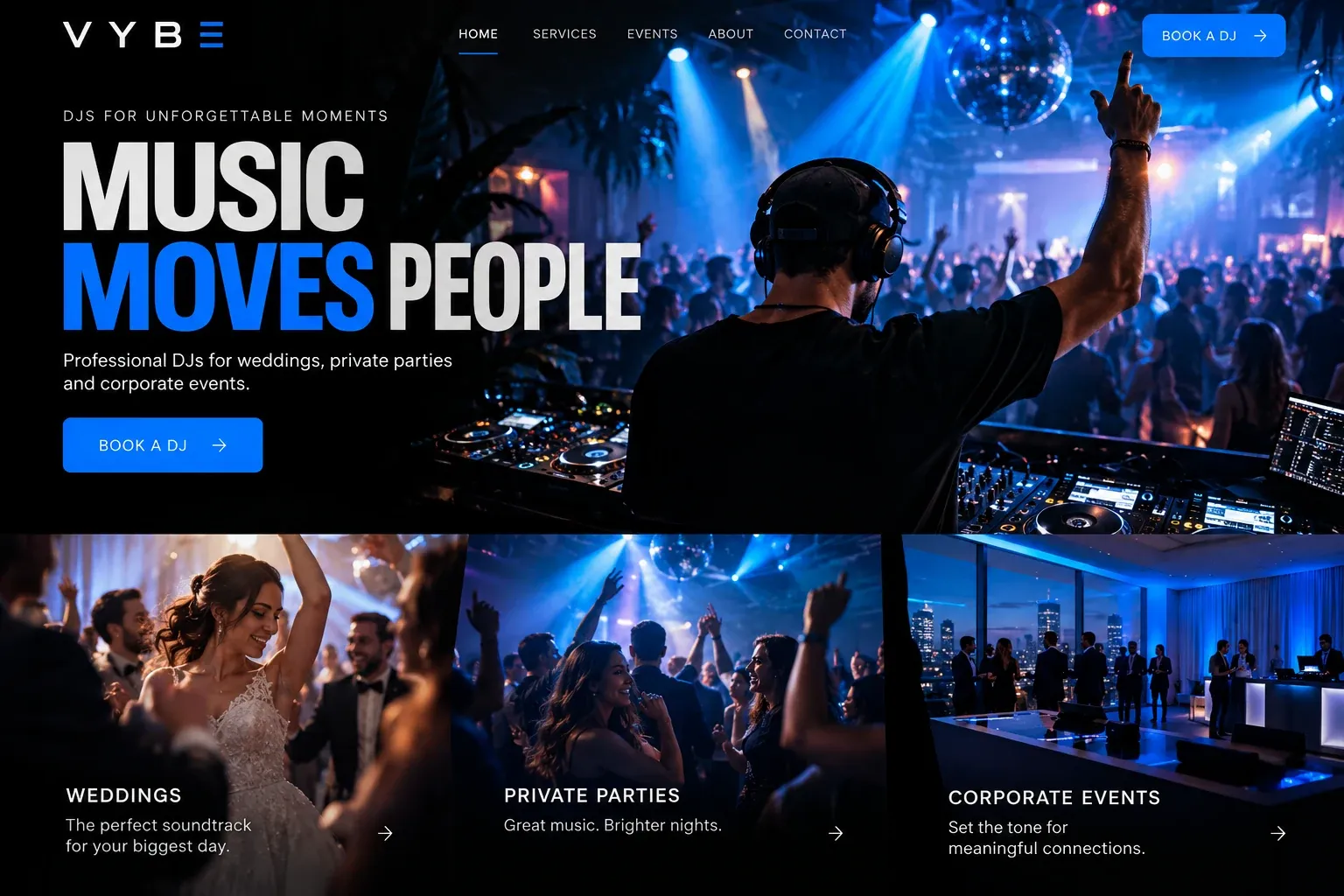
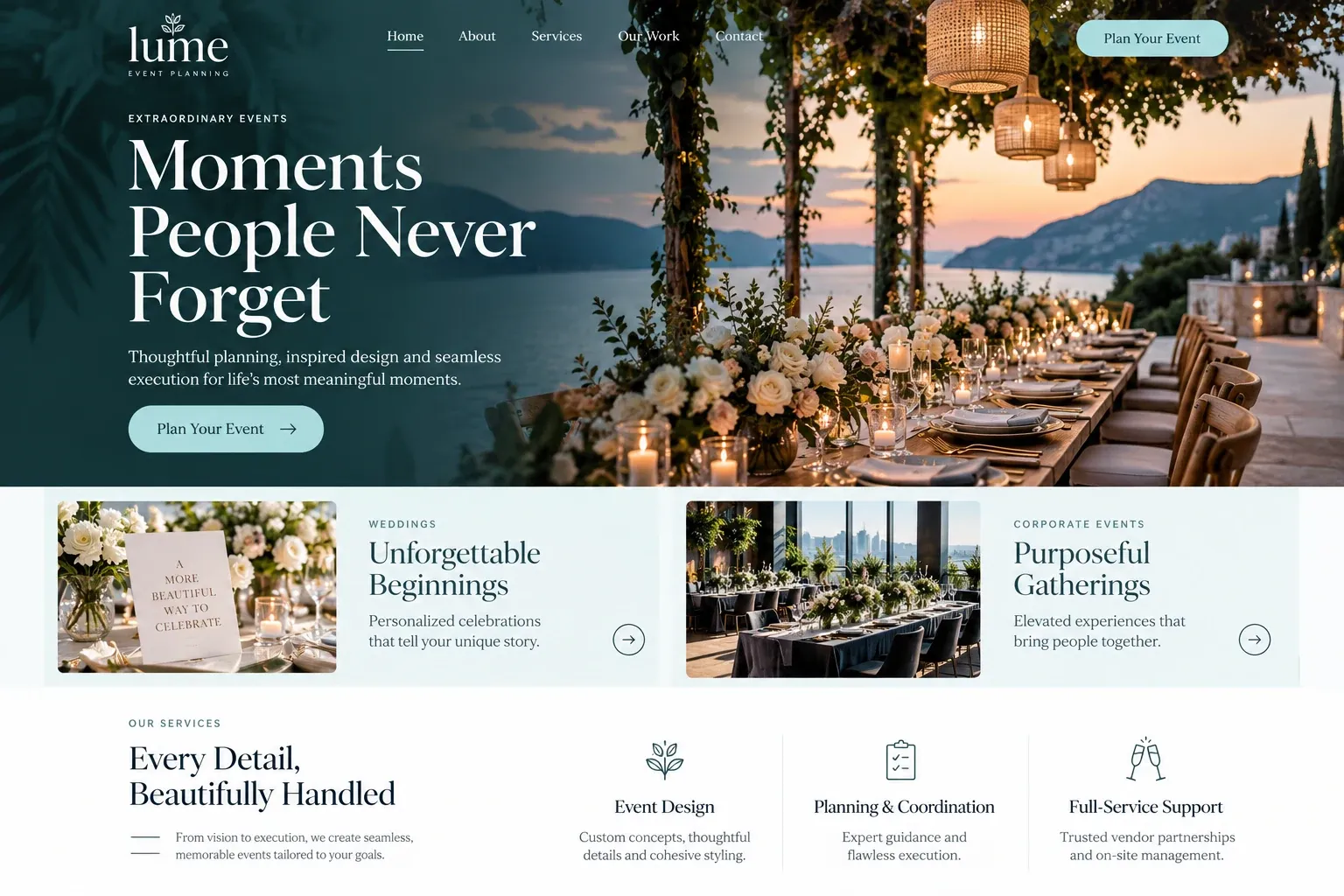
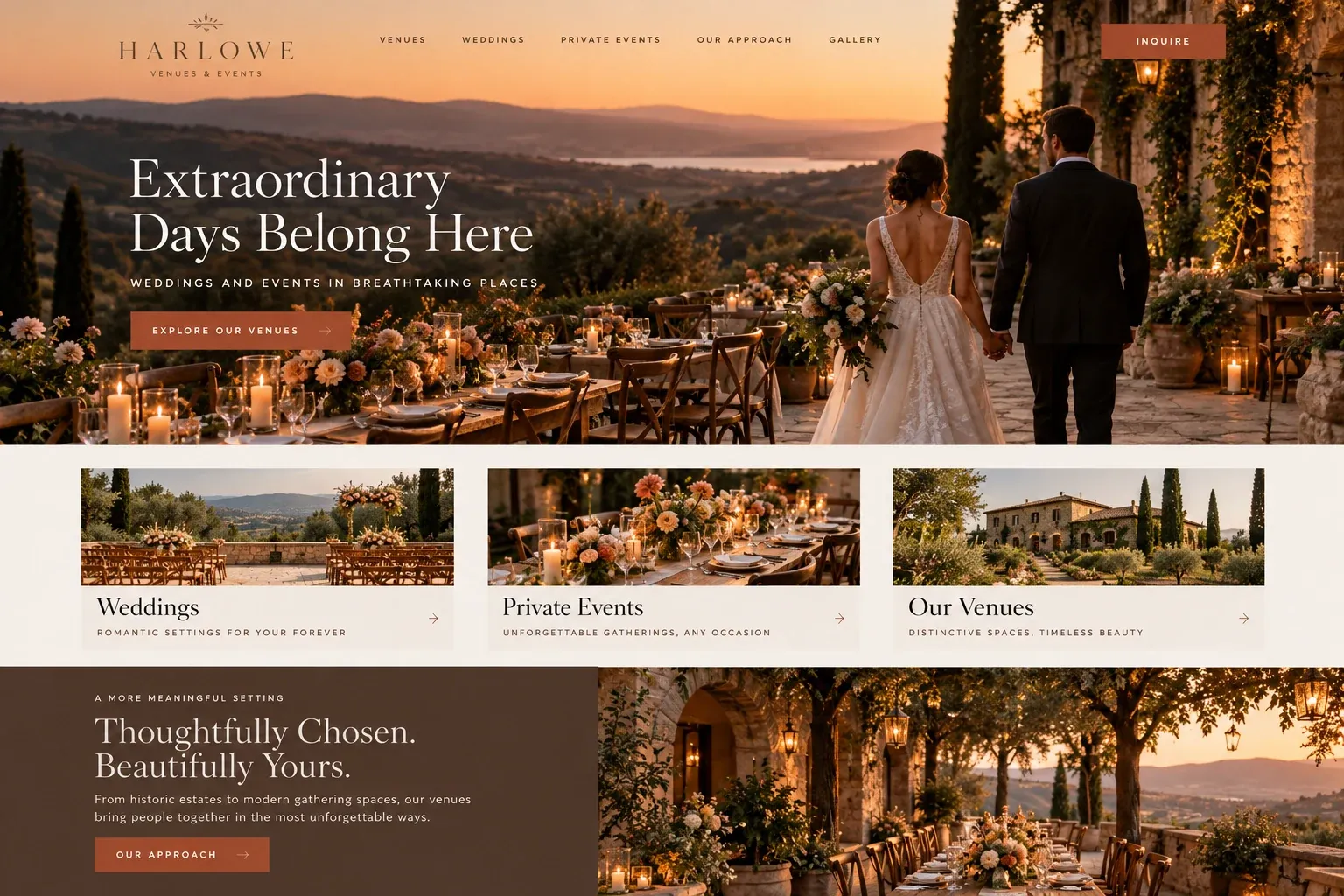
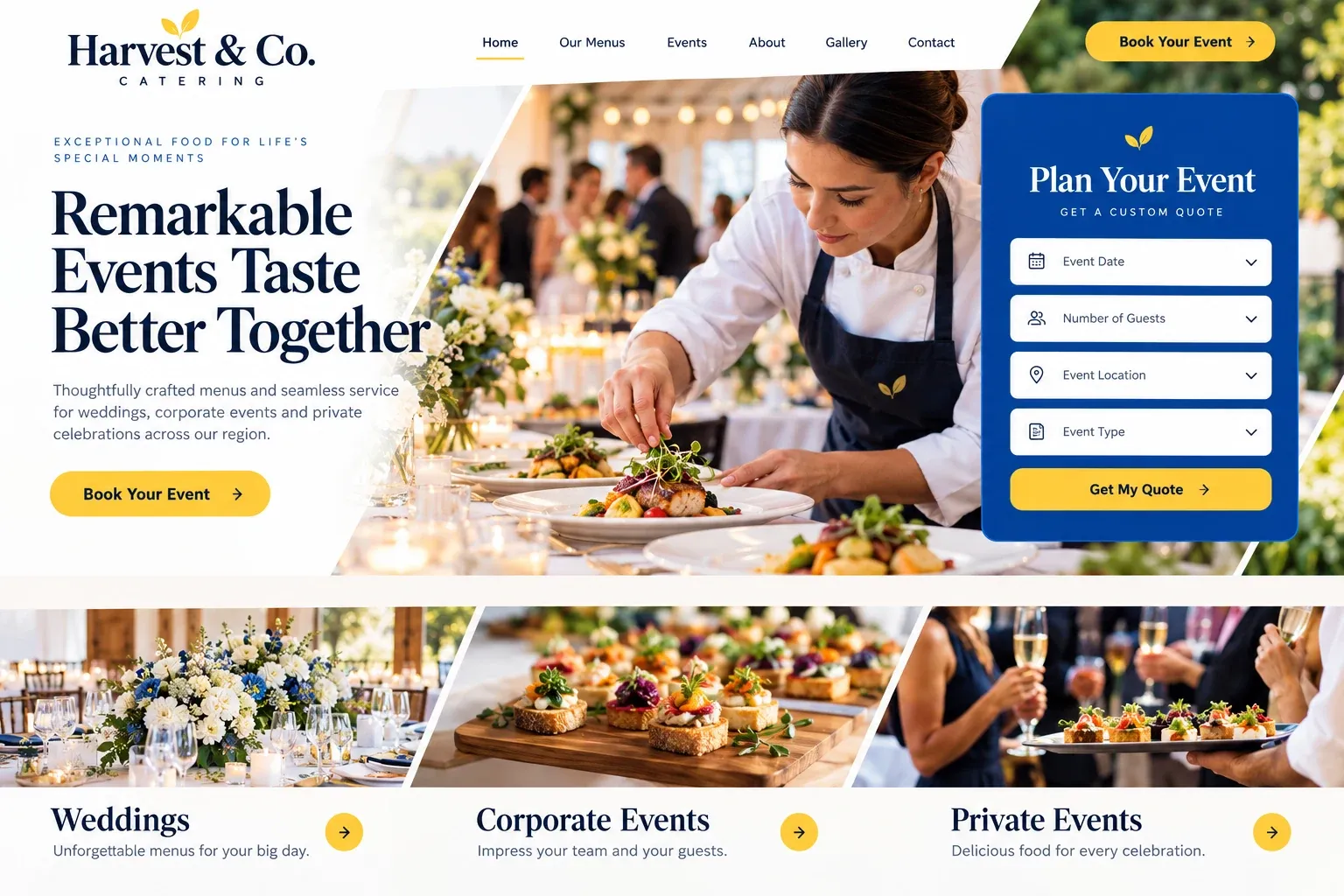
Fictional event planners website homepage design concept
A design concept for a fictional brand. Your site is designed from scratch around yours.

Your customer's story

The sales kickoff nobody else wants to run

Victor manages a regional sales team, and in January he has to bring two hundred people together for a kickoff, an awards dinner, and a day of client meetings. Finance wants a firm budget, the vice president wants it to feel special, and the team in Bogotá needs travel help. He has never planned anything larger than a team lunch. On Monday morning he searches "corporate event planner Miami".

The first sites he opens are wedding galleries with a corporate tab added as an afterthought. One planner's site is different. Its work is organized by event type: conferences, incentive trips, galas, product launches. Each project story starts with the client's objective, explains what the planner was responsible for, and shows the result in photos of rooms full of people, not empty tables.

There is a planning brief asking for the audience, the date range, the goals, and which decisions still need support. Victor fills it in and forwards the reply to his boss with one word: this. An event planner's website should help a busy organizer explain what they need, then show that the planner thinks in objectives, schedules, and responsibilities, not just decoration.

Why it matters

Why event planners need a website.

Event planning buyers are often coordinators who have been handed a project on top of their job. They search, compare a short list of planners, and must justify the choice to someone else. They need evidence that you understand their kind of event, a clear picture of what you would handle, and a way to share messy details. A social feed of décor photos cannot show any of that.

We build event planner websites organized by the events you run, such as conferences, galas, product launches, incentive trips, and private celebrations. Scope pages describe what you take on, from venue sourcing to on-site management. Project stories lead with objectives and responsibilities. The planning brief collects audience, dates, format, and goals, so your first proposal is grounded in their real situation, and their boss can read it too.

What your customers search for

  • event planner Miami
  • corporate event planner
  • conference planning company
  • gala event planner
  • event planning services near me
  • product launch event planner

Your customers

What organizers want to know before hiring an event planner

  • Have you run an event like this?

    A portfolio sorted by event type and size, so a coordinator planning a conference can find conferences, not weddings or birthday parties.

  • What exactly would you handle?

    Scope pages listing what you take on, such as venue sourcing, vendors, budgets, run of show, registration, travel, and on-site staff.

  • Can I share this with my boss?

    Project stories that open with the goal and results in plain language, easy to forward to decision makers inside a company.

  • Where do we even start?

    A planning brief that asks clear questions about audience, dates, format, and goals, then explains what happens after it is sent.

What we build

What a website for event planners should include.

  • Portfolio by event type

    Conferences, galas, launches, retreats, and private parties grouped separately, each with photos of the event in progress.

  • Scope of work pages

    Clear lists of what you handle at each level of service, from full production to on-site management only.

  • Objective-led case stories

    Each project begins with the client's goal and your responsibilities, then shows how the event came together.

  • Event planning brief

    Audience, attendance, date range, format, location ideas, and open decisions, collected in a structured form sent to you.

  • Venue and vendor network

    Venues, caterers, production companies, and transport partners you work with, which shows local reach without inflated claims.

  • Planning timeline page

    The stages from brief to wrap-up report, so organizers see when they make decisions and when you take over.

Planning guide

How should an event planning company structure its website?

An event planner's website works for two readers: the person organizing the event and the person approving the spend. Both want proof you can handle their type of event, clarity on what you will do, and a simple first step. Here is how we structure an event planning site, what to show, and how to help organizers in your area find it.

Organize the work by event type

Visitors look for events like their own. Group your portfolio by type, such as corporate conferences, nonprofit galas, product launches, incentive trips, and private celebrations, and give each type a short page describing how you approach it. A coordinator planning a three-day summit should land on summits within one click. This also gives search engines distinct pages for the different searches organizers run.

Show objectives and responsibilities, not only décor

Beautiful room photos are useful, but corporate buyers want to know what you were responsible for. For each featured event, explain the client's goal, the audience, what you handled, and how it ran: registration, production, transport, timing. Describe clients by sector unless you have permission to name them. Include photos of the event in progress, with people engaged, because that is the moment buyers are paying for.

Start the conversation with a brief

A planning brief helps organizers think through details they have not considered, and it gives you what you need to scope the work. Ask for the event purpose, expected attendance, the audience, date range, preferred location or venue, format, and decisions still open. An optional budget range helps you suggest a realistic approach. Explain what happens next, such as a call within a stated time and a written proposal.

Keep the form approachable. Many visitors are not professional planners and will leave if the brief feels like an exam. Short questions, optional fields for anything uncertain, and a place to attach a document from their own team make it easier to finish and share internally. A confirmation message that repeats their answers gives them something to forward to colleagues straight away.

Help organizers in your market find you

Organizers search by event type and city: corporate event planner, conference planning, gala planner. Pages for each type, a page for the areas you cover, and a consistent Google Business Profile give search engines clear signals. Venue pages describing places you know well help too. Ask satisfied clients for reviews and short quotes you may publish. Search positions cannot be promised, but this structure gives a capable planner room to be found.
In your market

Built for event planning in South Florida

South Florida hosts conventions, art fairs, boat shows, music weeks, and incentive trips that bring companies here from across the Americas. Many events mix English and Spanish speakers, and some draw guests from Latin America and Europe who need travel and transport help. Weather shapes plans for outdoor programs, especially during the rainy and hurricane seasons. We write pages that speak to visiting companies and local organizers alike, and can add a Spanish version for clients across the region.

Questions

Questions event planners ask us.

How can our event planning site show corporate work under NDA?

Describe the event by sector and format, such as a pharmaceutical sales meeting or a tech product launch, without naming the client. Focus on the goal, scale, and your responsibilities. Use photos only where you have permission, and choose wide shots that show the event without identifying the brand.

Should the event planner website separate corporate and private events?

Yes, if you do both. Corporate buyers and families look for different things, and mixing them confuses both. We give each its own section with matching project stories and inquiry forms, so a conference coordinator never has to scroll past birthday parties.

What should our event planning brief ask?

Purpose, audience, expected attendance, date range, location ideas, format, and decisions still open, plus an optional budget range and a file upload. Each question is short, and uncertain fields are optional. The brief is emailed to you, ready to scope a proposal.

Can the site handle registration for events we plan?

The planner's website is a marketing site, but it can link to or embed the registration tool you use for each event, such as an event ticketing platform. For a large program, we can add a simple page per event that points attendees to registration, schedule, and travel details.

Let's talk

Ready for a website built for event planners?

Tell us about your business and we will come back with a clear recommendation and a fixed quote. No pressure, no jargon.

Trades we design for

See all 226 trades

226 trades

  • Plumbers website design concept
CallFree quote