Planning guide
What should a marine surveyor's website include?
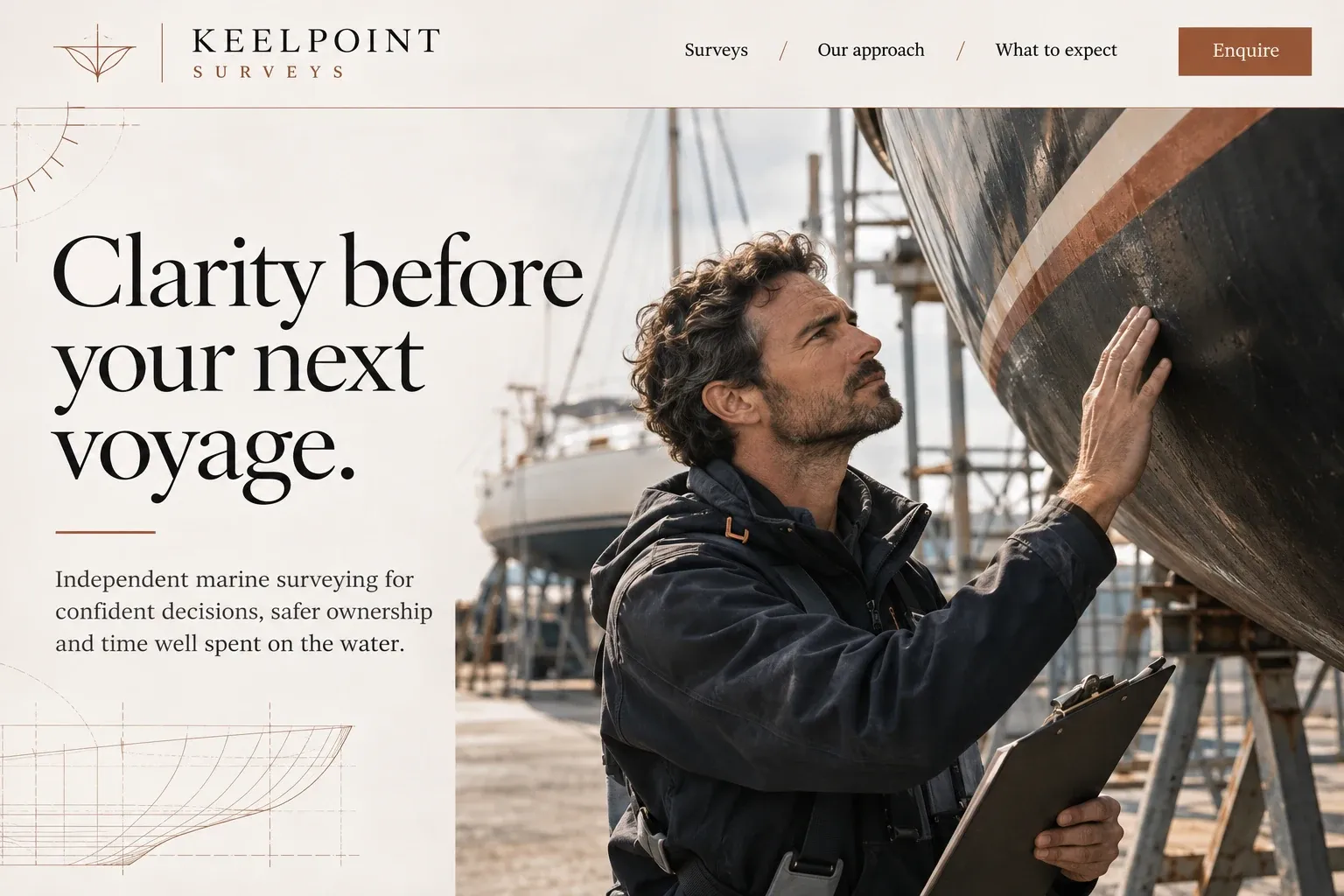
A marine surveyor's clients are usually in a hurry and new to the process. The website should explain which survey they need, what happens on the day, what the report contains, and how to book, all before they pick up the phone. Here is how we plan a surveyor's site and how it helps the practice get found by buyers and brokers.
Explain each survey type
Pre-purchase, insurance condition and valuation, damage, and appraisal surveys each answer a different question. Give each a page that says when it is usually needed, who tends to ask for it, what is inspected, and what the client receives. Mention when specialist engine or rigging surveys are advised. Clear pages help buyers pick the right survey, reduce long explanatory phone calls, and show insurers that you know their requirements.
Show your process and your report
Lay out the inspection step by step: booking, access to the vessel, the haul-out, the sea trial, and the written report. Say who arranges each part and roughly how the day runs. A redacted sample report, shared with permission, shows insurers and buyers what they will get. Real photos of you at work on the types of boats you survey help too, far more than stock images of distant marinas.
Make booking easy under deadline
Most clients book with a deadline in mind, set by a purchase agreement or an insurer. A survey enquiry form should ask for the vessel's make, length, year, location, survey type, and deadline, so you can reply with availability straight away. Keep a phone button visible for brokers and owners who would rather call than type.
Be clear about what you need from the client: access arrangements, the broker's contact, the haul-out booking, and fuel for the sea trial. A short preparation checklist on the site prevents wasted trips and awkward delays at the yard. If you survey across a wide area, explain how travel works, so clients know before they ask.
Help buyers and brokers find you
Survey searches often include a place, such as a marine surveyor near a specific marina or city, or a survey type. Pages for each survey type, a list of the marinas and regions you cover, and a consistent Google Business Profile give search engines what they need. Reviews from satisfied clients help. Brokers also return to sites that explain things well and pass them on to their buyers.