Web design for boat repair businesses

Websites that get boats back on the water.

Boat owners call a mechanic when something has already gone wrong: an outboard that will not idle, a bilge pump cycling too often, a trip planned for Saturday. They need to know fast whether you work on their engine and can reach their boat.

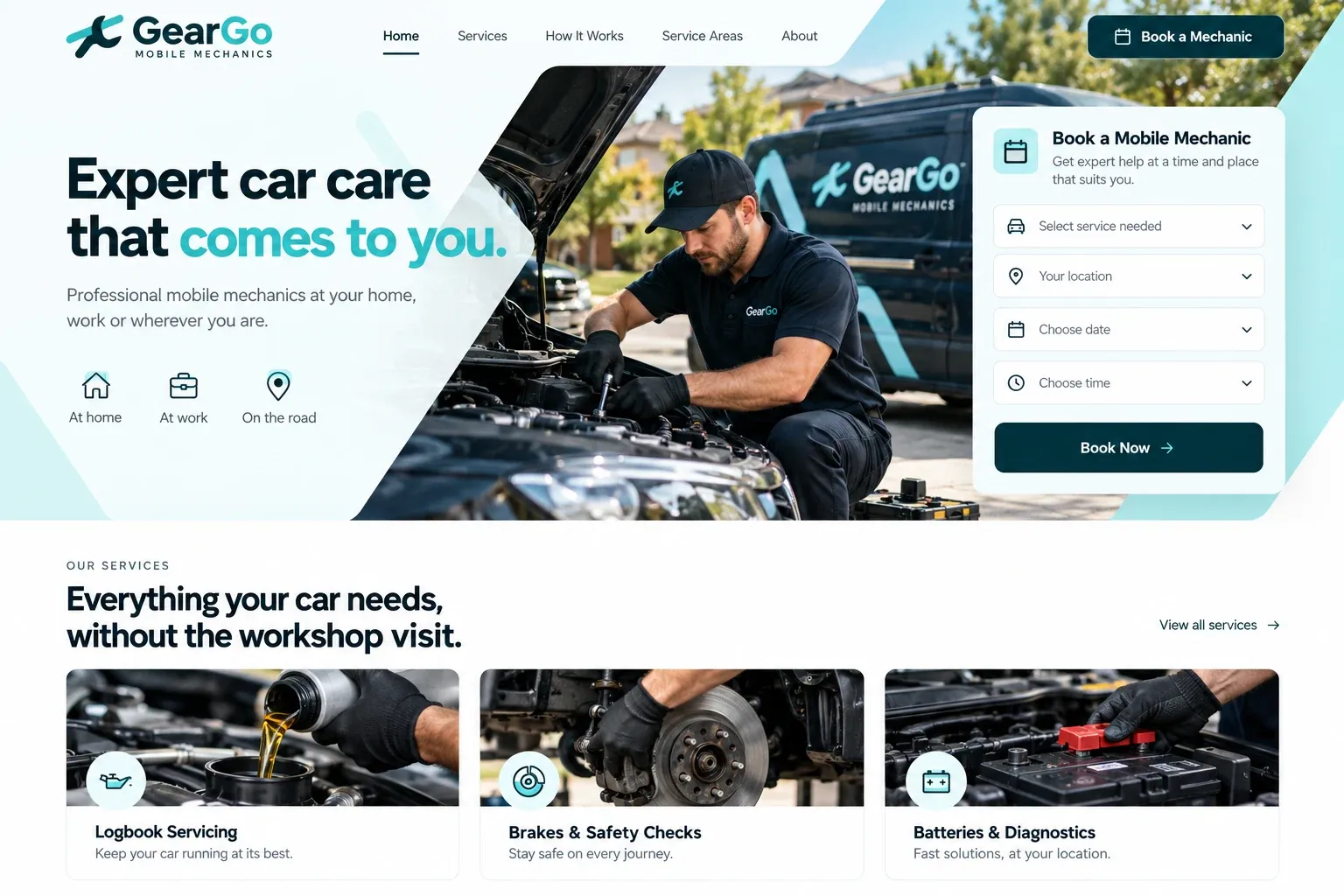
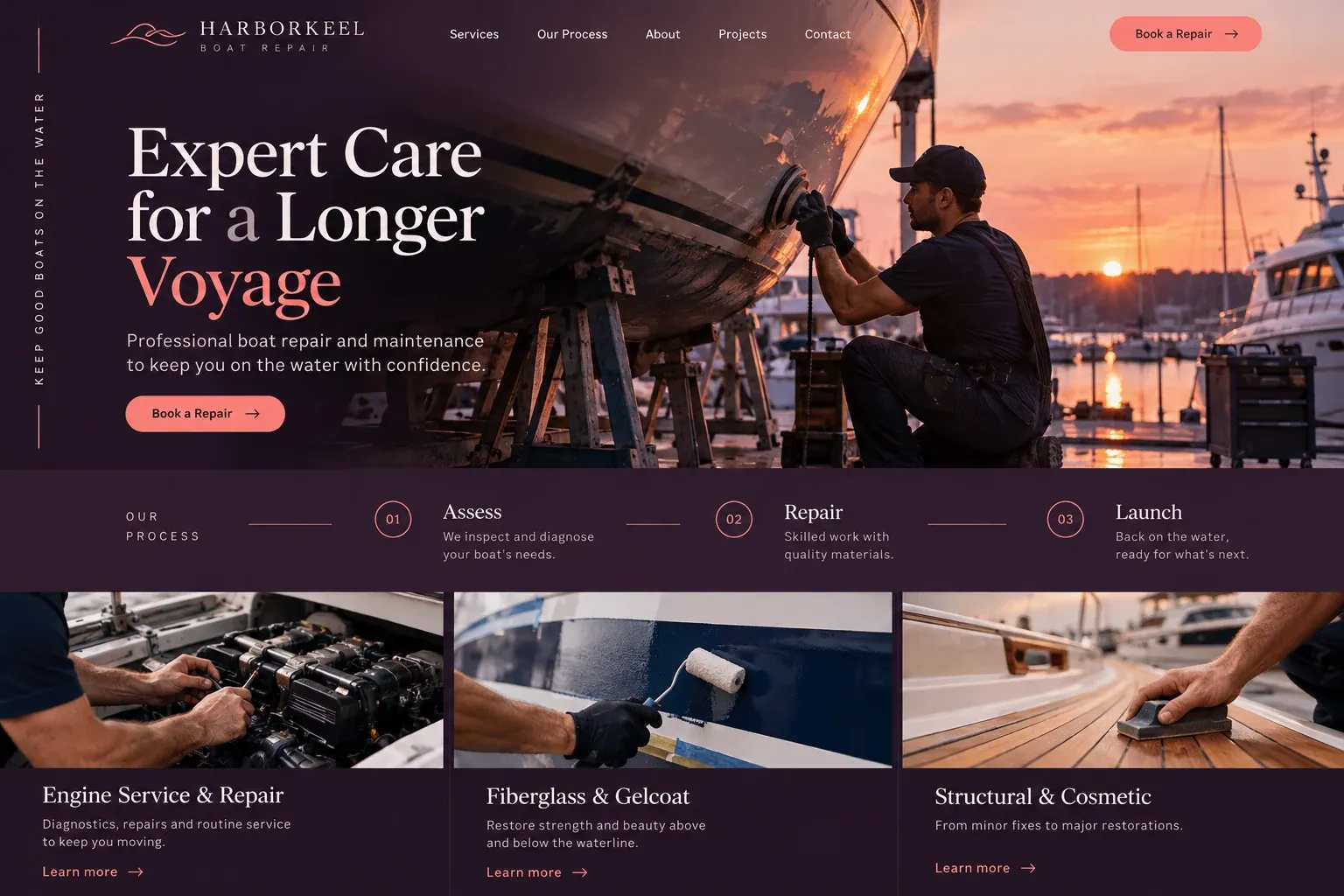
Fictional boat repair services website homepage design concept
A design concept for a fictional brand. Your site is designed from scratch around yours.

Your customer's story

A stumbling outboard two days before the sandbar

Javier keeps a center console on a lift behind his house in North Miami. On Thursday evening he takes it out for a short run to check everything before a Saturday at the sandbar with his brother's family. Halfway across the bay the port engine starts to stumble, and the warning horn sounds twice. He idles home on one motor, ties up, and sits on the gunwale with his phone.

He searches for an outboard mechanic who can come to the house. One shop's site lists every boat brand ever built but never says which engines it services. Another only works inside its own yard, which he learns after scrolling to the bottom. A third names the outboard brands its technicians are trained on, says its service truck visits private docks and marinas nearby, and has a form that asks for the engine model and hours.

He fills it in from the dock, adds a photo of the engine's serial tag, and gets a call the next morning. Nobody recommended that shop to him. Its site simply answered what a boat owner needs to know before the weekend: do you work on my engine, can you get to my boat, and what should I tell you first so the visit is not wasted.

Why it matters

Why boat repair businesses need a website.

Boat owners judge a repair business on fit before anything else. Their questions are narrow: do you service this outboard or that sterndrive, do you handle electrical and fiberglass or only engines, can you work at my marina, or do I need to haul out and trailer it to you. A social media page full of engine photos cannot answer those questions clearly, and a marketplace listing says nothing about which docks you are allowed to work on.

We build boat repair websites around those questions. Engines, systems, and hull work each get their own page, with the brands and models you service named plainly. A page on where you work explains mobile service, your yard, haul-outs, and the marinas you visit. The service form asks for the boat, the engine, its hours, and where the boat is kept, so your first call starts with the facts.

What your customers search for

  • boat mechanic near me
  • outboard motor repair Miami
  • mobile marine mechanic
  • marine electrical repair
  • gelcoat and fiberglass repair
  • boat engine overheating

Your customers

What boat owners ask before they book a marine mechanic

  • Do you work on my engine?

    A page for each engine family you service, from outboards and sterndrives to inboard diesels, naming the brands and any factory training your technicians hold.

  • Can you come to my marina?

    A clear note on mobile service: the marinas, dry stacks, and private docks you reach, and when a job needs a haul-out at your yard instead.

  • Is it just the engine, or more?

    Separate pages for electrical faults, electronics installs, steering, pumps, and gelcoat or fiberglass repair, so owners know whether one shop can handle the whole list.

  • Will it be ready before my trip?

    An honest note on how you schedule work and what slows a job down, such as parts on order, plus a form field for the date they hope to go out.

What we build

What a website for boat repair businesses should include.

  • Engine and brand pages

    Outboards, sterndrives, inboards, and diesels on their own pages, each naming the makes you service and the work you do on them.

  • Marina and yard details

    Which marinas and dry stacks you visit, whether you work at private docks, and how haul-outs at your yard are arranged.

  • Boat service request

    Fields for make, length, engine model, engine hours, and where the boat is kept, plus room for photos of the problem.

  • Maintenance and haul-out pages

    Annual service, bottom paint, and hurricane season haul-outs explained, so owners book routine work before it turns urgent.

  • Repower and repair gallery

    Repowers, rewiring, and fiberglass repairs shown with a short note on the boat and what was done, never a stock photo.

  • Call button for the dock

    A call button that stays on screen, because boat owners often search from a phone while standing next to the problem.

Planning guide

What does a boat repair business need on its website?

A marine repair website should sort visitors quickly. The owner with a dead outboard, the buyer fixing items from a marine survey, and the person planning a repower all need different pages. Below is how we plan the site, what to show on it, how owners should reach you, and how it helps a boat repair business turn up in local searches.

Split the site by engine and system

Boat owners search by the part that failed: outboard repair, sterndrive service, marine electrical, gelcoat repair. Give each a page that names the makes you service, the common problems you fix, and whether the work happens at the dock or in your yard. A home page, these service pages, a page on where you work, and a contact page are a solid start for most marine shops.

Show the work, the yard, and the truck

Real photos carry weight with boat owners, who can tell a tidy rigging job from a rushed one. Show repowers, rewiring behind the helm, and fiberglass repairs before and after, with a line on the boat and the job. Add the service truck and the yard so owners know what to expect. List factory training only where your technicians actually hold it, and keep insurance details ready for marinas that ask.

Collect the boat details up front

A service request form saves both sides a round of calls. Ask for the make and length, the engine model and hours, where the boat is kept, and what the owner noticed. Let them attach photos or a short clip of the sound. Add a field for the date they hope to use the boat, and say honestly that parts and weather can move a schedule.

Keep the phone number on every page too. Many owners would rather describe a noise than type it, and a call button that works with one thumb suits someone standing on a swim platform. Say when you answer and how you handle calls from boats that will not start at the ramp, if that is work you take.

Be easy to find near the water

Boat owners search close to where they keep the boat. Name the marinas, waterways, and neighborhoods you serve on a service-area page, keep your business details identical on the site and your Google Business Profile, and ask satisfied owners for reviews that mention the job. Engine and system pages give search engines specific matches. No site can promise a ranking, but this structure gives a careful marine shop a real chance to be seen.


In your market

Boat repair on South Florida water

Boats here run most of the year, and salt water, heat, and sun are hard on engines, wiring, and gelcoat. Owners keep boats on lifts behind homes, in marina slips, in dry stack storage, and on trailers, and each setup changes how a mechanic gets to the job. Hurricane season brings haul-out and tie-down questions every year, seasonal owners often arrange work from out of state, and many customers speak Spanish first. We write pages around these realities and can add a Spanish version of the site.

Questions

Questions boat repair businesses ask us.

Should a mobile marine mechanic list the marinas we work at?

Usually, yes. Owners want to know you can reach their slip, and naming the marinas, dry stacks, and stretches of private docks you cover answers that at a glance. If a marina limits outside contractors, say you work there by arrangement, and keep the list current as it changes.

Can the boat service form take photos and engine details?

Yes. The form can ask for the boat's make and length, engine model, serial number if they have it, engine hours, and where the boat sits, with an upload for photos. Everything goes to your email, so you can judge the job and the parts before you call back.

We repair engines and fiberglass. Should those be separate pages?

Yes. Someone searching for gelcoat repair is rarely the same person searching for an outboard that will not start, and each search deserves a page that matches it. Separate pages also let you show the right photos and name the right brands, which reads as more expert than one long list of everything.

Can our boat repair site be in Spanish as well as English?

Yes. We can build a Spanish version of every page, including the service form, so owners can describe the problem in the language they think in. You approve both versions, and we keep marine terms consistent, since an owner who searches motor fuera de borda should land on your outboard page.

Let's talk

Ready for a website built for boat repair businesses?

Tell us about your business and we will come back with a clear recommendation and a fixed quote. No pressure, no jargon.

Trades we design for

See all 226 trades

226 trades

  • Plumbers website design concept
CallFree quote