Web design for mold remediation companies

Website design for mold remediation companies.

Mold searches start with a stain behind a dresser and a page of frightening results. Homeowners need a company that explains what an assessment involves and what remediation actually does, in a steady voice.

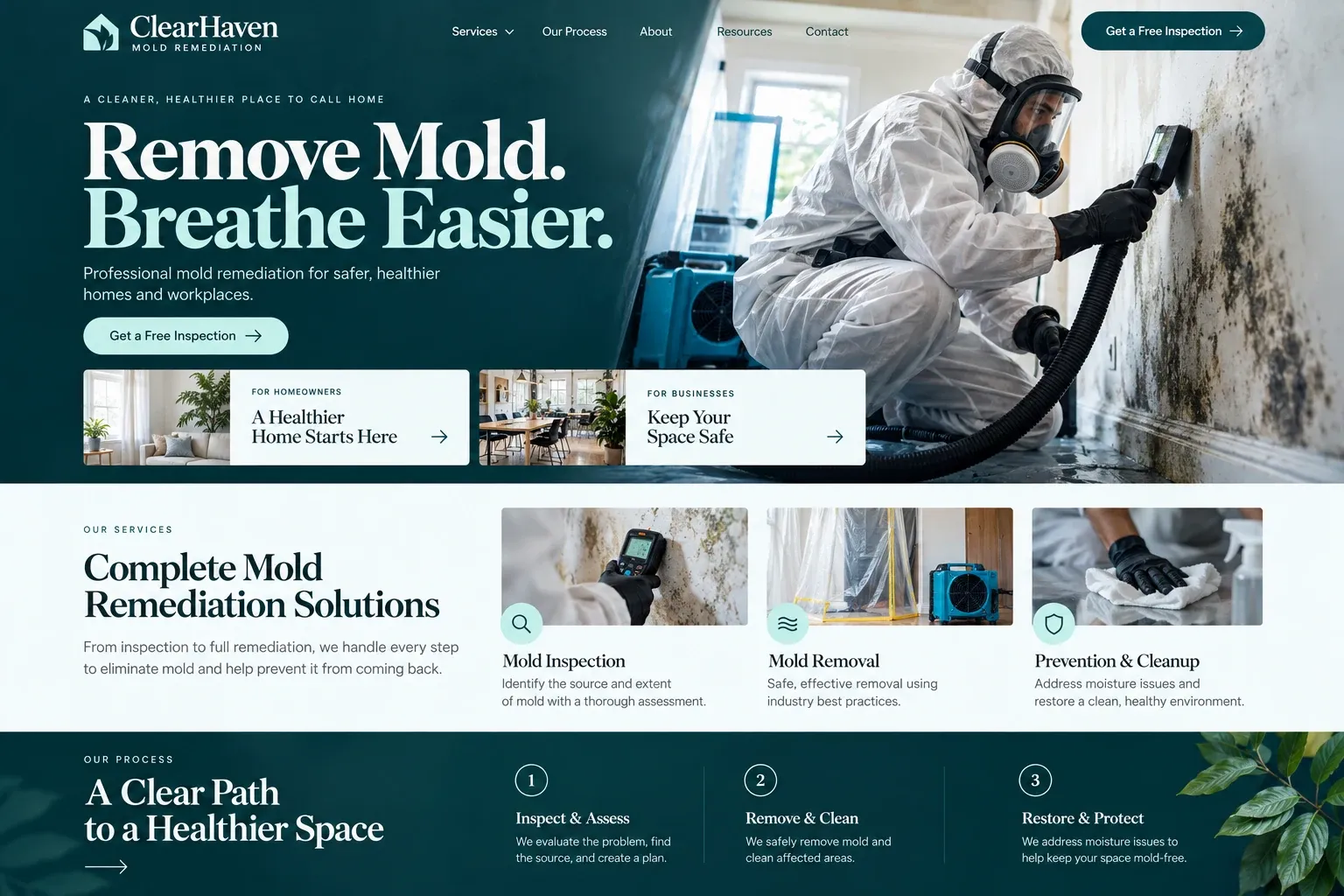
Fictional mold remediation companies website homepage design concept
A design concept for a fictional brand. Your site is designed from scratch around yours.

Your customer's story

A dark patch behind the bedroom dresser

Kelly is moving furniture to repaint her son's bedroom when she finds it: a dark, fuzzy patch on the wall behind the dresser, about the size of a dinner plate. The closet has smelled musty since the summer, and the window above the desk leaked during a storm last year. She takes a photo, closes the door, and starts searching before she has even put the paint tray down.

The results frighten her. Forum posts, videos with red arrows, and articles full of warnings she cannot judge. A few remediation companies appear, and most of their sites repeat the same alarming words. One does not. It explains the difference between an assessment and removal, describes how a technician looks for the moisture source, and has a short form asking about the room and any recent leaks.

She sends the photo and a note about the leaking window. The reply explains what an assessment would look at and what happens next. A mold remediation website should do what that one did: replace alarm with a clear process, separate inspection from removal, describe the documentation, and give a worried owner a calm way to ask a question.

Why it matters

Why mold remediation companies need a website.

Mold is one of the few home problems people research for hours before calling anyone. They find conflicting advice and frightening language, and they arrive at your site wary of being sold a large job. They want to know whether you assess, remediate, or both, how the work is contained, and what paperwork they receive at the end. A directory listing or a social page cannot explain any of that.

We build mold remediation websites that lead with process rather than fear. Service pages separate inspection and assessment from remediation, where you offer them, and explain each in plain terms. A process page covers finding the moisture source, containment, removal, cleaning, and clearance checks. A documentation page describes what owners receive. The inquiry form asks about the property and the concern, never about anyone's health.

What your customers search for

  • mold removal near me
  • mold inspection Miami
  • mold remediation Miami
  • black mold removal
  • mold in closet after leak
  • mold assessment for home sale

Your customers

What homeowners want answered before calling about mold

  • Do you test, remove, or both?

    Clear service boundaries that explain what you offer, which licenses you hold, and how assessment and remediation are kept separate where that is required.

  • How bad is it really?

    A page explaining how an assessment works, what is measured, and why a website or a photo alone cannot diagnose a problem.

  • Will you contain it while you work?

    Plain descriptions of containment, air filtration, removal of affected materials, and cleaning, with photos of real job setups in occupied homes.

  • What will I have when you finish?

    A documentation overview listing the reports, photos, and clearance results you provide, so owners know what to keep for a sale or insurance file.

What we build

What a website for mold remediation companies should include.

  • Service boundary pages

    Separate pages for inspection, assessment, and remediation, each stating what is included and what falls to another professional.

  • Calm assessment explainer

    What a technician checks, from moisture readings to hidden leaks, written to inform the reader rather than scare them.

  • Containment and removal steps

    The remediation process laid out in order, with photos of containment walls, air scrubbers, and finished rooms.

  • Reports and clearance records

    The reports, photos, and post-remediation checks owners receive, explained clearly before the job ever starts.

  • Property concern inquiry

    A short form asking about the property, the area affected, and any recent leaks or flooding, with optional photos.

  • License and insurance details

    Your Florida mold license numbers, insurance, and any industry certifications, shown in the footer and on the about page.

Planning guide

What should a mold remediation website say, and avoid saying?

Mold remediation customers arrive anxious and skeptical, often after reading alarming material elsewhere. The website's job is to inform, separate the services clearly, and make a careful inquiry easy. This guide covers the pages a mold business needs, what proof to show, how inquiries should work, and how to be found by local owners without leaning on fear.

Separate inspection from remediation

Customers often do not know that assessment and removal are different services, sometimes performed by different licensed professionals. Give each its own page if you offer both, and say clearly which you provide if you offer only one. Explain what an assessment produces, such as moisture readings, a written scope, and sampling where appropriate, and what remediation involves. Clear boundaries build trust with owners, realtors, and insurers.

Describe the process without diagnosing

A website cannot see inside a wall, and it should say so. Walk through your process instead: finding and fixing the moisture source, setting up containment, filtering the air, removing affected materials, cleaning, and checking the result. Use photos from real jobs. Avoid health claims and promises that mold will never return, and point readers toward a professional assessment rather than conclusions drawn from a photo.

A short page of common questions helps here. Answer what owners ask you on the phone, such as whether they can stay home during the work, what happens to furniture in the affected room, and how long containment stays up, and keep every answer general enough to stay true across many different jobs.

Ask for the right details

The inquiry form should ask about the property type, the room or area, how large the affected area looks, and any recent leak, flood, or roof problem. Let owners upload photos. Do not ask about symptoms or medical history; health questions belong with a doctor, not a contact form. Add a phone number for those who prefer to talk, and say when you usually reply.

Be found by worried local owners

People search for mold inspection, mold removal, and black mold with their city or near me. Pages for each service, an area page listing the places you work, and a consistent Google Business Profile give search engines clear signals. Reviews that describe a calm, professional job carry weight in this trade, so ask for them when work is complete. None of this promises a position in results.

In your market

Built for mold remediation in South Florida

Heat and humidity make mold a year-round concern here. Common triggers include roof leaks, hurricane-driven rain, air conditioning problems, leaks from the unit upstairs, and homes closed up for months while seasonal owners are away. Florida licenses mold assessors and mold remediators, and careful customers ask to see those license numbers. Many inquiries come from condo boards, landlords, and realtors before a sale. We write pages for each of these readers and can add a Spanish version of the site.

Questions

Questions mold remediation companies ask us.

Can our mold remediation site explain health risks?

We keep health topics general and point readers to their doctor for medical questions. The site describes what you do, how the work is contained, and what documentation you provide, without promising health outcomes. You approve every line, and we avoid the alarming language that makes owners distrust the whole industry.

Should the website show our mold license numbers?

Yes. Florida licenses mold assessors and remediators, and careful owners, realtors, and insurers look for those numbers. We place them in the footer and on the about page, alongside insurance and any industry certifications your team holds, so they are easy to verify.

What photos should a mold remediation company use?

Containment set up in a real room, air scrubbers running, technicians in protective gear, and clean, rebuilt spaces after the work. Avoid extreme close-ups of mold that exist mainly to shock. With the owner's permission, a few before and after pairs show your care without exposing anyone's home.

Can realtors and property managers request mold assessments through the site?

Yes. We add a short page for real estate and property professionals, with a form that asks for the address, any deadline involved, such as an inspection period, and who will provide access. Those requests reach your inbox labeled separately from homeowner inquiries.

Let's talk

Ready for a website built for mold remediation companies?

Tell us about your business and we will come back with a clear recommendation and a fixed quote. No pressure, no jargon.

Trades we design for

See all 226 trades

226 trades

  • Plumbers website design concept
CallFree quote