Planning guide
What should a non-emergency medical transport website include?
A medical transport website has two audiences: families arranging a ride for someone they love and professionals who book trips every day. Both want clear facts about vehicles, assistance, areas and booking. Here is how we plan the pages, what to show, how people request trips without sharing health details, and how the site helps your company get found.
Pages for each ride and each audience
Give ambulatory, wheelchair and stretcher rides their own pages, each explaining the vehicle, the help drivers give, and what the rider needs ready. Add a page for facilities and case managers, one for insurance and payment, a page about your drivers and training, and a contact page. A family member and a hospital planner should each find their path from the home page in one tap.
Show your vans and your drivers
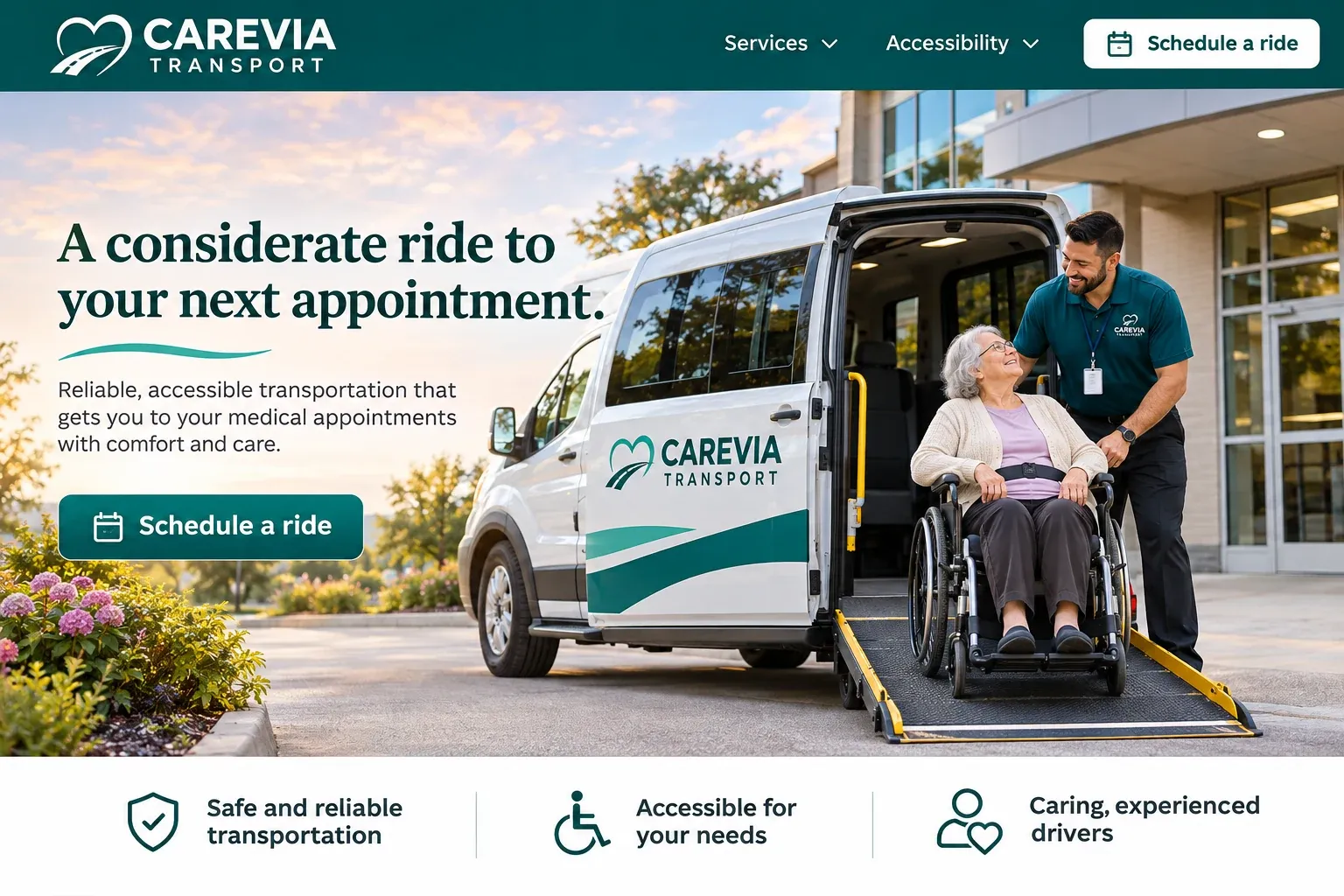
Photos of your real vehicles, lifts and ramps, securement systems and stretchers show families what to expect at the curb. Introduce your drivers or coordinators if they agree. Describe the training they receive, such as passenger assistance and safe transfers, only as the owner confirms it. Proof should be real: your vehicle photos, your service area, and reviews from families or facilities who chose to leave one.
Trip requests without health details
An ordinary contact form is not the place for diagnoses, medications or insurance numbers. Keep the website form to logistics: who is riding, pickup and destination, date and time, mobility equipment, and whether a companion is coming. The coordinator gathers anything else by phone or through a secure system you already use. The owner approves the wording of every field.
Facilities often prefer to send trip lists in bulk. A facility page can explain how to set up an account, who to contact, and how recurring dialysis or therapy schedules are handled. If you use a booking portal for partners, the site links to it from that page so coordinators always find the right door.
Help families and planners find you
People search for wheelchair transportation, medical rides to appointments, or stretcher transport near them. Ride type pages, a clear list of the counties and cities you serve, and a Google Business Profile with the same name and phone number help search engines connect those searches to you. Reviews from families help too. This gives a well-run transport company a fair chance, though it does not promise a ranking.