Web design for recording studios

Website design for recording studios.

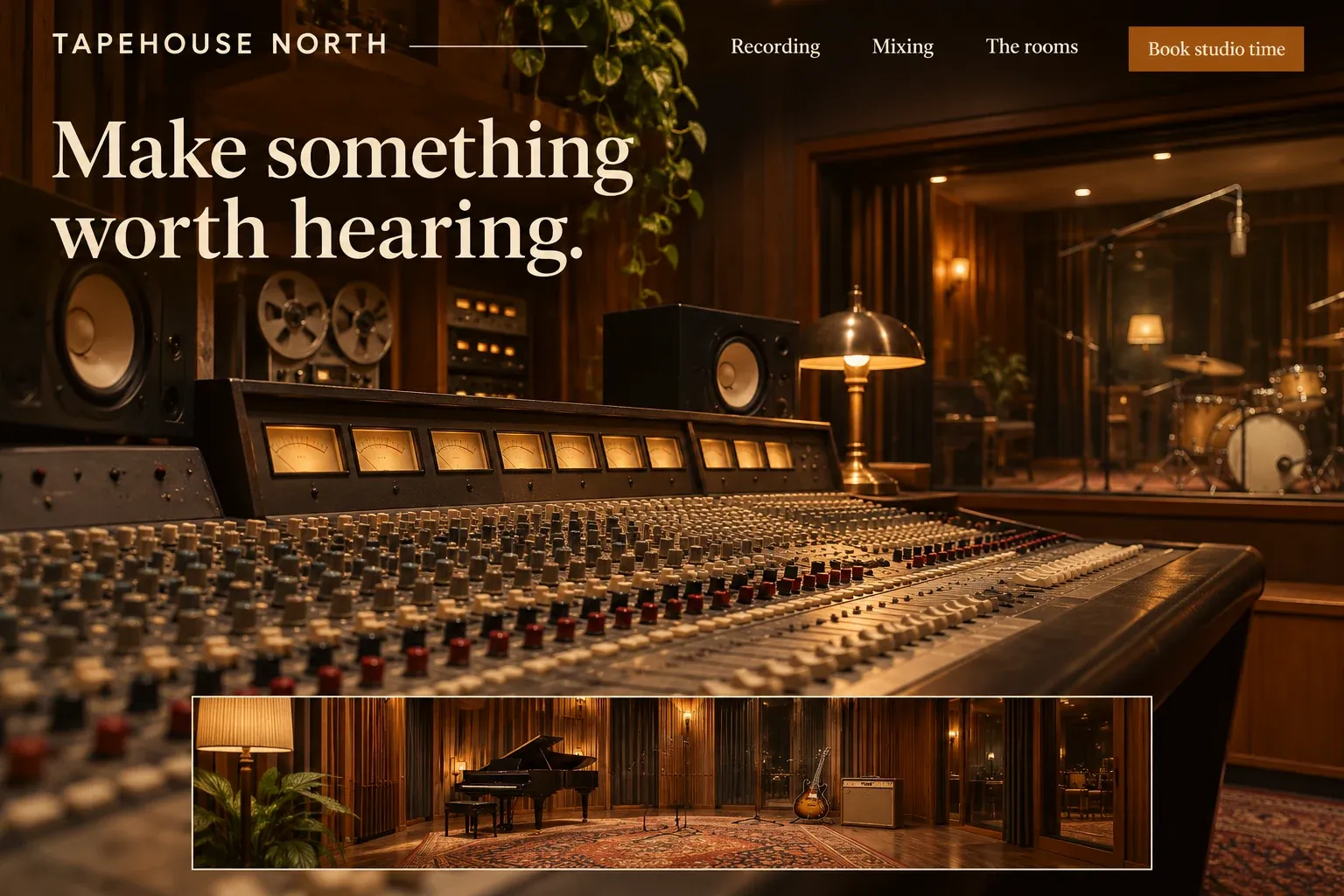
Artists choose a studio by ear and by eye before they ever walk in. They want to hear what comes out of your rooms, see the gear and the vocal booth, and know how to book a block of time.

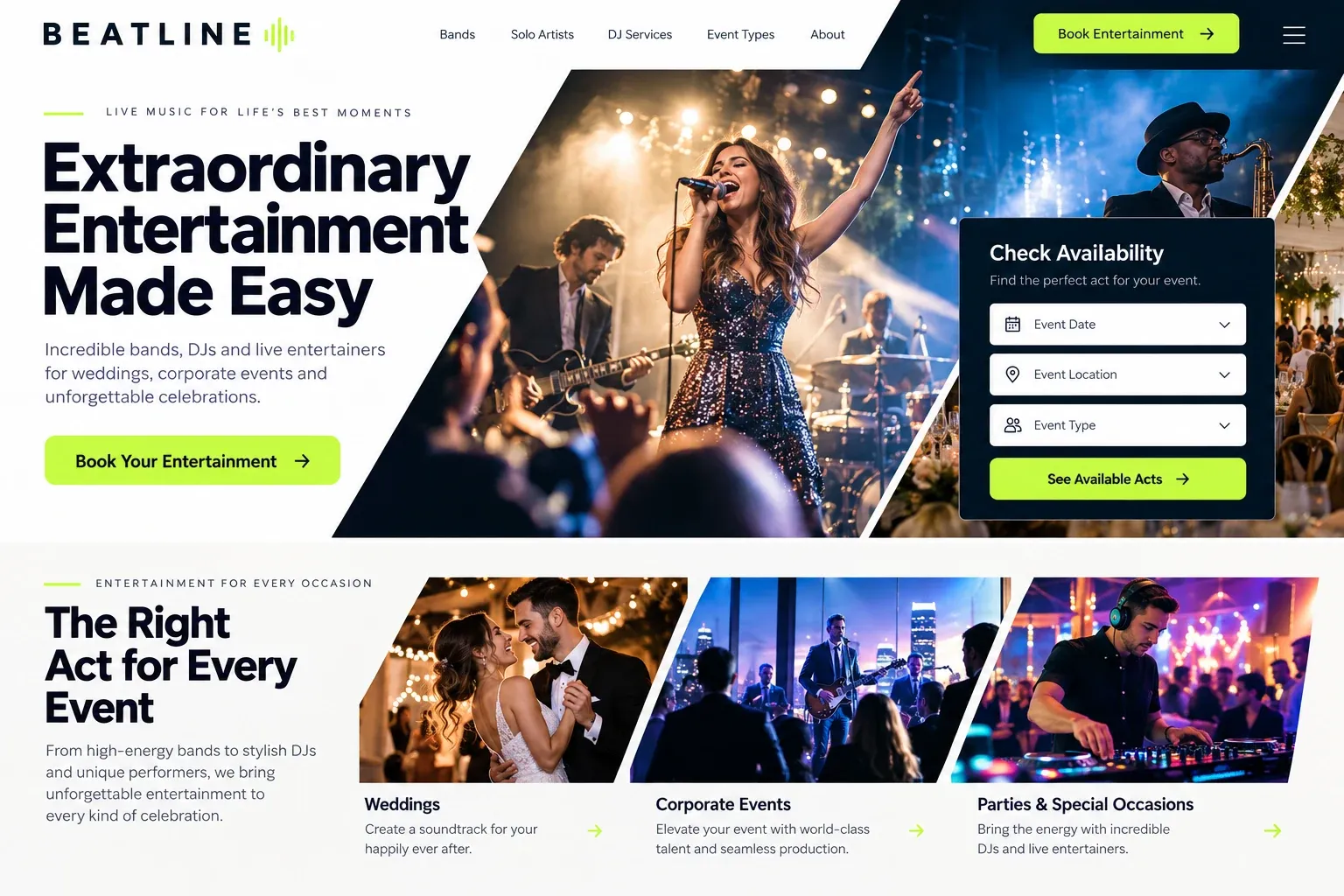
Website design concept for recording studios, an illustration
Illustration only: the design, business name and logo are made up to show the kind of website we can build. Not a real business or client website. Yours is designed from scratch around your brand.

Your customer's story

Three songs, one weekend, and a deadline

Dario has three songs written, a release date he set too early, and a producer friend who can only work on weekends. His bedroom vocals sound thin next to the references he loves, so he decides to cut them properly. On his lunch break he searches for recording studios near him and opens links between bites, earbuds in, listening for anything that sounds like the record in his head.

One studio has an Instagram grid of famous faces and no way to tell which room he would get. Another lists an hourly rate and a phone number that goes to voicemail. A third shows its live room and vocal booth in daylight photos, names the microphones and the console, plays short before and after clips of mixes, and has a form that asks what he is recording and when.

He sends the form during his break and gets a reply that evening with two open Saturdays. Nothing about that studio was louder than the others. It simply let him hear the work, picture himself in the booth, and ask for time without a phone call. A studio website should do exactly that for every artist, podcaster, and band who finds it late at night.

Why it matters

Why recording studios need a website.

People who book studio time come with very different needs: a rapper cutting vocals over a beat, a band tracking drums live, a podcaster who needs two good microphones and a quiet room, a songwriter who wants mixing and mastering done remotely. Each one searches for their own job. A social media page shows the vibe, but it cannot hold a gear list, explain how sessions run, or show up for each of those searches.

We build studio websites around the rooms and the services. Each room gets photos and its equipment, each service gets a page in the words musicians use, and your audio samples play right on the page through the player you already use. A session request form asks for the project type, length, and preferred dates, and lands in your inbox ready for a reply.

What your customers search for

  • recording studio near me
  • recording studio in Miami
  • podcast studio rental Miami
  • mixing and mastering services
  • vocal booth rental
  • music production studio

Your customers

What artists check before booking a recording studio

  • What does your room actually sound like?

    Before and after clips of mixes, short room recordings, and links to released tracks recorded there, played through an embedded player that works on phones.

  • Do you have the gear I need?

    A gear list for each room: microphones, preamps, monitors, instruments, and the software you run, so producers can check before they arrive with sessions.

  • Is an engineer included, or can I bring mine?

    A plain explanation of how sessions work: engineer included or not, setup time, file delivery, and what happens when a session runs long.

  • Can you mix a song I already recorded?

    A page for remote mixing and mastering that explains how to send stems, how revisions work, and what format the finished files come in.

What we build

What a website for recording studios should include.

  • Room-by-room tour

    Photos of the live room, control room, and vocal booth, each with its size, layout, and the gear inside.

  • Embedded sample player

    Mix and master samples from SoundCloud, Spotify, or your own files, playable on any phone without leaving the page.

  • Service pages

    Tracking, vocal production, mixing, mastering, podcast recording, and rehearsal time, each explained for the person who searches for it.

  • Session request form

    Project type, number of songs, preferred dates, and a link to a demo, sent straight to your email.

  • Studio policies

    Booking holds, cancellations, guest limits, and file storage written in plain language the client reads before the first session.

  • Engineer and producer profiles

    Short bios, credits you can back up, and the genres each engineer works in most comfortably.

Planning guide

What should a recording studio website include?

A recording studio sells something people need to hear and see before they trust it. The website has to carry the sound of the rooms, the gear, and the way sessions work, then make it simple to ask for dates. Here is how we plan a studio site, what to put on it, and how it helps the studio get found.

Build pages around rooms and services

Artists think in two ways: where they will record and what they need done. Give each room its own section with photos, size, and a gear list, and give each service its own page: tracking, vocal sessions, mixing, mastering, podcasts, voiceover, and rehearsal. A home page, the rooms, a page per service, an about page with your engineers, and a contact page make a solid start that can grow with the studio.

Let visitors hear the work

Audio is your strongest proof. Embed short before and after clips of mixes, room samples, and links to released songs recorded in your space, but only work you have permission to share. Use the player you already have, such as SoundCloud or Spotify, so tracks stream properly on phones. Add daylight photos of the rooms and close-ups of the console, outboard gear, and microphone locker, because producers notice the details.

Make booking a session simple

Most first contact happens by message, not by phone. A session request form should ask for the artist or project name, the type of work, how many songs or episodes, preferred dates, and a link to a demo or reference track. If you use an online calendar or booking tool, link it from every page. Put your booking and cancellation policy in writing on the site so there are no surprises on the day.

Say clearly when the studio is open. Many artists write and record late, so evening and overnight hours deserve a line near the top of the booking page. If engineers are booked separately or the room can be rented dry, explain both options there too, so a visitor knows exactly what to ask for before sending the form.

Help local artists and podcasters find you

People search for the job and the place: recording studio near me, podcast studio in Miami, mixing engineer, vocal booth rental. Service pages give search engines something specific to match, and a Google Business Profile with the same name, address, and hours connects the website to map results. Ask happy clients for reviews that mention what they recorded, and keep the gear list current so it matches what is really in the room.
In your market

Built for recording studios in South Florida

Miami's music scene runs in several languages at once: Latin pop, reggaeton, hip hop, gospel, electronic music, and a busy podcast and voiceover world. Many clients write and record in Spanish, and some fly in from the Caribbean and Latin America for a few days of sessions. We can add a Spanish version of the site, write service pages around the genres you record, and make sure visitors from out of town can see your location, parking, and places to stay nearby.

Questions

Questions recording studios ask us.

Can we put our audio samples on the recording studio website?

Yes. We embed the player you already use, such as SoundCloud, Spotify, or YouTube, or host short clips directly on the page. Before and after mixes and room samples work best. We only feature tracks you have the right to share, and we keep the player light enough to load quickly on a phone.

Should our studio website show the full gear list?

We recommend it. Producers and engineers check microphones, preamps, monitors, and software before they book, and a current list saves you answering the same messages. We organize it by room, and you can send updates whenever you buy, sell, or move a piece of equipment.

How do artists book studio sessions through the site?

Through a short request form that emails you the project type, songs or episodes, preferred dates, and a demo link. If you already use an online calendar or booking tool, we link to it from every page so artists can pick open time themselves.

Can the studio website reach Spanish-speaking artists?

Yes. We can build a Spanish version of the whole site, with the same rooms, services, and session form. Many artists in Miami write and record in Spanish, so a booking page in their language makes the first message much easier to send.

Let's talk

Ready for a website built for recording studios?

Tell us about your business and we will come back with a clear recommendation and a fixed quote. No pressure, no jargon.

Trades we design for

See all 436 trades

436 trades

  • Plumbers website design concept
CallFree quote