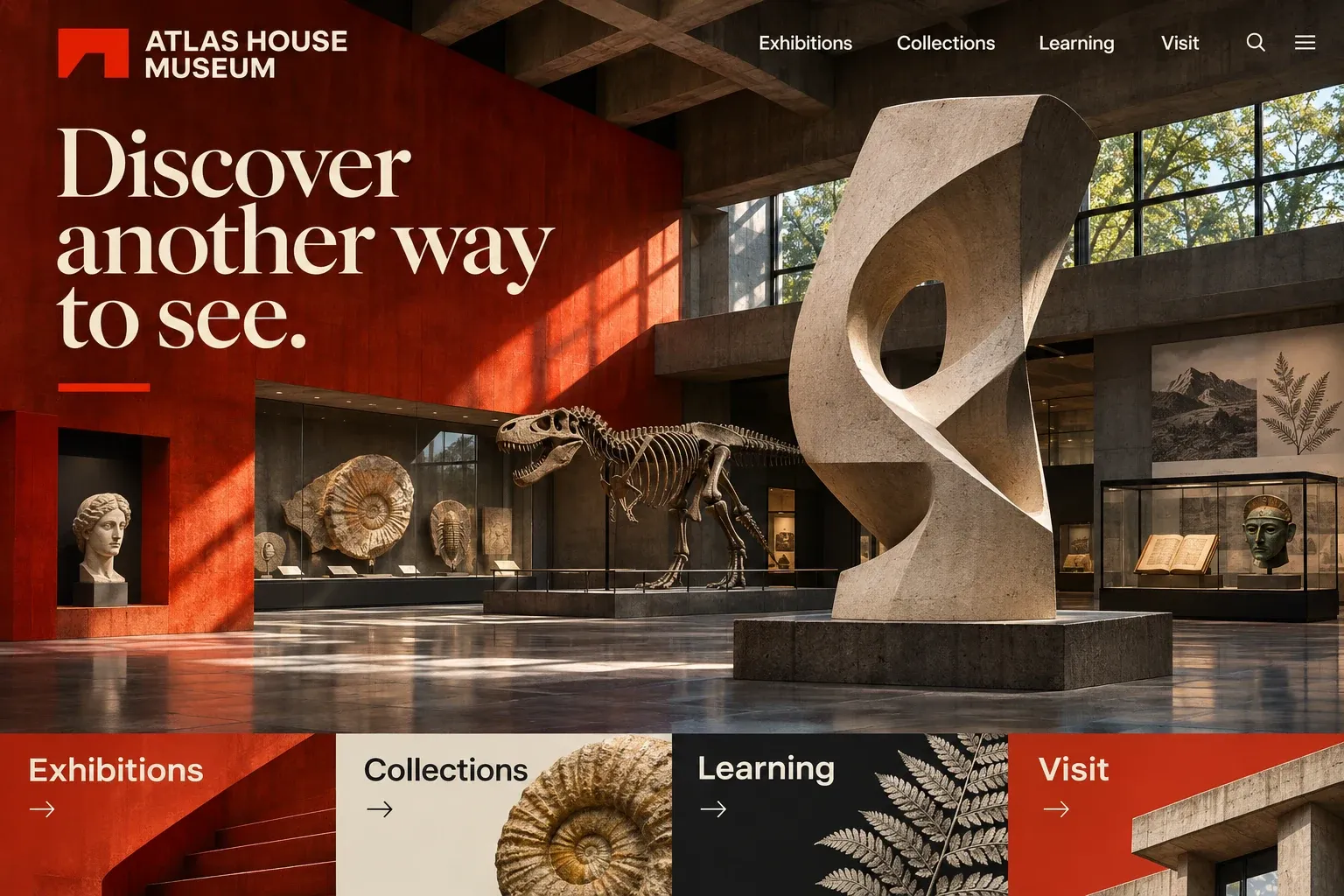
Web design for art galleries

Website design for art galleries.

Collectors and curious visitors check a gallery's website before they walk in: what is on view now, who the artists are, when the next opening happens, and how to ask about a work.

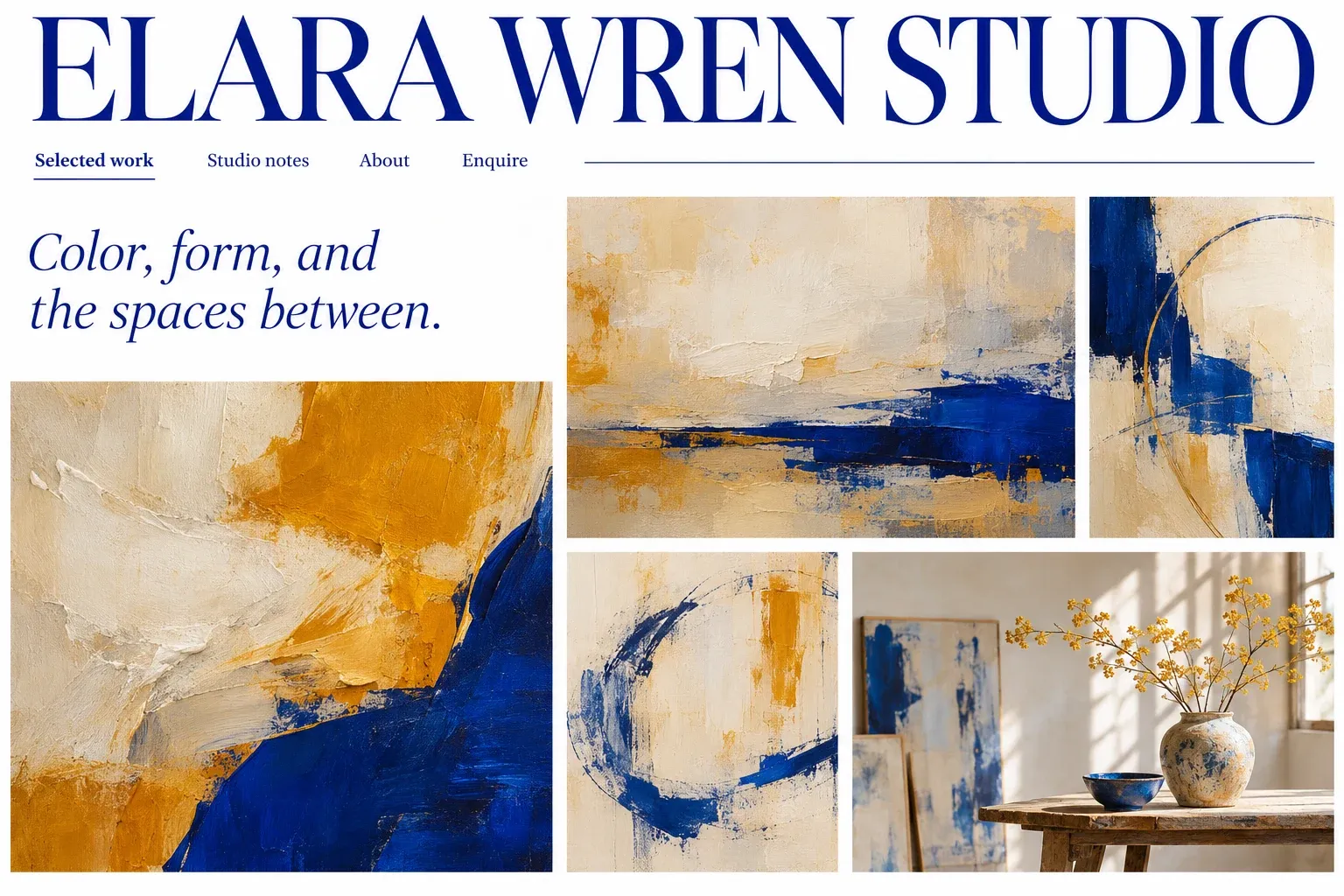
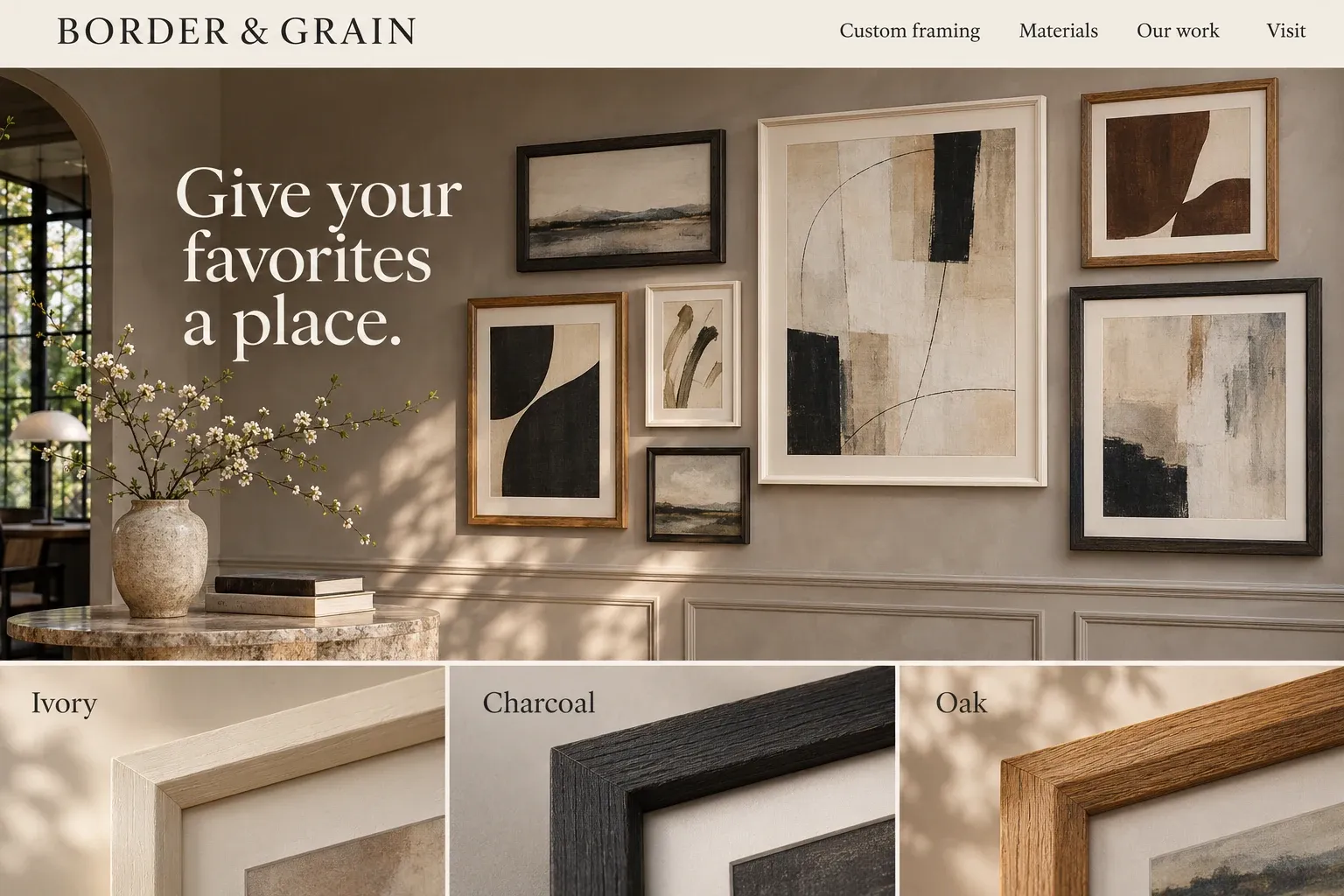
Website design concept for art galleries, an illustration
Illustration only: the design, business name and logo are made up to show the kind of website we can build. Not a real business or client website. Yours is designed from scratch around your brand.

Your customer's story

Seeing the show before stepping inside

Valeria and her partner are in town for a long weekend, and an art fair is on. Between fair visits they want to see a smaller gallery, somewhere they could actually talk to someone about the work. In the hotel lobby she searches for contemporary galleries nearby and opens a handful of links, scrolling with one hand while holding a coffee.

Several gallery sites show a beautiful home page but no sign of what is on view now. One gallery shows the current exhibition at the top, with dates, an installation view, a short curatorial text, and the list of works. The artist's page has a biography and earlier shows. The opening reception is on Saturday evening, the address is a short walk away, and the hours are plain.

They go on Saturday, meet the artist, and later email the gallery about a small drawing they saw on the checklist. An art gallery's website should do that kind of quiet work: show what is on the walls right now, introduce the artists properly, and make it easy to visit, attend, or ask about a piece.

Why it matters

Why art galleries need a website.

Gallery visitors decide where to go by what is on view. Collectors follow artists, visitors plan around openings and art fairs, and press and curators look for exhibition texts and images. A social media account shows glimpses but loses past exhibitions and artist histories within weeks, and a map listing cannot hold a checklist or a press release. The website becomes the gallery's record and its front door.

We build gallery sites around exhibitions and artists. Each show gets its own page with dates, installation views, a curatorial text, and a list of works, and it moves into an archive when it closes. Artist pages hold biographies, selected works, and past exhibitions. Openings and talks appear on an events calendar, and an inquiry form names the specific work a collector asks about.

What your customers search for

  • art galleries near me
  • art gallery Miami
  • contemporary art gallery
  • gallery openings this weekend
  • Wynwood art galleries
  • buy original art Miami

Your customers

What visitors and collectors look for on a gallery website

  • What is on view right now?

    The current exhibition at the top of the home page, with dates, an installation view, a short text, and the works included.

  • Who is this artist?

    Artist pages with a biography, a statement in the artist's own words, selected works, and past exhibitions at your gallery and elsewhere.

  • When is the opening?

    An events calendar for receptions, artist talks, and private views, with times, the address, and an RSVP link where you use one.

  • How do I ask about a work?

    An inquiry button next to each work that names the piece in the message, so a collector's question reaches you with the context.

What we build

What a website for art galleries should include.

  • Exhibition pages

    Dates, installation views, curatorial text, and a checklist of works for each show, kept as an archive afterward.

  • Artist profiles

    Biography, statement, selected works, and exhibition history for each represented or exhibited artist, written with their approval.

  • Openings and events calendar

    Receptions, talks, and private views with times and RSVP links, updated whenever a new event is confirmed.

  • Work inquiry form

    Collectors ask about a specific work by title, and the message arrives in your email with the details attached.

  • Press and archive

    Past exhibitions, press releases, and downloadable images for writers, curators, and fair organizers who need them.

  • Visit details

    Hours, appointment-only days, step-free access notes, parking, and how to find the entrance, stated plainly on one page.

Planning guide

What should an art gallery's website include?

An art gallery's website is both a front door and a record. It tells visitors what is on view today, introduces the artists properly, and keeps a history of every exhibition. Here is how we plan the pages for a gallery, how to present work, how collectors and visitors get in touch, and how the site helps people find the gallery.

Exhibitions and artists come first

Most visits start with one question: what is on now. Put the current exhibition at the top of the home page, then link to upcoming shows and the archive. Give each artist a page with a biography, statement, selected works, and exhibition history. Add an events calendar, a visit page, and a short about page on the gallery's program, its history, and the people who run it day to day.

Present the work with care

Install shots show scale and context, while individual images show detail. Use both, photographed well and color checked, with titles, dates, media, and dimensions. Write exhibition texts in clear language a newcomer can follow. Ask artists to approve their pages, and credit photographers. Avoid inflated claims about an artist's market or importance; serious collectors notice, and accurate information builds the gallery's standing.

Make inquiries specific and simple

Many sales start with a question about one work. An inquiry button beside each piece that fills in the title saves back and forth, and the message goes straight to your email. Some galleries share availability openly, others prefer to answer privately; the site can work either way, and you decide what appears.

Visitors need easy next steps as well: an RSVP link for openings, a mailing list signup for exhibition announcements, and a clear note when the gallery is open by appointment only. Keep the phone number tappable on every page for people standing outside a locked door on a Sunday afternoon, wondering whether anyone is inside.

Help visitors and press find the gallery

People search for art galleries near me, contemporary art gallery, and the names of artists they follow. Artist pages and exhibition pages with clear titles give search engines specific things to match. Keep your hours and address consistent on the site and your Google Business Profile, list openings there as well, and keep an archive of past shows online. That record helps writers, curators, and collectors find the gallery long after an exhibition closes.
In your market

Built for galleries in South Florida

South Florida's art calendar has a pronounced season, with major fair weeks in winter drawing collectors, press, and visitors from around the world. Gallery districts and neighborhoods change quickly, so clear directions and parking notes matter. Many visitors read Spanish or Portuguese, and seasonal collectors follow programs from afar. We plan exhibition pages, archives, and event calendars around that rhythm, and we can add a Spanish version of the site.

Questions

Questions art galleries ask us.

Should our gallery show availability on the website?

That is your choice. Some galleries list available works openly, others mark works as available on request and answer privately. The site can show either approach, or both for different shows, and each work can carry an inquiry button so collectors can ask without leaving the page.

Can we keep an archive of past exhibitions on the gallery site?

Yes, and we recommend it. Each exhibition page stays online after closing, moving into an archive with its dates, texts, images, and list of works. The archive shows the depth of your program and gives artists, writers, and collectors a lasting record to reference.

How do we handle artist approval for their gallery pages?

We draft each artist page from the biography, statement, and images you provide, then send it to you to share with the artist. Nothing goes live until you approve it. Corrections later are simple, so pages can grow as the artist's career does.

Can visitors RSVP for gallery openings through the website?

Yes. Each event links to the RSVP or ticketing tool you use, or a short form emails you the guest's name and party size. A mailing list signup on the same page lets visitors hear about the next opening without following you on social media.

Let's talk

Ready for a website built for art galleries?

Tell us about your business and we will come back with a clear recommendation and a fixed quote. No pressure, no jargon.

Trades we design for

See all 436 trades

436 trades

  • Plumbers website design concept
CallFree quote