Web design for auto paint shops

Websites that show the finish up close.

Paint customers want very different things. One needs a faded hood made to match, another wants a full color change, a third is restoring a car they have owned for decades. Each looks for proof you handle their kind of job.

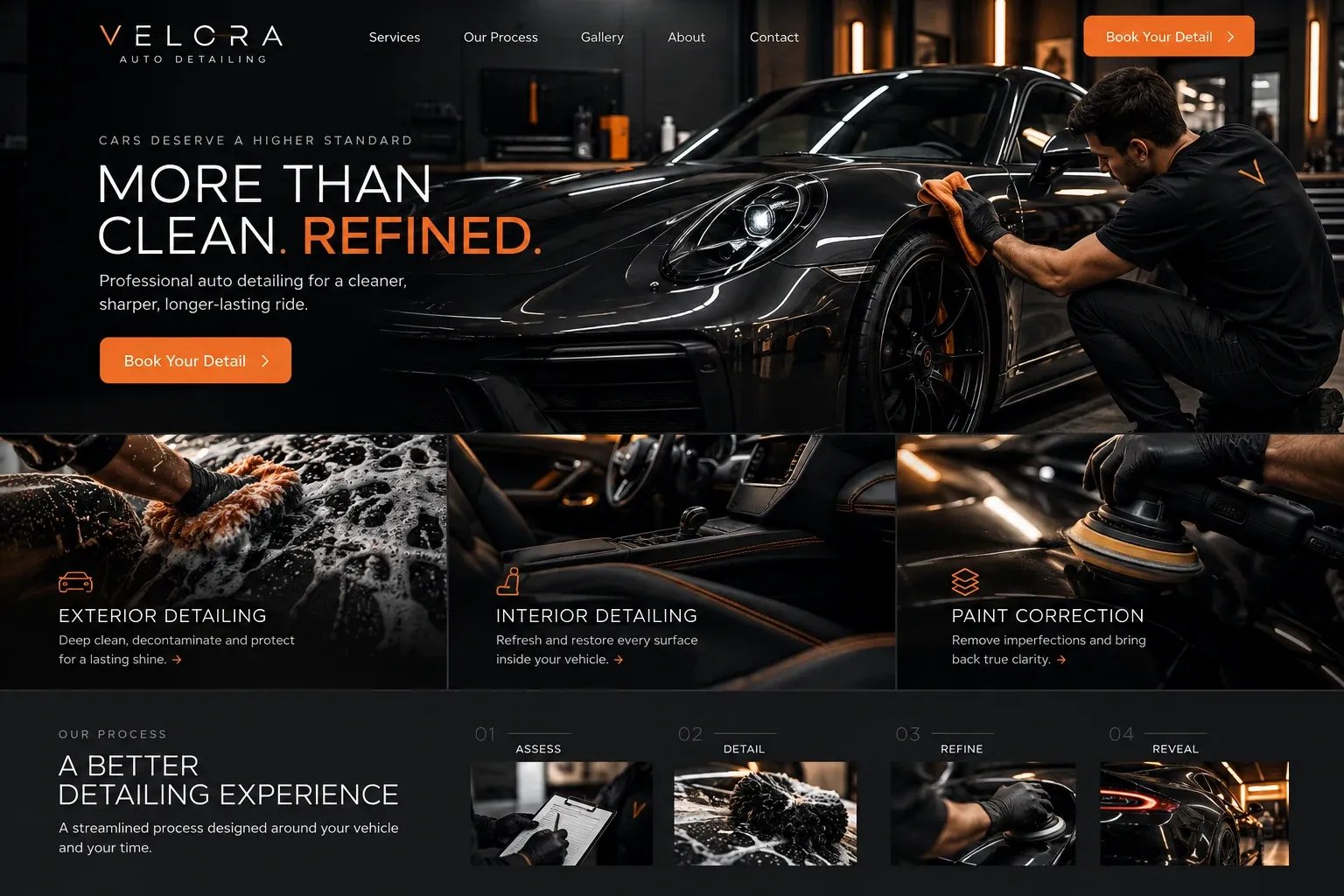
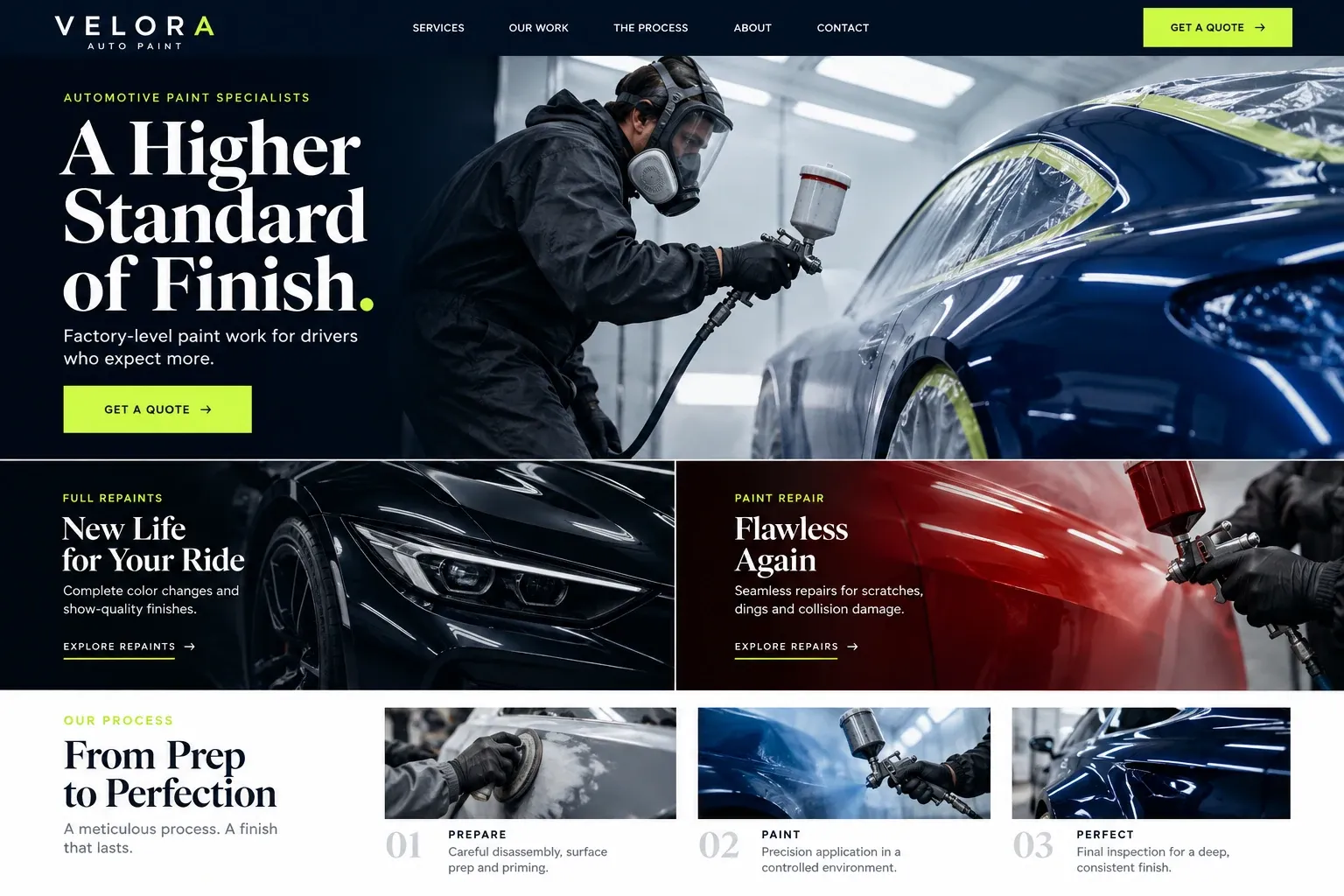
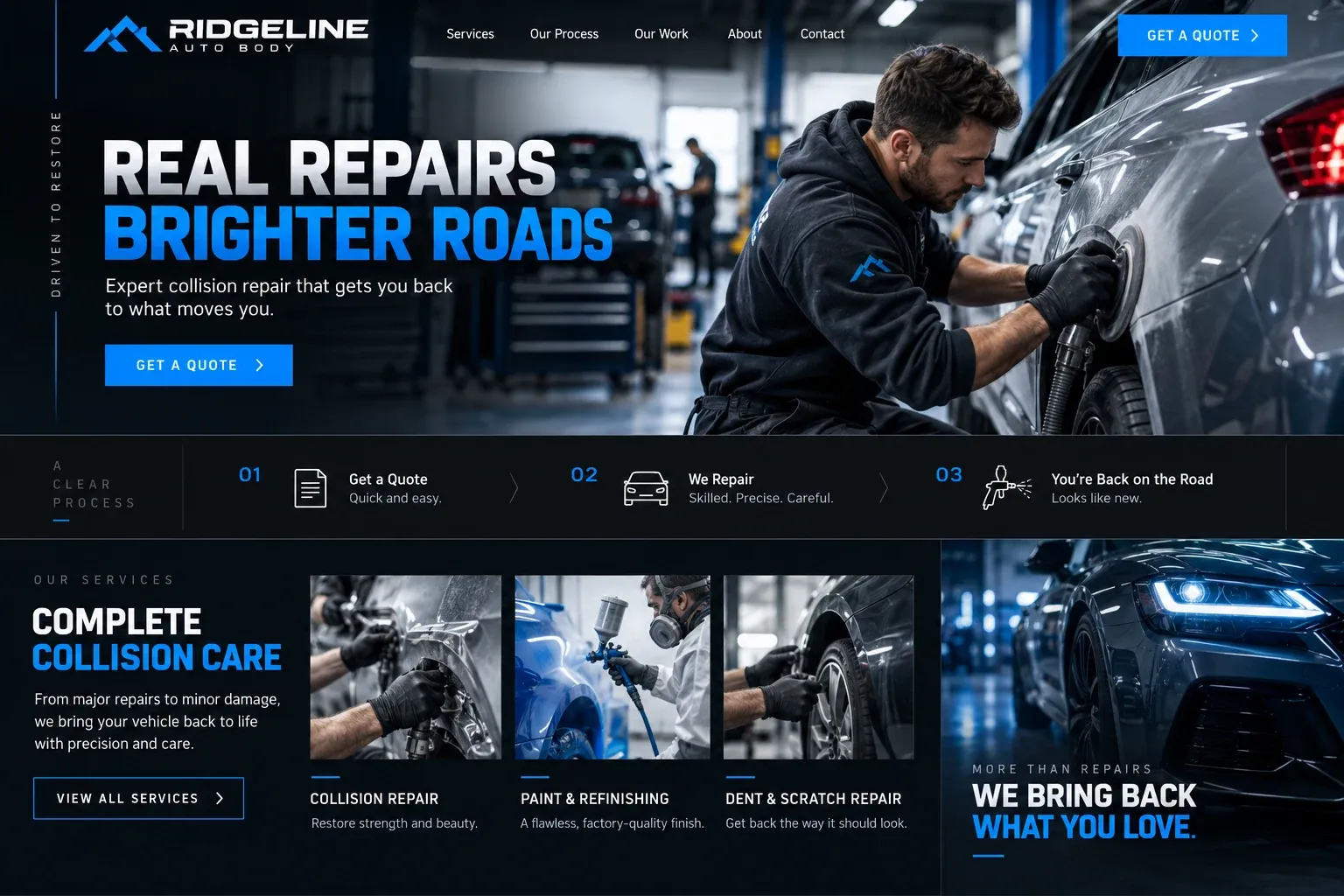
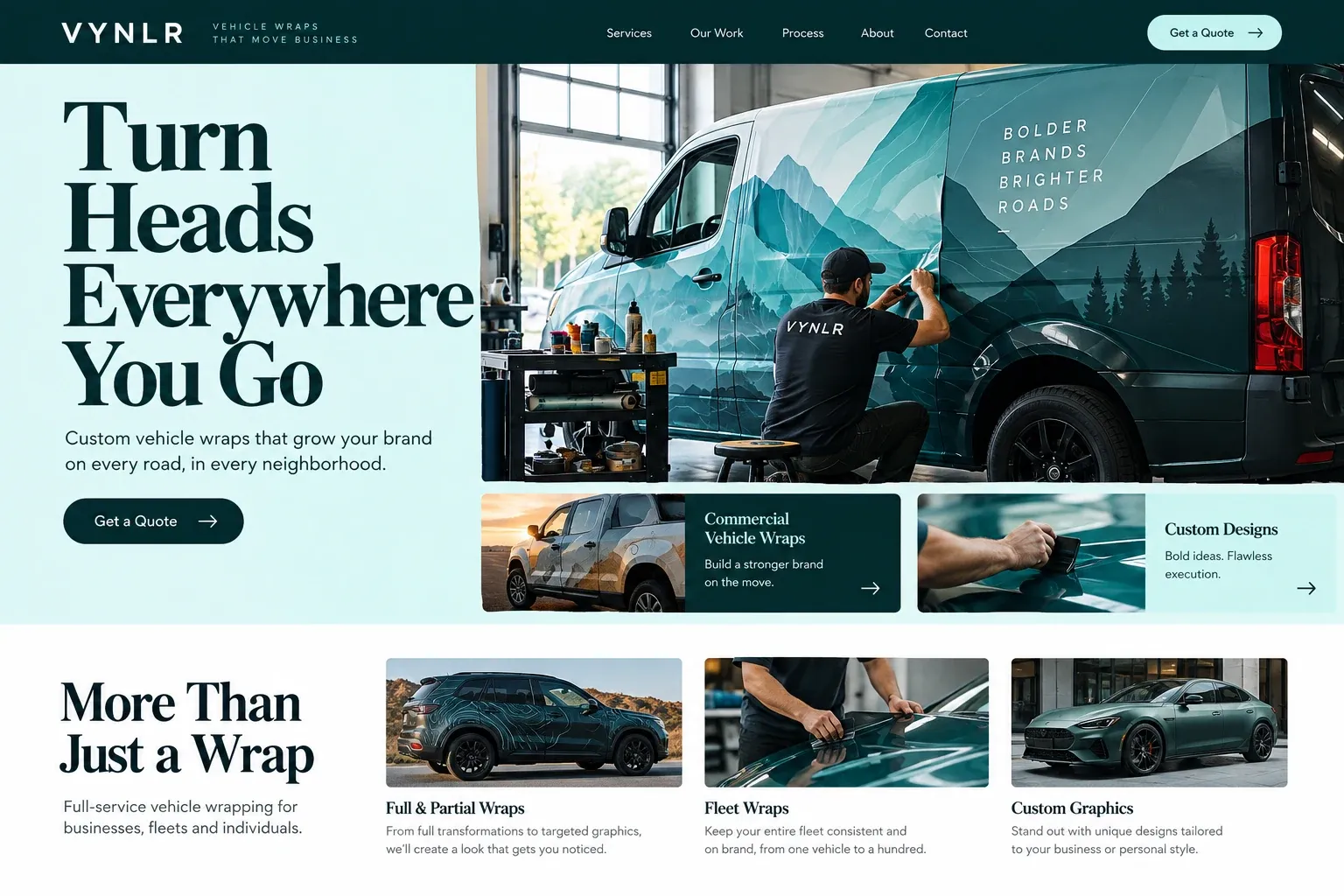
Fictional automotive paint shops website homepage design concept
A design concept for a fictional brand. Your site is designed from scratch around yours.

Your customer's story

A faded roof and a bigger idea

Ernesto bought his 1990s pickup from his uncle, and the Florida sun has turned the red roof and hood a chalky pink. At first he only wants those panels redone. Then he starts wondering about a full respray in a darker color, maybe with the original trim cleaned up. Sitting in the truck at lunch, he searches "auto paint shop near me" and "truck repaint cost".

The first shop's gallery is one shiny sports car after another, shot at night under colored lights. He cannot tell what was done to any of them. The second shop shows a pickup much like his in stages: sanded to bare metal in spots, primed, in the booth, and finished, with captions about rust repair, door jambs, and the clear coat used.

That shop also explains the difference between refinishing panels, a same-color respray, and a full color change, and has a form that asks about the vehicle, its condition, and what he has in mind. He uploads three photos. A paint shop's website persuades by showing the work behind the gloss, so the owner can see their own car in the process.

Why it matters

Why auto paint shops need a website.

Paint work is bought slowly and judged closely. Owners compare shops for weeks, zoom into photos, and ask friends at car meets. They want to see the preparation, not just the shine, because they know that is where quality lives. Social media posts show glossy finished cars, but they rarely explain what was done, separate repair refinishing from custom work, or capture the details a shop needs to answer an inquiry.

We build auto paint websites that make the process visible. Galleries are organized by type of job, with captions describing the prep, repairs, and finish. A page explains each stage in your shop, from teardown and sanding to booth, clear, and polish. The project brief form asks about the vehicle, its condition, the color goal, and how much of the car is involved, so your first reply is a useful one.

What your customers search for

  • auto paint shop near me
  • car repaint Miami
  • clear coat peeling repair
  • classic car restoration paint
  • custom car paint Miami
  • car color change paint

Your customers

What owners ask before trusting a shop with paint

  • Do you do my kind of job?

    Separate pages for panel refinishing, same-color resprays, color changes, and restorations, so each visitor lands on the work that matches their plans.

  • What happens before the paint?

    A plain walk through teardown, sanding, rust and dent repair, primer, and masking, with photos taken in your shop at each stage.

  • Can you match my color?

    A short explanation of how you match factory colors, blend into nearby panels, and test sprays before committing to the whole car.

  • How much of the car gets painted?

    Clear notes on what each type of job covers, such as door jambs, under the hood, and trim removal, so quotes compare fairly.

What we build

What a website for auto paint shops should include.

  • Galleries by job type

    Refinish, respray, color change, and restoration projects kept apart, each photographed in consistent light from the same angles.

  • Preparation explained

    A stage-by-stage page with shop photos, because prep is the part customers never see and most want to understand.

  • Color consultation page

    How color choices are discussed, from factory codes to custom mixes, metallic flakes, pearls, and finishes like matte or satin.

  • Project brief form

    Vehicle, condition, color goal, panels involved, and photo uploads, sent to your email as one organized request.

  • Paint or wrap comparison

    An honest page for owners weighing a respray against a vinyl wrap, written from your shop's point of view.

  • Booth and equipment photos

    Pictures of your paint booth, mixing room, and tools, which tell enthusiasts more than any claim about quality.

Planning guide

What should an automotive paint shop show on its website?

An automotive paint website has to sell something customers mostly cannot see: the hours of preparation under the color. It should separate the different kinds of paint jobs, show the process honestly, and help each visitor describe their project well. What follows covers the page structure, the photography, the inquiry form, and the local search basics for a paint shop.

Separate repair refinish from custom work

A driver who needs a bumper matched after a scrape and an enthusiast planning a color change are different customers. Give refinishing, full resprays, color changes, and restoration work their own pages, each with its own gallery and its own request button. If you also do clear coat repair or spot repairs for sun damage, that deserves a page too, since faded roofs and hoods bring in steady work.

Photograph the process, not just the result

Consistent photography makes a paint portfolio believable. Shoot finished cars in daylight or steady shop light, from the same angles each time, and add close-ups of reflections and edges. Then show the middle: bare metal, filler work, primer, masking, the car in the booth. Captions should say what was done, the type of finish, and anything unusual about the job.

Avoid photos that rely on dramatic lighting to hide flaws. Serious buyers notice, and they will trust a shop that shows a finished panel under plain light far more than one that only posts night shots. If a restoration took months, a short series of progress photos with dates tells that story better than a single glamour picture.

Turn inquiries into usable briefs

The contact form for a paint shop works best as a short brief. Ask for the year, make, and model, the current color and condition, the goal, and which areas are included, such as door jambs, engine bay, or interior edges. Let customers upload several photos and describe any rust or dents. You get enough to reply with real questions instead of a vague promise to look at it.

Explain how color consultations happen, whether in person with spray-out cards or by sharing paint codes first. People planning a big change like knowing they will see the color on a sample panel, outdoors and in shade, before it goes on the car. Say too whether they should bring the vehicle in for the first conversation or can start with photos.

Help local owners find your shop

Owners search for "car paint shop near me", "classic car restoration paint", or "clear coat repair". Pages for each service give search engines specific topics, and a Google Business Profile with real photos and reviews supports them. Mention the car clubs or events you attend only if you actually take part. Over time, a clear site gives a careful shop a fair chance of being found by the owners it wants.
In your market

Built for automotive paint in South Florida

Strong sun and salt air are tough on paint here. Roofs, hoods, and trunks fade and peel, and coastal cars show rust in seams and under trim. Humidity and summer heat also shape how and when paint work is done in the booth. South Florida has an active classic and custom car scene, plus many owners who prefer to discuss a project in Spanish. We write pages that speak to these local realities, and a Spanish translation of the site is available.

Questions

Questions auto paint shops ask us.

How should a paint shop organize its project photos?

By type of job first: refinish, respray, color change, and restoration. Within each, show the finished car from consistent angles plus a few process shots, with captions describing the prep and finish. That lets an owner find work like theirs quickly and see that you document what you do.

Should our auto paint site explain how color matching works?

Yes, briefly and in plain words. Owners worry that a repaired panel will look different from the rest of the car. A short page on paint codes, test sprays, and blending into nearby panels reassures them and also shows that your shop takes matching seriously.

Can customers upload photos of their car with a paint inquiry?

Yes. The project brief form accepts several photos along with the vehicle details, current condition, color goal, and areas to include. It all arrives in your email as one message, so your reply can address the actual car rather than a general question.

Can the website compare a full repaint with a vinyl wrap?

It can, as long as the page reflects your honest view. We write a short comparison with you covering durability, what each covers, how the original paint is affected, and what kind of owner usually chooses each. If you also offer wraps, the page links to that service.

Let's talk

Ready for a website built for auto paint shops?

Tell us about your business and we will come back with a clear recommendation and a fixed quote. No pressure, no jargon.

Trades we design for

See all 226 trades

226 trades

  • Plumbers website design concept
CallFree quote