Web design for auto body shops

Website design for auto body shops.

Nobody plans a collision. The driver who finds your site is shaken, dealing with an insurer for the first time in years, and wondering how long the car will be gone and whether it will look right again.

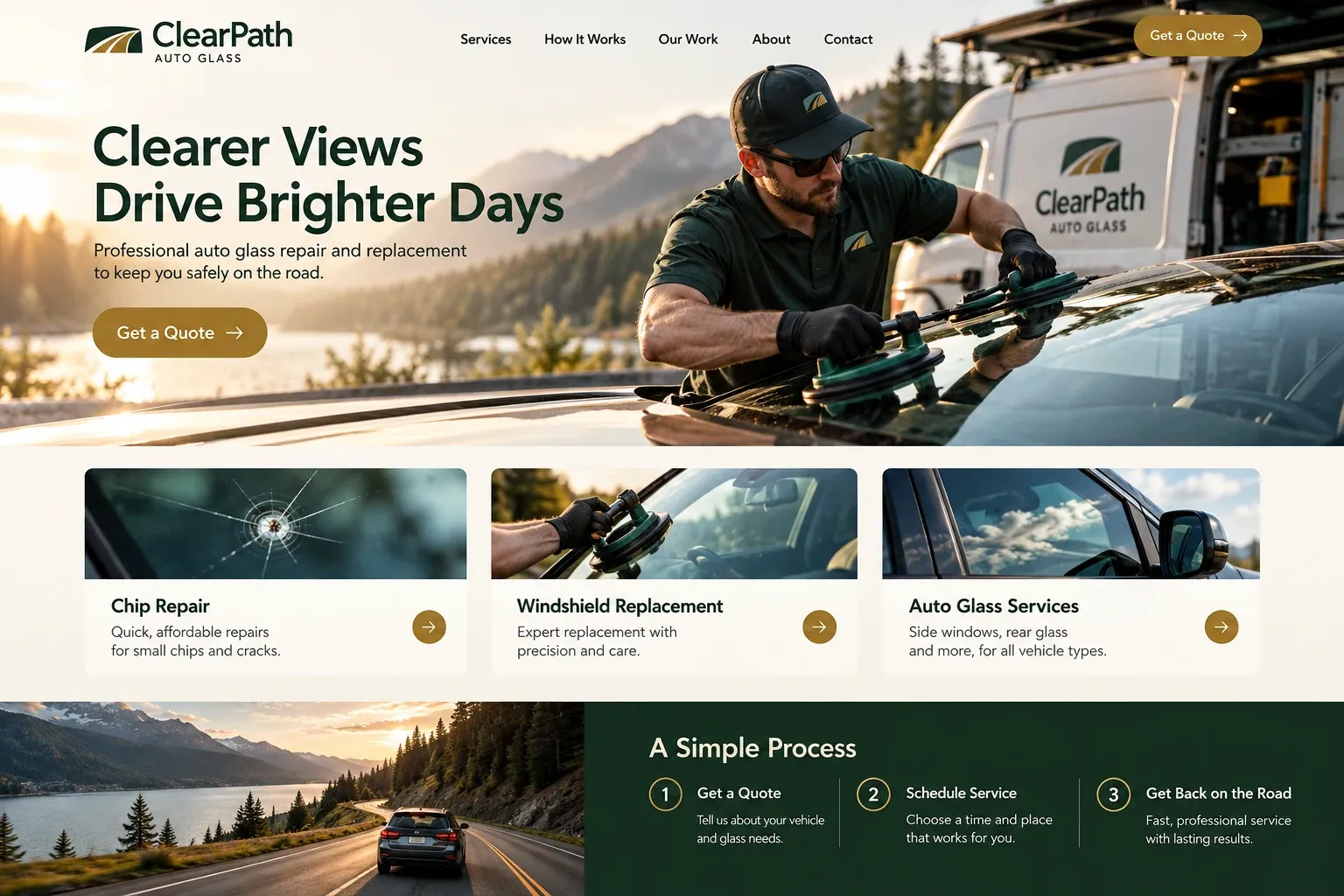
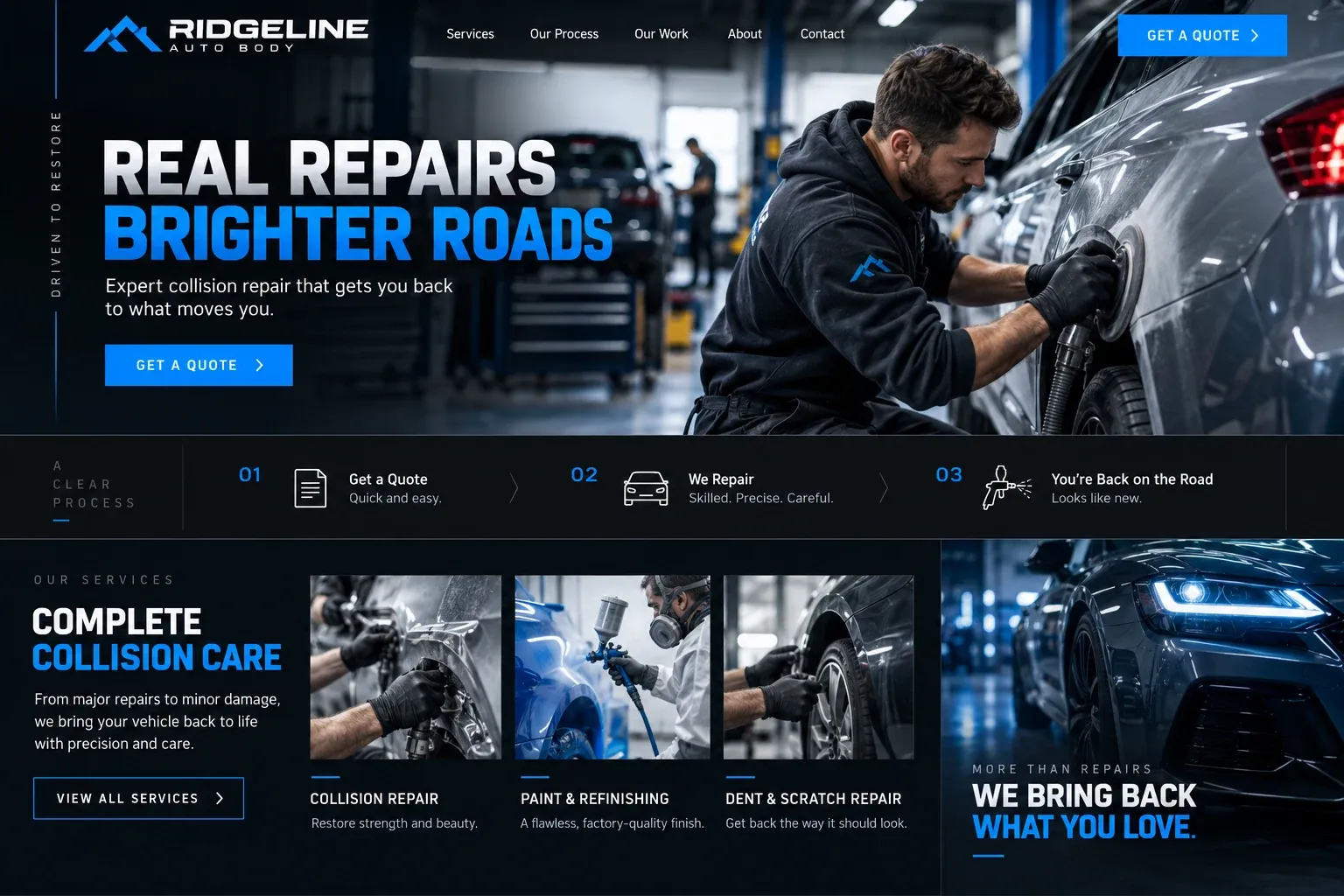
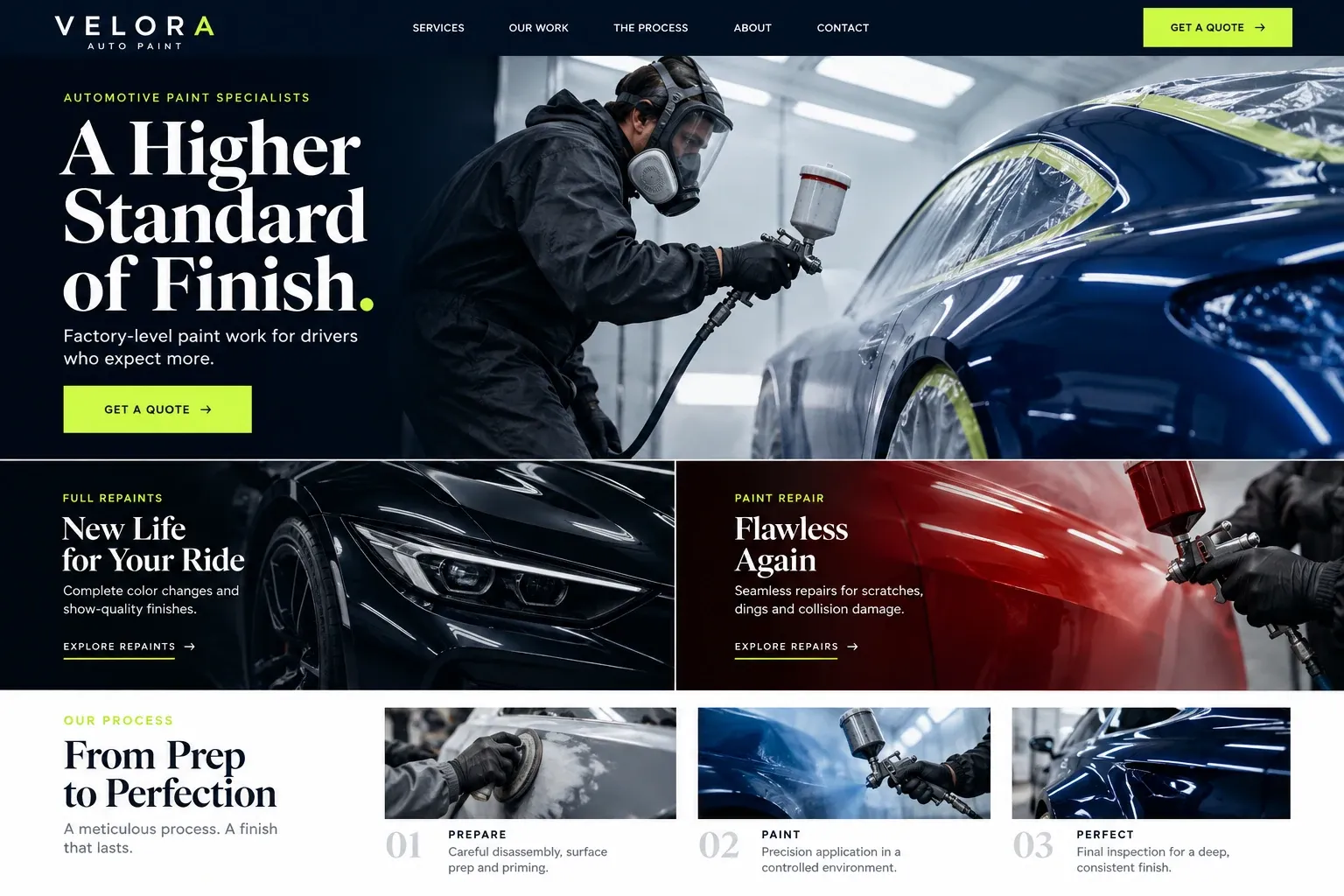
Fictional auto body shops website homepage design concept
A design concept for a fictional brand. Your site is designed from scratch around yours.

Your customer's story

A crumpled fender in a grocery store lot

Luz comes out of the supermarket in Westchester to find the rear quarter panel of her SUV pushed in and a note under the wiper with someone's insurance details. Nobody is hurt, which is the good news. The rest is a mystery to her: who calls whom, whether she needs several estimates, and how she will get to work while the car is being fixed.

That night she searches "body shop near me that works with insurance". Most results show glossy photos of sports cars. One shop has a page that walks through the repair in six stages, from the first estimate and the insurance claim to teardown, parts, paint, and final inspection. It explains that hidden damage sometimes appears once panels come off, and how the shop handles that with the insurer.

There is a form to send photos of the damage for a preliminary estimate, with a clear note that the final figure comes after an in-person look. She sends four pictures from her driveway. An auto body site earns trust by turning a stressful, unfamiliar process into steps a driver can follow, and by showing real repairs, not borrowed showroom shots.

Why it matters

Why auto body shops need a website.

Collision customers arrive confused. They are juggling an insurer, a rental, and a damaged car, and they search for a shop that will make the process less painful. They compare galleries, read reviews, and look for signs that you deal with insurance claims every day. A map listing gives them a phone number. It cannot explain your repair stages, show matching paint on a real repair, or take photos for an estimate.

We build auto body websites that walk the driver through the whole repair. Your process gets a clear stage-by-stage page. Galleries pair before and after photos with short captions saying what was repaired. An insurance page explains how you work with carriers, in terms you approve. A photo estimate form lets customers start from their driveway, with an honest note that an inspection may change the figure.

What your customers search for

  • auto body shop near me
  • collision repair Miami
  • body shop that works with insurance
  • bumper repair near me
  • paintless dent repair Miami
  • car scratch repair

Your customers

What drivers ask a body shop after an accident

  • Will you deal with my insurance?

    A plain page on how you work with insurers and adjusters, what the customer handles, and what happens if extra damage shows up during repair.

  • How long will my car be gone?

    A stage-by-stage guide with honest notes on what affects timing, such as parts availability, insurer approvals, and hidden damage found after teardown.

  • Will the paint match?

    Close-up photos of finished repairs taken in daylight, with captions explaining which panels were repaired, blended into the old paint, or replaced.

  • How do I get around meanwhile?

    Notes on rental arrangements you help coordinate, partner rental desks if you have them, and drop-off and pick-up hours.

What we build

What a website for auto body shops should include.

  • Repair stage guide

    Estimate, claim, teardown, parts, body and frame work, paint, reassembly, and inspection, each explained in a sentence or two.

  • Photo estimate request

    Customers upload pictures of the damage with their vehicle details, and the request lands in your inbox for a preliminary look.

  • Captioned before and after

    Real repairs shown in matching angles, each with a line on what was fixed, so the gallery informs rather than just impresses.

  • Insurance and claims page

    How you work with carriers and adjusters, written with you, without promises about what any insurer will pay.

  • Certifications and warranty

    Training and manufacturer certifications you currently hold, and your workmanship warranty, shown near the estimate buttons.

  • Dent and scratch pages

    Separate pages for paintless dent repair, bumper repair, and scratches, which bring in smaller jobs between collisions.

Planning guide

How should an auto body shop structure its website?

A collision repair site serves people on a bad day. It should calm them down, explain what happens next, and make it easy to start an estimate. Beyond the first visit, it also needs to show the quality of your work and help the shop appear when drivers search nearby. The guide below takes those parts in turn, page by page.

Map the repair from damage to delivery

The most useful page on a body shop site is a clear account of the repair journey. Start with the estimate and the insurance claim, then cover teardown, parts ordering, structural and body work, paint, reassembly, and the final check before handover. Explain supplements in everyday words: once panels come off, more damage may appear, and the shop then contacts the insurer before continuing.

Say how customers get updates during the repair, whether by text, call, or email, and how often. Silence while the car sits in the shop is a common complaint in body shop reviews, so a simple promise to keep owners informed, if you keep it, carries real weight. Name the person who will call them, too.

Use galleries that explain, not just shine

Before and after photos are your evidence. Shoot them from the same angle, in daylight, and caption each one: the vehicle type, the panels repaired or replaced, and any frame or structural work. Include ordinary repairs, not just dramatic ones, because most visitors have a dented door, not a rolled truck. Show certifications only where current, and link to your Google reviews instead of pasting quotes.

Start estimates with photos

A photo estimate form lowers the barrier for a nervous driver. Ask for the year, make, and model, the insurance company and claim number if there is one, and three or four pictures of the damage from different distances. State plainly that a photo estimate is preliminary and the final figure follows an in-person inspection. Keep a call button beside the form for people who would rather talk it through.

If you arrange towing from accident scenes or have rental partners nearby, give each its own short paragraph with a phone number. Mention whether a customer can drop the car off after hours and leave the keys. Those small practical details often decide which shop gets the car, because the driver is thinking about tomorrow morning, not about paint.

Show up when drivers search nearby

Collision searches are local and urgent: "body shop near me", "bumper repair", "dent repair". Separate pages for collision repair, paintless dent repair, bumpers, and paint give search engines specific matches. Keep your name, address, and phone identical on the site and your Google Business Profile, and ask every satisfied customer for a review. Search positions are never promised, but these basics help search engines connect the shop with nearby drivers who have just had a scrape.
In your market

Built for collision repair in South Florida

Heavy traffic, crowded parking lots, and sudden downpours keep body shops here busy all year, and intense sun makes faded and peeling clear coat a steady second line of work. After major storms and street flooding, shops also field calls about fallen branches and water-damaged vehicles. Drivers and adjusters often switch between English and Spanish in the same conversation. We write your repair guide and insurance page for local drivers and can publish the whole site in Spanish too.

Questions

Questions auto body shops ask us.

Can customers send damage photos through our body shop website?

Yes. The estimate form accepts several photos along with the vehicle details, insurance company, and claim number. It arrives in your email ready for an estimator to review. We add a clear line that a photo estimate is preliminary and that the final figure follows an inspection at the shop.

How should our collision repair site talk about insurance companies?

Factually and carefully. We describe how you work with insurers and adjusters, what the customer needs to provide, and how hidden damage is handled, without claiming any insurer will approve a repair. If you hold relationships with particular carriers, you tell us which ones and how you want them described.

What makes a good before and after gallery for an auto body shop?

Matching angles, daylight, and honest captions. Show a range of everyday repairs, such as bumpers, doors, and quarter panels, along with larger jobs. Each image gets a line on what was repaired or replaced. We can launch with a few and add new repairs as you send them.

Should our body shop list I-CAR or manufacturer certifications?

If you hold them, yes, because drivers and some insurers look for them. We place current certifications on the home page and the repair process page, with the certifying body named correctly. We leave off anything expired or pending, so the site stays accurate when customers check.

Let's talk

Ready for a website built for auto body shops?

Tell us about your business and we will come back with a clear recommendation and a fixed quote. No pressure, no jargon.

Trades we design for

See all 226 trades

226 trades

  • Plumbers website design concept
CallFree quote