Planning guide
What should a bait and tackle shop's website include?
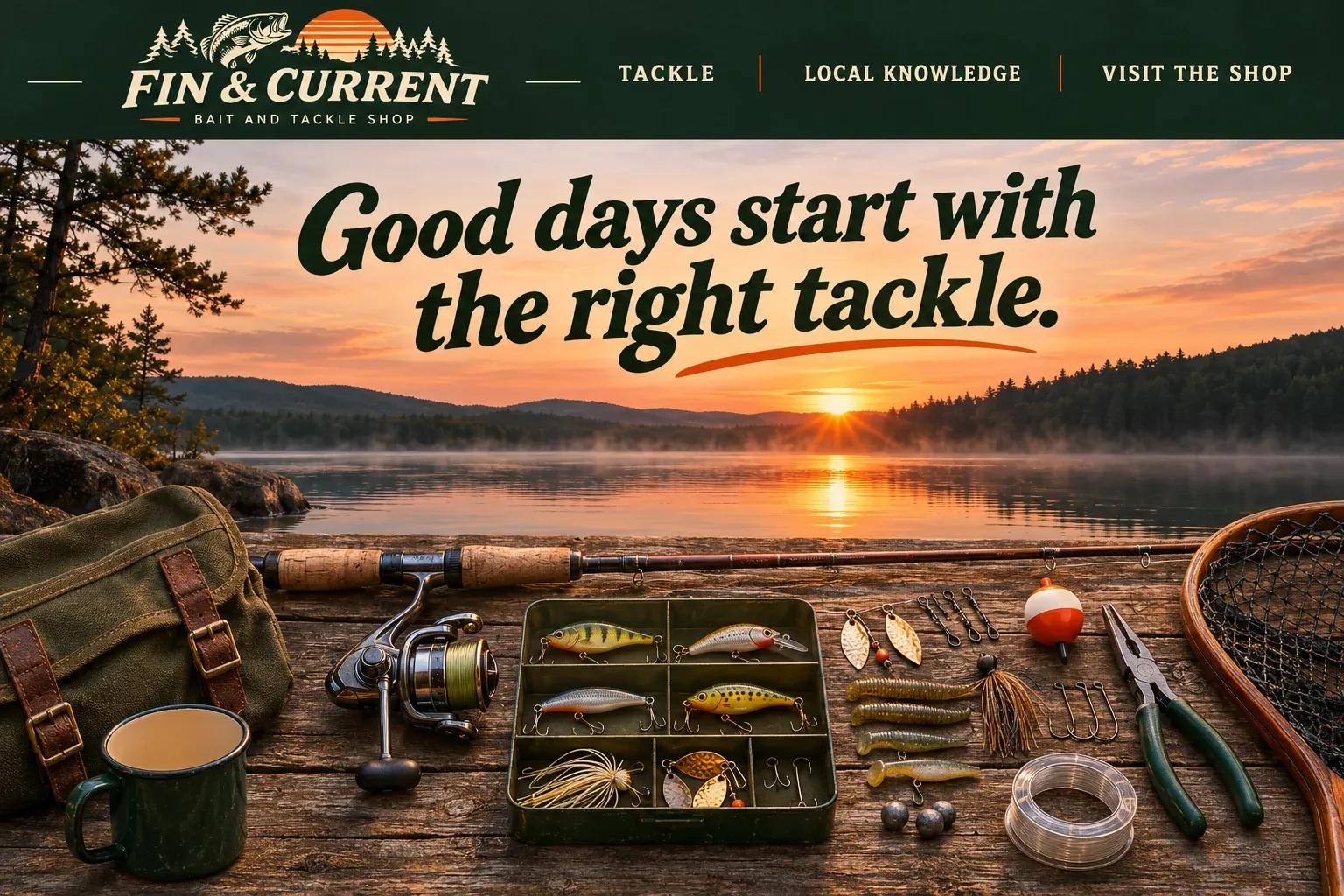
A bait and tackle shop's website does not need to be big. It needs to be current, fast, and useful at four in the morning, when most of your customers are deciding where to stop. Here is how we plan the pages, what to show, and how the site helps a shop get found by local regulars and visiting anglers alike.
Put hours and bait first
The two questions every angler asks are whether you are open and whether you have bait. Put your hours, by day, at the top of every page, and keep them current, including holidays and seasonal changes. A live bait page that lists what you usually carry, and invites people to call and check the day's supply, saves wasted trips and wins the early customers who spend the most.
Show the shop and what you carry
Photos of your bait tanks, tackle walls, rods, and counter show anglers they will find what they need. Arrange tackle categories the way people fish: inshore, offshore, surf, bridge, and freshwater. List the brands you carry if they matter to your customers. Add pages for services like reel repair, line spooling, and custom rigs, which bring people back between trips and build loyalty with regulars.
Share local knowledge, carefully
A short fishing report is one of the best reasons to visit your site again. Note what is being caught nearby, tides, and water conditions, written by you or your staff. Keep it honest and date each update. Link to the state's official fishing regulations rather than restating limits, so anglers always see the current rules.
If you sell licences, host tournaments, rent kayaks, or take special orders, give each its own short section. A shop enquiry form for special orders and repairs, with an option to attach a photo of a reel or part, keeps those requests organized and out of your counter conversations during the morning rush.
Help anglers on the road find you
Many customers are traveling to fish, searching for bait near a bridge, a ramp, or a beach. Mention those landmarks on your site, keep your details consistent with your Google Business Profile, and update hours there too. Ask regulars for reviews. A clear, current website gives a local shop a fair chance to be the first stop for visiting anglers who have never driven past it.