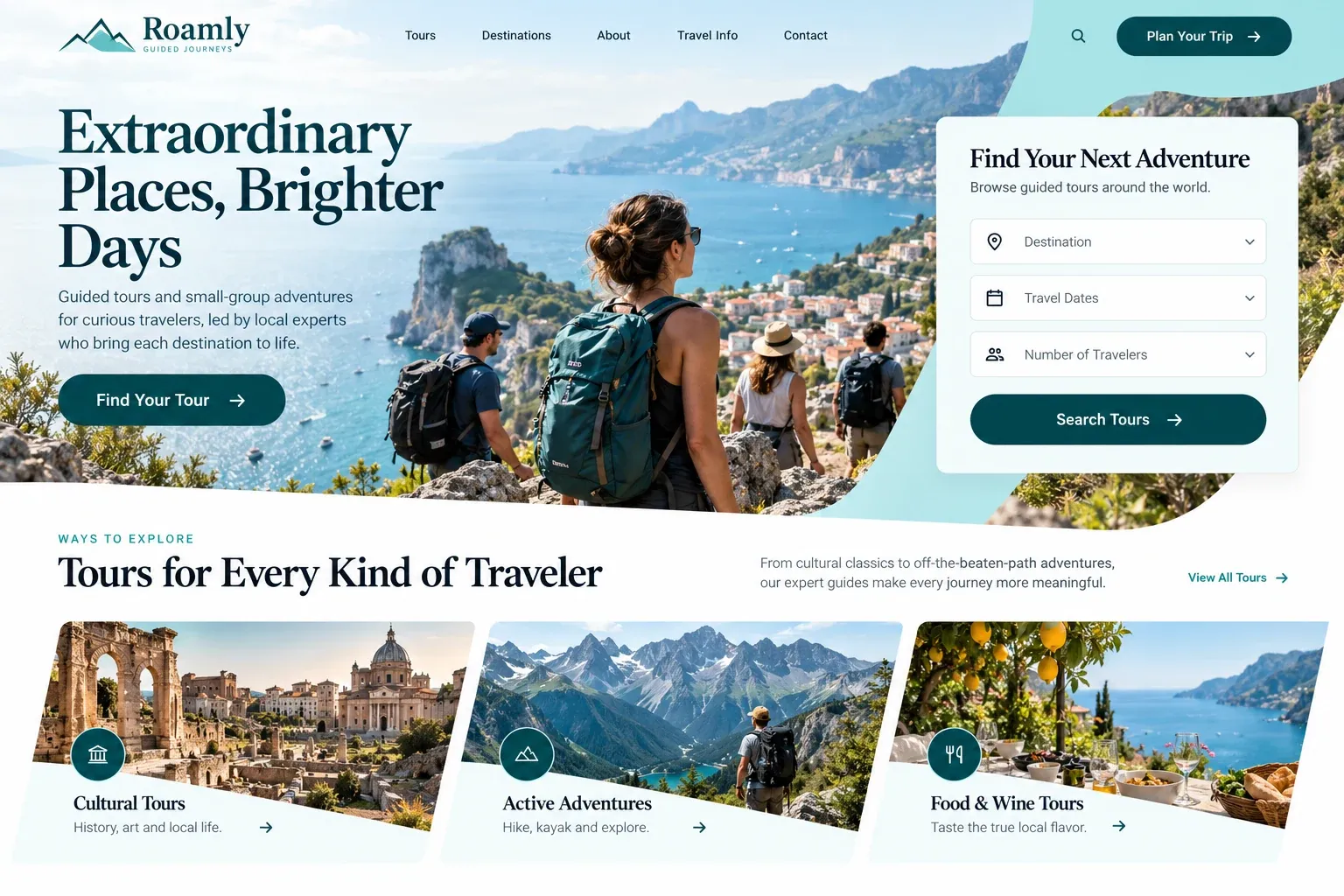
Web design for tour guides and operators

Websites that help travelers picture the tour.

Visitors have a few free hours and dozens of tours to choose from. They pick the one they can picture: where it starts, what they will see, who leads it, and whether it suits everyone in the group.

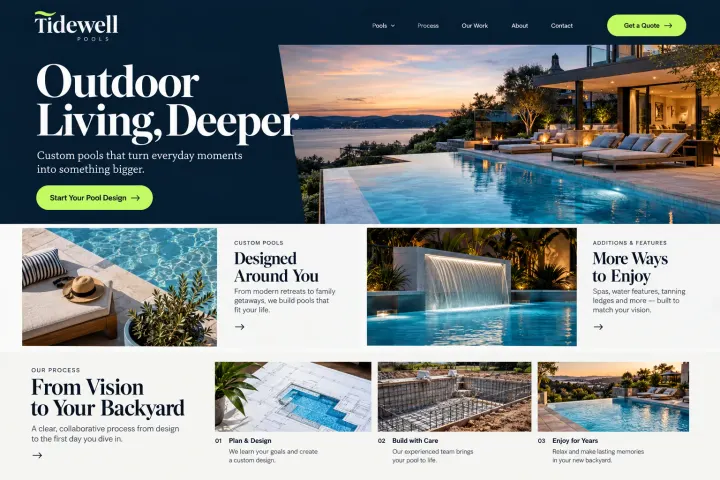
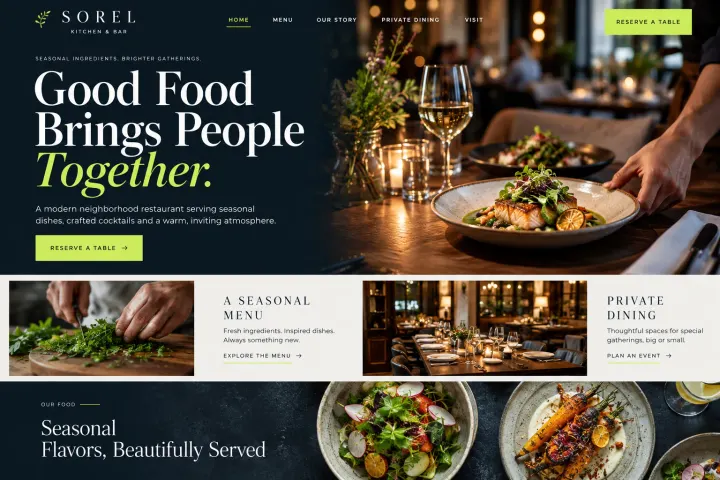
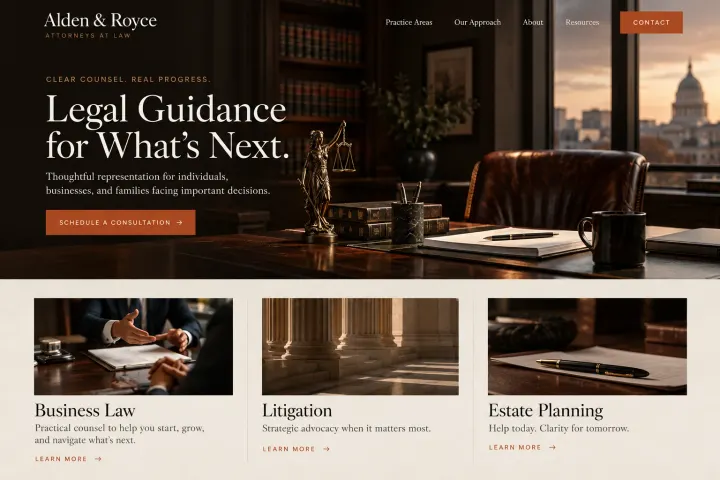
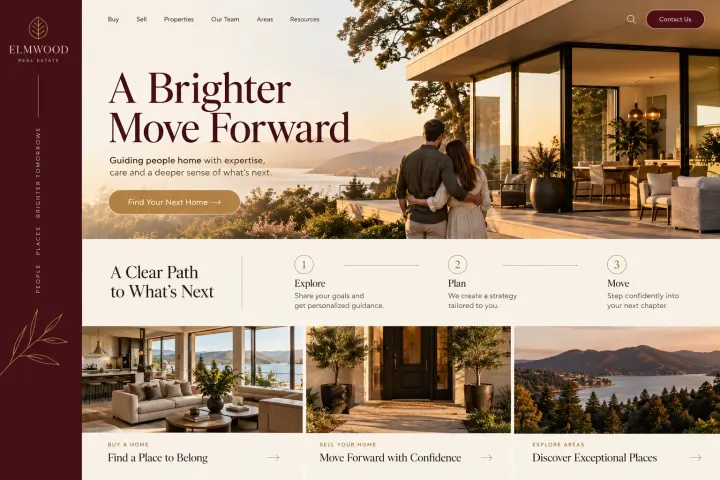
Fictional tour guides and tour operators website homepage design concept
A design concept for a fictional brand. Your site is designed from scratch around yours.

Your customer's story

One free afternoon, too many choices

Sophie and her brother Mateo are in Miami for a conference, with one free afternoon before their flight home. Mateo wants the Everglades, Sophie wants food, and their mother, who came along, cannot walk far. Over breakfast in the hotel they search "best tours in Miami" and get a wall of listings from booking sites that all look the same.

They open a few operators' own websites. One has a tour title and a price, nothing else. Another has a page for each tour with a map of the route, the duration, the meeting point with parking notes, what is included, what to bring, and a clear note on walking distance. A short profile introduces the guide, who grew up in Little Havana and speaks Spanish and English.

They book the food walk for the afternoon through a calendar on the page, choosing the version with less walking. A tour operator's website should help visitors imagine being there and plan the practical side at the same time: an itinerary they can follow, details that answer the awkward questions, and a booking path that works on a phone in a hotel lobby.

Why it matters

Why tour guides and operators need a website.

Travelers find tours through booking marketplaces, review sites, and searches on their phones, often the day before or the morning of. They compare a handful of experiences on what they will see, how long it takes, where it starts, and who leads it. Marketplaces show the basics but take a commission and present your tour beside dozens of rivals. Your own site is where travelers meet your guides and book directly.

We build tour operator websites where every tour has its own page: highlights, route, duration, meeting point, inclusions, what to bring, and suitability notes you supply. Guide profiles add personality. Booking connects to the system you already use, such as FareHarbor or Peek, so availability stays accurate. Private and group tours get their own inquiry form for schools, companies, and families.

What your customers search for

  • things to do in Miami
  • Everglades airboat tour
  • Little Havana food tour
  • miami boat tour
  • walking tours near me
  • private tour guide Miami

Your customers

What travelers ask before booking a tour

  • What will we actually see?

    A tour page with highlights, a simple route map, and photos from real tours, so visitors can picture the experience in order.

  • Where do we meet, and for how long?

    The exact meeting point with a map link and parking notes, start times, duration, and where the tour ends.

  • Is it right for our group?

    Suitability notes you provide: walking distance, age limits, accessibility, what happens in bad weather, and what to wear or bring.

  • Who is our guide?

    Guide profiles with photos, languages spoken, and a few lines on what each one loves to show visitors.

What we build

What a website for tour guides and operators should include.

  • A page for each tour

    Highlights, route map, duration, inclusions, and photos, so every tour can be found and booked on its own.

  • Meeting point details

    Exact location, map link, parking, landmarks, and arrival time, so groups find the guide without phone calls.

  • Guide profiles

    Photos, languages, and backgrounds of your guides, which turn a listing into people travelers want to meet.

  • Booking calendar connection

    Your FareHarbor, Peek, or other booking calendar linked or embedded on each tour page, with live availability.

  • Weather and cancellation policy

    How rain, storms, and rough water affect tours, and how rebooking or refunds work, in plain words.

  • Private and group inquiries

    A form for schools, companies, and families wanting a private tour, asking date, group size, and interests.

Planning guide

What should a tour company's website include?

A tour website has to inspire and inform in the same scroll. Travelers want to imagine the experience, check the practical details, and book on a phone, often on short notice. Here is how we plan a tour operator's site, what each tour page needs, how booking should work, and how the site helps visitors searching for things to do find your tours.

Give each tour a complete page

Each tour deserves its own page with a clear title, highlights, a simple route or itinerary, duration, start times, the meeting point, and what is included. Add photos from real tours in the order travelers will experience them. Pages for each tour also match the specific searches visitors make, such as an airboat tour, a food tour, or a sunset cruise, far better than one long list.

Answer the awkward questions plainly

Travelers hesitate when they cannot tell whether a tour suits them. State walking distance, minimum ages, accessibility, what to wear and bring, and what happens in heat, rain, or rough water, using the information you supply. Explain your cancellation and rebooking policy simply. Clear suitability notes prevent bad reviews from guests who chose the wrong tour, and they reassure families and older travelers.

Licenses and insurance matter to many travelers, especially for boat and adventure tours. Show the licenses and insurance your business holds, such as a captain's credentials where your tours run on the water. Precise facts build more trust than slogans, and they answer the question before anyone has to ask.

Connect booking and private tours

Most operators already use a booking platform for calendars, payments, and waivers. The website should link to or embed it on every tour page, so availability stays accurate and travelers book in a few taps. Private tours for schools, companies, and families need a separate inquiry form that asks for the date, group size, interests, and any accessibility needs, so you can design and quote the right experience.

Be found by visitors looking for things to do

Visitors search things to do plus a place, or a specific experience such as an Everglades tour or a walking tour of a neighborhood. Tour pages, guide profiles, and a page about the areas you cover give search engines clear matches. Keep your details consistent with your Google Business Profile, add photos there, and reply to reviews. No one can promise rankings, but this gives good tours a fair chance.
In your market

Built for tours in South Florida

Tours here range from airboat rides in the Everglades and boat trips across Biscayne Bay to Art Deco walks, street art tours, and food tours in Little Havana. Visitors come from across the world, cruise passengers often have only a few hours, and many guests prefer Spanish or Portuguese. Heat, afternoon storms, and hurricane season shape schedules and cancellations. We can add a Spanish version of the site and write tour pages that answer weather and suitability questions clearly.

Questions

Questions tour guides and operators ask us.

Can our tour website connect to FareHarbor or Peek?

Yes. We link to or embed your booking platform on each tour page, so travelers see live availability and book without leaving the site. Payments, waivers, and confirmations stay in the system you already use, and we style the pages around it.

How should we write tour itineraries without overpromising?

Describe the route and highlights you include on most tours, and note what can change, such as wildlife sightings or stops affected by weather. We write from your notes and avoid promises you cannot keep, and you approve every line before the page goes live.

Should a tour operator website have guide profiles?

Yes, if your guides are a reason people choose you. A photo, languages spoken, and a few lines on their background and favorite stops turn a tour into people travelers want to meet. Reviews that mention guides by name connect well with these profiles.

Can the tour site handle private and group bookings?

It can collect them. A private tour form asks for the date, group size, interests, and any accessibility needs, and emails you. Once you agree on details, you can send a booking link or invoice from the platform you already use.

Let's talk

Ready for a website built for tour guides and operators?

Tell us about your business and we will come back with a clear recommendation and a fixed quote. No pressure, no jargon.

Trades we design for

See all 226 trades

226 trades

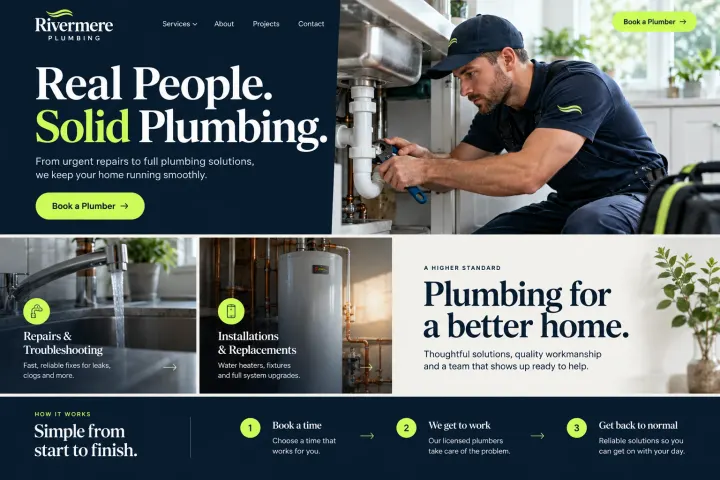
  • Plumbers website design concept
CallFree quote