Planning guide
How should a commercial real estate firm organize its website?
Commercial clients arrive with requirements, not daydreams. A distributor needs loading doors, a medical group needs parking and the right zoning, and an investor needs income figures. A good commercial site answers those first questions quickly and leads to a broker who can answer the rest. These notes cover structure, listings, inquiries, and search.
Sort by property type and client side
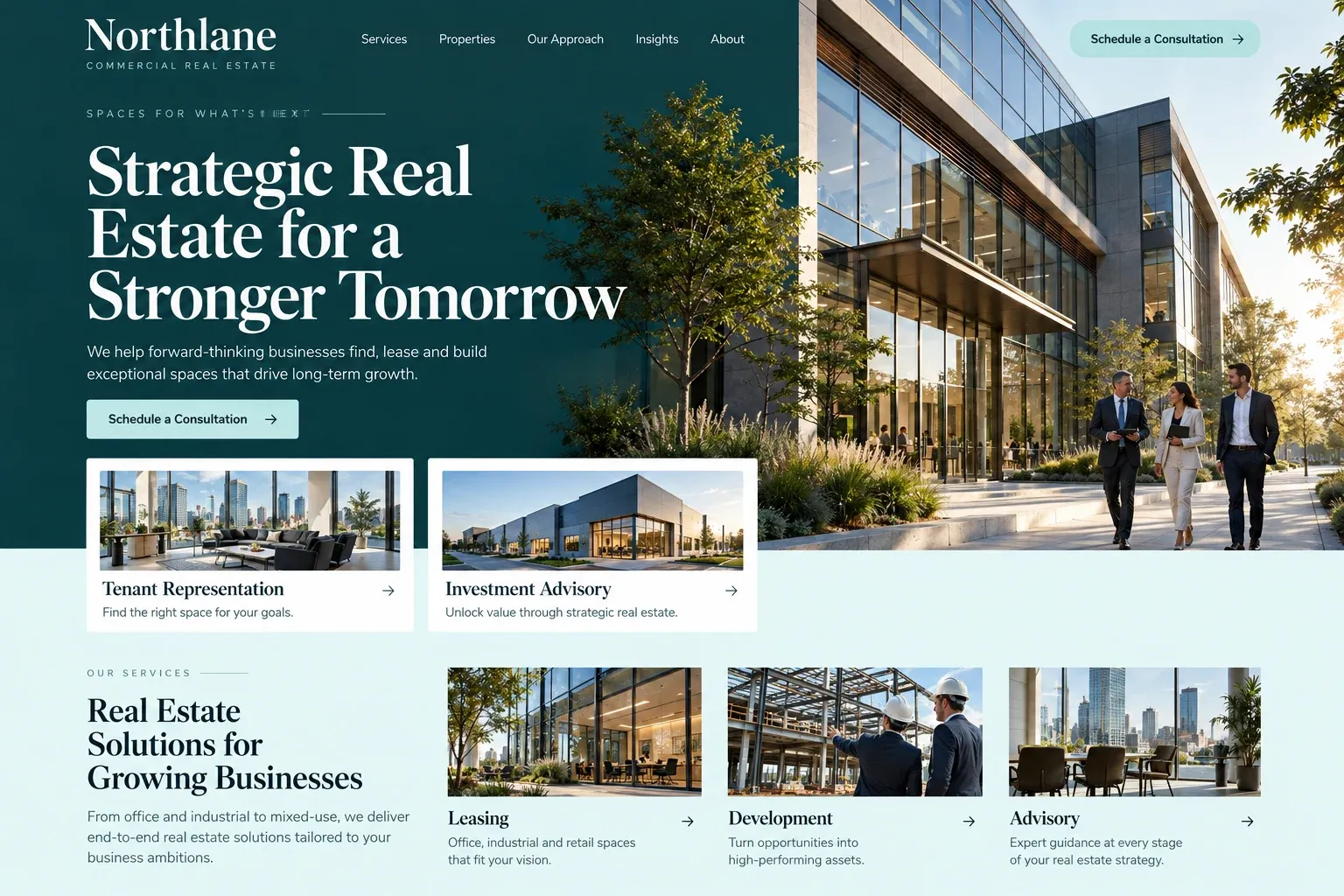
A commercial site needs two ways in. One is by property type: office, retail, industrial, land, and investment. The other is by who the visitor is: a tenant looking for space, an owner who wants a building leased or sold, or an investor. Pages for each service, an about page with your history in the market, broker profiles, and a contact page complete the structure.
Publish specifications you can stand behind
Prospects compare buildings on numbers, so give every listing the same set: square footage, ceiling height, loading, parking, power, zoning, and asking terms where you publish them. Mark anything that comes from the owner and has not been checked. A downloadable flyer helps people forward the property to partners. If you list on a national platform, the site can link to it, but your own page should carry the essentials and your broker's name.
Route inquiries to the right broker
A tenant asking about a retail bay and an investor asking about a cap rate should not land in the same queue. Give each listing a form or a direct line to its broker, and add a general requirements form for people who have not found the right property yet. Ask for use, size range, location, timing, and contact details. Keep it short enough to fill in on a phone between meetings.
Confidential material, such as offering memorandums and rent rolls, can sit behind a request form. Your team receives the request, sends a confidentiality agreement if you use one, and releases the documents by email. The website collects the request; it does not replace your own process for deciding who sees what.
Show up for submarket searches
Commercial searches tend to be specific: warehouse for lease in Doral, retail space in Wynwood, office space in Brickell. Pages about the submarkets you work in, with your current listings and what tenants there usually ask for, give search engines something real to match. Keep the firm's details consistent with your Google Business Profile and invite tenants and owners you have represented to review you. None of it promises a ranking, but it gives a firm with real expertise a fair way to be found.