Web design for concrete contractors

Concrete websites that explain what happens before the pour.

A finished slab hides most of the work that went into it: the grading, the base, the forms, the slope that sends rain away from the door. Customers comparing concrete quotes rarely know to ask about any of it.

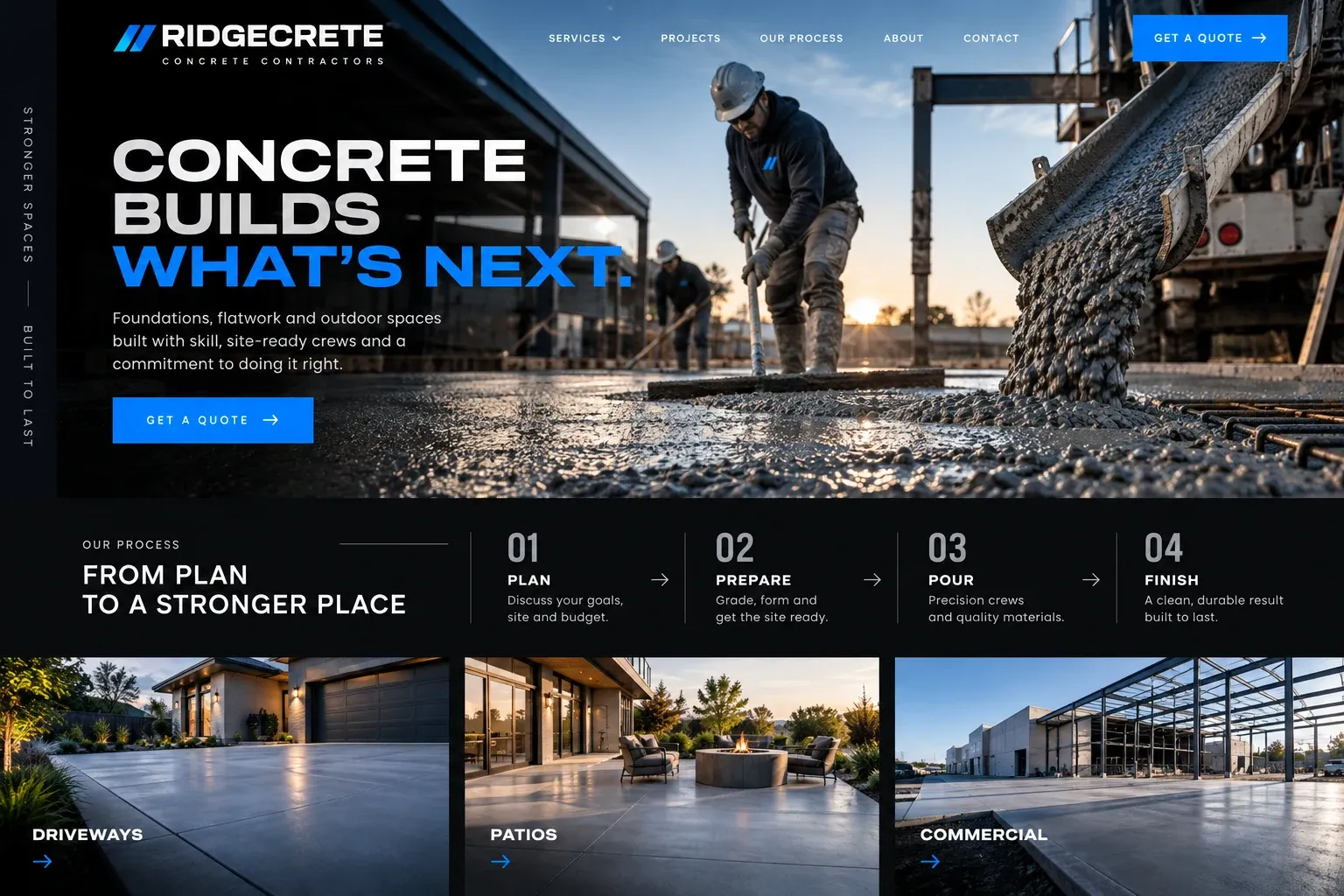
Fictional concrete contractors website homepage design concept
A design concept for a fictional brand. Your site is designed from scratch around yours.

Your customer's story

Where the rain pools by the back door

Every time it rains, a wide puddle forms outside Marisol's sliding door and stays for a day. The patch of yard beyond it is half sand, half tired grass, and the plastic table sinks a little more each month. She and Kevin want a real patio there, big enough for the grill and a table for eight on Sunday afternoons. Kevin measures it with a tape and calls it simple.

Marisol searches for concrete contractors that night. Several sites show a single gray slab and a phone number. One shows finishes side by side with their names: broom, stamped, exposed aggregate, salt. Each project photo includes the edge where the patio meets the house. A page on preparation mentions slope, compacted base, and keeping water away from doors. She looks back at the puddle outside the glass.

Its estimate form asks the questions Kevin skipped: what is on the ground now, whether a truck can reach the backyard or the concrete will need to be pumped, and where water goes in a storm. They send it with two photos. A concrete contractor's website should make the point this one makes: a clean surface starts with planning the customer never thought about.

Why it matters

Why concrete contractors need a website.

Concrete buyers often compare contractors on one number, because the work that separates a lasting slab from a cracked one happens underground or before the pour. Grading, base, reinforcement, joints, and drainage are invisible in a finished photo and missing from most listings. A social media post shows a fresh driveway on the day it was poured, not how it looks after a few rainy seasons. Your website is where that difference can be explained.

We build concrete contractor websites that show the planning as well as the surface. Service pages cover driveways, patios, pool decks, sidewalks, and slabs. A preparation page walks through the stages with photos from your jobs. Finishes are labeled so customers can point to what they want. The estimate form gathers access, current ground cover, approximate size, and drainage concerns, so your first visit is spent measuring, not explaining.

What your customers search for

  • concrete contractor near me
  • concrete driveway Miami
  • stamped concrete patio
  • pool deck resurfacing near me
  • concrete slab for shed
  • concrete sidewalk repair

Your customers

What homeowners wonder before booking a concrete job

  • Why is one quote higher than another?

    A preparation page showing grading, base, reinforcement, and control joints, so customers can see what your estimate includes and compare fairly.

  • Which finish should I choose?

    Labeled photos of broom, stamped, exposed aggregate, and salt finishes from your own jobs, with a line on where each one works best.

  • Will water drain the right way?

    A plain explanation of how you plan slope and drainage around doors, walls, and the street, with photos that show the finished edges.

  • When can we drive or walk on it?

    A short guide to curing and what owners should avoid after the pour, written from your own practice rather than generic advice.

What we build

What a website for concrete contractors should include.

  • Labeled finish gallery

    Every photo tagged with the finish and color used, so customers can browse broom, stamped, aggregate, and decorative work by name.

  • Preparation stages

    Excavation, base, forms, reinforcement, pour, and finishing shown step by step with real job photos and short captions.

  • Driveway and patio pages

    Separate pages for driveways, patios, pool decks, walkways, and slabs, each matched to how homeowners search for that job.

  • Access and drainage notes

    A page on truck access, pumping, and slope, the site questions that shape a concrete estimate as much as its size.

  • Site-details estimate form

    Customers describe what is on the ground now, rough dimensions, access from the street, and drainage worries, with photos attached.

  • Commercial and repair work

    Pages for sidewalks, dumpster pads, curbs, and crack or spall repair, aimed at property managers and businesses as well as homeowners.

Planning guide

What should a concrete contractor put on a website?

Concrete work is easy to photograph and hard to judge. A concrete contractor's website has to show finished surfaces, but it earns trust by explaining what happens before and underneath them. These notes cover the pages to build, the photos and proof that help, how to collect useful site details, and how the site supports local search.

Build pages around the surfaces people want

Homeowners search for a driveway, a patio, a pool deck, or a walkway, and businesses search for sidewalks, slabs, and repairs. Each deserves a page with photos from your jobs, the finishes you offer for it, and a short description of how that kind of job is done. Add a preparation page, a gallery, an about page that introduces your crew, and a contact page with your service area.

Show the work under the surface

Take photos during the job, not only at the end. Forms set and checked for slope, base compacted, rebar or mesh in place, the pour, the finishing: these images show customers why your estimate looks the way it does. Pair them with finished photos that include the surroundings, such as the door threshold, the lawn edge, or the pool coping, so people can see how the slab meets the property.

Label every finish by name and, where it helps, by color. Customers often know what they like but not what it is called, and a labeled gallery lets them point. Show only your own work, and keep captions to facts you can stand behind. Older jobs are worth photographing again too, because a driveway that still looks sound after several summers is strong evidence.

Ask about the site, not just the size

Square footage is only part of a concrete estimate. Access for the truck, whether a pump is needed, what must be removed first, the existing slope, and where water drains all change the job. Put those questions on the estimate form in plain words, let customers upload photos, and keep a tap-to-call number on every page for anyone who would rather talk it through on the phone.

Help nearby customers find your work

Concrete searches pair a job with a place: "concrete driveway near me", "stamped concrete patio", "pool deck resurfacing" plus a city. Service pages answer the first half, and a clear list of the areas you cover answers the second. Keep your name, address, and phone consistent with your Google Business Profile, post job photos there as well, and ask customers to review you once the slab has cured and the forms are gone. Rankings are never assured, but these basics matter.

In your market

Built for concrete work in South Florida

Concrete here works against heat, humidity, and sudden afternoon storms that can interrupt a pour. Pool decks, driveways, and patios are everywhere, and the salt finish is a familiar choice around pools. Flat land and heavy summer rain make drainage a constant topic, and work that touches a sidewalk or street often needs a permit. Older coastal buildings bring repair work where salt air has reached the steel inside. Your pages can speak to all of this, in Spanish too.

Questions

Questions concrete contractors ask us.

Should a concrete contractor show photos of jobs in progress?

Yes. Forms, base, and reinforcement photos show customers the work they are paying for and why your estimate may differ from a cheaper one. We place them on a preparation page and alongside finished projects. A few clear phone shots from each job are enough to start.

How do we label concrete finishes so customers understand them?

By the names you use on the job, with a short line on where each suits best, such as salt finish around pools or broom finish on driveways. We build the gallery so visitors can filter by finish, then mention what they liked when they send the estimate form.

What should our concrete estimate form ask?

Enough to plan a useful visit: the type of job, approximate size, what is on the ground now, access for a truck or pump, and any drainage problems. Photos help most. Every answer arrives in your email, and the form stays short enough to finish on a phone.

Can one concrete website serve both homeowners and commercial clients?

Yes. The home page offers two clear paths, one for homeowners and one for businesses and property managers, each with its own service pages, photos, and request form. That keeps a driveway customer from wading through dumpster pads and gives commercial clients the details they look for.

Let's talk

Ready for a website built for concrete contractors?

Tell us about your business and we will come back with a clear recommendation and a fixed quote. No pressure, no jargon.

Trades we design for

See all 226 trades

226 trades

  • Plumbers website design concept
CallFree quote