Planning guide
What should an esthetician's website explain to new clients?
Clients choose an esthetician carefully, because they are trusting someone with their face. An esthetics website earns that trust with clear treatment descriptions, honest practitioner information, and a simple first step. Here is how we approach each part, and the language worth avoiding.
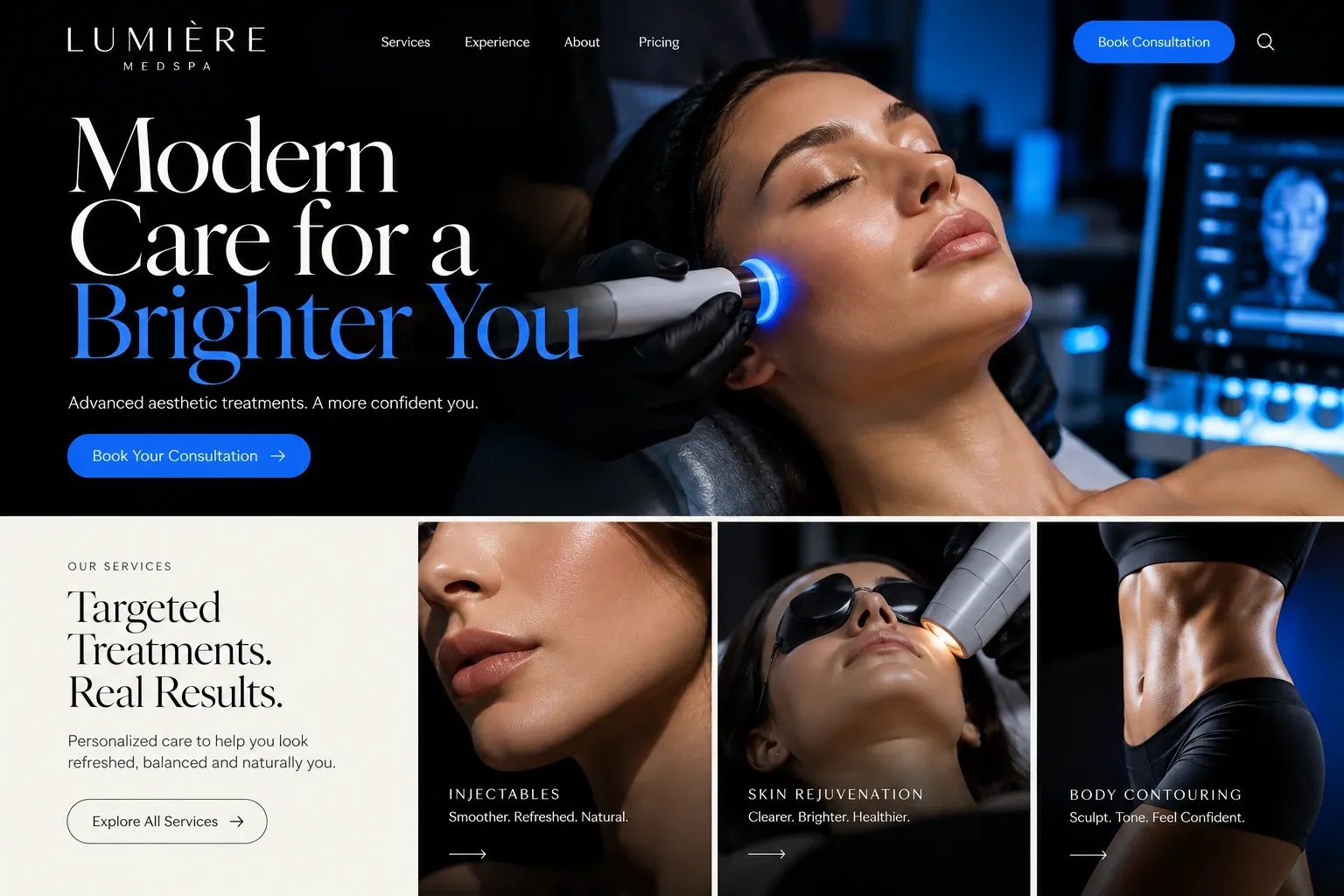
Describe treatments without promising results
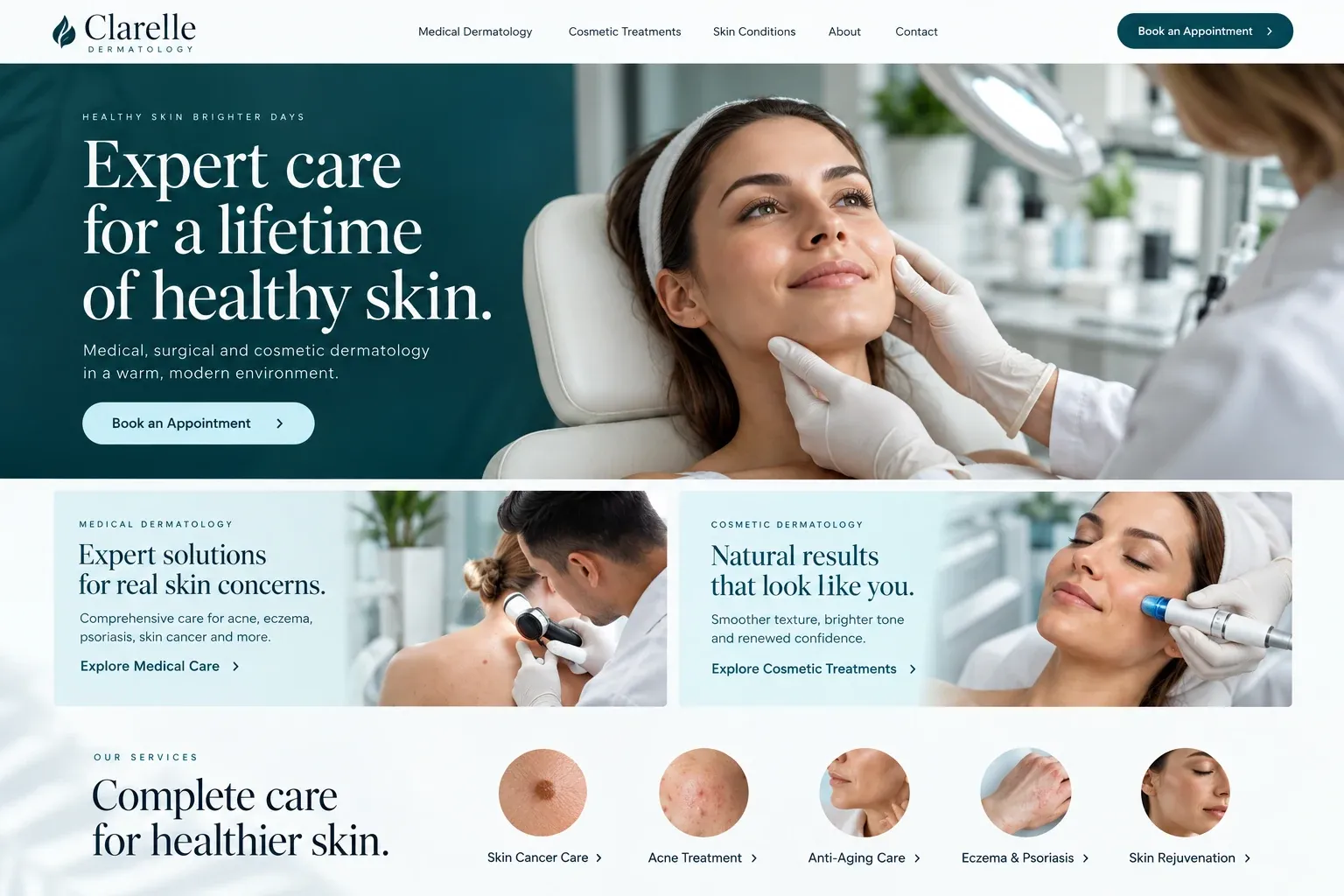
Each treatment deserves its own page: what it is, what happens during the appointment, roughly how long it takes, who usually asks for it, and who should check with you first. Write the way you explain it in the room. Avoid words like cure, erase, or permanent, and do not promise how skin will look afterward, because results vary from person to person.
If you offer treatments that sit close to medical care, such as stronger peels or devices, describe only what you are trained and licensed to provide, and say when a client should see a dermatologist instead. Clients notice that kind of honesty. Every sentence on these pages waits for your sign-off before launch.
Introduce the person behind the treatments
Clients book an esthetician, not a room. A practitioner page with a real photo, your license, the training you have completed, and the skin concerns you work with most gives them someone to trust. Add a few lines about why you do this work. If the studio has several practitioners, give each a short profile and note who handles which treatments.
Show the studio, and handle photos with care
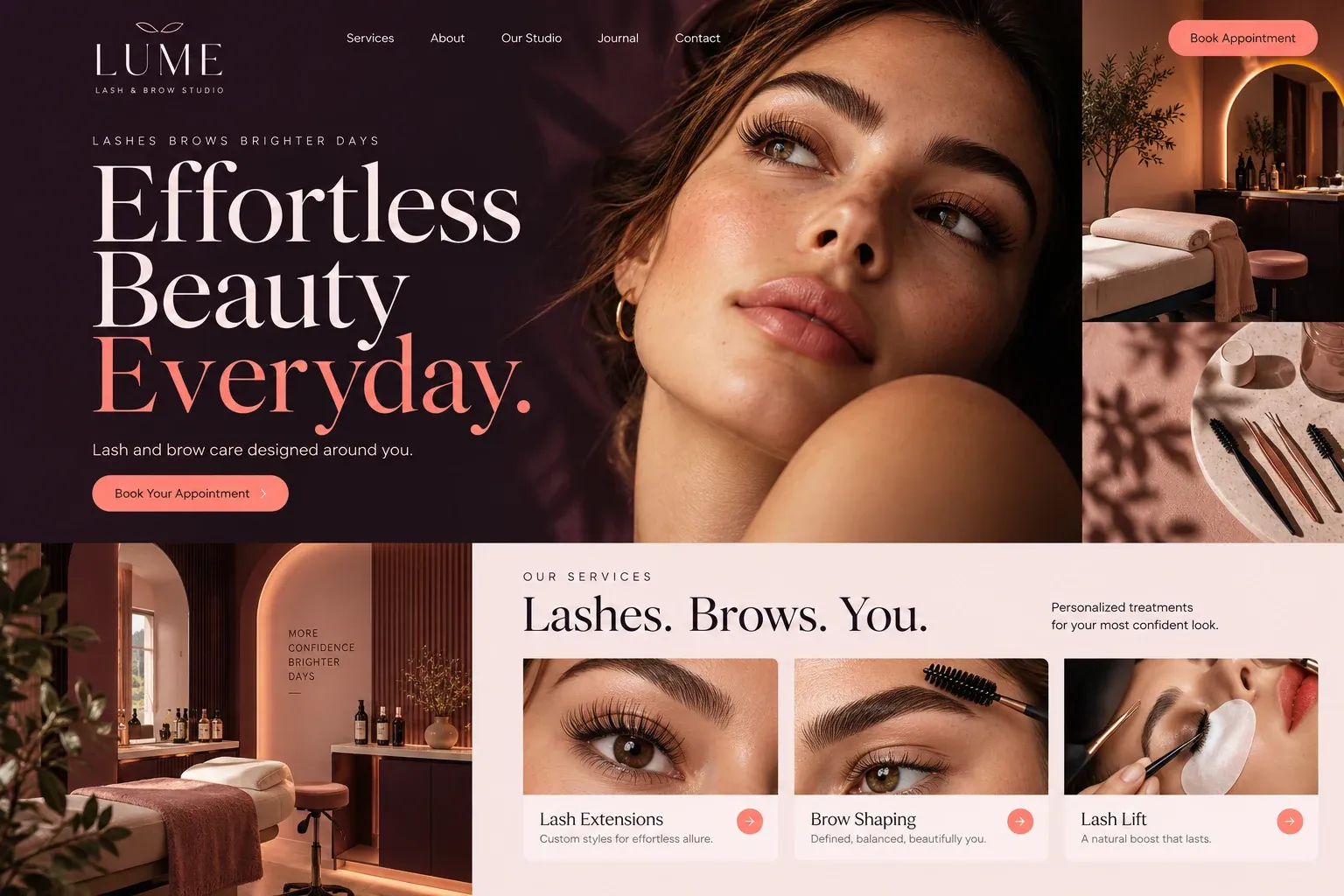
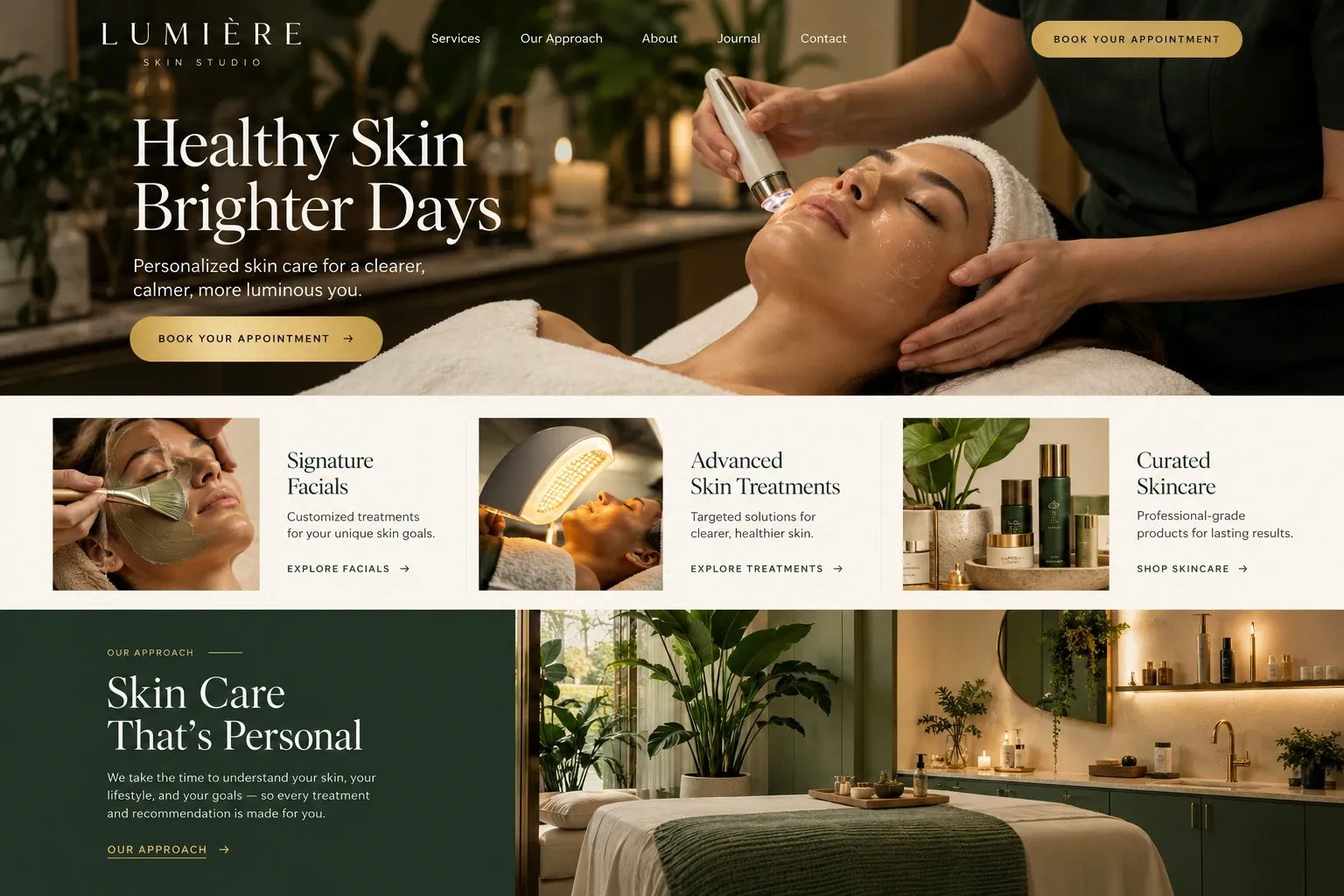
Photos of the treatment room, the bed, and the products you use help a nervous first-timer picture the visit. Before and after photos need care: use only clients who gave written permission, keep lighting and angles the same, label them as individual results, and never retouch them. Many studios skip them and let the room, the practitioner, and reviews do the work.
Booking, privacy, and being found nearby
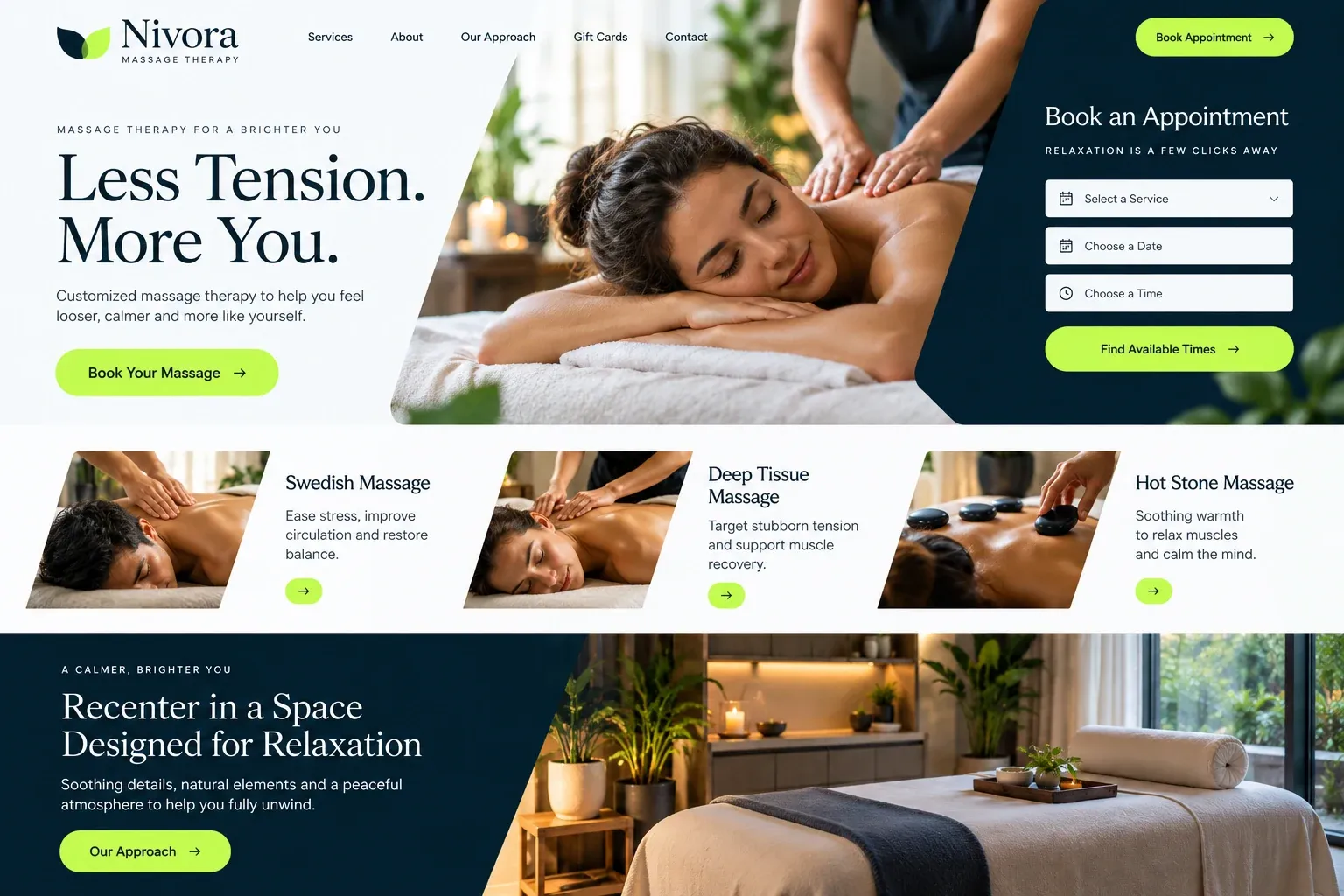
Clients should be able to book from any page, through the scheduling software you already use. Skin history, medications, and allergies belong in that software's intake forms, not in a website contact form that lands in an ordinary inbox. The website's own form should ask only for a name, contact details, and the treatment someone is curious about.
To be found nearby, give each treatment its own page, keep your studio details consistent with your Google Business Profile, and invite reviews that describe the experience rather than dramatic results. Searches like "facial for sensitive skin near me" are easier to match when a page answers that exact concern in plain words.