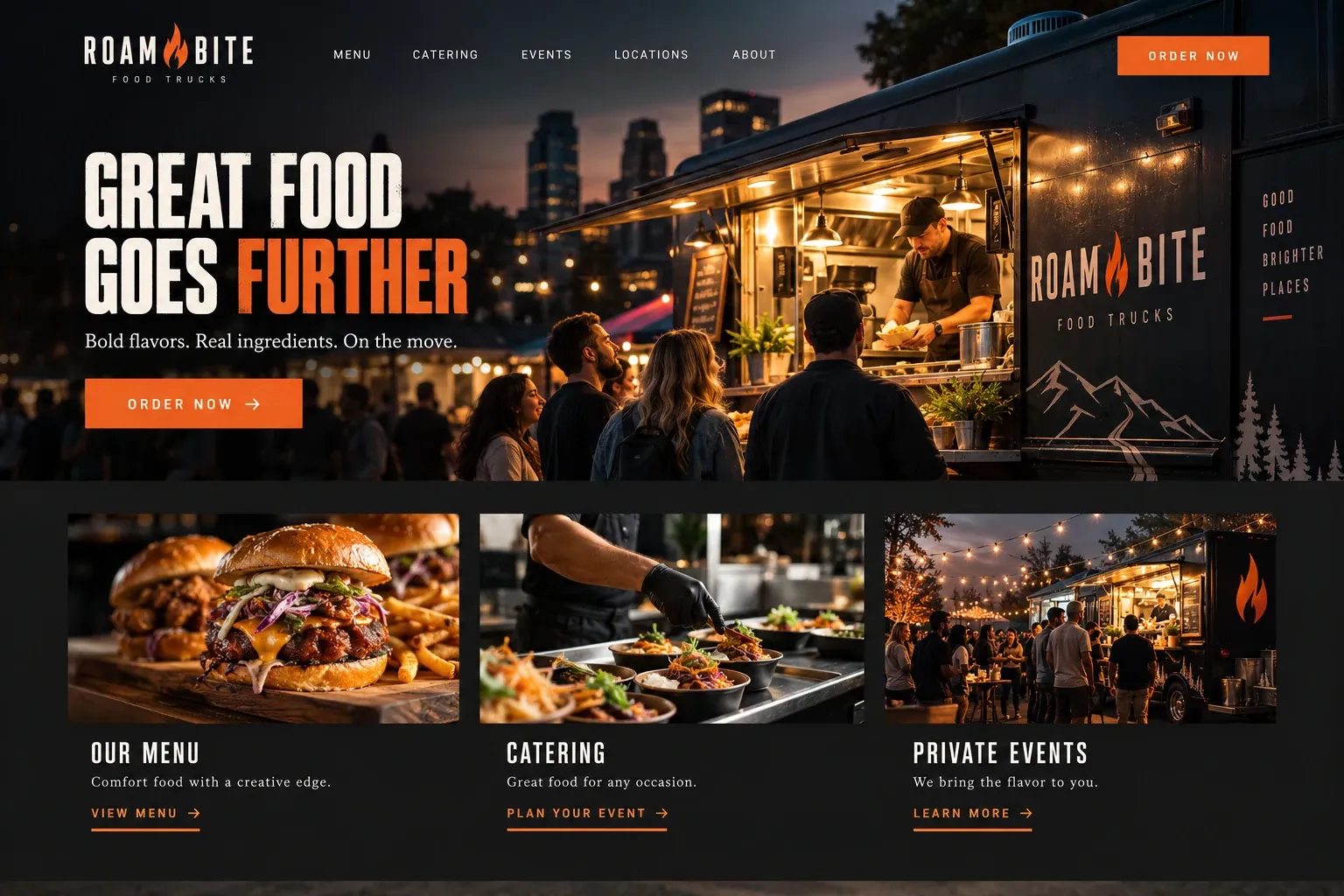
Planning guide
What does a food truck need on its website?
A food truck website answers a moving question: where are you today. After that it has two jobs, showing the menu to hungry fans and giving event hosts a clear way to book. Here is how we plan a food truck site so the schedule stays current, the brand stays recognizable, and private bookings arrive with the details you need.
Put the schedule at the top
The first thing most visitors want is today's location. Place this week's stops at the top of the home page, with addresses, hours, and a map link for each. Keep it easy to update: a short list you can edit from a phone, a shared calendar embedded on the page, or a message to us. When plans change because of weather or a sold-out stop, a one-line notice tells people before they drive over.
Keep the menu short and readable
People read a food truck menu standing up, often in line. List your signature items first, then sides, drinks, and any specials that come and go. Write it as text, large enough to read in sunlight, with prices and simple marks for vegetarian or spicy dishes if you use them. A few strong photos of your best sellers do more than a long gallery, and they help fans tell their friends exactly what to order.
Give private bookings their own path
Private events often bring steadier income than street service, so they deserve a dedicated page. Describe the events you do, such as weddings, office lunches, birthdays, and school fairs, and how booking works, including any minimum you set. The inquiry form should ask for the date, time, address, guest count, and event type, so you can check the calendar and reply with a quote.
Add a short section on what the venue must provide. Truck length, a level surface, access for a large vehicle, power or generator use, and setup time are the questions planners and venues ask most. Answering them up front prevents surprises on the day and makes you easier to recommend.
Help people search their way to you
Fans search your name, a dish, or food trucks near me. Event hosts search food truck catering plus a city. A Google Business Profile with your service area, regular stops, and photos helps with both. Keep your name, phone, and website identical across the profile, the site, and your social accounts. Encourage reviews from private event clients, who often mention the occasion. This gives your truck a fair chance to be found, without promises.