Web design for life and career coaches

Coaching websites that make the first conversation easy.

People rarely search for a coach on a good day. They feel stuck in a job, a transition, or a pattern, and they need to understand what coaching is, who you help, and what working together looks like.

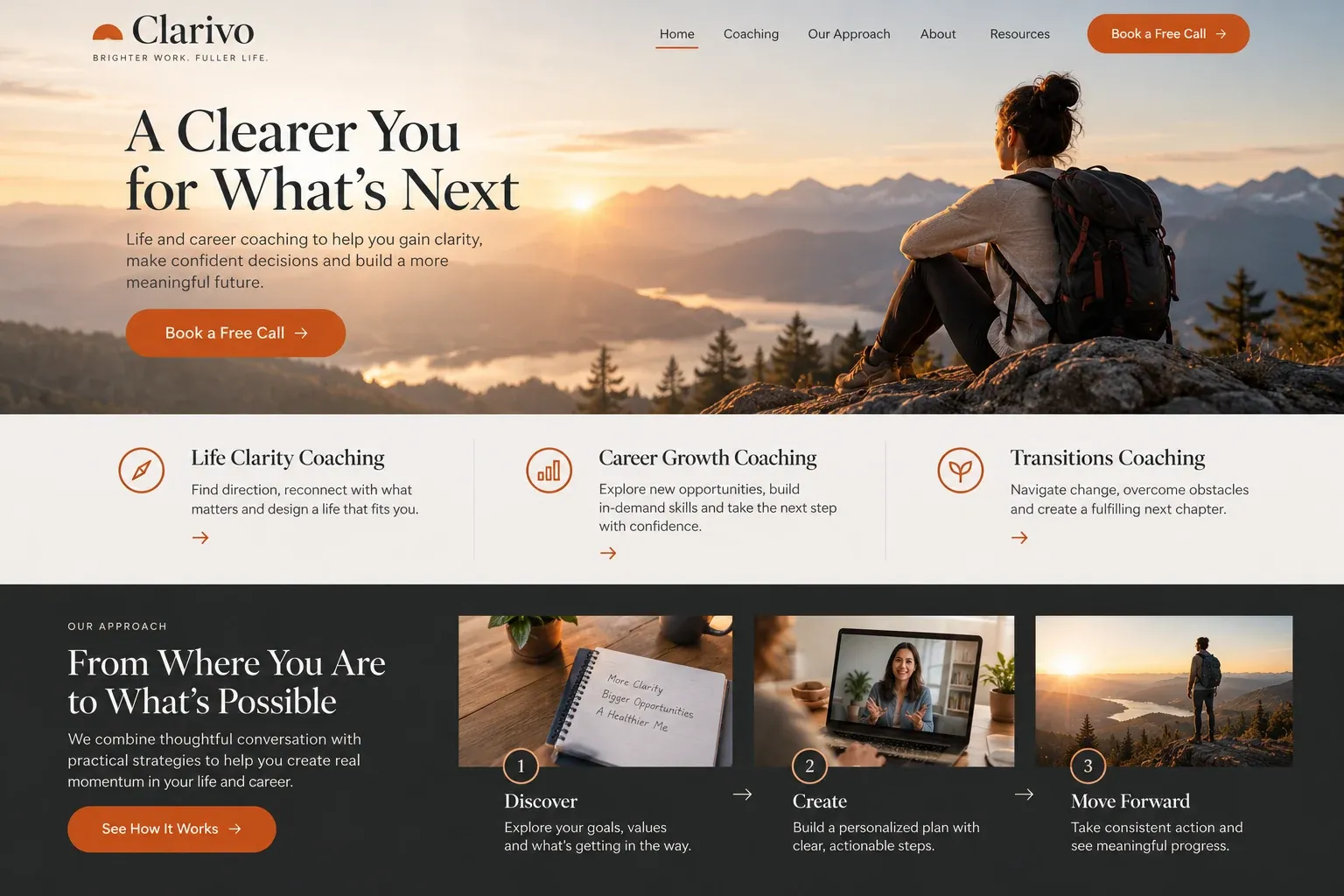
Fictional life and career coaches website homepage design concept
A design concept for a fictional brand. Your site is designed from scratch around yours.

Your customer's story

Ten years in, and ready for something else

Daniel has worked in hotel operations for ten years and is good at it. He is also restless in a way he cannot quite name. He has thought about changing careers, starting something of his own, or simply asking for a different role, and every option feels both exciting and reckless. After a long Sunday shift, he searches "career coach Miami" from the parking lot.

Several sites promise to transform his life in ninety days, which makes him wary. One is just a photo and a booking calendar. Then he finds a coach whose site says plainly who she works with, mid-career professionals considering a change, and how coaching with her works: the number of sessions, by video or in person, what happens between them, and what coaching is not.

Her background is listed honestly, including the coaching credential she holds and the corporate career before it. A short page invites him to book a free discovery call to see whether they are a fit, with no pressure to continue. He books Thursday. A coaching website earns that call by being specific about the work and modest about the promises.

Why it matters

Why life and career coaches need a website.

Coaching is full of big promises, and careful buyers have learned to be wary. Before they book a call, they want to know who you coach, what a coaching engagement involves, how you differ from a therapist or a consultant, and what training you have. Social media builds familiarity, and a booking link takes appointments, but neither explains your approach or sets boundaries the way a website can.

We build coaching websites that make the relationship concrete. The home page names the people you work with. A how-it-works page covers session format, length, frequency, and what happens between sessions. Your background and credentials are stated accurately, and a short note explains what coaching is not, such as therapy or medical advice. A discovery call is booked through your scheduling tool, with no sensitive questions on the form.

What your customers search for

  • career coach Miami
  • life coach near me
  • career change coach
  • executive coach for new managers
  • life coach for women
  • bilingual career coach

Your customers

What people want to know before booking a coach

  • Do you work with people like me?

    A clear description of the people you coach, such as career changers, new managers, or founders, so visitors recognize themselves quickly.

  • What does coaching actually involve?

    A how-it-works page covering session format, length, frequency, and what happens between sessions, in plain and specific language.

  • Is this therapy?

    A short, respectful note on how coaching differs from therapy, and a suggestion to seek a licensed professional for mental health concerns.

  • Will it be a hard sell?

    A discovery call described honestly as a conversation about fit, with no obligation, booked through your calendar in a few clicks.

What we build

What a website for life and career coaches should include.

  • Audience and scope

    The people you coach and the topics you cover, plus a clear line on what falls outside your work.

  • Session structure page

    How engagements run, by video, phone, or in person, with session length, frequency, and support between sessions.

  • Professional background

    Your career history, coaching training, and any credentials you hold, presented accurately without inflated titles.

  • Discovery call booking

    A link or embed from Calendly or your scheduling tool, so a first conversation is booked without email back-and-forth.

  • Workshops and speaking

    Pages for group programs, workshops, or talks you offer to companies, each with a short inquiry form.

  • Writing and resources

    Articles or free guides that show how you think, helping visitors get to know you before the first call.

Planning guide

What should a coach's website say before the first call?

A coaching website has an unusual job: it sells a relationship that is hard to picture. The best ones make it concrete by naming the audience, describing the process, presenting the coach honestly, and inviting a low-pressure first conversation. Here is how we plan each of those parts with you.

Name who you coach and what you do not

"I help people live their best life" fits every coach and persuades no one. Be specific: new managers in their first leadership role, mid-career professionals considering a change, founders running a small team, or people returning to work after a break. Then say what is outside your scope. If someone needs therapy, legal advice, or financial planning, a respectful line pointing them elsewhere builds trust.

Describe the engagement step by step

Visitors cannot buy what they cannot picture. A how-it-works page should cover the first call, how an engagement is structured, session length and frequency, whether you meet by video, phone, or in person, and what support looks like between sessions. A simple timeline graphic of a typical engagement can do a lot here. If you offer group programs or workshops, give each its own page. Describe the work, not the outcome, since results depend on the client.

Present yourself honestly

Your about page carries much of the decision. Share the career path that led you to coaching, the training you completed, and any credentials you hold, named exactly. Testimonials can help when clients agree to share them, but they should describe the experience of working with you rather than promise a promotion or a new life. Use real names only with permission.

A few articles or a short guide in your own voice let visitors hear how you think before they ever speak to you. Write about the questions clients bring to you most often, without giving individual advice. These pages also give search engines more to understand about your work and your audience.

Make the first call simple and private

The discovery call should be one click from every page, booked through a scheduling tool such as Calendly. Keep the form to a name, an email, and an optional line about what prompted them to reach out. Do not ask about health, finances, or personal history in an ordinary form. Pages for each audience you coach give searches like "career coach for new managers" something to match, and a Google Business Profile with your service area and reviews helps nearby people find you.
In your market

Coaching in a region of career changes

South Florida draws people in transition: professionals relocating for remote work or new roles, founders building companies, families arriving from Latin America and elsewhere, and retirees designing a second chapter. Many prefer to be coached in Spanish or Portuguese, and many clients want sessions by video because traffic makes in-person meetings hard. We write pages that speak to the people you coach here and beyond, and can add a Spanish version.

Questions

Questions life and career coaches ask us.

How should a life coach explain the difference from therapy on the website?

Briefly and respectfully, usually on the how-it-works page or in the footer: coaching focuses on goals and action, and it is not a substitute for mental health care. Suggest that anyone needing that kind of support contact a licensed professional. You approve the wording, and we keep it calm rather than legalistic.

Can a career coach's site book discovery calls automatically?

Yes. We link or embed your scheduling tool, such as Calendly or Acuity, so visitors pick a time that is actually open and get a confirmation from the tool. The website explains what the call is for, so people arrive ready to talk about fit.

What testimonials can a coaching website use?

Ones clients have agreed to share, in their words, describing what working with you was like. We avoid quotes that promise income, promotions, or life changes, since every client's situation differs. First names or initials are fine if clients prefer privacy, and any testimonial can be removed on request.

Should my coaching website mention that I work with clients outside Miami?

Yes, if you coach by video. Say plainly that sessions happen online for clients anywhere, and in person for those nearby, if you offer both. Mention the time zone you work in and the languages you coach in, so distant clients know how scheduling will work.

Let's talk

Ready for a website built for life and career coaches?

Tell us about your business and we will come back with a clear recommendation and a fixed quote. No pressure, no jargon.

Trades we design for

See all 226 trades

226 trades

  • Plumbers website design concept
CallFree quote