
Web design for mental health counselors

Websites that make the first message easier to send.

Deciding to see a counselor can take months, and the first message is often the hardest part. People look for respectful language, practical details about sessions and fees, and a way to reach out without telling their story to a form.

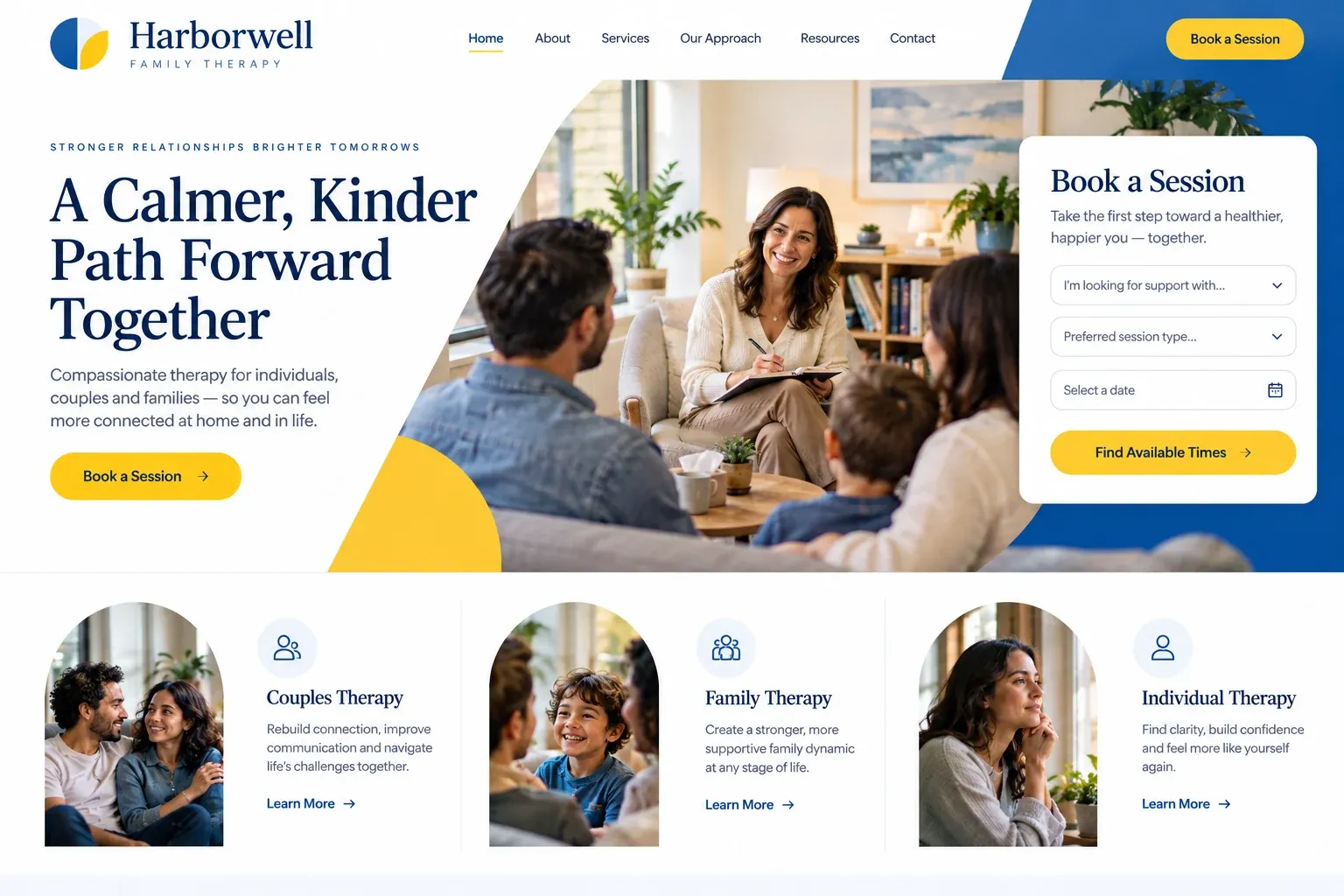
Fictional mental health counselors website homepage design concept
A design concept for a fictional brand. Your site is designed from scratch around yours.

Your customer's story

Three drafts deleted, then a short form

Andrea manages a busy restaurant and gets home after midnight most nights. The last few months have felt heavy, and her sister keeps gently saying she should talk to someone. Twice this month Andrea has opened a counselor's contact page, seen a large empty box labeled Tell us what brings you here, typed a few lines, and deleted them. Tonight she tries one more search.

This counselor's site is quiet and plain. It describes the people she works with in kind, ordinary words, lists evening and online sessions, and shows the fee, a sliding scale, and how out-of-network paperwork works. The contact form says, in effect, that nothing needs explaining yet: just a name, a way to reach her, and a good time to call. A line near the button lists 911 and 988 for anyone in danger.

Andrea fills it in, ticks the box saying a voicemail is fine, and puts her phone down. The counselor calls two afternoons later, before her shift. A counseling website does a large part of its work in that small moment. It has to make reaching out feel manageable, and leave the story for a conversation with a person rather than a box on a screen.

Why it matters

Why mental health counselors need a website.

Counseling is a personal choice made quietly, often late at night on a phone. People compare counselors by approach, availability, fees, insurance, and whether sessions can happen online or in the evening. Many want to know whether the counselor works with people like them. Directory profiles help people discover you, but they all look alike, and they rarely say much about how a first call works or what happens to the information someone shares.

We build counseling sites with a quiet, respectful tone. You describe who you work with and how, in your own words, and approve every line. Session logistics are clear: in person or online, evenings, length, fees, any sliding scale, and insurance or out-of-network paperwork. The inquiry form asks for a name, a way to reach the person, and a good time. A plain notice explains that the practice is not for emergencies and where to turn instead.

What your customers search for

  • counselor near me
  • therapist that takes my insurance
  • online counseling Florida
  • spanish speaking therapist Miami
  • sliding scale therapy
  • evening therapy appointments

Your customers

What people want to know before messaging a counselor

  • How much do I have to say at first?

    A form that asks only for a name, contact details, and a good time, with a line saying the rest can wait for a conversation.

  • Can I afford this?

    Fees, any sliding scale, the insurance plans you accept, and out-of-network paperwork explained plainly on one page, so nobody has to ask first.

  • Can we meet in the evening or online?

    Your session formats and hours shown clearly, including telehealth and evening times, with a note on how online sessions work in practice.

  • What if I need help right now?

    A statement near every contact button that sessions are not emergency care, telling anyone in danger to call 911, or to call or text 988.

What we build

What a website for mental health counselors should include.

  • Your approach, in your words

    Who you work with, how sessions tend to feel, and what you value in the work, written with you and approved by you.

  • Session logistics page

    In-person and online options, session length, evening and weekend times, and how to reschedule, gathered in one calm place.

  • Fees and insurance

    Your fee, any sliding scale, accepted plans, and how out-of-network clients request a superbill, explained without jargon.

  • Simple inquiry form

    Name, phone or email, the best time to call, and whether a voicemail is okay. Nothing about the reason for reaching out.

  • Crisis resources notice

    Visible on every page: the practice is not an emergency service, and anyone in danger should call 911 or call or text 988.

  • Introductory call request

    If you offer a short introductory phone call, a clear button to request one, with a note on what that call covers.

Planning guide

What should a counseling practice website say and ask?

A counseling website is often read by someone who has been thinking about therapy for a long time. The words and the form on that site can make the first step feel possible or out of reach. Here is how we plan a counseling site: the pages it needs, what to show, how people reach out safely, and how the practice gets found.

Describe who you serve and how

Start with an about page in your own voice: your license, your training, the people you work with, and the way you approach sessions. Then add a page for each area of focus you want to be found for, such as grief, life transitions, work stress, or adjusting after a move, written in general terms. Avoid promising relief or results. Visitors respond to warmth and clarity far more than to claims.

Put logistics in plain view

Many people choose a counselor based on practical fit. Explain session length, how often clients usually meet, in-person and online options, evening or weekend availability, fees, any sliding scale spots, and how insurance or out-of-network reimbursement works. Show the office and the entrance so in-person clients know what to expect. A photo of you, taken somewhere comfortable, does more than a stock image of a sunset.

Make the first message easy and private

The inquiry form should take a name, a phone number or email, the best time to call, and whether it is okay to leave a voicemail. Do not ask people to describe what brings them in. That conversation belongs on the phone or in a secure intake system. Say how quickly you usually reply, and link your client portal for existing clients.

State plainly, on every page, that the practice cannot respond to emergencies. Tell anyone in danger to call 911, or to call or text 988, the Suicide and Crisis Lifeline. Place that line near each contact button, so no one sits waiting for a reply in a moment that cannot wait.

Help people near you find the practice

People search for a counselor near me, a therapist who takes their insurance, online counseling in Florida, or a counselor who speaks Spanish. Pages for each area of focus, your session formats, and your languages give search engines precise topics. Keep your details consistent across the site, your Google Business Profile, and the directory profiles you already use. Rankings cannot be promised, but a clear, specific site gives you a fair chance.

In your market

Built for counseling in South Florida

South Florida clients often want a counselor who shares their language or understands their family's culture, whether that is Cuban, Venezuelan, Haitian, Colombian, or Brazilian. Long commutes and service-industry schedules make evening and telehealth sessions especially valued. Hurricane season can interrupt in-person sessions, so clients like to know how online sessions continue when the office closes. We give languages, formats, and fees a clear place on the site, keep the crisis notice visible, and can add a Spanish version.

Questions

Questions mental health counselors ask us.

Should a counselor's website list session fees publicly?

Many counselors find it helps, because cost is one of the first questions people have and some will never ask it. We write a short fees page from your notes, with any sliding scale and insurance details, and you decide exactly what appears. When fees change, send us the update.

How do we keep counseling inquiries private?

The form asks only for contact details, a good time to call, and whether a voicemail is okay. It never asks why the person is reaching out. Clinical intake happens later through your secure client portal, so nothing sensitive travels through the website or an ordinary email inbox.

Where does the crisis line information go on a counselor's site?

On every page, near each contact button and in the footer. It says the practice is not an emergency service and tells anyone in danger to call 911 or to call or text 988. We can use wording you already have, and you approve it before launch.

Can we connect our counseling practice's scheduling or telehealth platform?

Yes. We link the scheduling, intake, and video tools your practice already uses, with a client portal button in the header for current clients. New visitors see the inquiry form or a consultation request first, and existing clients find their login without hunting for it.

Let's talk

Ready for a website built for mental health counselors?

Tell us about your business and we will come back with a clear recommendation and a fixed quote. No pressure, no jargon.

Trades we design for

See all 226 trades

226 trades

  • Plumbers website design concept
CallFree quote