Web design for makeup artists

Makeup artist websites that fit the occasion.

Makeup clients are rarely booking makeup for its own sake. They have a gala, a photo shoot, a quince, or a television spot, and they need an artist whose work suits that exact setting and schedule.

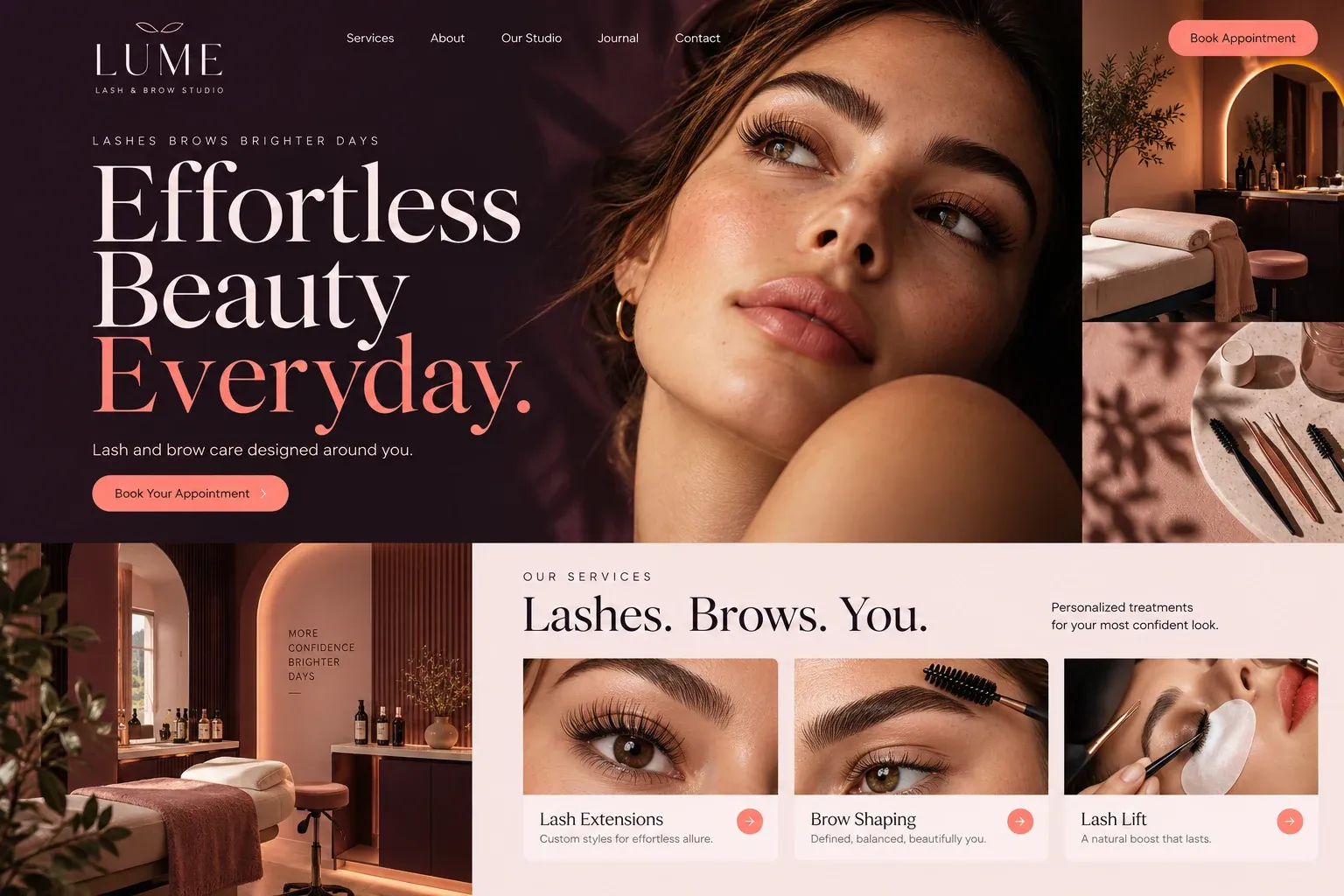
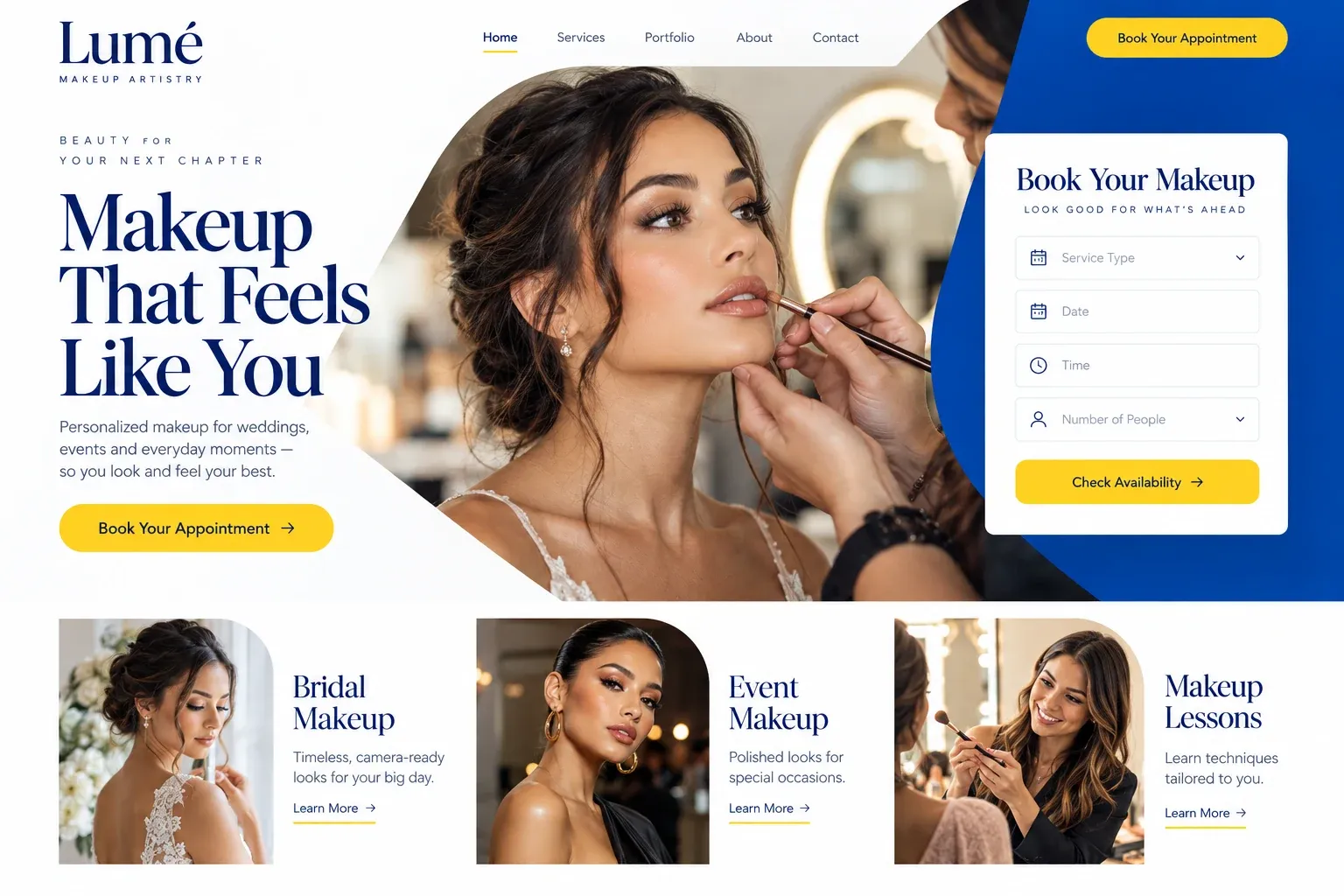
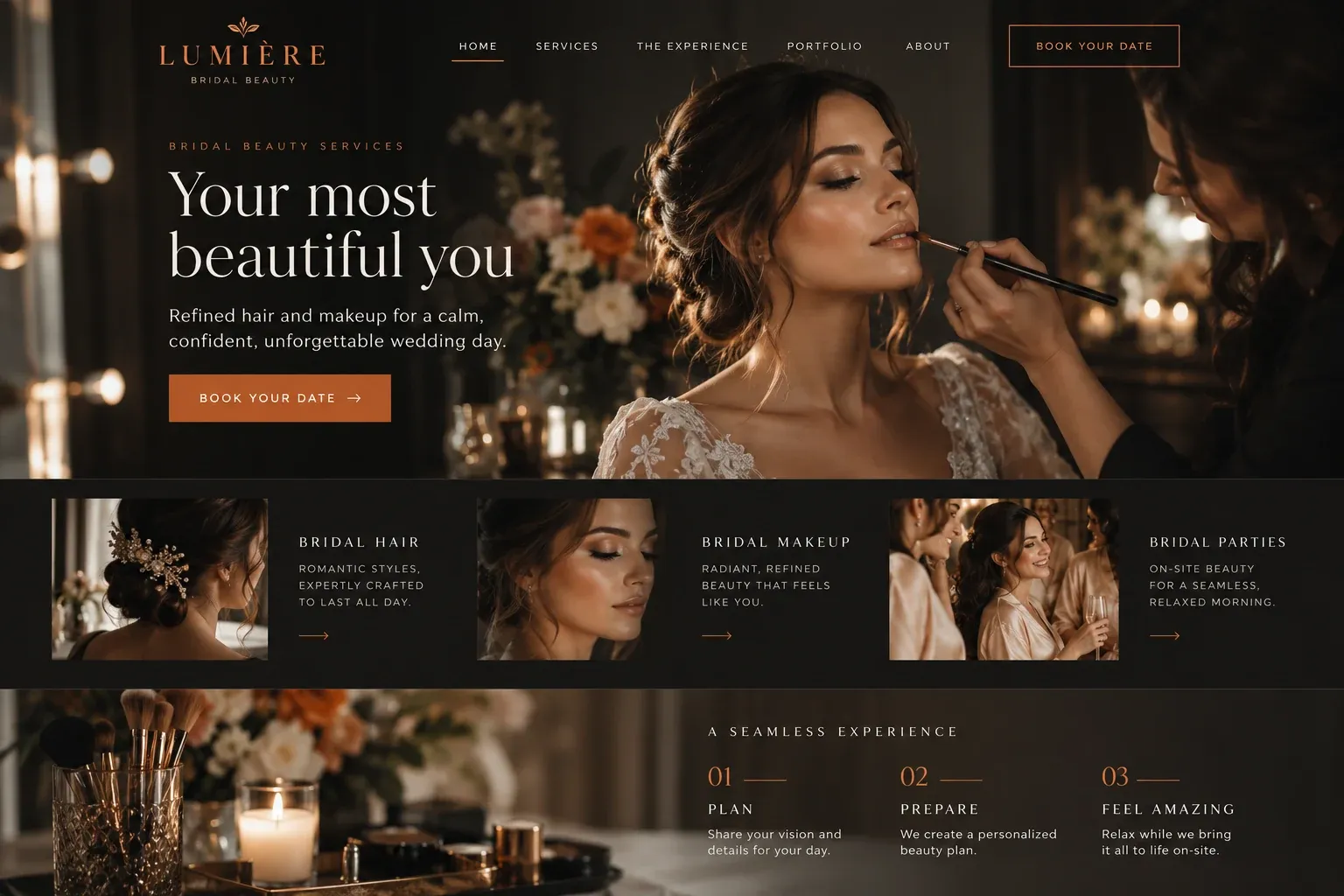
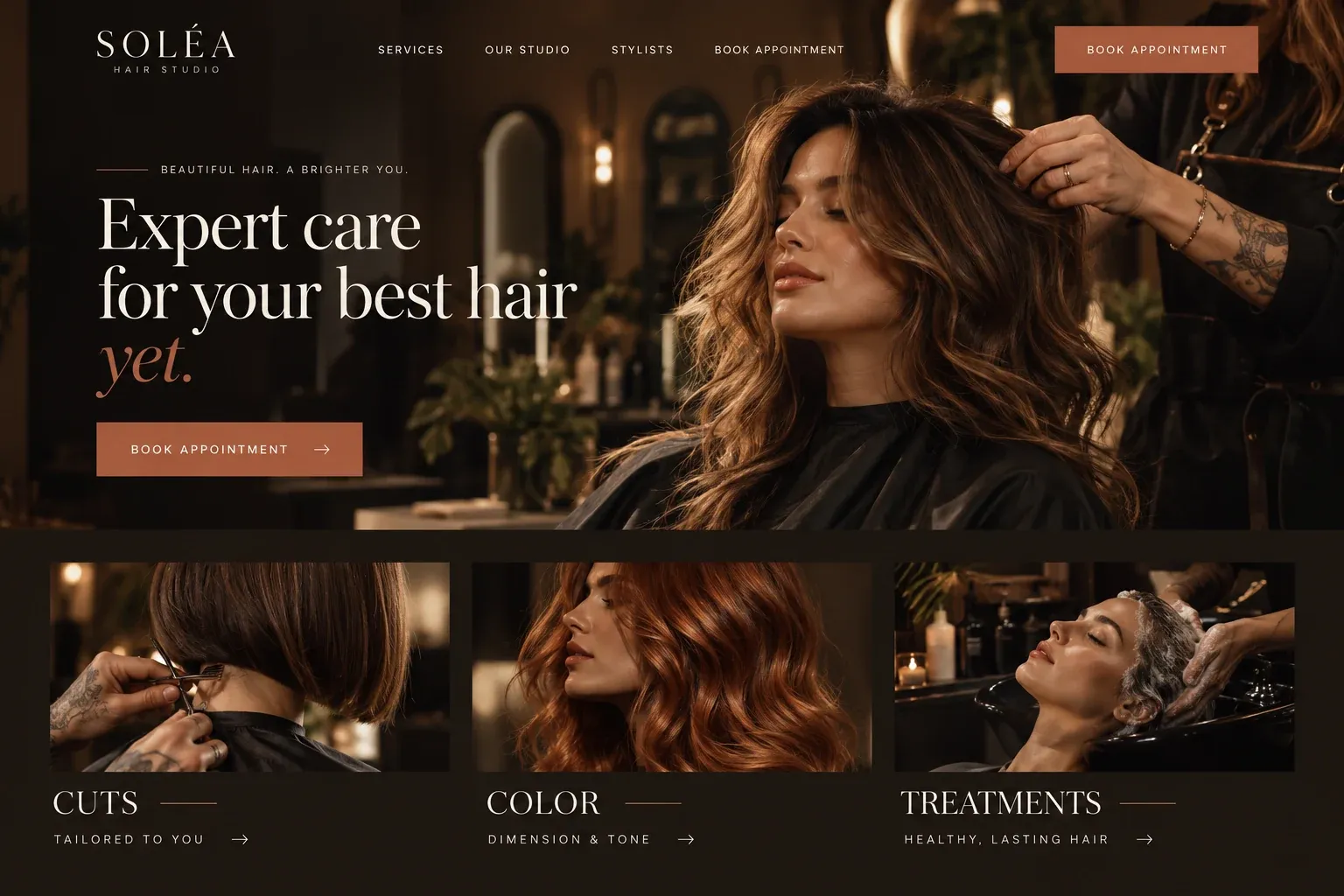
Fictional makeup artists website homepage design concept
A design concept for a fictional brand. Your site is designed from scratch around yours.

Your customer's story

A gala, a red dress, and humidity

Lucía is chairing a hospital foundation gala in February, and she will be on stage, in photos, and under a tent on the bay for five hours. Her dress is deep red. Last year she did her own makeup and watched it slide off by the second toast. This year she wants an artist who can come to her condo, work fast, and make it last.

Most portfolios she finds are wedding after wedding, soft and pink, nothing like a woman in her fifties under stage lights. One artist's site sorts work by occasion: bridal, editorial, evening events, mature skin, on camera. The evening section has looks that could stand next to a red gown, and a page explains on-location appointments, travel areas, and how early the artist arrives.

Lucía fills in the event brief: date, start time, location, dress color, a photo of the gown. The artist replies with two questions and an offer of a trial. Lucía never has to explain herself twice. A makeup artist's website should do that sorting for every client, so the right occasion leads to the right portfolio and then to a brief that gets the plan started.

Why it matters

Why makeup artists need a website.

Makeup artistry is booked by occasion, and every occasion asks something different: soft and photo-friendly for a wedding, durable for a long night, precise for camera, quick for a corporate headshot day. Clients scroll an Instagram grid and see beautiful faces without knowing what each look was for. A website lets you organize the work by event, explain where you work, and gather the details you need before saying yes.

We build makeup artist websites that sort before they sell. Galleries are grouped by occasion and show a range of skin tones and ages, so every client can find a face like theirs. A services page explains studio and on-location appointments, trials, travel areas, and early call times. An event brief collects the date, venue, timing, and reference photos, and lands in your inbox ready for a real reply.

What your customers search for

  • makeup artist near me
  • makeup artist Miami
  • on location makeup artist
  • makeup for photo shoot
  • quinceañera makeup artist
  • airbrush makeup for events

Your customers

What clients want to see before hiring a makeup artist

  • Have you done a look for an event like mine?

    Portfolios grouped by occasion, such as evening events, editorial shoots, on-camera work, and graduations, each labeled with the setting it was made for.

  • Have you worked on skin like mine?

    A range of skin tones, textures, and ages across the gallery, so clients of every background can see themselves in your work.

  • Will you come to me?

    Clear details on studio appointments versus on-location work, the areas you travel to, and how early you arrive before the client's call time.

  • Can I try the look first?

    A plain explanation of trials, when they make sense, how they are booked, and what the client should bring along to one.

What we build

What a website for makeup artists should include.

  • Occasion galleries

    Evening, editorial, on-camera, graduation, and celebration looks in separate sets, so clients find relevant work in seconds.

  • On-location details

    Where you travel, how you set up in a hotel room or home, and what space and light you need.

  • Trial information

    When a trial is recommended, how long it usually runs, and how it connects to the final booking.

  • Event brief form

    Date, venue, start time, number of faces, and room for reference photos and outfit pictures, sent to your inbox.

  • Kit hygiene notes

    A short note in your own words on how you clean brushes and tools between clients, which careful clients look for.

  • Lessons and classes

    A page for one-on-one makeup lessons or group classes, with a request form or a link to your booking tool.

Planning guide

How should a makeup artist organize their website?

A makeup artist's website is a portfolio with a schedule attached. The portfolio helps the client recognize the right look for the occasion, and the schedule side explains how the appointment works and what you need to know. Here is how we plan both halves, and how they help clients find you.

Sort the portfolio by occasion

A single long gallery makes clients do the sorting. Group work by the occasions you take most, such as weddings, evening events, editorial and fashion, on-camera, and graduations or quinces, and keep each set to your strongest dozen or so looks. Show a real range of skin tones, ages, and textures. Clients notice quickly when every face in a gallery looks the same. Label each photo with the occasion and, if a photographer took it, credit them.

Explain where and how you work

Clients need to know early whether you work from a studio, travel to them, or both. Describe the areas you cover, how much time you need on site, and what you need from the room, such as a table near a window and a chair at the right height. If you take early call times, say so, because some events start their makeup before sunrise.

Trials deserve their own short section: when you recommend one, how it is scheduled, and what the client should bring, such as outfit photos and the jewelry they plan to wear. A clear trial page answers a question nearly every bride or event client asks, usually in the very first message.

Use a brief instead of a contact form

A generic contact form brings back messages like "are you free on the 14th", which means another round of questions. An event brief asks for the date, venue, start time, number of people, type of occasion, and reference photos up front. You reply with real availability and a plan, and the client feels taken seriously from the first message. Keep a phone and text option for quick questions.

Be findable for the events you want

Clients search by occasion and place: "makeup artist for gala Miami", "on-location makeup Fort Lauderdale", "headshot makeup artist". Pages for each kind of work you want more of give search engines something specific to match. Keep your Google Business Profile current with fresh photos, and ask clients to mention the occasion in their reviews. A clear site also makes it easier for photographers and planners to recommend you.
In your market

Makeup for South Florida's events and heat

Makeup in South Florida has to survive heat, humidity, and outdoor venues by the water, so clients ask a lot about how long a look will last. The region also has a steady stream of photo and video shoots, winter galas, quinces, and destination weddings, and many clients prefer Spanish. Artists here often travel between Miami-Dade, Broward, and Palm Beach. We build sites that say clearly where you go and what you do, and can add a Spanish version.

Questions

Questions makeup artists ask us.

How should a makeup artist show work for different skin tones?

Across every gallery, not in a separate section. If clients of many backgrounds can see faces like theirs in the evening, editorial, and bridal sets, the portfolio speaks for itself. We help you choose a balanced selection from your own work and label each photo with the occasion.

Can my makeup site take event requests with reference photos?

Yes. The event brief asks for the date, venue, start time, number of people, and the occasion, and lets the client attach reference photos and an outfit picture. It arrives in your email, so you can answer with real availability instead of a round of follow-up questions.

Should a makeup artist who travels list every city they cover?

List the areas you cover regularly and say plainly that farther trips are possible on request, if they are. A short note on travel arrangements, such as early arrivals and parking at hotels or condos, saves you from answering the same questions for each new client.

Can I sell makeup lessons or classes through the website?

Yes. A page describes your one-on-one lessons or group classes, and clients book through your scheduling tool or send a request. If you sell gift cards or class seats online, we link to your payment system, or set up a Shopify store if you also sell products.

Let's talk

Ready for a website built for makeup artists?

Tell us about your business and we will come back with a clear recommendation and a fixed quote. No pressure, no jargon.

Trades we design for

See all 226 trades

226 trades

  • Plumbers website design concept
CallFree quote