Web design for professional organizers

Organizer websites that make the first step feel small.

Most people who need an organizer have closed the same closet door a hundred times. They are not looking for a lecture. They want to know you will help without judgment, and what that help looks like.

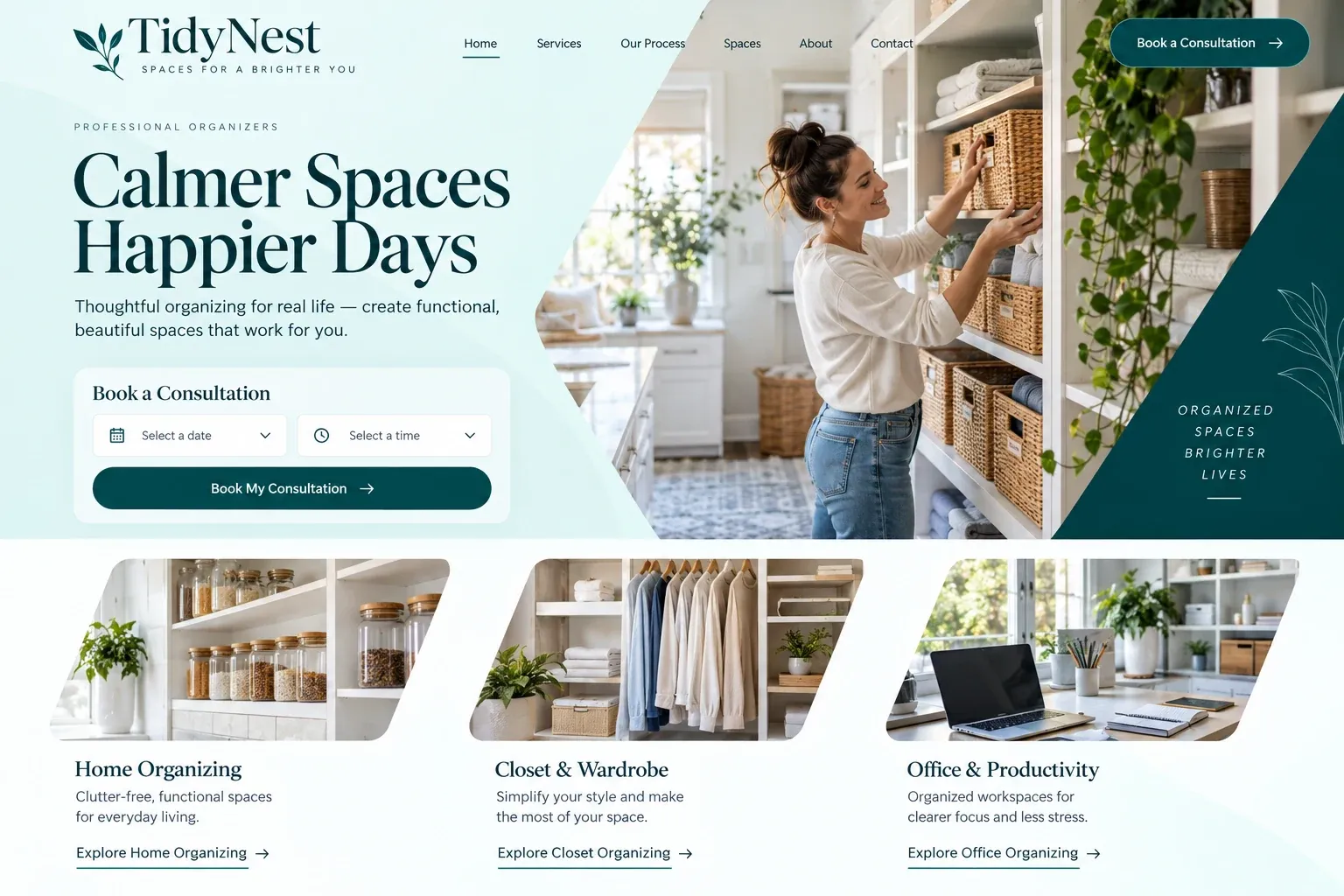
Fictional professional organizers website homepage design concept
A design concept for a fictional brand. Your site is designed from scratch around yours.

Your customer's story

The spare room nobody opens anymore

Teresa's spare room was supposed to be an office. Instead it holds two years of boxes from her mother's apartment, a treadmill, the kids' outgrown clothes, and paperwork she keeps meaning to sort. Guests are coming for the holidays. Every time she opens the door she feels tired and a little ashamed, and closes it again. Late one night she searches for help.

The first organizer's site is all white shelves and matching bins, which somehow makes her feel worse. The second shows dramatic before photos that she would hate to see of her own home. The third talks gently about how sessions work: Teresa decides what stays, nothing leaves without her say, and the organizer arranges donation drop-offs. There are calm photos of finished spaces, and a short form.

The form asks which room, what she would like it to become, and when she is free. It does not ask her to describe the mess. Teresa writes "a guest room and a desk" and presses send before she can change her mind. An organizer's website wins that message with tone as much as content: kind words, a clear process, and a first step small enough to take.

Why it matters

Why professional organizers need a website.

Hiring an organizer is personal. Clients are letting someone into closets, garages, and paperwork they may feel embarrassed about, so tone matters as much as skill. They want to know how decisions are made, whether anything is thrown away without asking, and what a session asks of them in time and energy. Social media favors perfect pantries, which can feel out of reach. A website can explain a kinder, practical process.

We build professional organizer websites with a warm, plain-spoken process page: the first call, the assessment, hands-on sessions, decisions about keeping and letting go, and what happens to donations. Project stories are told respectfully, with client permission. Services such as moves, downsizing, closets, and home offices each get a page. The inquiry form asks about the room and the goal, never for details clients would rather not share.

What your customers search for

  • professional organizer near me
  • closet organizer Miami
  • help organizing garage
  • move in unpacking service
  • downsizing help for seniors
  • home office organizing

Your customers

What clients wonder before calling an organizer

  • Will you judge my home?

    Warm, respectful language throughout the site, and a short note on your approach, so clients feel safe reaching out before tidying up first.

  • Will you throw my things away?

    A clear explanation that the client makes every keep-or-let-go decision, and how donations, consignment, or disposal are arranged.

  • How does a session work?

    A process page covering the first call, the walk-through, how long sessions usually run, and whether the client works alongside you.

  • Will my privacy be respected?

    A plain statement on confidentiality, how photos are taken only with permission, and how personal papers and belongings are handled.

What we build

What a website for professional organizers should include.

  • Process explanation

    From first call to finished room, each step described calmly, with what the client decides and what you handle.

  • Respectful project stories

    Short accounts of real projects, shared with permission, focused on what the space became rather than how it looked.

  • Service pages

    Closets, kitchens, garages, home offices, moves, and downsizing, each with its own page and practical details.

  • Session options

    Hands-on sessions, virtual coaching, and maintenance visits explained, so clients can choose the level of help they want.

  • Room-and-goal inquiry

    A short form asking which space, what the client hopes it becomes, and when they are available to start.

  • Donation and drop-off notes

    How you handle donations, consignment, and recycling, including which local organizations you usually work with.

Planning guide

How can a professional organizer's website put clients at ease?

An organizer's website has to lower a barrier before it sells a service. Visitors often feel overwhelmed or embarrassed, and the first thing they need is a sense that you are kind, practical, and discreet. Here is how we plan the pages, the photos, and the first contact with that in mind.

Write the process in plain, kind words

The process page is the heart of an organizer's site. Describe the first call, the walk-through or virtual assessment, how hands-on sessions work, and how decisions are made. Say plainly that the client decides what stays and what goes. Explain what happens to donations and discarded items. Kind, plain language matters here, because many readers have put off this call for months or years.

Use photos that invite rather than shame

Perfect, styled spaces can make visitors feel worse about their own homes. Mix finished results with realistic, lived-in spaces, and use before photos only with clear client permission and without identifying details. A single well-lit closet shows your care better than a staged showroom. Short project stories work well: what the client wanted, how you worked together, and what the space does now. Keep names and addresses out.

Offer clear services and session choices

Give each main service a page: closets, kitchens and pantries, garages, home offices, moving and unpacking, downsizing, and help after a loss in the family if you offer it. Explain session formats too, such as hands-on sessions, virtual coaching, and maintenance visits. People choose more easily when they can see the level of help available.

Keep the inquiry form short and gentle: which space, what the client would like it to become, and when they are free. Avoid asking them to describe the mess in detail. A phone number and a text option help people who would rather talk, and a quick, warm reply makes a real difference.

Help nearby clients find you

Organizing searches are local and often tied to a moment: "professional organizer near me", "move in organizer Miami", "downsizing help for seniors Boca Raton". Each service page answers one of those searches directly. A Google Business Profile listing your service area, with a few calm photos, backs them up. Ask happy clients for reviews, and let them stay anonymous if they prefer. Real estate agents, movers, and senior living communities often refer organizers, so a site they can share easily is worth having.

In your market

Organizing for South Florida homes

South Florida homes bring their own organizing work: condos with little storage, garages that double as hurricane supply rooms, seasonal homes opened and closed each year, and families downsizing from houses into apartments. Humidity means papers, clothes, and keepsakes need thoughtful storage. Many clients prefer Spanish, and many adult children arrange help for parents from out of state. We write service pages for these situations and can add a Spanish version.

Questions

Questions professional organizers ask us.

Can a professional organizer show before and after photos without embarrassing clients?

Yes, with care. Use only photos clients have agreed to share, crop out anything identifying, and pair them with a short, respectful story. Many organizers lean on after photos and close details instead. We write captions that focus on what the space became, never on how it looked before.

Should an organizer's site explain what happens to donated items?

Yes, because it is one of the first worries people have. Explain that the client decides, how you sort donations, consignment, recycling, and trash, and whether you take items away or arrange pickups. Naming the local charities you usually work with makes the process feel real and responsible.

Can an adult child book an organizer for a parent through the website?

Yes. The inquiry form can ask who the help is for and the best way to reach each person. A page on downsizing or helping older relatives can explain how you work with families, respecting the parent's choices and keeping everyone informed.

Do professional organizers need a page for virtual sessions?

If you offer them, yes. Explain how a virtual session works, what the client needs, such as a phone or tablet and a little time, and what kinds of projects suit it. Virtual sessions let you help people outside your driving area, including clients who split their year between two homes.

Let's talk

Ready for a website built for professional organizers?

Tell us about your business and we will come back with a clear recommendation and a fixed quote. No pressure, no jargon.

Trades we design for

See all 226 trades

226 trades

  • Plumbers website design concept
CallFree quote