Web design for home stagers

Website design for home stagers.

Stagers work on tight timelines for people who are busy selling. Agents want to know you can furnish a vacant condo before the photographer arrives, and sellers want to know what happens to the furniture they already own.

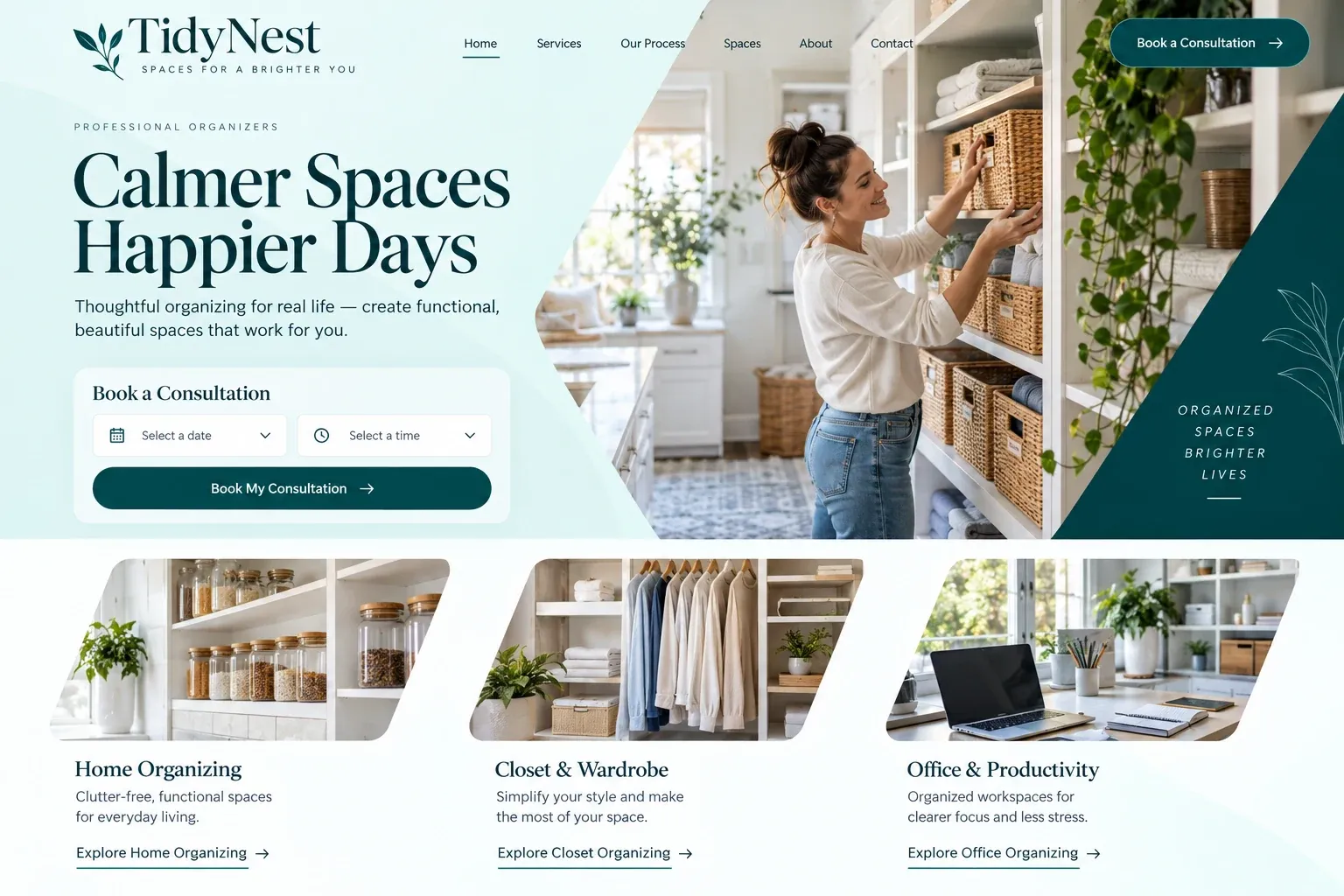
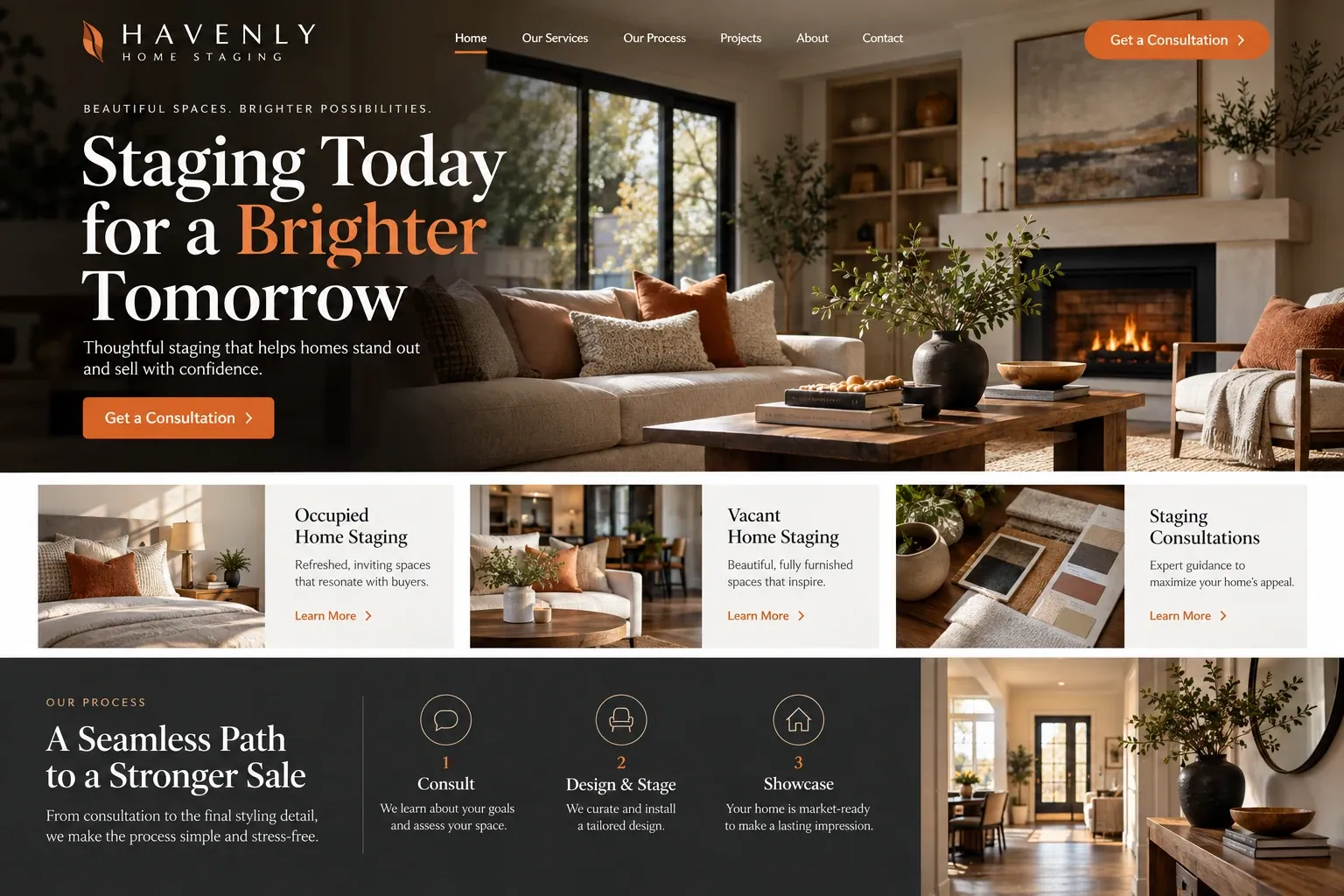
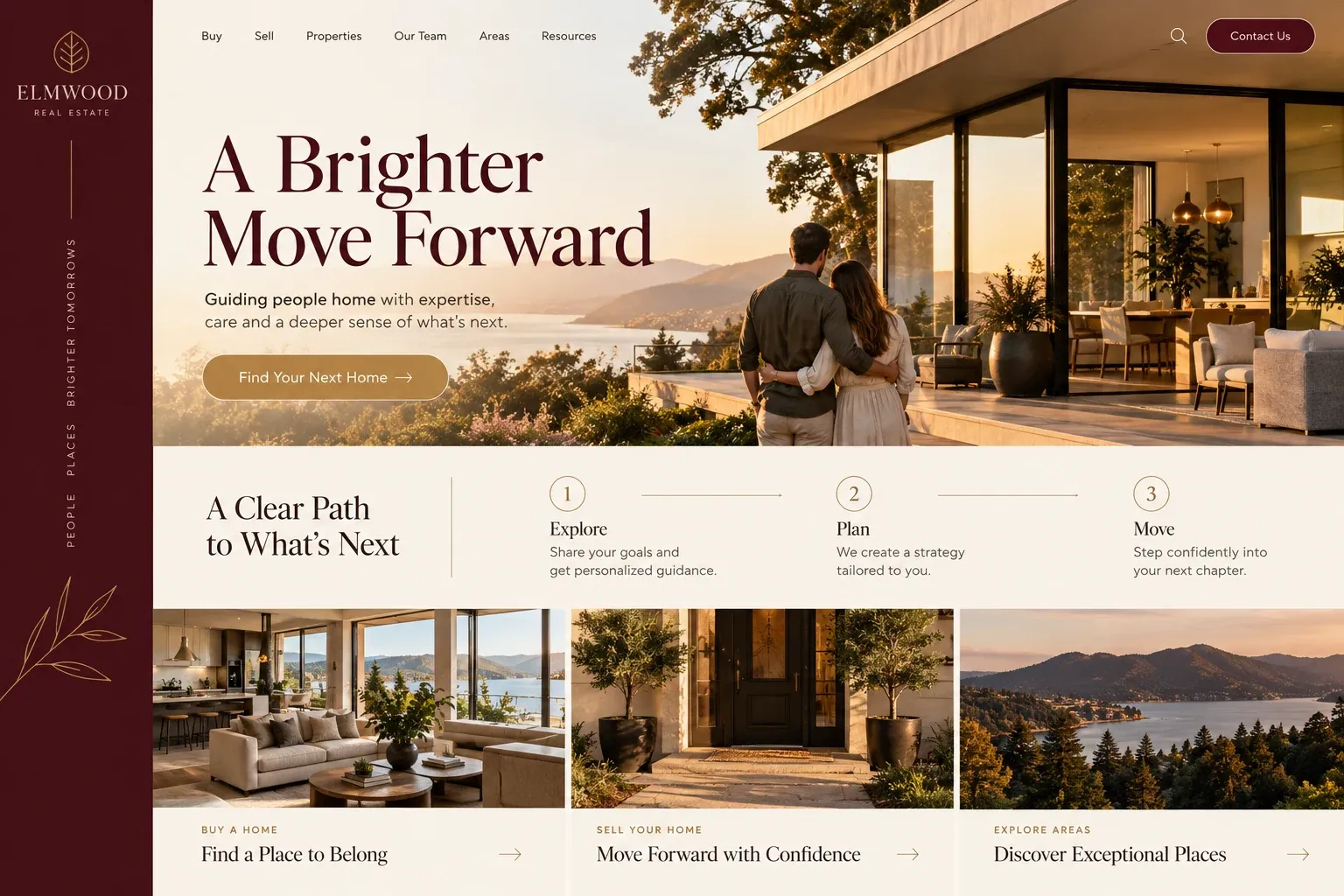
Fictional home staging businesses website homepage design concept
A design concept for a fictional brand. Your site is designed from scratch around yours.

Your customer's story

Selling the house they raised three kids in

Gloria and Ernesto have lived in their Kendall house for twenty-six years. The kids are grown, the stairs are getting harder, and a smaller place near their daughter is waiting. Their agent walks through, smiling at the family photos on every wall, and gently suggests a stager. Ernesto bristles. Gloria says nothing but searches home staging that night, wondering whether a stranger will hate their furniture.

Some staging sites show only vacant luxury condos furnished with rented white sofas. Nothing for a family home with things in it. One company has a page just for occupied homes: a consultation, working mostly with what the owners have, packing away some personal items, and adding a few accessories. Its before and after photos show real living rooms, not showrooms, with notes on what was kept.

Gloria reads that page twice and sends it to Ernesto with no comment. The next morning he fills in the request form himself, listing the rooms and noting that the dining set stays. A staging website earns trust by showing sellers respect as well as good taste, and by explaining clearly what will happen to their home and when.

Why it matters

Why home stagers need a website.

Staging is usually sold twice: once to the listing agent who recommends you, and once to the seller who pays or agrees. Agents want reliability and a look that photographs well. Sellers want to know what you will change, what it costs them in time and disruption, and what happens to their belongings. A social feed of pretty rooms answers neither group, and it says nothing about scheduling, inventory, or how long furniture stays.

We build staging websites that separate your services: consultations, occupied staging, and vacant staging, plus anything else you offer, such as model homes or short-term rental setups. Before and after galleries show context, not just the finished room. A logistics page explains scheduling, delivery, building access, rental terms, and pickup. A request form gives agents a quick way to book and gives sellers room to ask questions, without promising any sale outcome.

What your customers search for

  • home staging near me
  • home staging Miami
  • vacant home staging
  • condo staging company
  • occupied home staging
  • how much does home staging cost

Your customers

What agents and sellers ask a home stager

  • Can you be ready before the photo shoot?

    A logistics page on how you schedule, how far ahead to book, and how install and pickup work around the listing calendar.

  • What happens to our own furniture?

    An occupied staging page explaining what you typically keep, rearrange, or pack away, and how you treat family belongings and photos.

  • What does an empty home look like staged?

    Before and after pairs from vacant properties, shot from the same angle, with a note on the rooms staged and the style chosen.

  • How long does the furniture stay?

    Your rental terms in plain words: the initial period, how extensions work, and what happens if the home sells or comes off the market.

What we build

What a website for home stagers should include.

  • Staging service pages

    Consultations, occupied homes, vacant homes, and model units, each with what is included and who it suits best.

  • Before and after galleries

    Matching angles of real rooms before and after staging, grouped by property type, with short notes instead of sales claims.

  • Logistics explained

    Booking lead time, delivery crews, condo elevator reservations, insurance certificates, rental periods, and pickup, all on one clear page.

  • Agent booking form

    Listing address, property type, vacant or occupied, rooms to stage, photo date, and access details, sent straight to your inbox.

  • Seller questions page

    Honest answers for homeowners about disruption, belongings, pets, and living in a staged home while it is on the market.

  • Inventory highlights

    A look at the furniture styles and pieces you own, so agents can picture what you would bring to a listing.

Planning guide

What does a home staging company need on its website?

A staging website talks to agents who want a reliable partner and to sellers who are nervous about strangers rearranging their home. It needs to show the work honestly, explain the logistics, and make booking quick. This outline covers the pages to build, the photos that persuade, the request forms, and the basics of being found.

Separate each staging service clearly

Vacant staging, occupied staging, and consultations are different jobs for different situations. Give each one a page that says what is included, how long setup usually takes, and who it suits. If you also stage model units for builders or furnish short-term rentals, give those their own pages. An about page with your team and warehouse, and a contact page, complete the core of the site.

Use before and after photos with context

Before and after pairs are the heart of a staging site, but only when they are honest. Shoot from the same spot with the same light, show the whole room, and note what you did: brought in furniture, edited the owner's pieces, or only accessorized. Avoid saying a staged home sold faster or for more unless you can document it, and even then describe a single case, not a promise.

Make booking fit the listing calendar

Agents book stagers around photographers, open houses, and listing dates. A short form should take the address, property type, whether it is vacant or occupied, the rooms to stage, the photo date, and access details such as lockbox or building management contacts. Say how much notice you usually need, honestly, and make your phone number easy to tap.

Condo buildings add a layer. Many require a certificate of insurance and an elevator reservation before furniture moves in or out. Explaining that on the logistics page shows agents you know the drill, and it reminds sellers to alert building management early. Mention whether your crews carry the coverage buildings usually ask for.

Earn searches from agents and sellers

Agents search for stagers by area, and sellers search for advice: home staging Miami, vacant home staging, should I stage my condo. Service pages and a few practical guides written from your experience give search engines specific matches. Keep your Google Business Profile consistent with the site and ask agents you work with to leave reviews there. Search rankings are never assured, but a clear site gives a reliable stager a fair chance to be found.

In your market

Built for home staging in South Florida

Staging here often means high-rise condos, where deliveries depend on building rules, service elevators, and insurance paperwork. Many listings belong to owners who live elsewhere and never see the home staged in person, so photos and clear communication matter more. Light, airy furniture suits the climate and the views, and summer heat and storm season affect delivery schedules. Our pages speak to all of this, and a Spanish version is available for bilingual sellers.

Questions

Questions home stagers ask us.

Should we publish our staging rental terms online?

Publishing the structure helps: the initial rental period, how extensions work, and what a consultation includes. Many stagers quote each home individually because size and condition vary, and the site can say so while still explaining how a quote is built. You choose what to share and approve the wording.

Can agents book staging directly through the site?

They can send a staging request with the address, property type, rooms, photo date, and access details, which arrives in your inbox for confirmation. If you use an online scheduling tool, we can link or embed it. Repeat agents especially appreciate not having to explain the basics each time.

How do we show staging results without overpromising?

Let the photos speak and keep the words factual: what the room looked like, what you changed, and which pieces were rented or the owner's own. If an agent shares a specific outcome, you can quote it with permission as one case. We leave out general claims about faster or higher sales.

Should a staging website talk to sellers as well as agents?

Yes. Agents may recommend you, but sellers often decide, and many are anxious about the process. A page written for homeowners that covers belongings, pets, privacy, and living in a staged home helps the agent make the case and gives sellers confidence before you arrive.

Let's talk

Ready for a website built for home stagers?

Tell us about your business and we will come back with a clear recommendation and a fixed quote. No pressure, no jargon.

Trades we design for

See all 226 trades

226 trades

  • Plumbers website design concept
CallFree quote