Web design for propane and heating oil delivery companies

Website design for propane and heating oil delivery companies.

Fuel delivery customers do not shop often, but when they do, they need answers quickly: do you deliver here, how do I schedule a fill, and who do I call if I smell gas.

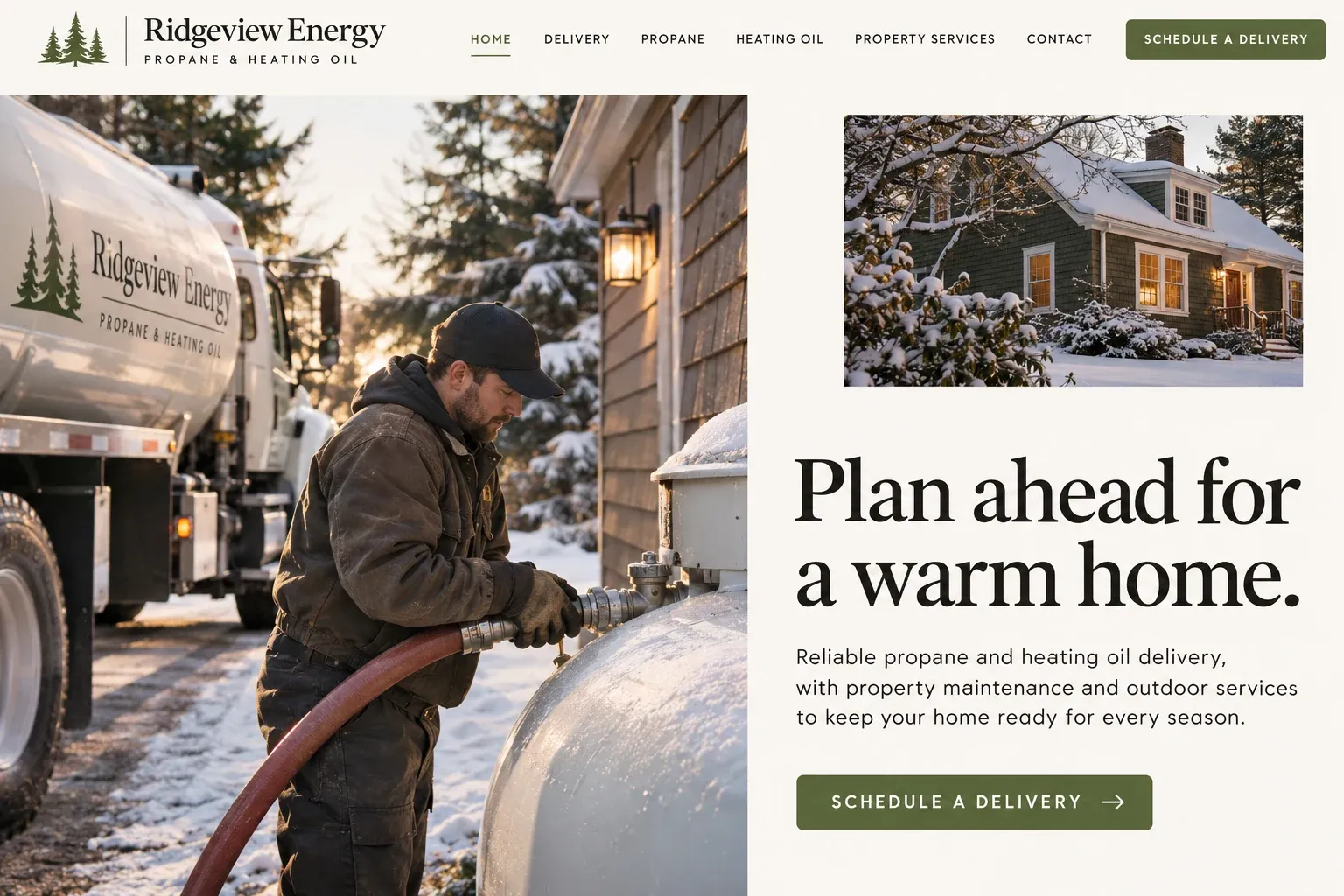
Website design concept for propane and heating oil delivery companies, an illustration
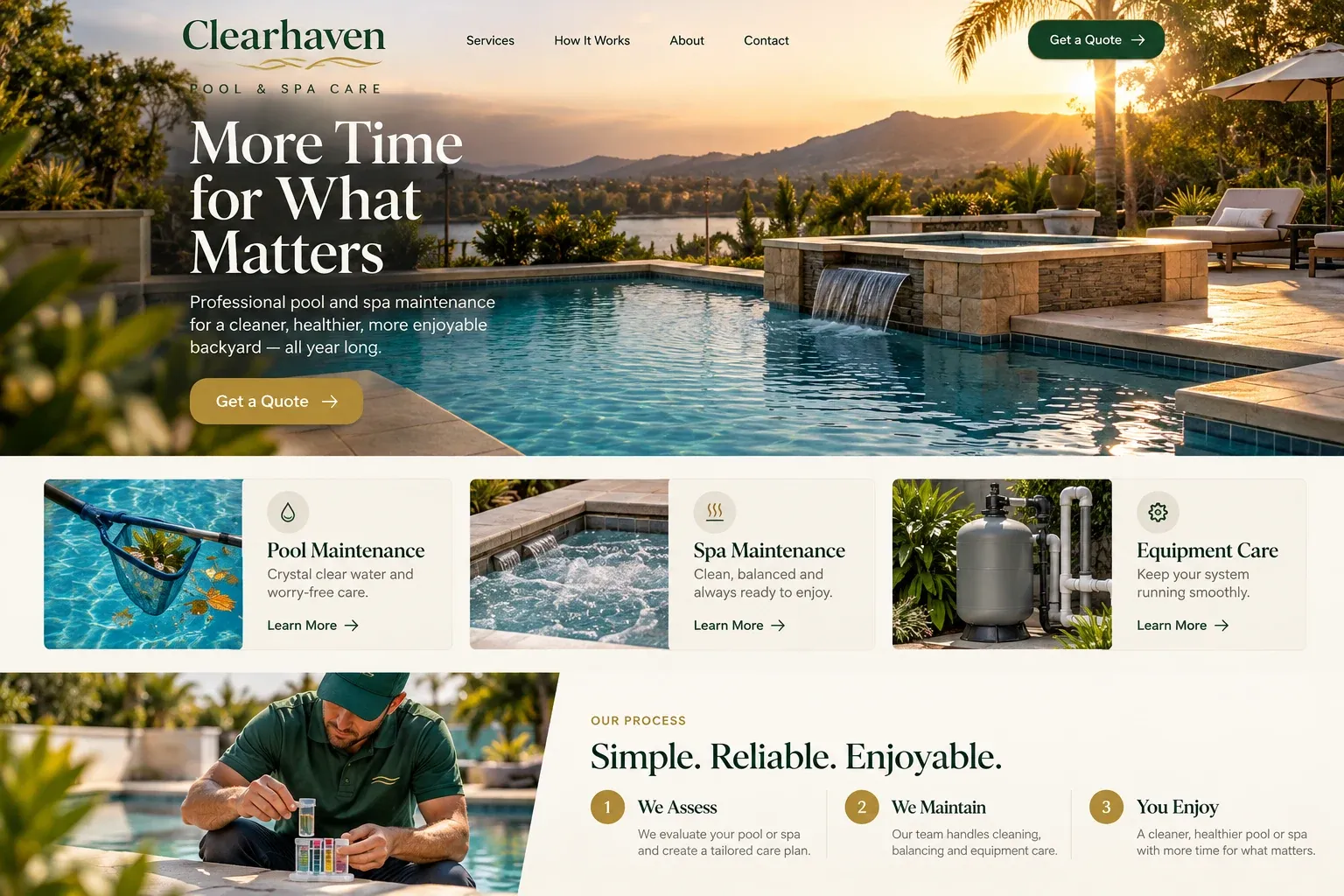
Illustration only: the design, business name and logo are made up to show the kind of website we can build. Not a real business or client website. Yours is designed from scratch around your brand.

Your customer's story

The generator tank before the storm

A hurricane is forecast to pass near the coast later in the week, and on Monday morning Ana checks the gauge on the propane tank that feeds her standby generator and the pool heater. It reads low. Her last supplier sold its routes and never called her back. She sits in the car outside her office and searches for propane delivery in her area.

The first site is a national brand page with no local phone number. The second lists services but nothing about where it delivers. The company she calls has a delivery area map with her city on it, separate pages for generator tanks, pool heaters, and restaurants, a clear explanation of automatic and will-call delivery, and a safety page about what to do if you smell gas.

Its contact page shows the office hours, the emergency number, and a short form for new customers that asks for the address, the tank, and what it feeds. Ana calls and gets on the list for Tuesday. A fuel delivery website must answer coverage, scheduling, and safety in seconds, especially when the weather is turning.

Why it matters

Why propane and heating oil delivery companies need a website.

Fuel delivery customers want reliability more than anything else. New customers arrive after moving, after a supplier changes, or before a storm, and they need to know quickly whether you deliver to them and how scheduling works. Existing customers need to request fills, check office hours, and find safety information. A directory listing cannot explain delivery areas, tank programs, and safety steps, and a social media page is the wrong place for urgent instructions.

We build fuel delivery websites that put coverage, scheduling, and safety first. A delivery area page lists the cities and routes you serve. Fuel service pages cover home, commercial, generator, and pool heater customers. Scheduling guidance explains automatic and will-call delivery and how to request a fill. Contact details and the emergency number appear on every page, and a plain safety page tells people what to do if they smell gas.

What your customers search for

  • propane delivery near me
  • propane delivery Miami
  • generator propane tank refill
  • pool heater propane delivery
  • propane for restaurants
  • heating oil delivery

Your customers

What new customers ask a propane delivery company

  • Do you deliver to my address?

    A delivery area page listing the cities and neighborhoods on your routes, plus a form for addresses near the edge of your coverage.

  • How do I get on a delivery schedule?

    Scheduling guidance explaining automatic delivery, will-call fills, how to read a tank gauge, and how much notice the office needs.

  • Can you fill a tank you did not install?

    A page on leased and customer-owned tanks, switching suppliers, and the safety check new customers can expect before a first fill.

  • What do I do if I smell gas?

    A safety page with plain steps to follow, your emergency number, and links to official safety guidance, reachable from every page.

What we build

What a website for propane and heating oil delivery companies should include.

  • Delivery area page

    The cities, neighborhoods, and routes you serve, with a form for checking addresses near the edge of coverage.

  • Fuel service pages

    Separate pages for homes, generators, pool heaters, restaurants, and businesses, written for the search each customer uses.

  • Scheduling guidance

    Automatic delivery, will-call fills, gauge reading, and storm season planning explained in short, practical steps.

  • Gas safety page

    What to do if you smell gas, linked from every page, with your emergency number in large type.

  • New customer form

    Address, tank type and ownership, what the tank feeds, and preferred delivery method, sent straight to your office.

  • Contact details everywhere

    Office hours, phone, and emergency line in the header and footer of every page, readable on any phone.

Planning guide

What should a propane delivery company's website include?

A fuel delivery website handles three jobs: confirming coverage, organizing deliveries, and giving clear safety instructions. When those are easy to find, the office answers fewer basic calls and new customers sign up with the right information. Here is how we plan the pages, what to show, how customers request fills, and how the site helps a delivery company get found.

Start with coverage and contact

The first questions are always whether you deliver here and how to reach you. Put a delivery area page near the top of the menu with the cities and neighborhoods on your routes, and keep your office hours, phone number, and emergency line visible on every page. If coverage depends on the exact address, add a short form so people near the edge can ask.

Explain fuel services and scheduling

Give each kind of customer a page: home cooking and water heating, standby generators, pool heaters, restaurants, and commercial accounts, plus heating oil if you deliver it. Explain the tanks you fill, leased and customer-owned, and what happens when someone switches suppliers, including any safety check your technicians perform before the first fill.

Scheduling guidance deserves its own page. Explain automatic delivery and will-call orders, how to read a tank gauge, how much notice your office needs, and how storm season changes demand. Customers who understand the system call earlier and more calmly, which makes route planning easier for your drivers and dispatchers alike.

Make safety information impossible to miss

A gas safety page is essential. Explain in plain steps what to do if someone smells gas, link to official safety resources, and show your emergency number in large type. Link the page from the header or footer of every page. Keep the language calm and factual, and let your team approve every word, since this is information people may read in a hurry.

Help local customers find you

Fuel searches are local: propane delivery near me, generator propane refill, or a city name. Service pages and an area page give search engines clear topics. Keep your name, address, and phone consistent with your Google Business Profile, and ask long-time customers for reviews. That structure gives a reliable local supplier a fair chance to appear when new customers start looking.

A new customer form completes the picture. Ask for the address, the tank type and ownership, what the tank feeds, the current gauge reading if known, and the preferred delivery method. Requests go straight to the office, which can confirm coverage and schedule a first delivery without a long phone call.

In your market

Built for fuel delivery in South Florida

In South Florida, propane rarely heats homes through a long winter. It runs gas ranges, tankless water heaters, pool heaters, clothes dryers, and the standby generators many households and businesses rely on during hurricane season. Restaurants and food trucks use it every day, and heating oil is uncommon here. Demand rises before storms, when everyone checks their gauges at once. We write pages around these local uses and can add a Spanish version for bilingual customers.

Questions

Questions propane and heating oil delivery companies ask us.

Should our propane website show a delivery area map?

Yes. Coverage is the first question new customers ask, and a map or clear list of cities answers it without a phone call. For addresses near the edge of your routes, a short form lets people ask, and your office decides case by case.

Can customers request propane fills online?

A request form can collect the account name, address, gauge reading, and preferred delivery window, and send it to your office. If you already use a customer portal or ordering tool, we link to it from every page so existing customers can log in quickly.

How should our site handle gas safety information?

Give it its own page, linked from every page. Use plain steps your team approves, show the emergency number in large type, and link to official propane safety resources. We keep the wording calm and factual, because people may be reading it in a stressful moment.

Do we need separate pages for propane generators and pool heaters?

We recommend it. Homeowners search for those uses specifically, especially before hurricane season, and each page can explain tank questions, scheduling, and what to check before a storm. Each one links to your delivery area page and new customer form, so the next step is always one tap away.

Let's talk

Ready for a website built for propane and heating oil delivery companies?

Tell us about your business and we will come back with a clear recommendation and a fixed quote. No pressure, no jargon.

Trades we design for

See all 436 trades

436 trades

  • Plumbers website design concept
CallFree quote