Web design for generator installers

Website design for generator installers.

Most people start shopping for a generator during the outage that made them want one. Your website has to serve them then, and again during the calm months when they finally plan a proper standby system.

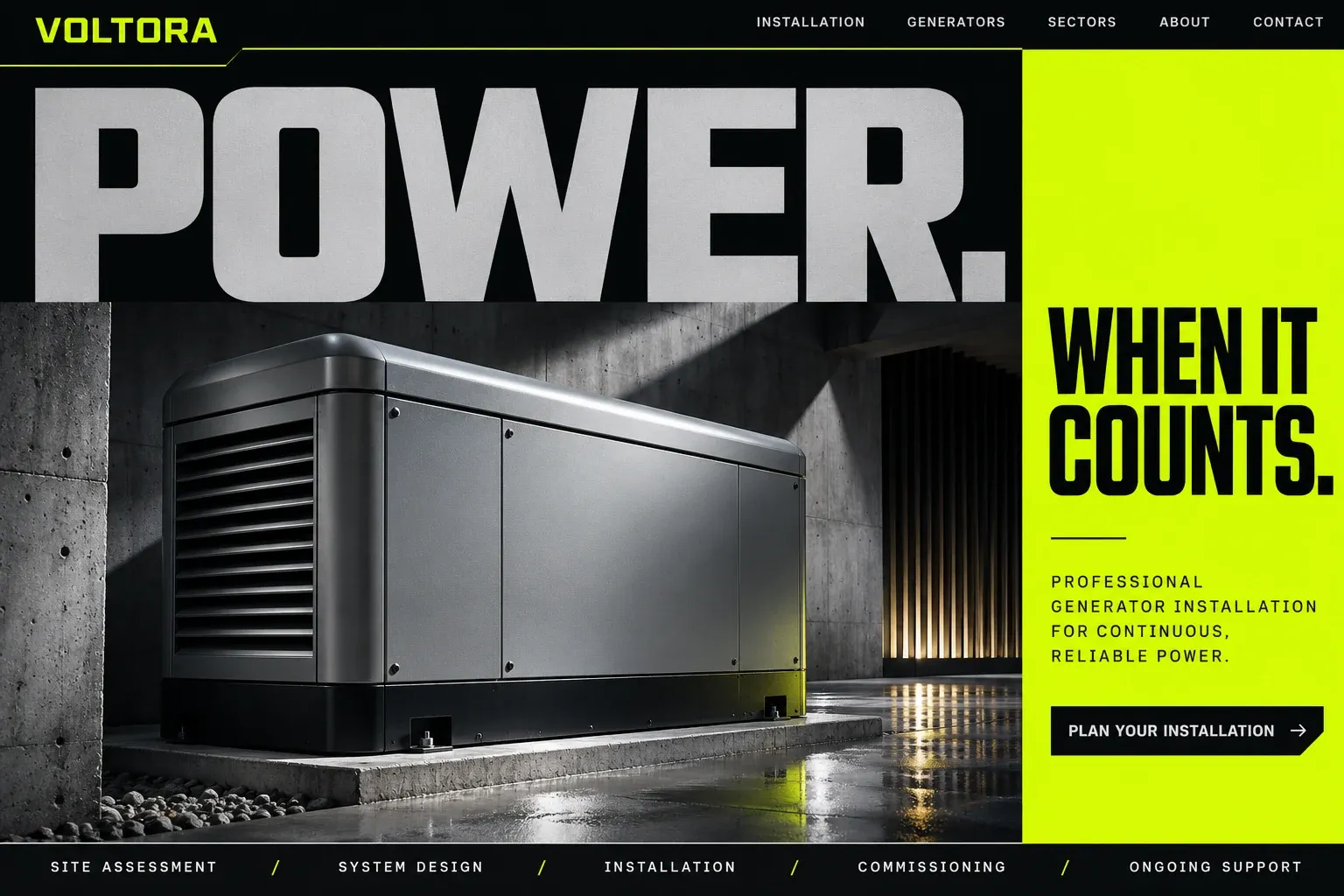
Website design concept for generator installers, an illustration
Illustration only: the design, business name and logo are made up to show the kind of website we can build. Not a real business or client website. Yours is designed from scratch around your brand.

Your customer's story

Day three without power in August

On the third day without power after a storm, Robert lies awake listening to a generator hum next door. His fridge is warm, the house is stifling, and his mother, who lives with him, has barely slept. He charges his phone in the car and searches for whole home generators, promising himself he will never go through this again.

Most of what he finds is confusing. Some sites talk only about brands and kilowatts. Others are national lead forms that never name a local installer. One company explains, in plain words, how to work out what the house needs to run, the difference between natural gas and propane, what a transfer switch does, and how permits and inspections fit in.

It also says honestly that installs take planning and do not happen during an outage, and it offers an assessment visit once power is back. Robert fills in the form from the car. A generator installer's website wins that customer by being clear on the worst day and still useful when the lights come back on.

Why it matters

Why generator installers need a website.

Generator buyers arrive in two moods. During and right after an outage, people are anxious and searching on phones with little battery. In the calm months, they research carefully, compare installers, and ask about fuel, sizing, permits, and maintenance. A directory listing shows a phone number but cannot explain load calculations, transfer switches, or what an assessment involves, and national lead sites never introduce the local crew.

We build generator installer websites for both moods. A short notice explains what you can do during an outage and when assessments resume. Then the site does the patient explaining: pages on sizing and power needs, fuel options, the installation steps from permit to inspection, and maintenance visits. The assessment form asks about the home and what must run, so your visit starts with real details.

What your customers search for

  • whole house generator installation
  • generator installers near me
  • standby generator Miami
  • natural gas generator for home
  • generator maintenance service
  • transfer switch installation Miami

Your customers

What homeowners ask before buying a standby generator

  • What size do we need?

    A plain guide to power needs, explaining the difference between running a few circuits and the whole house, with an assessment as the real answer.

  • Natural gas or propane?

    A fuel page explaining when each option makes sense, what a propane tank involves, and how fuel choice affects placement on the property.

  • How does installation work?

    Step by step, from assessment and permit to the pad, gas line, transfer switch, inspection, and the first test run with the homeowner.

  • Who services it afterward?

    A maintenance page listing what your service visits cover, how often a generator should be checked, and how to book a visit.

What we build

What a website for generator installers should include.

  • Power needs guide

    A page that walks homeowners through what they want running in an outage, leading naturally to an assessment request.

  • Generator options pages

    Standby, whole home, and portable connection options, each with photos of your installs and the brands you carry.

  • Installation steps timeline

    Assessment, permit, site work, transfer switch, inspection, and startup laid out so homeowners know what to expect.

  • Outage notice banner

    A banner switched on during widespread outages stating what you can help with now and when new installs resume.

  • Maintenance and service requests

    A form for existing owners to book service, report a fault, or ask about a generator another company installed.

  • Assessment request form

    Questions on home size, fuel available, critical needs, and preferred placement, with room to attach photos of the meter and yard.

Planning guide

What should a generator installer's website include?

A generator installer's website works hardest at two times: during an outage, when people panic, and months later, when they plan. It should answer sizing, fuel, and installation questions honestly, and make the assessment easy to request. Here is how we plan those pages, what to show, and how the site helps an installer get found.

Explain sizing and fuel in plain words

Homeowners search for answers before they search for a company: what size generator they need, whether natural gas is available on their street, how a transfer switch works. Give each of those questions a page written in everyday words, with the honest note that an assessment settles the details. Add pages for the generator types and brands you install, with photos from your own jobs. Keep a short glossary of terms like load, circuits, and automatic transfer, linked from every page.

Show the work behind the box

A finished generator looks simple, so show what goes into it: the pad, the gas line, the transfer switch, the clean wiring. Photos from real installs, with a short description of the home and what it runs, build more trust than a manufacturer's glossy image. Put your license numbers and insurance on every page.

A process page should cover the assessment, permits, utility coordination, installation day, inspection, and the walkthrough. Say plainly what can slow things down, such as permit offices and gas utility schedules, so homeowners plan ahead instead of calling during the next storm. Mention whether you register warranties and schedule the first service visit, since owners often forget both.

Handle outage calls and planned requests

During outages, your phone floods with calls you cannot help with. A notice on the site, switched on when you ask, explains what you can do now and how to join the list for an assessment. In calm months, a fuller form asks about the house, fuel, critical needs, and photos of the meter and yard, then emails you the details.

Be easy to find before storm season

Searches for generator installation rise as storm season approaches and spike after big outages. Separate pages for standby generators, maintenance, and each brand you are authorized to install give search engines clear topics. List your service areas, keep your Google Business Profile matched to the site, and ask happy customers to mention their install in reviews. That gives your business a fair chance to be found.
In your market

Built for generator installation in South Florida

Here, generators are mostly about hurricanes, long summer outages, and heat that makes a house unlivable without air conditioning. Installers deal with permits and inspections, natural gas availability that varies by neighborhood, propane tank placement, flood zones, older panels that may need work before a standby unit connects, and condo or association rules. Demand spikes before and after storms, then quiets down. Many customers prefer Spanish, and some are seasonal owners who want the house protected while they are away.

Questions

Questions generator installers ask us.

Should our generator website show which brands we install?

Yes, if you are authorized to install them. A page for each brand you carry, with photos of your own installs and the models you usually recommend, helps homeowners who already have a brand in mind. We link to the manufacturer for full specifications rather than copying them.

How should the site handle calls during a long outage?

We add a notice that can go up as soon as an outage hits, saying plainly what you can do now, such as service for existing customers, and how others can request an assessment once things settle. It keeps expectations honest and spares your office from repeating the same answer.

Can customers book generator maintenance online?

Yes. A service request form asks for the generator brand, model if known, the address, and what is wrong or due, and sends it to your email. If you use scheduling or field service software with online booking, we link to it instead.

Should we explain generator sizing on the site?

Explain it generally, then point to the assessment. Homeowners want to understand the difference between covering essentials and the whole house before they call. A plain guide does that, while making clear that the right size depends on the home, which your visit confirms.

Let's talk

Ready for a website built for generator installers?

Tell us about your business and we will come back with a clear recommendation and a fixed quote. No pressure, no jargon.

Trades we design for

See all 436 trades

436 trades

  • Plumbers website design concept
CallFree quote