Web design for HVAC contractors

Website design for HVAC contractors.

In South Florida a failed air conditioner stops being a comfort problem within hours. It becomes a sleep problem and a humidity problem, and the homeowner keeps searching until someone looks ready to come out.

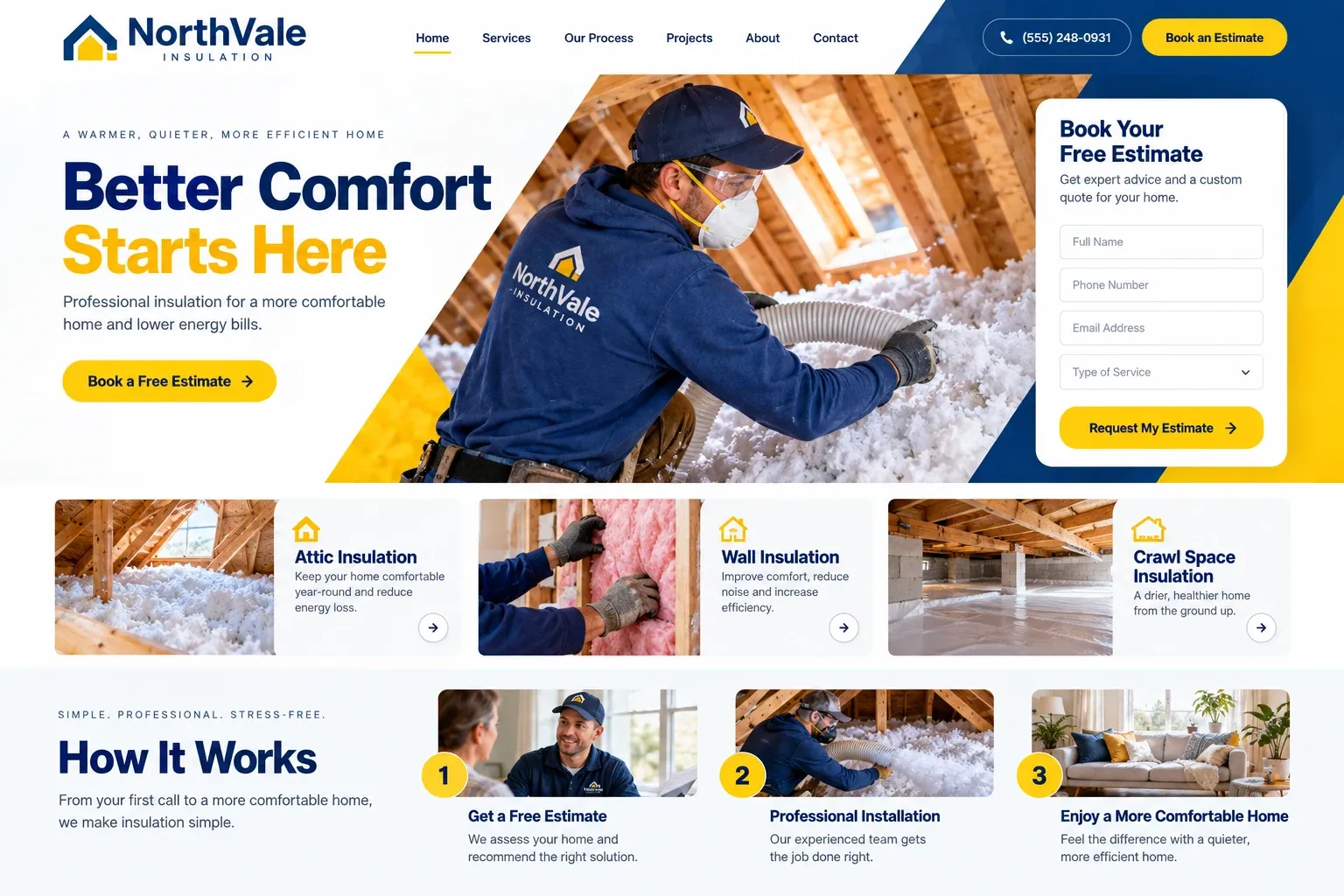
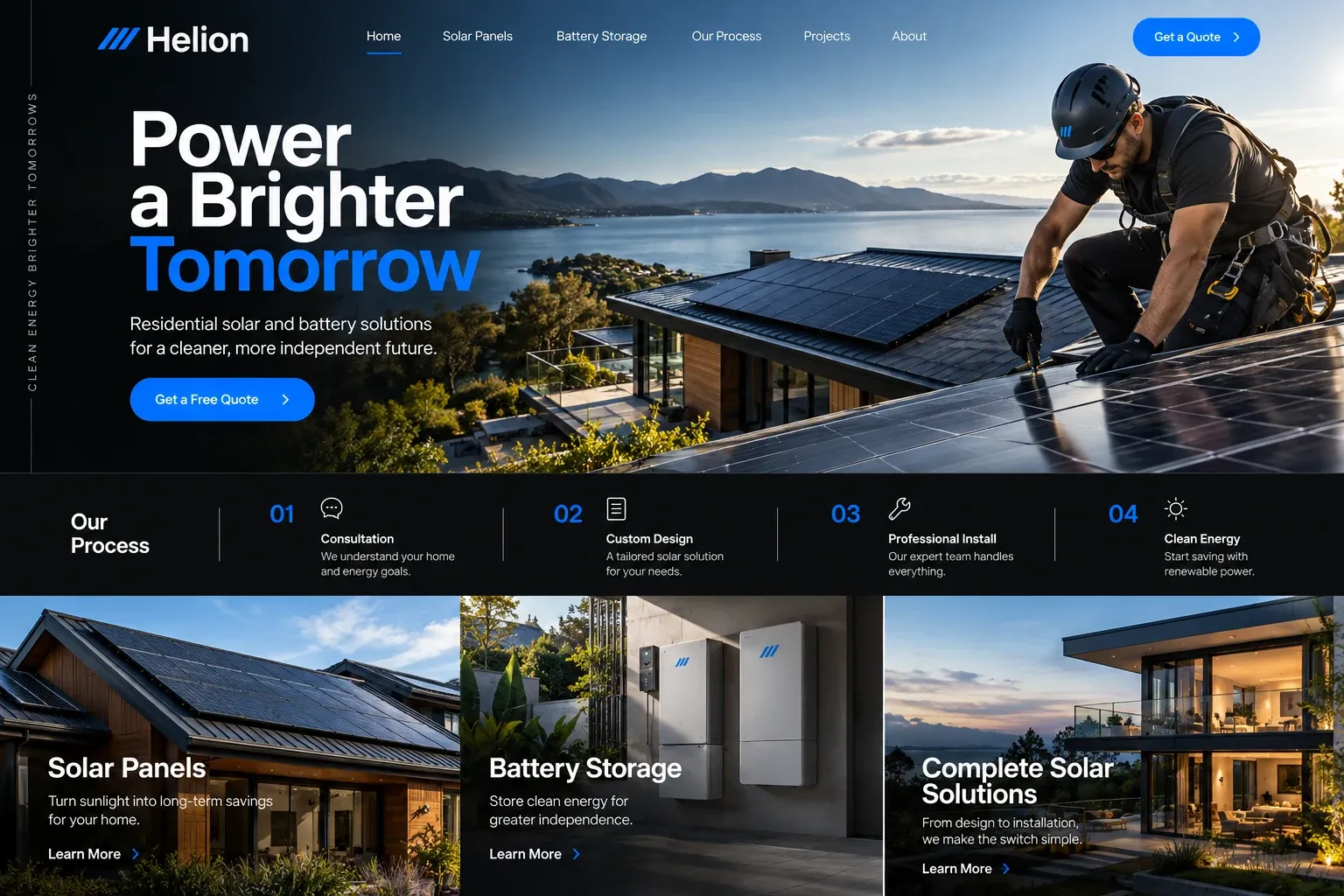
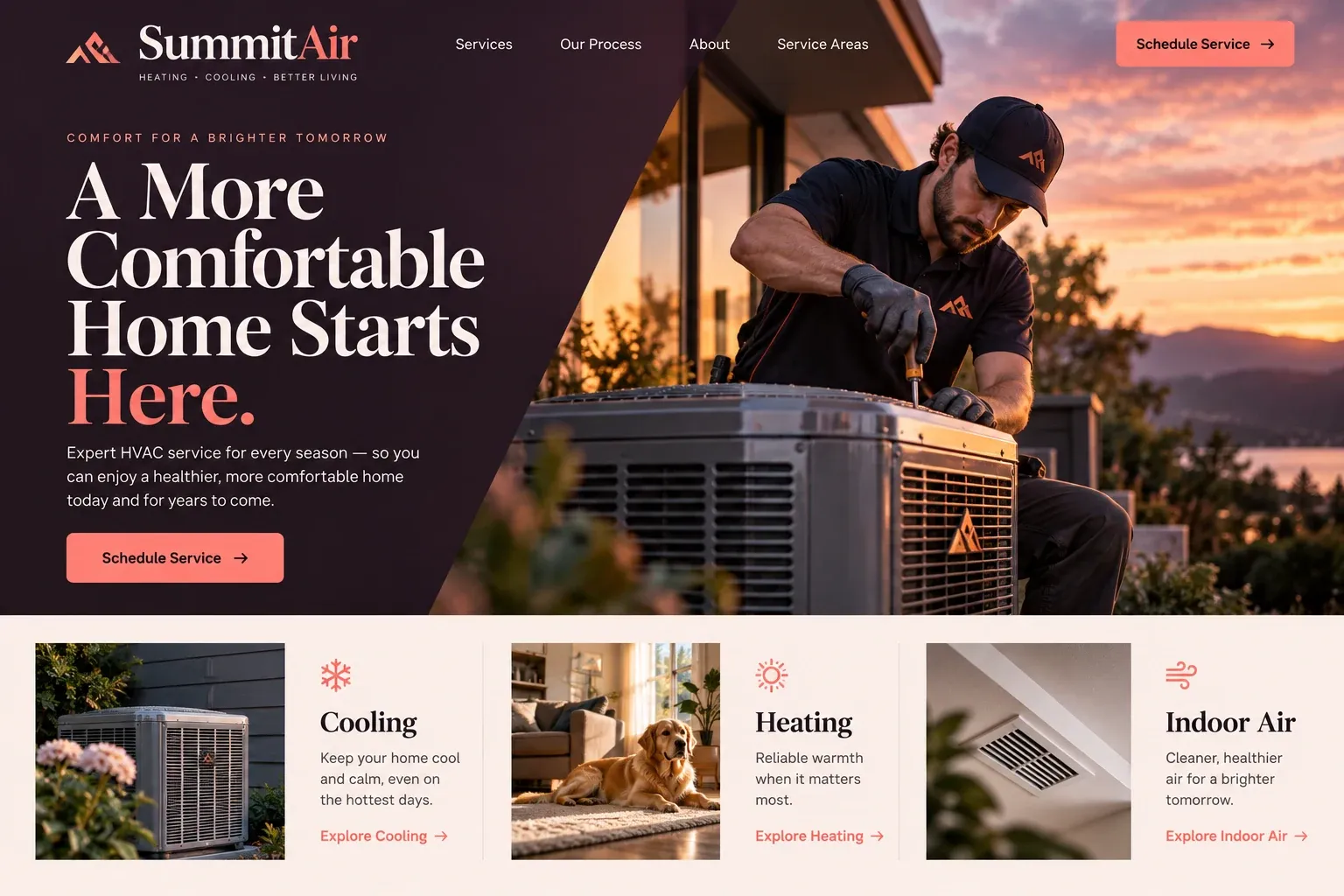
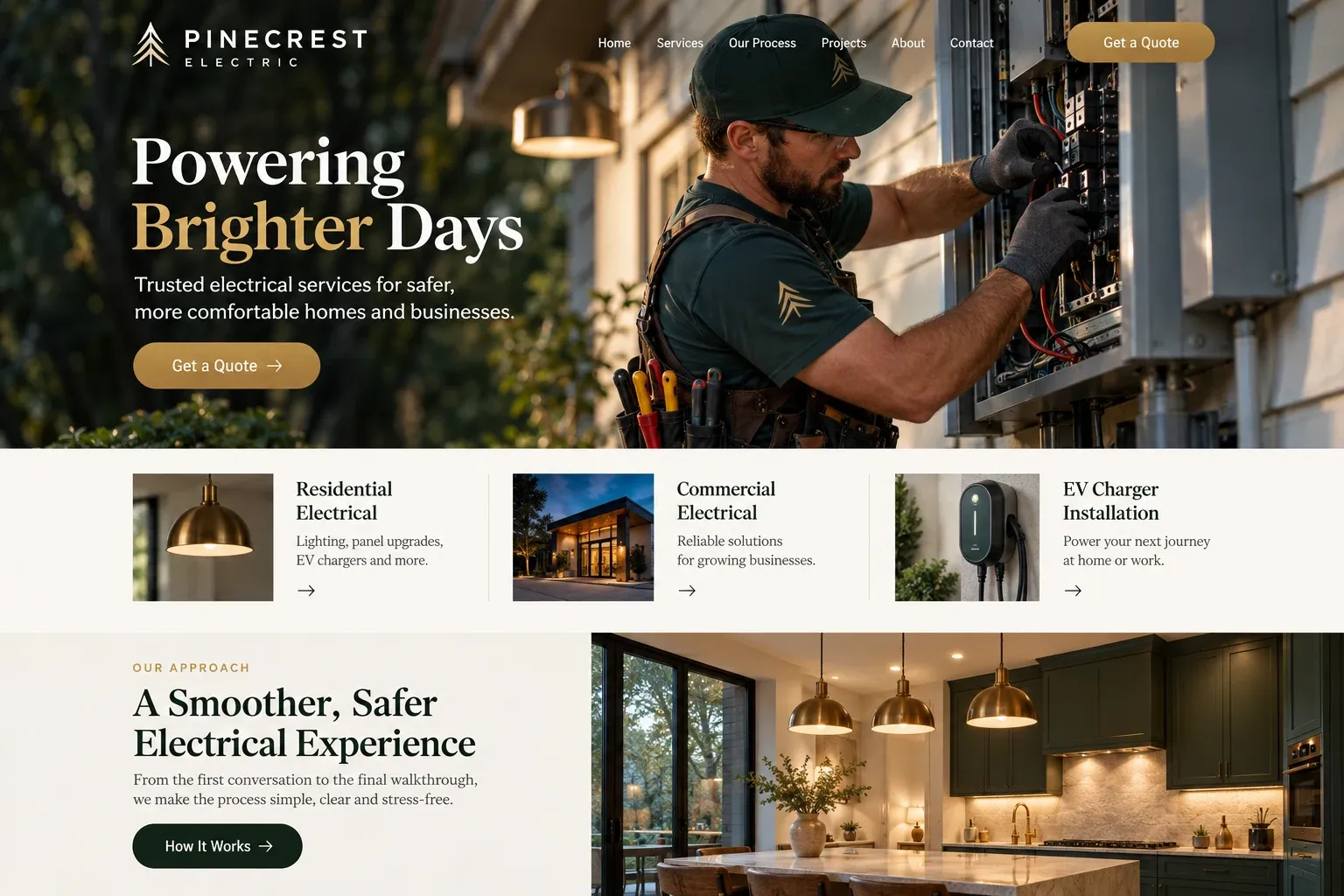
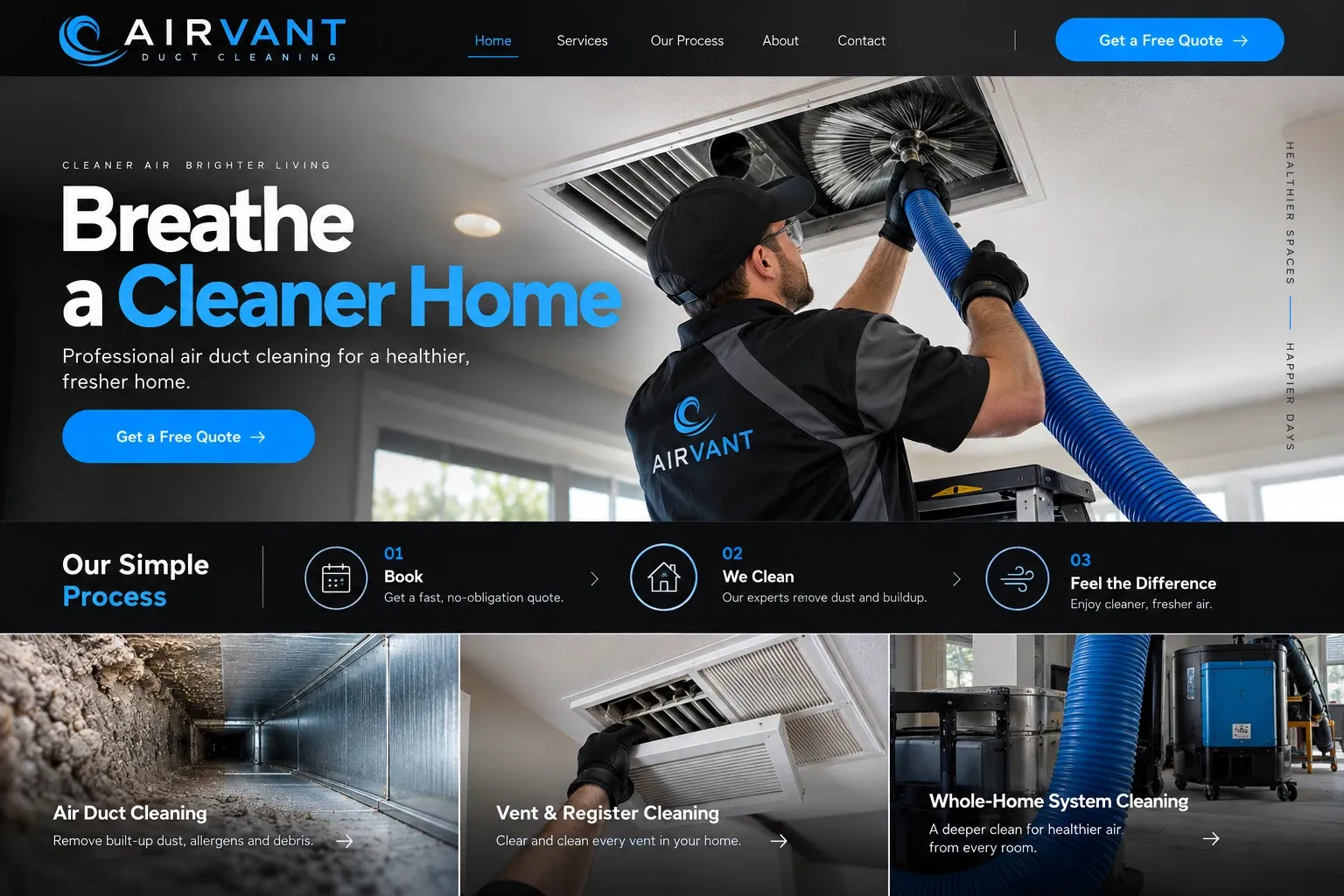
Fictional hvac contractors website homepage design concept
A design concept for a fictional brand. Your site is designed from scratch around yours.

Your customer's story

The back bedroom never gets cool

It is late June, and the thermostat in the hallway says 76, but nobody in the house believes it. The back bedroom, where Yolanda's mother sleeps, feels sticky by ten at night. The air handler in the closet runs and runs. The electric bill that came on Monday was the highest she has ever paid. She lowers the setting another two degrees, hears the system hum, and feels no difference at all.

In bed, she searches "AC not cooling one room" and lands on a mix of forums and company sites. Some push a brand new system on the first screen. Others list every equipment brand under the sun and offer no way to book except a phone line that closes at five. One contractor's site asks a simple question near the top: do you need a repair, a tune-up, or advice on replacing an older system?

She taps repair, picks a morning on the request form, and adds that the unit is about fourteen years old. The site never tried to diagnose her house from a distance. It simply made clear that someone would come, look, and explain the options. That is what an HVAC website has to do on the hottest night of the year: give a worried person a straight path to a visit.

Why it matters

Why HVAC contractors need a website.

Air conditioning customers arrive in three states of mind. Some have warm air blowing at midnight and need a technician tomorrow. Some want the yearly tune-up before summer. Others are weighing whether an aging system deserves another repair. Each needs a different page and a different next step. A directory listing lumps them together, and a social media page cannot hold the brands you service, your hours, or the details of a maintenance agreement.

We build HVAC websites around those three paths. Repair visitors see your number and a short request form at the top. Maintenance gets a page explaining what a visit includes and how your agreement works. Replacement gets room to explain what you check before recommending new equipment, the system types you install, and any financing partners. Your license number and the brands you work on appear throughout, so nobody has to call just to ask.

What your customers search for

  • ac repair near me
  • ac repair Miami
  • air conditioner not cooling
  • ac replacement cost
  • ductless mini split installation
  • ac tune up before summer

Your customers

What homeowners ask before booking an AC visit

  • Do I need a repair or a new system?

    A page explaining what a diagnostic visit covers and how you present options, so nobody feels pushed toward replacement before a technician has looked.

  • Do you work on my brand?

    The equipment brands and system types you service, from central split systems to ductless units and condo air handlers, listed plainly in one place.

  • When can someone come out?

    Your service hours, how urgent calls are handled, and a request form that lets customers choose a preferred morning or afternoon window.

  • What does the maintenance agreement include?

    Visits per year, what the technician checks, and any priority scheduling or member discounts, written out so customers can decide before you call them.

What we build

What a website for HVAC contractors should include.

  • Repair, tune-up, replacement paths

    Three clear starting points on the home page, each leading to its own page and its own short request form.

  • Equipment and brands page

    The systems you install and service, including central air, ductless mini-splits, heat pumps, and dehumidifiers, with photos from your own jobs.

  • Maintenance agreement details

    What a tune-up includes, how often you visit, and what members receive, with a simple form for anyone who wants to join.

  • Indoor air quality pages

    Duct cleaning, filtration, UV lights, and humidity control explained for homeowners bothered by musty smells, dust, and sticky rooms.

  • Seasonal service notes

    Short, timely updates before summer and hurricane season, which give customers a reason to come back and book a check.

  • Financing and rebates

    Links to the financing partners you use and a plain note on utility or manufacturer rebates you can help customers claim.

Planning guide

How should an HVAC company plan its website?

An HVAC website handles urgent calls, routine maintenance, and big replacement decisions, often for the same household in the same year. The trick is giving each one a clear door without making the site feel crowded. These are the pages, the proof, the booking options, and the local search basics we plan for air conditioning and heating contractors.

Three doors on the home page

Most HVAC visitors know which situation they are in, even if they cannot name the fault. Put three clear choices near the top: repair, maintenance, and replacement. Each leads to its own page. Below them, add pages for the services people search by name, such as AC repair, ductless installation, duct cleaning, and whole-home dehumidifiers. Commercial rooftop work, if you do it, deserves a separate section with photos that actually look like commercial work.

Show equipment, technicians, and credentials

A photo of a neat condenser install on a fresh pad, a clean air handler closet, or a technician checking refrigerant pressures tells a homeowner more than any slogan. Show your trucks and your team in uniform. List the brands you install and any dealer status you genuinely hold. Your license number and insurance belong on every page, and your Google reviews belong near the request form, where people make up their minds.

Booking that respects the heat

When the AC is out, a phone call is fastest, so keep a call button on screen at all times. For everything else, a request form works around the clock: name, phone, address, the problem, the age of the system if known, and a preferred time window. If your dispatch software offers online booking, the site can link to it or embed it, so customers can pick a real slot themselves.

Be honest about timing. If the busiest summer weeks mean a wait for routine visits, say so, and explain how you prioritize calls, for example homes with elderly residents or babies, if that is your policy. People forgive a wait they were warned about far more readily than a promise that quietly slips.

Earn local searches season by season

AC searches climb with the heat and after storms, and they are almost always local. Keep your name, address, and phone the same on the site and your Google Business Profile, and list the areas your trucks cover. Each service page gives search engines a precise match. A short seasonal update, like a pre-hurricane checklist for the outdoor unit, gives people a reason to return. Reviews matter too, so ask happy customers after each visit.
In your market

Built for air conditioning in South Florida

Here, air conditioning runs nearly all year and humidity is as much of a problem as heat. Salt air corrodes coils near the coast, condo air handlers sit in tight closets, and hurricane season brings questions about securing outdoor units and running on generator power. Insurers may ask about the age of the system in older homes. Many customers would rather talk in Spanish. We write pages around these realities and can add a Spanish version of the whole site.

Questions

Questions HVAC contractors ask us.

Should our HVAC site list the equipment brands we service?

Yes, if you work on many of them. Homeowners often search with the brand name printed on their outdoor unit, and seeing it listed reassures them before they call. We add a brand list and note any dealer or installer status you hold, using only claims you can document.

Can customers sign up for our AC maintenance agreement on the website?

They can read exactly what the agreement includes and send a sign-up request through a form, which reaches your office by email. If you already take payments through your field service software or a payment link, the page can link to it so customers finish enrolling online.

How do we explain AC repair versus replacement without sounding pushy?

We write a page that describes what your technician checks, such as age, repair history, efficiency, and refrigerant type, and how you present options. It does not diagnose anyone's system online. Homeowners read it before the visit, so the conversation in the driveway feels like advice rather than a sales pitch.

Can the website help during a heat wave when our phones are swamped?

It can take some pressure off. A banner at the top can tell visitors about current wait times, the request form collects details around the clock, and a short page of things to check first, such as the breaker and the filter, answers the questions your dispatcher hears all day.

Let's talk

Ready for a website built for HVAC contractors?

Tell us about your business and we will come back with a clear recommendation and a fixed quote. No pressure, no jargon.

Trades we design for

See all 226 trades

226 trades

  • Plumbers website design concept
CallFree quote