Planning guide
What should a prosthetics and orthotics provider's website include?
A prosthetics and orthotics website is read by people in a hard season: new amputees, parents of children who need braces, older adults trying to stay on their feet. It is also read by the physicians and therapists who refer them. Here is how we plan the pages, what to show, how both groups make contact, and how the practice gets found.
Pages for patients and for referrers
Patients need a home page that says what you provide and where, then a page for each device category, a fitting process page, an insurance page, clinician profiles, and a page per location. Physicians, therapists, and case managers need one referral page with what to send, how to send it, and how you report back. Keep the two paths separate so each audience finds what it needs without wading through the other's details.
Show the people and the work
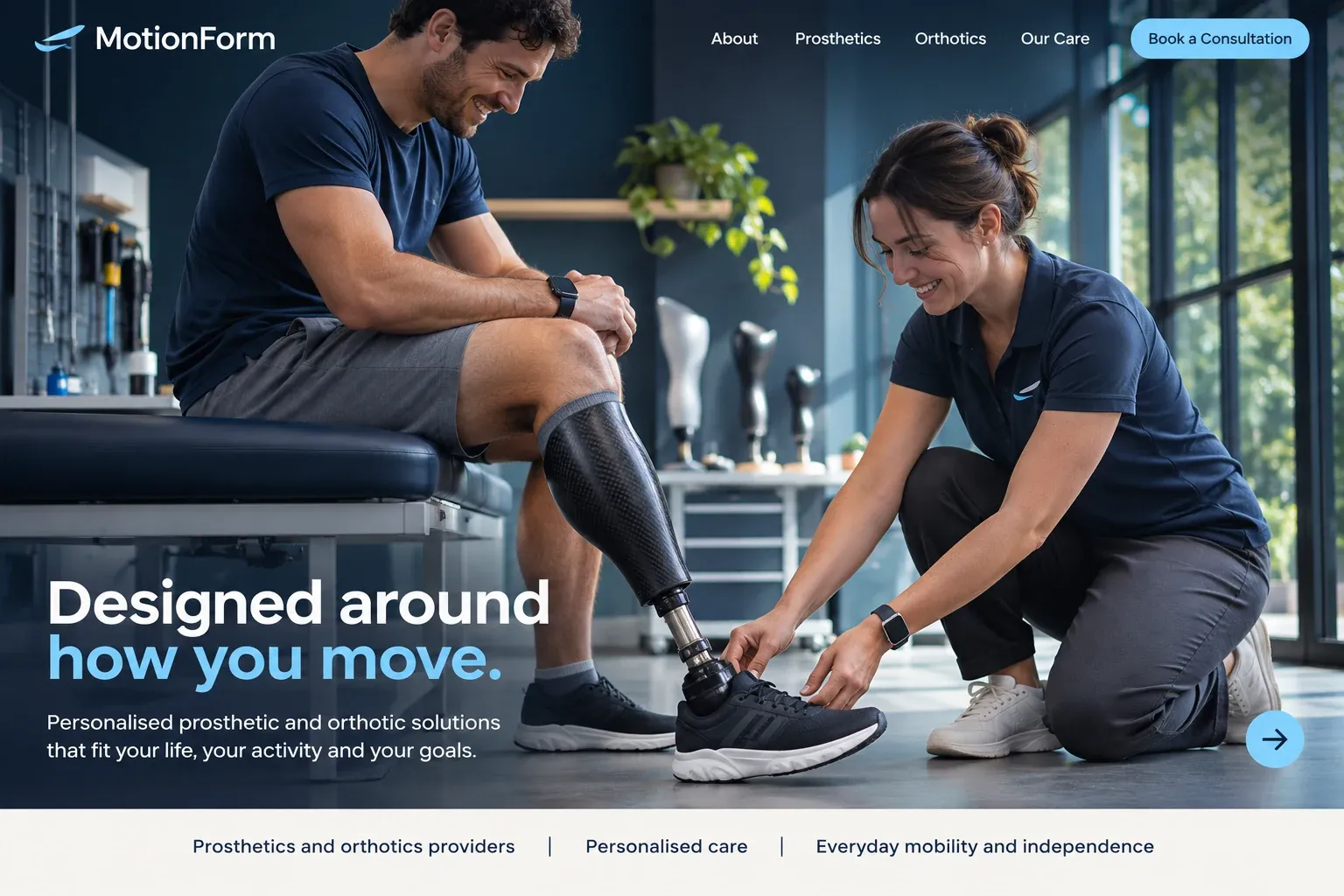
Real photos of your clinicians, fitting rooms, and on-site lab show families that the work is careful and personal. Photos of patients belong only with their written permission, and many practices use device close-ups instead. Explain how fittings happen and why adjustments continue for months. Avoid promising what any patient will be able to do, because results depend on many things the website cannot know.
Make the first appointment easy
Often the first call comes from a worried daughter, a spouse, or a hospital case manager rather than the patient. A tap-to-call number and a short appointment request form handle most of those first contacts. Ask for the patient's or caregiver's name, phone, email, and the name of the prescribing doctor, so your office can call back and start insurance checks.
Leave diagnoses, surgical notes, and medical records out of the website form. Those belong in your secure intake system or the referral channel your office already uses. Put practical details beside the form: what to wear to a fitting, what to bring, and how long a first evaluation usually takes.
Help patients and referrers find you
Families search with a device and a place: prosthetic leg provider near me, scoliosis brace in Miami, custom orthotics. Device pages, location pages, and local business markup give search engines something to match. Keep each office's Google Business Profile accurate, with hours, accessibility details, and photos. When patients are happy with their care, a gentle review request your office approves helps the next family. No site can promise a position, but this gives a good provider a fair chance.