Web design for occupational therapists

Websites that explain occupational therapy plainly.

Many families first hear the words occupational therapy from a teacher, a pediatrician, or a hospital discharge planner, and their first question is what it even means. The practice whose website explains it in everyday terms gets the call.

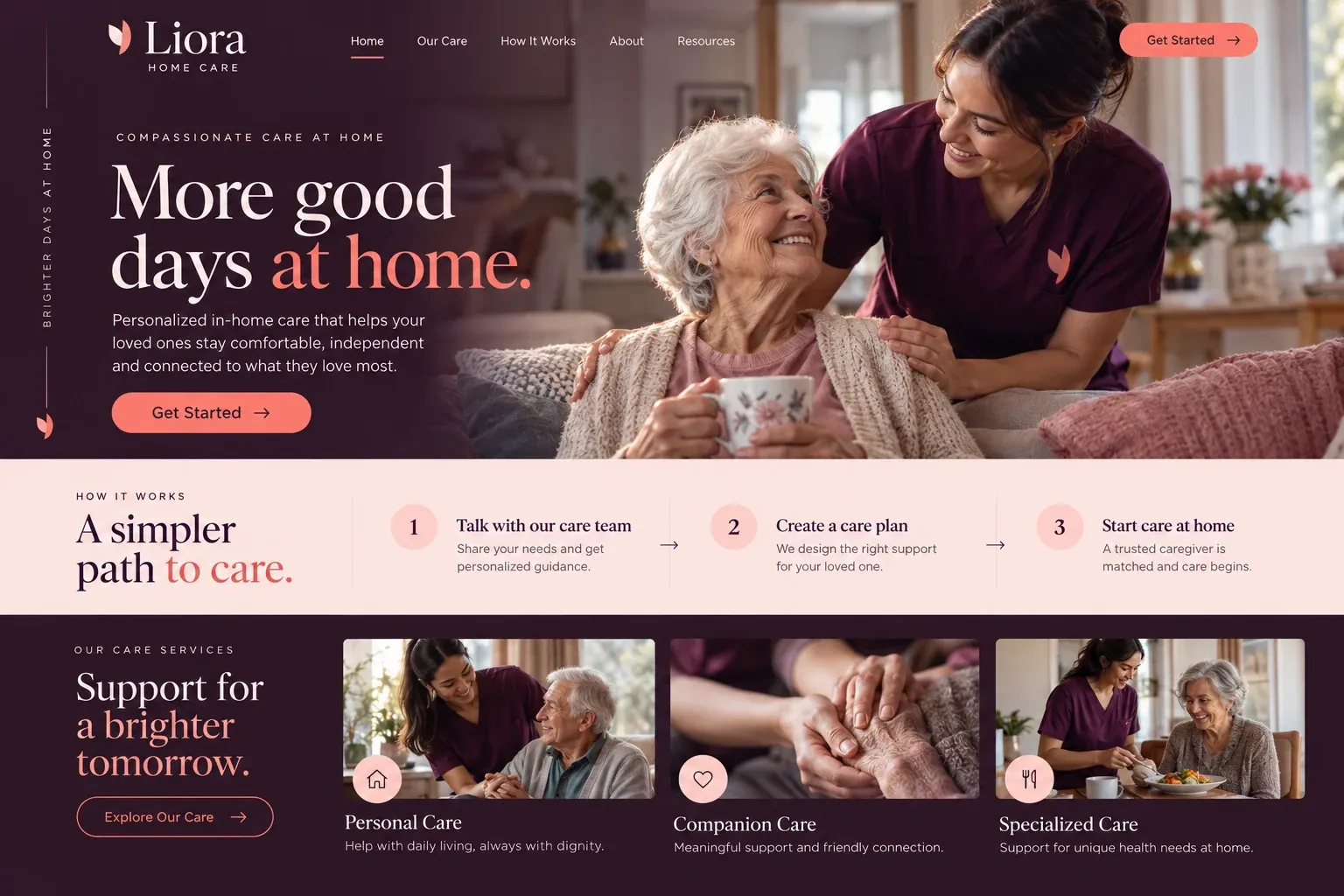
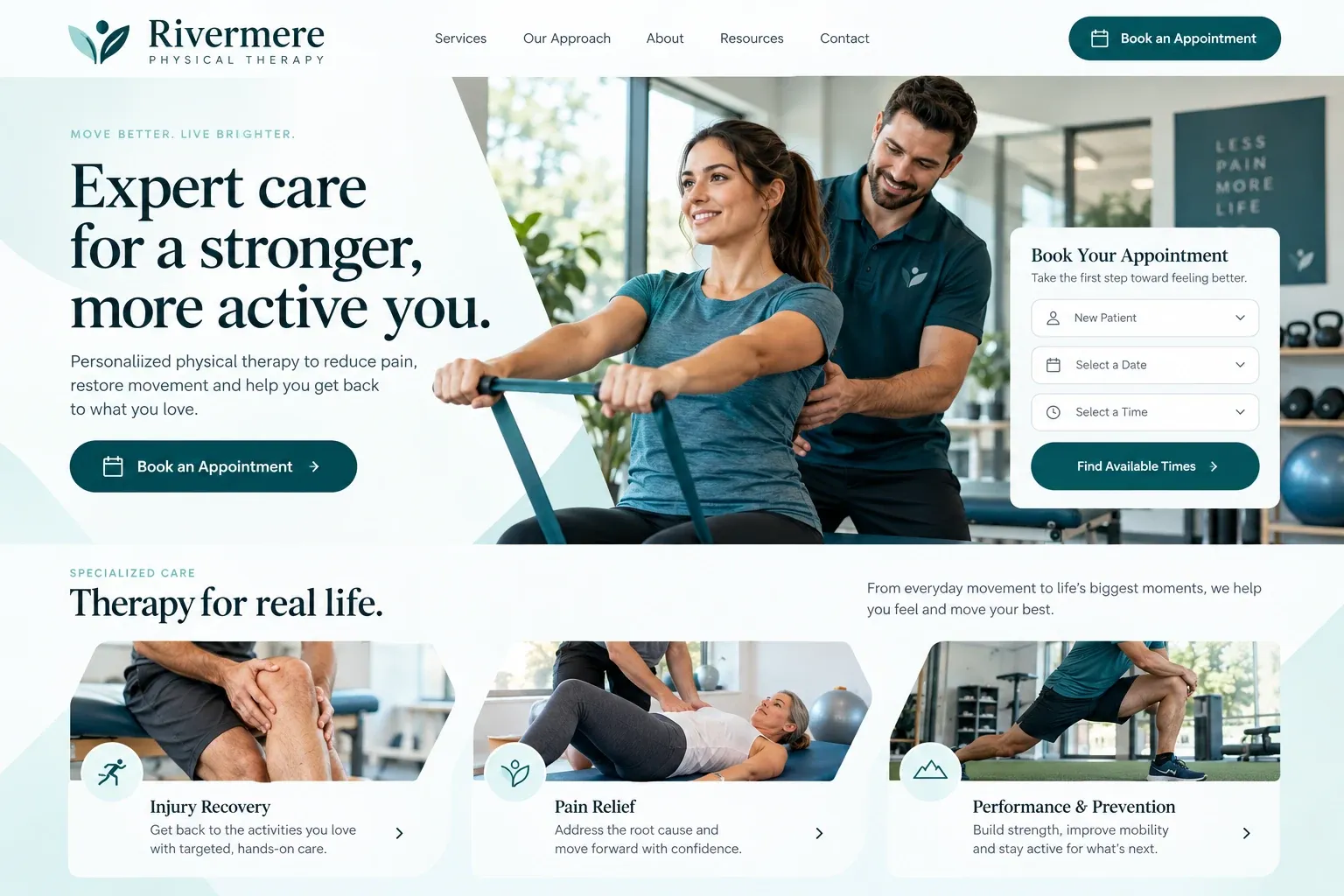
Fictional occupational therapists website homepage design concept
A design concept for a fictional brand. Your site is designed from scratch around yours.

Your customer's story

My mother does not have a job anymore

Gloria is seventy-eight, home again after a stay in the hospital, and determined to make her own coffee. Her daughter Nadia has taken the week off to help. Before discharge, a planner mentioned occupational therapy at home and handed over a list of names. Nadia nodded at the time. Now, at the kitchen table, she wonders why her retired mother needs therapy for an occupation.

She searches "occupational therapy at home for seniors" and opens three sites. The first is written for other therapists. The second only talks about children. The third starts with ordinary things: getting dressed, moving safely around the kitchen, stepping in and out of the shower. It lists the neighborhoods its therapists visit, the plans it works with, and a therapist who speaks Spanish.

Nadia fills in the inquiry: adult, home visit, her mother's zip code, her own phone number. Nothing about the hospital stay is asked. The practice calls that afternoon and explains the assessment in the same calm words as the site. An occupational therapy website has to translate the work into daily life first, because that is the only language a worried family is using.

Why it matters

Why occupational therapists need a website.

Occupational therapy is often misunderstood by the very people who need it. Parents wonder why a child needs therapy for an occupation. Adult children caring for a parent are told to arrange it and are not sure what it covers. Both search with simple words: help getting dressed, handwriting, using a hand again, staying safe at home. A directory listing cannot translate your work into those words, and it cannot say where your therapists see clients.

We build occupational therapy sites that start with everyday activities and work back to the service. Pages are organized by age group and setting: children in the clinic or at school, adults at home or after an injury. Each describes what sessions involve, in general terms your therapists approve. The assessment journey is laid out step by step. The inquiry form asks whether it is for a child or an adult, never for a diagnosis.

What your customers search for

  • occupational therapy for kids near me
  • in-home occupational therapy for seniors
  • pediatric occupational therapy Miami
  • what does an occupational therapist do
  • hand therapy after injury
  • occupational therapy evaluation

Your customers

What families ask when occupational therapy is first suggested

  • What does an occupational therapist actually do?

    An everyday explanation built on familiar tasks, like dressing, writing, cooking, and getting around the house, before any clinical terms appear.

  • Do you see children, adults, or both?

    Separate paths by age group on the home page, each with its own description of the people you serve and where sessions happen.

  • Can you come to the house?

    A clear list of the settings you offer, from clinic sessions to home visits and school-based work, with the neighborhoods your therapists travel to.

  • How does the assessment work?

    A step-by-step outline of the first assessment, how goals are agreed with the family, and how progress is reviewed, without promises about outcomes.

What we build

What a website for occupational therapists should include.

  • Age group paths

    Children, teens, adults, and older adults each get an entry point, so families quickly see whether the practice fits.

  • Service settings map

    Clinic, home, school, and community settings explained, with the areas your therapists travel to shown on a simple map.

  • Assessment journey page

    The steps from first call to assessment and regular sessions, written in plain words and approved by your therapists.

  • Therapist introductions

    Photos, credentials, special training such as hand therapy or pediatrics, and the languages each therapist works in.

  • Everyday examples

    Short, general examples of the daily tasks therapy may address, kept free of personal stories and individual advice.

  • Referral and coverage notes

    How referrals from doctors, schools, or hospitals reach you, and which insurance plans your practice works with, listed by name.

Planning guide

What should an occupational therapy practice website explain?

Most visitors to an occupational therapy website are not yet sure the service fits them. Some are parents following up on a teacher's note, others are caring for a parent after a hospital stay. The site's job is to make the work recognizable. Here is how we plan the pages, what to show, how families reach you, and how the practice gets found.

Organize by who you serve and where

Start the site with two simple choices: children or adults, then the setting. A pediatric page can describe sessions in the clinic or at school, and an adult page can cover home visits, hand therapy, or help returning to work, depending on what you offer. Each page describes the kinds of everyday activities therapy may focus on, in general terms. Your therapists approve every line, and no page offers individual advice.

Show the spaces and the people

A pediatric gym with swings and climbing walls tells a parent more than any paragraph. Photograph the clinic rooms, the equipment, and the therapists at work without identifying clients. For home visits, describe what the therapist brings and how long a visit usually lasts. Profiles should list credentials, special training, and languages. Reviews from families can appear, but avoid stories that describe a client's condition or promise a result.

Make the first contact simple and private

A family's first message should be easy to send. The inquiry form can ask whether it is for a child or an adult, an age range, the preferred setting, the area for home visits, and the best way to reach them. It should not ask for diagnoses, school reports, or medical records. Those come later through your intake process, once your team has spoken with the family.

Explain what happens after an inquiry: who calls back, what the assessment involves, and how referrals from doctors, schools, or hospitals are handled. Name the insurance plans you work with, and say plainly if there is a waitlist. Honest answers about timing help families plan, even when the answer is a wait.

Help families in your area find you

Families search in plain terms: occupational therapy for kids near me, in-home occupational therapy, help with handwriting. Separate pages for each age group and setting match those searches better than one long services page. Keep your name, address, and phone the same on the site and your Google Business Profile, list the areas your therapists travel to, and invite reviews from families willing to give them. Rankings cannot be promised, but clear structure helps.

In your market

Built for occupational therapy in South Florida

Occupational therapists here travel across a spread-out region, and families want to know right away whether home visits reach their part of Miami-Dade or Broward. Many households are bilingual, and parents often ask for a therapist who can work in Spanish with the child and the grandparents. A large retired population brings steady demand for help at home. Traffic shapes how home visits are scheduled. We map your service areas, list languages by therapist, and can add a Spanish version of the site.

Questions

Questions occupational therapists ask us.

How do we explain occupational therapy to families who have never heard of it?

We start with everyday activities, such as getting dressed, holding a pencil, cooking a meal, or moving safely around the house, then connect them to your services. The language stays general and avoids diagnosis. Your therapists review every page so the explanation matches how your practice actually works.

Can the occupational therapy site show the areas we cover for home visits?

Yes. We list the cities and neighborhoods your therapists travel to and can show them on a simple map. The inquiry form asks for the visitor's general area, so your team can tell straight away whether a home visit is possible before calling back.

Should a pediatric and adult OT practice have separate sections?

Usually, yes. Parents and adult children are looking for very different things, and each group should land on words written for them. We give each age group its own entry point from the home page, with its own settings, examples, and inquiry path.

Can we mention our waitlist on the occupational therapy website?

You can, and families appreciate honesty about timing. We add a short status note, updated whenever you tell us, saying whether you have openings for a given age group or setting. The inquiry form still works, so families can join the list without calling.

Let's talk

Ready for a website built for occupational therapists?

Tell us about your business and we will come back with a clear recommendation and a fixed quote. No pressure, no jargon.

Trades we design for

See all 226 trades

226 trades

  • Plumbers website design concept
CallFree quote