Web design for recruiting and staffing agencies

Websites with two front doors: one for employers, one for candidates.

A staffing agency's website has two audiences who want different things. Employers need to fill a role without wasting interviews; candidates want real jobs from a real agency. Both should find their path in one click.

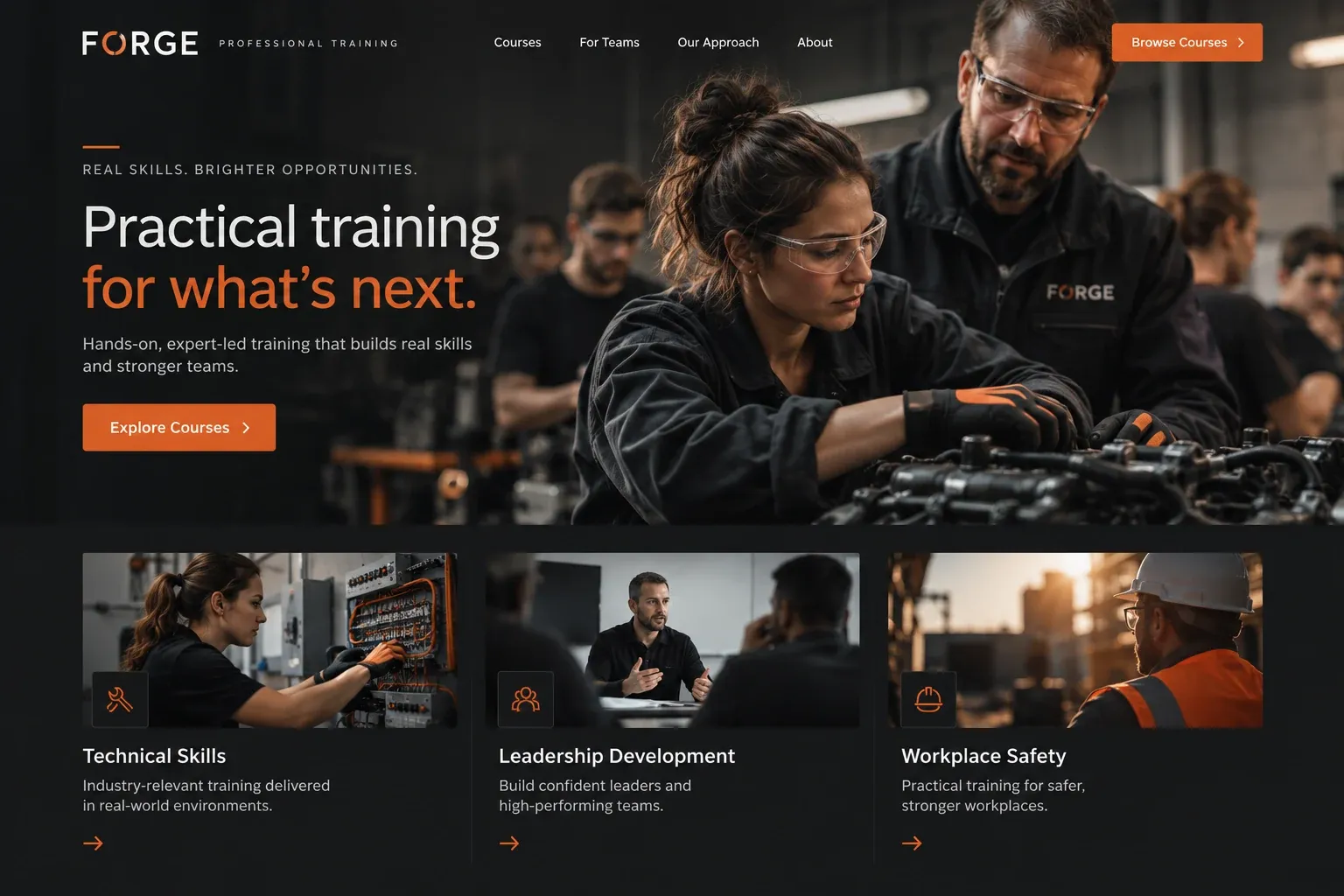
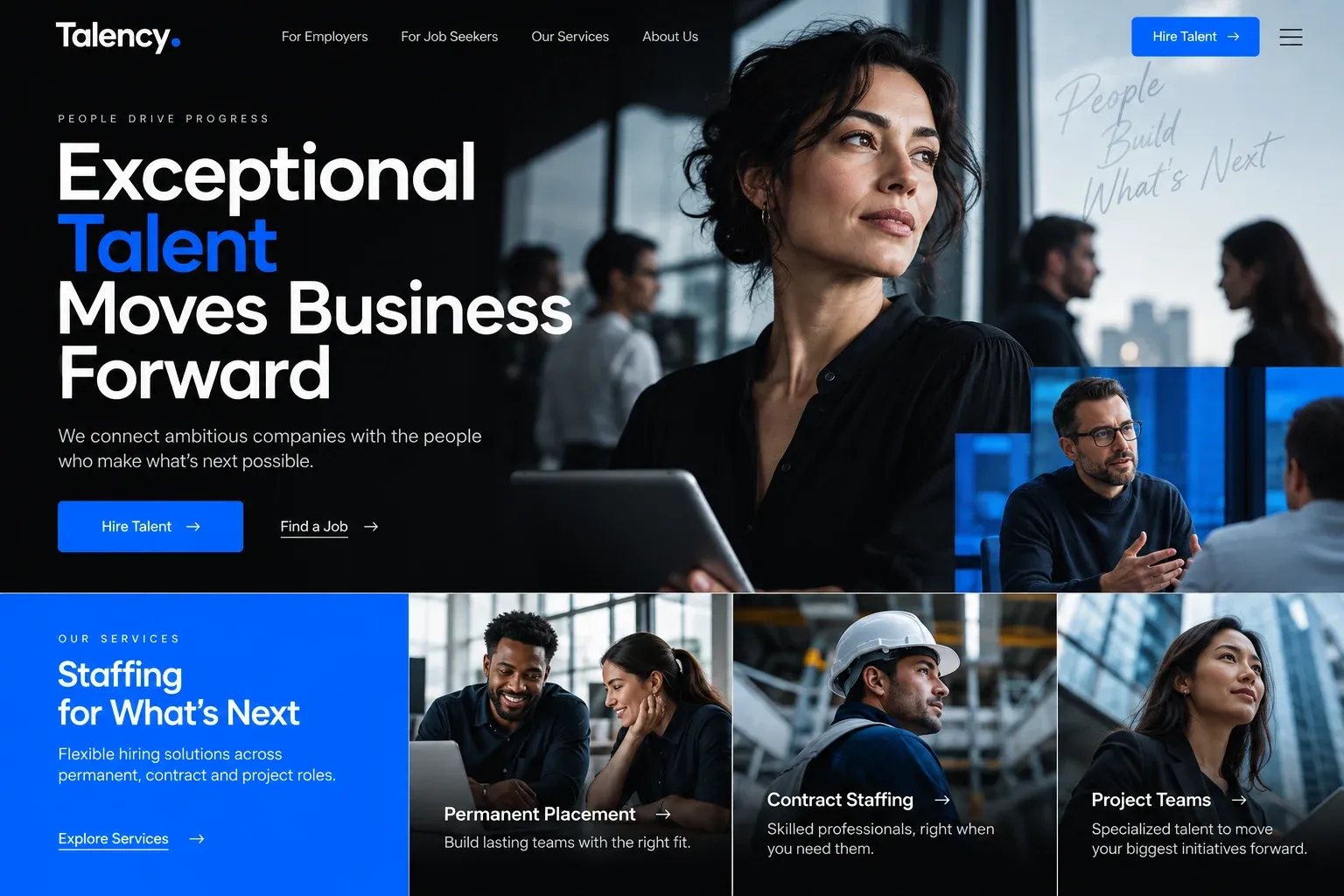
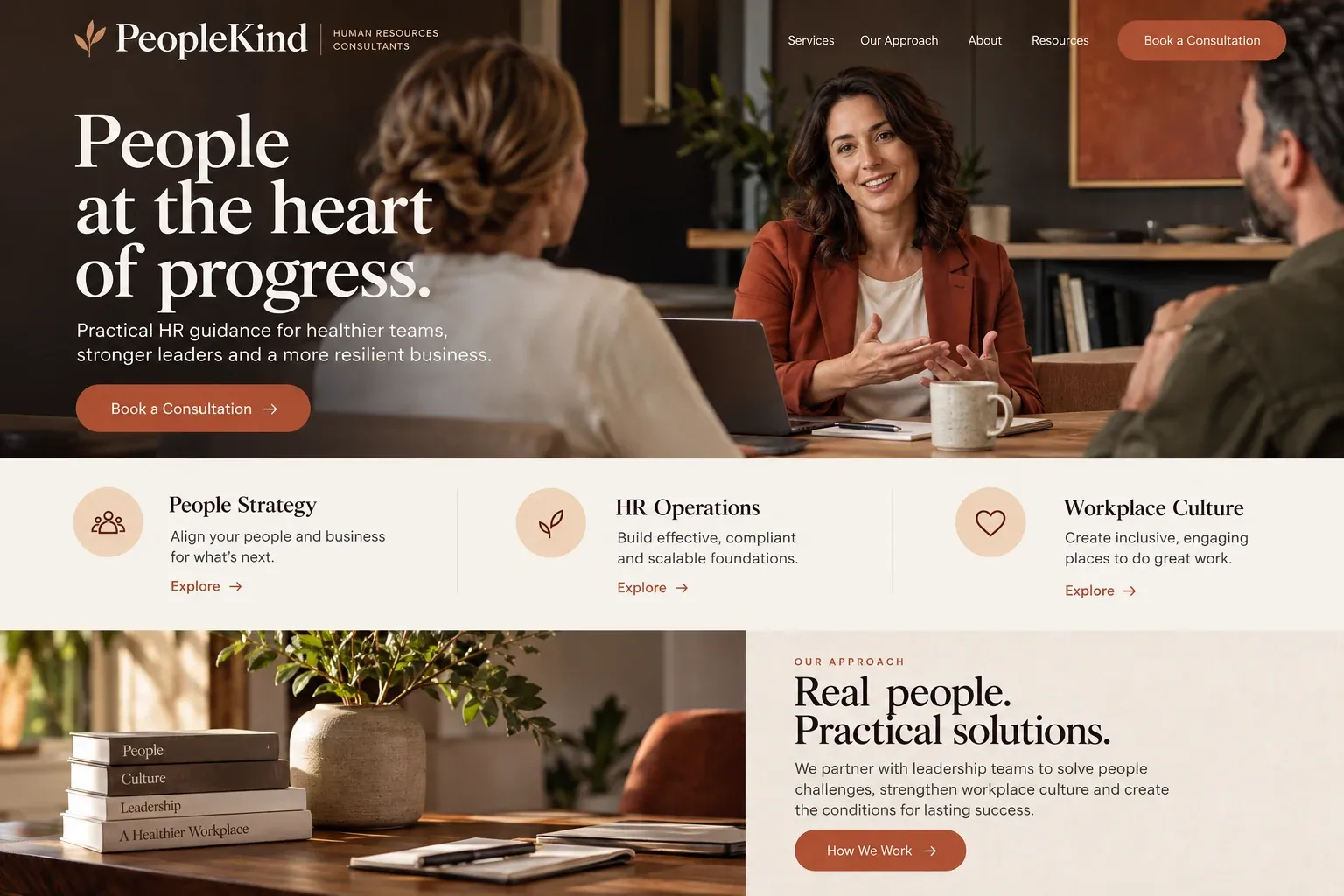
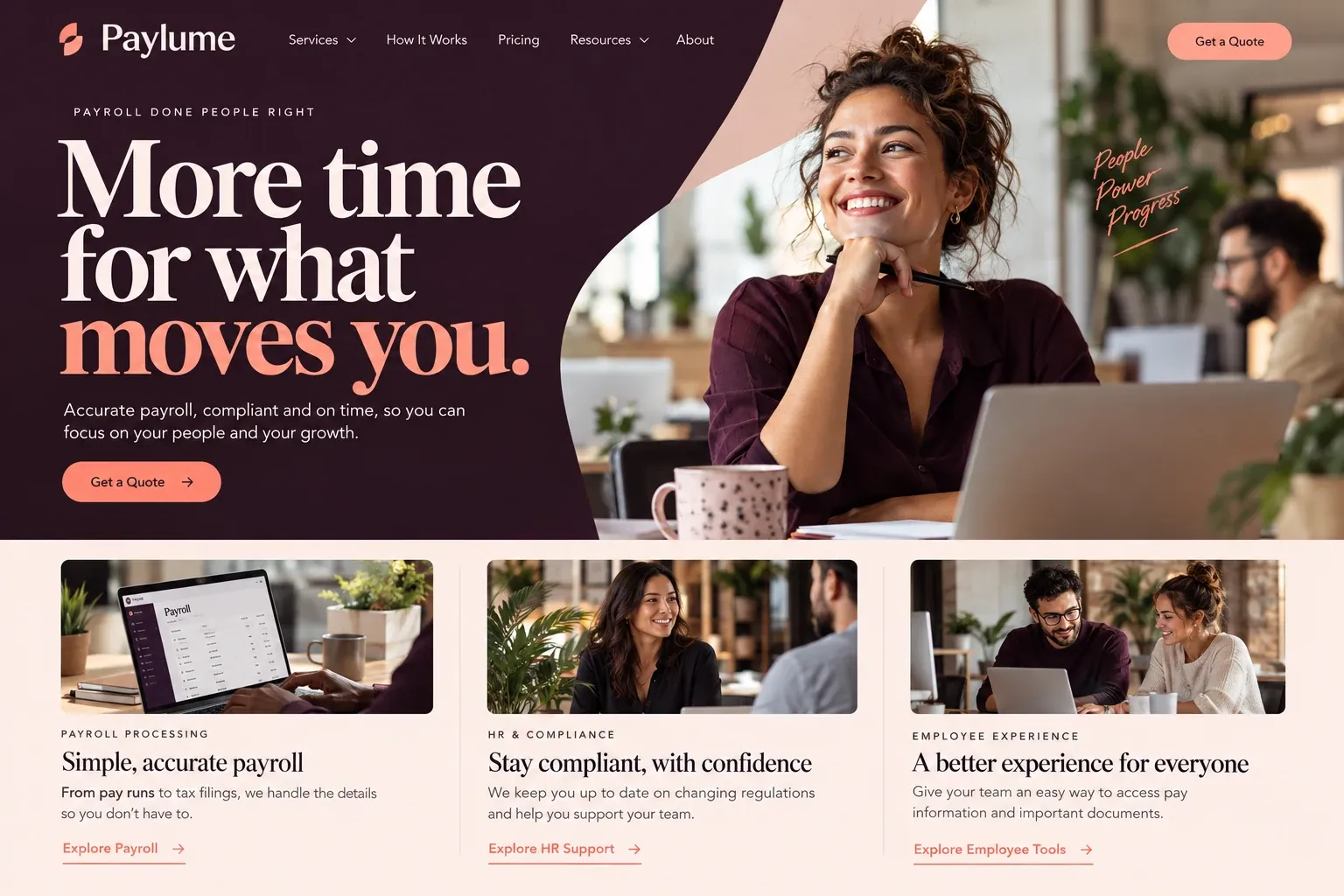
Fictional recruiting and staffing agencies website homepage design concept
A design concept for a fictional brand. Your site is designed from scratch around yours.

Your customer's story

A warehouse manager and a forklift driver

On Monday morning Felipe, operations manager at a distribution center in Medley, loses two shift leads and learns a large retail order is arriving early. He needs temporary help this week and a permanent lead within the month. Across town, Yolanda, a certified forklift operator, has just finished a seasonal contract and is scrolling for her next job on her phone during her bus ride.

Both land on the same staffing agency's website. Felipe taps "I'm hiring" and finds a page on warehouse and logistics staffing, an explanation of temp, temp-to-hire, and direct placement, and a short hiring brief he can send in two minutes. Yolanda taps "I'm looking for work" and sees current openings she can filter by area and shift, each with pay range and requirements listed where the agency provides them.

Neither has to wade through content meant for the other. The agency hears from Felipe before lunch and from Yolanda by the afternoon. A recruiting website works when it gives each side its own door, speaks to the sectors the agency really fills, and makes the next step obvious for a busy manager and a job seeker on a phone.

Why it matters

Why recruiting and staffing agencies need a website.

Staffing is a two-sided business, and the website has to serve both sides at once. Employers search by role and urgency, then compare agencies on the sectors they know, how quickly they respond, and how screening works. Candidates search by job title and neighborhood, and many check that an agency is legitimate before sharing a resume. A job board listing or a social page can post openings, but it cannot explain your placement models or reassure employers and candidates together.

We build staffing websites with separate front doors. Employers get sector pages, an explanation of your placement models, and a hiring brief form. Candidates get current openings from your applicant tracking system or job feed, a simple way to apply or upload a resume, and a plain note on how your agency works with them. Your office address and team are easy to find, and a short privacy note explains how candidate information is handled.

What your customers search for

  • staffing agency near me
  • staffing agency Miami
  • temp agency hiring now
  • warehouse staffing services
  • temp to hire staffing
  • recruiting firm for hospitality

Your customers

What employers and candidates check on a staffing agency's site

  • Do you fill roles like ours?

    Sector pages for the industries and positions you actually staff, such as warehouse, hospitality, healthcare support, or office roles, with the placement types you offer.

  • How do temp, temp-to-hire, and direct hire differ?

    A plain explanation of each placement model, what the employer handles, and how screening and replacement work in your agency.

  • Are these jobs real?

    Current openings pulled from your job feed, with location, shift, and requirements, plus your office address and a note that you never charge candidates, if true.

  • How do I apply from my phone?

    A short mobile application or resume upload that asks only for contact details, the kind of work wanted, and availability, never ID numbers.

What we build

What a website for recruiting and staffing agencies should include.

  • Employer and candidate paths

    Two clear buttons at the top of every page that lead each audience to its own menu, pages, and forms.

  • Live job listings

    Openings embedded from your applicant tracking system or job feed, filterable by sector, location, and shift where your system allows.

  • Sector coverage pages

    A page for each industry you staff, naming the roles you fill and the placement types available.

  • Hiring brief form

    Company, contact, role, number of openings, schedule, start date, and placement type, so your recruiters can call back prepared.

  • Simple candidate application

    Contact details, desired work, availability, and an optional resume upload. Identity documents and tax forms come later, in person or through your system.

  • Trust signals for job seekers

    Office address, recruiter names, a privacy note on candidate data, and a warning about scammers using agency names, if you want one.

Planning guide

How should a staffing agency website serve employers and candidates?

A staffing agency's website must do two jobs without letting them collide: win employer clients and attract reliable candidates. Each audience has different questions, different patience, and often a different device. Here is how to plan the structure, what to show each side, how to handle applications and briefs, and how the site helps you get found.

Split the site at the front door

Put two choices at the top of the home page: hiring and looking for work. Each leads to its own section with its own menu. The employer side needs sector pages, an explanation of your placement models, and a hiring brief form. The candidate side needs current openings, an application, and a page on how you work with job seekers. Shared pages, such as about and contact, link back to both.

Show employers the sectors you really fill

Employers want proof you know their world. A page for each sector you staff should name the roles you fill, describe how you screen for them, and explain the placement types available. Avoid listing industries you rarely serve. Real details persuade: the shifts you cover, the certifications you check, how you handle a no-show. Client logos or testimonials belong on the site only with written permission.

Keep applications short and data light

Candidates apply from phones, often on a break. The application should take a few minutes: name, phone, email, the kind of work wanted, availability, and an optional resume upload. Do not collect Social Security numbers, dates of birth, or identity documents through the website; those belong in your onboarding process or applicant tracking system. A short privacy note explains how candidate information is used and stored.

Employers, on the other hand, appreciate a structured hiring brief: the role, number of openings, schedule, location, start date, and placement type. Their answers let a recruiter call back with useful questions rather than starting from zero. Show a direct phone number for urgent orders, and say plainly how quickly you usually respond during business hours.

Get found by both kinds of searcher

Candidates search for jobs by title and place, so listings with clear titles and locations matter, and many job feeds can also be structured so search engines read them as job postings. Employers search for "staffing agency near me" or "temp workers for warehouse". Sector pages, a complete Google Business Profile, consistent contact details, and honest reviews from both clients and candidates give each audience a way in.
In your market

Staffing for South Florida's economy

South Florida hiring follows the region's industries: hospitality and tourism, logistics around the port and airport, construction, marine work, healthcare, and office roles. Demand swings with the winter season and big events such as boat shows, and many candidates and supervisors are more comfortable in Spanish or Haitian Creole. We build sites with candidate pages in English and Spanish, sector pages for the industries you actually fill, and job listings that read well on a phone.

Questions

Questions recruiting and staffing agencies ask us.

Can our staffing website show live job openings?

Yes. Many applicant tracking systems offer a job feed or embeddable job board, and we place it on the candidate side of the site, styled to match where the system allows. When you post or close a job in your system, the site updates with it, so recruiters are not maintaining listings in two places.

How do we keep employer and candidate traffic from confusing each other on a recruiting site?

Two clear choices at the top of every page, each leading to its own section with its own menu and forms. Employers never wade through job listings to find the hiring brief, and candidates never land on a sales page when they want to apply. Shared pages link back to both doors.

What should a staffing agency's job application collect online?

Only what a recruiter needs to make first contact: name, phone, email, the kind of work wanted, availability, and an optional resume. Social Security numbers, dates of birth, and identity documents should come later through your onboarding process or applicant tracking system, not through a website form.

Job seekers worry about recruiting scams. How can our agency's site reassure them?

Show the things scammers avoid: a real office address, recruiter names and photos, a local phone number, and a plain statement of how you contact candidates. If you never charge job seekers, say so. A short warning about people impersonating agencies, with how to verify a message is from you, helps too.

Let's talk

Ready for a website built for recruiting and staffing agencies?

Tell us about your business and we will come back with a clear recommendation and a fixed quote. No pressure, no jargon.

Trades we design for

See all 226 trades

226 trades

  • Plumbers website design concept
CallFree quote