Web design for RV dealers

Website design for RV dealers.

Buying an RV is part vehicle purchase and part home purchase. Families walk through dozens of floor plans online before they visit, and the dealer that shows interiors clearly and explains ownership honestly earns the visit.

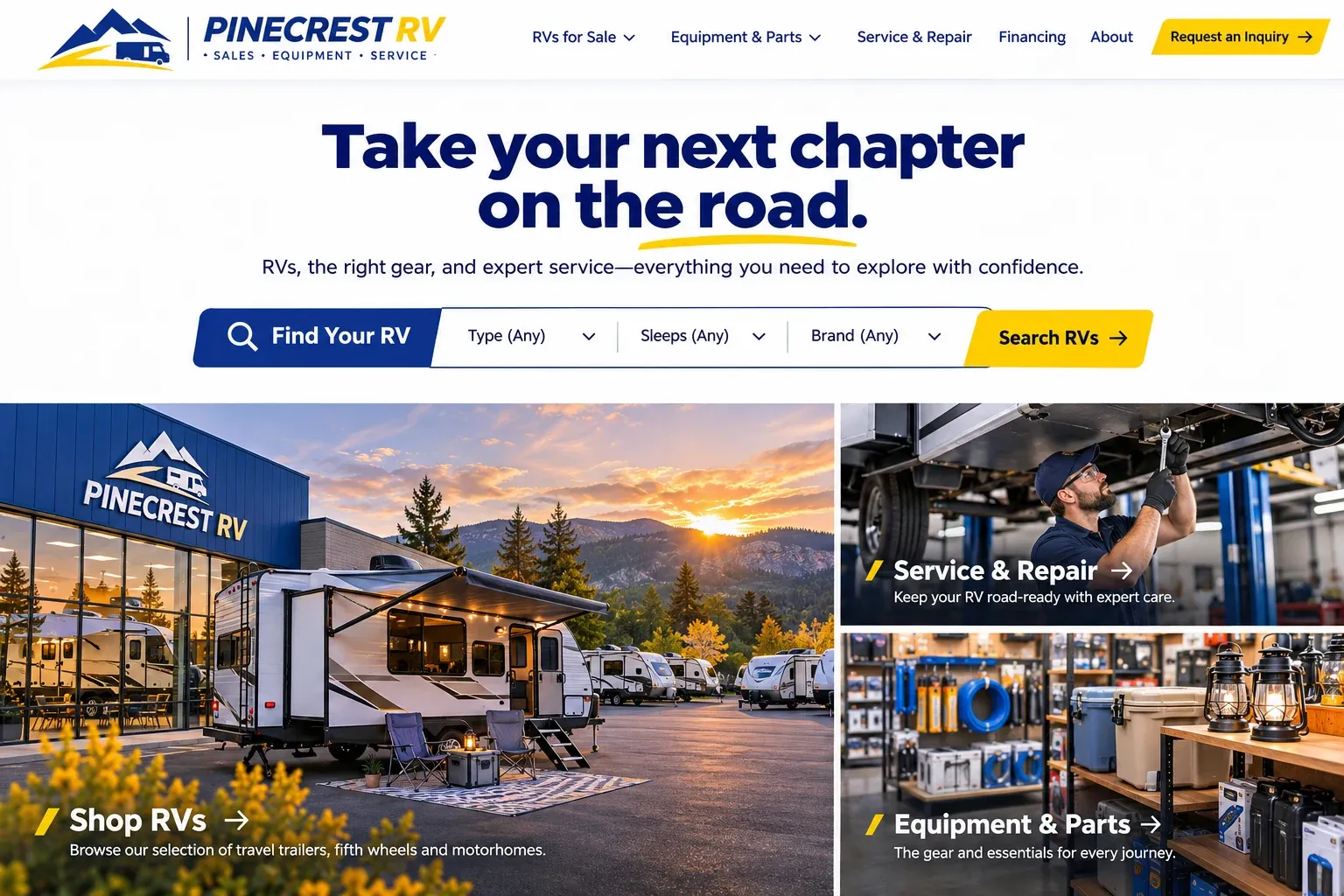
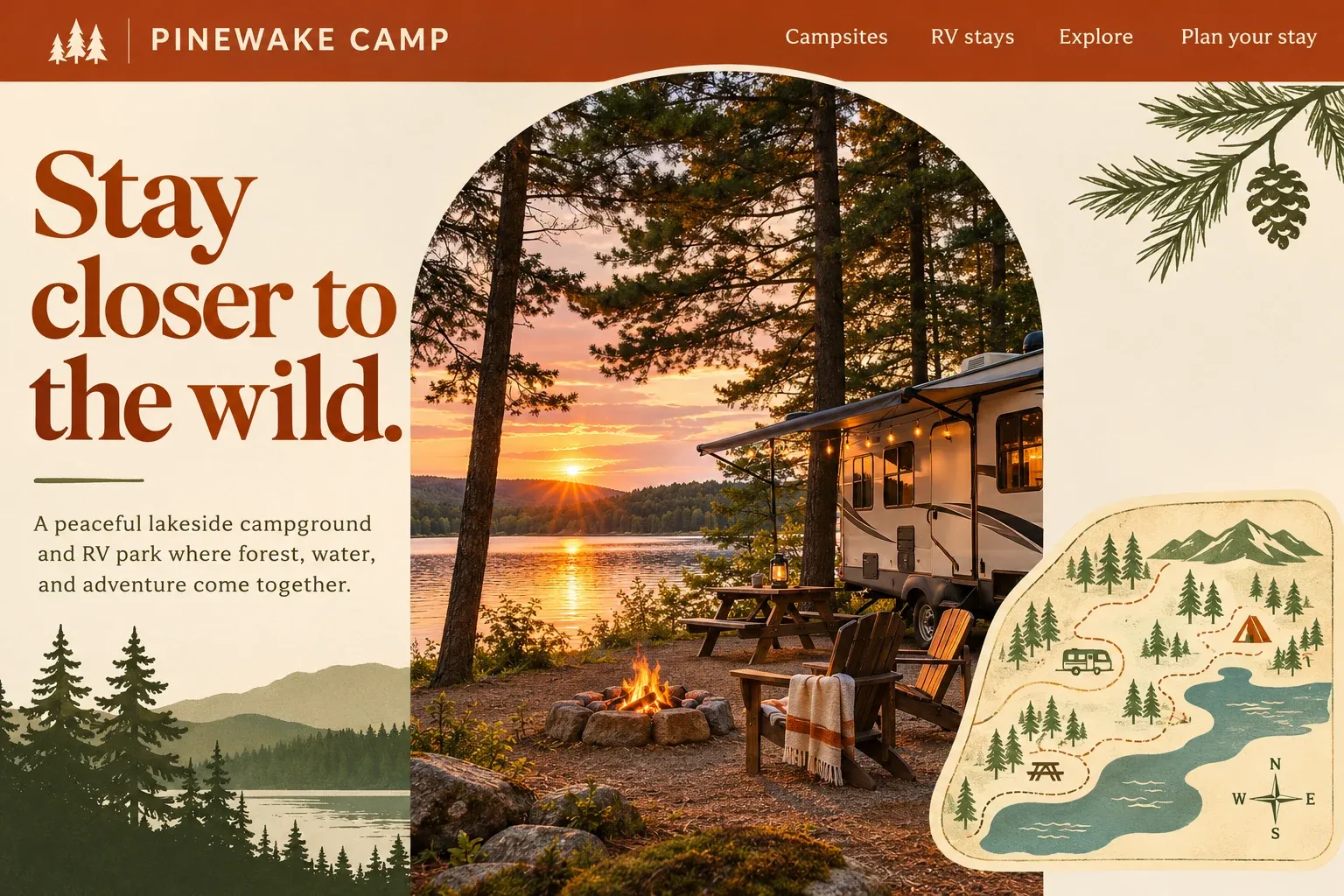
Website design concept for rv dealers, an illustration
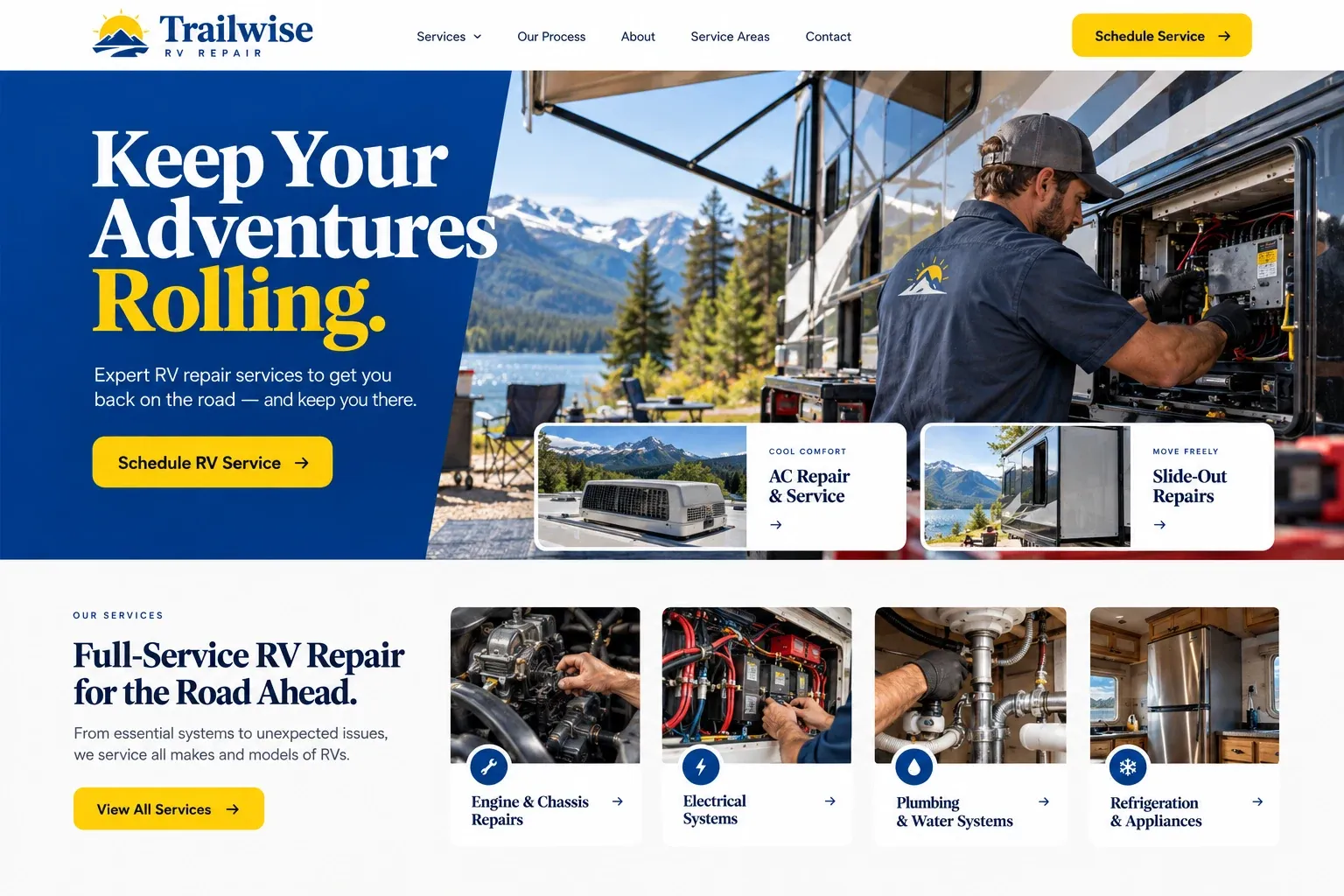
Illustration only: the design, business name and logo are made up to show the kind of website we can build. Not a real business or client website. Yours is designed from scratch around your brand.

Your customer's story

Retirement plans that start in the driveway

Gary and Rosa have talked about it for years: once they retire, they will spend winters in Florida and summers driving to see the national parks and their grandchildren. Now retirement is six months away. Every evening they sit at the kitchen table with a tablet, comparing motorhomes, fifth wheels, and travel trailers, and arguing gently about bunk rooms versus a bigger kitchen.

Most dealer sites show a few exterior photos and a long specification table. Rosa wants to see the inside: the bed, the shower, the storage, the kitchen counter. One dealer's site has full interior galleries for every unit, floor plan drawings, and a guide to towing, storage, insurance, and campground basics for new owners. It also has a service department and a page about the walkthrough at delivery.

They book a visit to see two units in person and bring a list of questions the site helped them write. An RV dealer's website earns that visit by showing interiors as carefully as exteriors, explaining what owning an RV really involves, and staying useful after the sale through service, parts, and owner support.

Why it matters

Why RV dealers need a website.

RV buyers research longer than almost any other vehicle shoppers. They compare classes, floor plans, sleeping capacity, towing requirements, and storage, and they want to imagine living in the space. Manufacturer sites show every floor plan but not what is on your lot. Marketplace listings rarely show enough interior photos or explain your service department, delivery walkthrough, and support for first-time owners.

We build RV dealer websites around how families shop. Inventory pages pull from your dealer software, with interior galleries and floor plans for each unit. Style pages explain motorhomes, fifth wheels, travel trailers, and camper vans. Ownership guides cover towing, storage, and campground basics, and service, parts, and vehicle inquiry forms make the dealership useful long after the sale.

What your customers search for

  • RV dealers near me
  • travel trailers for sale Miami
  • used motorhomes for sale
  • fifth wheel for sale near me
  • RV service center Miami
  • camper van for sale Florida

Your customers

What families ask before visiting an RV dealer

  • What does it look like inside?

    Interior galleries for every unit, with photos of the bedroom, bathroom, kitchen, living area, and storage, plus a floor plan drawing.

  • Which kind of RV suits us?

    Style pages comparing motorhomes, fifth wheels, travel trailers, and camper vans, with who each type usually suits and what it takes to drive or tow.

  • Can our truck tow it?

    Towing basics on each trailer listing, such as dry weight and hitch type, with advice to confirm the tow vehicle's ratings before buying.

  • What happens after we buy?

    Pages on the delivery walkthrough, the service department, warranty support, and parts, so families know the dealer stays involved after the sale.

What we build

What a website for RV dealers should include.

  • RV style pages

    Class A, Class C, camper vans, fifth wheels, travel trailers, and toy haulers, each explained with photos from your lot.

  • Interior galleries

    Every unit photographed inside, room by room, so families can picture living in it before they visit.

  • Floor plan views

    Floor plan drawings beside each listing, with sleeping capacity and key layout features noted plainly.

  • Ownership information

    Guides on towing, storage, insurance basics, campground etiquette, and winterizing for owners who travel north.

  • Vehicle inquiry form

    Questions about a specific unit, a trade-in, or a visit, sent straight to your sales team.

  • Service and parts booking

    A service appointment form for maintenance, repairs, and warranty work, plus parts requests for owners on the road.

Planning guide

What should an RV dealer's website include?

An RV dealer's website has to help families imagine living in a vehicle before they ever step inside one. It should show interiors, explain the types of RVs, and prepare first-time owners for what comes next. Here is how we plan the pages for an RV dealership and how the site helps families and travelers find your lot.

Make interiors the center of every listing

RV buyers spend most of their time looking inside. Each listing needs a full interior gallery, room by room, plus exterior shots, the floor plan drawing, sleeping capacity, length, and key features. Pull inventory from your dealer management software where possible, so sold units come off the site quickly and new arrivals appear with their photos.

Organize inventory by style: Class A, Class B camper vans, Class C, fifth wheels, travel trailers, and toy haulers. Many shoppers start by deciding which style suits them, so a page explaining each one, with who it usually suits and what it takes to drive or tow, guides them toward the right listings.

Prepare first-time owners honestly

Many buyers have never owned an RV. Ownership guides on towing basics, storage, insurance questions, campground reservations, and seasonal care answer the questions that make people hesitate. Keep them practical and honest, and recommend that buyers confirm tow ratings and insurance details with the right professionals. These pages also show families that your dealership will support them after the sale.

Explain your delivery walkthrough on its own page. Families want to know that someone will show them the systems, from water and power hookups to slides and leveling, before they drive away. Describing that walkthrough, and what support follows, makes a large purchase feel far less daunting for first-time buyers.

Make inquiries, visits, and service simple

Every listing should offer a quick inquiry, a request to see the unit, and tap-to-call. A trade-in form asks for year, make, model, mileage, and photos. Financing runs through your lender's secure application, never an ordinary form. The service department gets its own path with an appointment form, and owners on the road can request parts or advice by phone.

Help travelers and families find your lot

RV searches are specific: travel trailers for sale near me, a particular brand of fifth wheel, RV service in a nearby city. Style pages, inventory pages, and service pages give search engines specific topics to match. Keep your details consistent with your Google Business Profile, and ask owners for reviews after delivery and after service visits.
In your market

Built for RV dealers in South Florida

South Florida is both an RV destination and a starting point. Winter brings snowbirds who arrive in motorhomes and look for service, parts, and storage, while local families buy trailers for trips to the Keys, state parks, and the mountains up north. Heat, humidity, and storm season make roof care, air conditioning, and secure storage common questions. Many buyers prefer Spanish. We write style, inventory, and ownership pages around these needs and can add a Spanish version of the site.

Questions

Questions RV dealers ask us.

How many interior photos should each RV listing have?

Enough to walk through the whole unit: the bedroom, bathroom, kitchen, living area, storage, and outside compartments, plus the floor plan drawing. Families make most of their shortlist from photos, so complete, well-lit interiors do more for an RV listing than any amount of specification text.

Can our RV dealer site pull inventory from our dealer software?

Usually, yes. Most dealer management and listing systems provide a feed or embeddable inventory, and we connect the site to it so units, photos, and details stay current. If your system has none, we set up a simple process for updating listings.

Should our RV website include ownership guides?

We recommend it. First-time owners worry about towing, storage, hookups, and campgrounds. Practical guides answer those questions, bring in searches from people still deciding, and show that your dealership supports owners after the sale. We write them from your team's knowledge, and you approve every line.

Can RV owners book service through the website?

Yes. A service appointment form asks for the RV's year, make, model, and the work needed, and reaches your service department. If your service software offers online booking, we link to it. Owners passing through the area can also call or request parts from the same page.

Let's talk

Ready for a website built for RV dealers?

Tell us about your business and we will come back with a clear recommendation and a fixed quote. No pressure, no jargon.

Trades we design for

See all 436 trades

436 trades

  • Plumbers website design concept
CallFree quote