Planning guide
What should a campground or RV park website include?
A campground or RV park website answers practical questions for people planning trips weeks or months ahead. The best ones read like a friendly park office: clear about sites, hookups, rules, and what is nearby. Here is how we plan the pages, what to show, how guests request a stay, and how the site helps the park get found.
Pages that match how campers plan
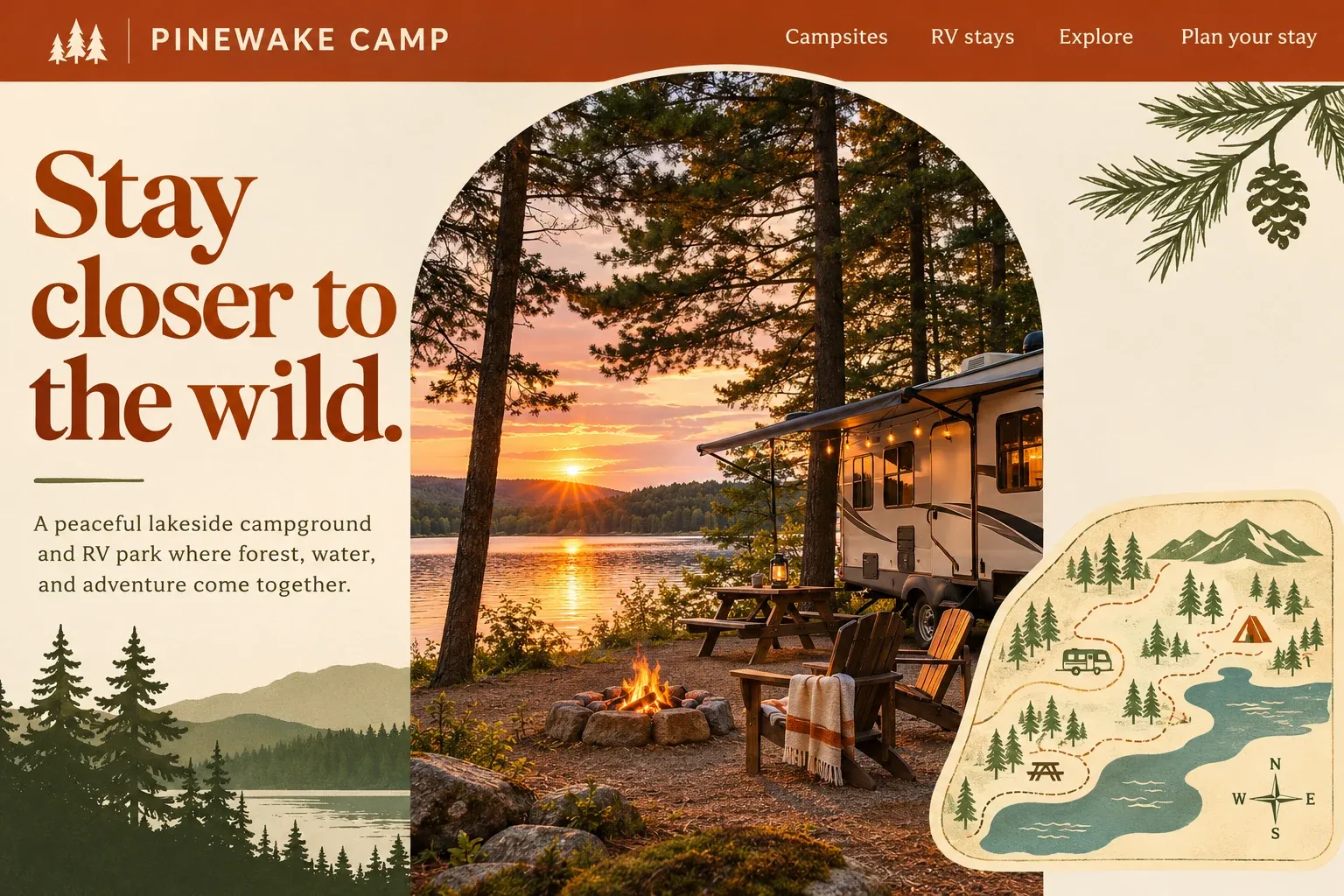
Start with a home page that shows the setting and the main site types, then a park map, a page for each site type, amenities, rules and policies, long stays, things to do nearby, and contact with directions. Directions matter more than usual, because big rigs need to know about low bridges, tight turns, and the best entrance. A short FAQ catches the rest, from mail delivery to whether visitors can park overnight.
Show the sites as they really are
Photograph real sites from the driver's seat and from the picnic table, with the hookups visible. Show the bathhouses, laundry, pool, and water access as they look on an ordinary day. Accurate photos reduce disappointment and awkward arrivals. List amenities honestly, including the ones that are seasonal or temporarily closed, and avoid claims about being the best park anywhere in the state.
Make stays easy to request
If you use a reservation system, link it from every page and from each site type. If you take requests by hand, a short stay enquiry form should ask for dates, rig type and length, hookup needs, guests, and pets, then email the office. Explain check-in times and cancellation rules plainly, right before the button, where guests actually read them.
Long stays deserve their own path. Seasonal guests and monthly residents have different questions about mail, utilities, storage, visitors, and waiting lists, and they often decide a year at a time. A dedicated page with its own enquiry form keeps those conversations organized and stops them crowding the short stay requests in your inbox during the busy season.
Help travelers find the park
Campers search for RV parks near me, campgrounds near the beach, or pet friendly RV parks along their route. A page for each site type and nearby attraction gives search engines specific content to match. Keep the park name, address, and phone consistent with your Google Business Profile and camping directories, add photos, and answer reviews. Positions cannot be promised, but accurate details help.