Web design for RV technicians

Website design for RV technicians.

An RV is an engine, a house, and a set of slide-outs rolled into one, and owners never know which part will fail next. When something does, they look for a technician who names both the system and the rig.

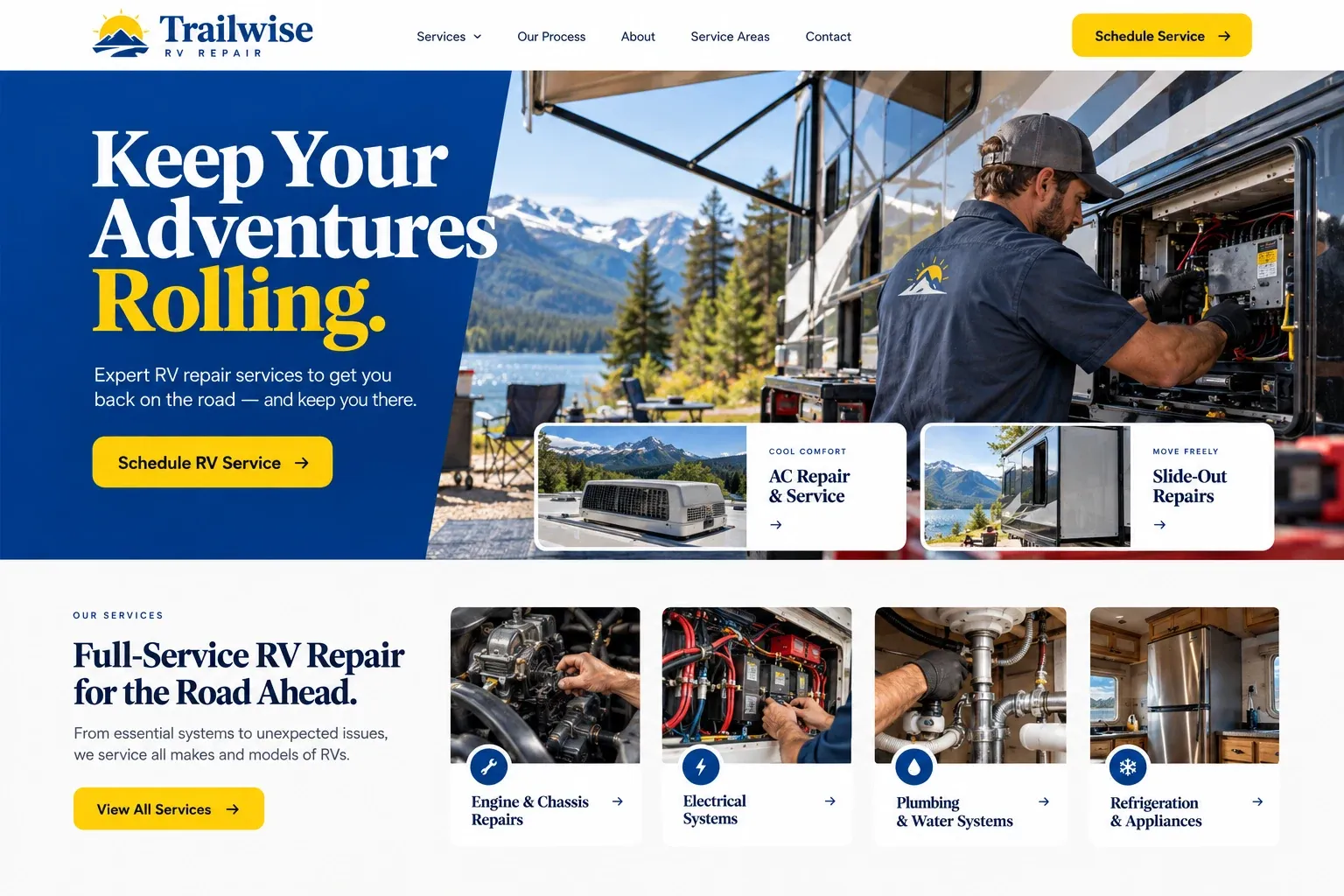
Fictional rv repair services website homepage design concept
A design concept for a fictional brand. Your site is designed from scratch around yours.

Your customer's story

The slide-out that will not come in

Diane and Ray have spent the winter in a fifth wheel at a park near Homestead, and their drive north starts in a week. On Sunday morning Ray presses the switch to bring the bedroom slide in, just to test it before packing. The motor hums, the slide moves a few inches, and then it stops at an angle. Ray tries again. Nothing moves at all.

Diane searches "mobile RV repair" while Ray reads the manual. The first result is a car repair shop that mentions RVs in a single line. The second only shows motorhomes in its photos and never says whether it works on towables. The third lists slide-outs, levelers, awnings, roof air units, and generators, says its technician visits RV parks in the area, and asks on its form what kind of rig they have and when they plan to leave.

The technician calls that afternoon, asks two questions about the slide mechanism, and books a visit to their site. Diane never compares ratings. She picks the one business whose website shows it understands that their RV is both a vehicle and the place they sleep, and that a departure date matters to them as much as the repair itself.

Why it matters

Why RV technicians need a website.

RV owners rarely know whether their problem belongs to a mechanic, an appliance technician, or a body shop. A water heater that will not light, a roof seam letting rain in, and a diesel pusher that will not start are three different jobs in one vehicle. They search for the system, then check whether you handle their type of rig and can come to them. A directory listing with a phone number and a star rating answers none of that.

We build RV repair websites that sort the work by system: chassis and engine, roof and seals, slide-outs and levelers, appliances, electrical, and generators. A clear page says which classes of motorhome and which towables you take, and whether you work at your shop, at RV parks, or both. The request form asks about the rig, the problem, and the travel date, so you can plan the visit honestly.

What your customers search for

  • mobile rv repair near me
  • rv repair Miami
  • rv roof leak repair
  • rv slide out repair
  • rv generator repair
  • rv ac not cooling

Your customers

What RV owners want to know before they book a repair

  • Do you work on my kind of rig?

    Class A, B, and C motorhomes, fifth wheels, travel trailers, and toy haulers listed as you actually service them, with any size limits for your bays.

  • Can you come to the campground?

    Your mobile service area, the RV parks and storage lots you visit, and which repairs need the rig brought into the shop instead.

  • Do you fix the house side too?

    Pages for refrigerators, water heaters, roof air conditioners, plumbing, and leaks, so owners see you handle the living area as well as the chassis.

  • Can you work around our trip?

    A form field for the departure date and where the rig is parked, plus an honest note that parts for some models take time to arrive.

What we build

What a website for RV technicians should include.

  • Repairs sorted by system

    Chassis, roof, slide-outs, levelers, awnings, appliances, and generators, each on a page that matches what owners type into a search.

  • Rig types you service

    Motorhome classes and towable types listed plainly, with notes on any length or weight limits at your shop.

  • Mobile service map

    A map and a list of the RV parks, campgrounds, and storage lots your mobile technician visits.

  • Trip-aware repair request

    Rig type, year, the system involved, where it is parked, and the date the owners hope to be back on the road.

  • Roof and seal inspections

    A page on resealing, roof membrane repair, and leak checks, which owners book before storage season or a long drive.

  • Warranty and claim notes

    How you work with extended service contracts and insurance claims, if you do, so owners know what paperwork to bring.

Planning guide

What should an RV repair shop put on its website?

An RV repair site serves owners who are often far from home, on a schedule, and unsure which kind of technician they need. The site should tell them fast whether you handle their rig and their problem, and where. These are the pages we plan, the photos and details worth showing, how requests should work, and how the site gets found.

Build pages around the systems that fail

Owners search for the symptom and the system: RV slide-out repair, RV roof leak, generator will not start, fridge not cooling. Give each system you repair its own page, name the component brands you know well, and say plainly whether that work happens in your bays or on site. Add a page for the rig types you take, since a shop that only handles towables saves everyone a call by saying so.

Photos that show the coach and the craft

Show real repairs: a roof resealed edge to edge, a slide mechanism rebuilt, a water-damaged wall rebuilt behind the paneling. Owners trust photos of rigs like their own more than any claim. Include the shop, the bays, and the mobile truck. If your technicians hold RV industry certifications, name them exactly. If not, describe the experience you do have, without invented figures.

Make the request fit life on the road

A good request form asks what the owner knows: rig type, make, year, the system involved, where the rig is parked, and when they plan to leave. Let them attach photos of the damage or a warning panel. Avoid promising a fixed turnaround. Say instead what affects timing, such as diagnosis, parts availability, and how busy the season is.

Put a phone number on every page and say plainly how you handle owners who are traveling through. Someone parked at a campground for a few nights needs to know whether you can see them before they move on, or whether they should plan the repair for a later stop on their route.

Get found by owners passing through

RV owners search where they are parked, often in places they do not know well. A service-area page naming the towns, parks, and storage lots you cover gives them something to match. Keep your details consistent with your Google Business Profile, with current photos and hours, and ask owners for a review after a repair. Visitors who find you once often look for you again the next season.


In your market

RV service in South Florida

South Florida draws RV travelers every winter, and many arrive from colder states with problems that surfaced on the drive down. Summer brings heat that strains roof air units and sun that breaks down sealant, and hurricane season means owners prepare rigs for storage or evacuation. RV parks, campgrounds, and storage lots stretch from the Redland to the Keys, so mobile service matters. We write pages for winter visitors and year-round owners alike, and can add a Spanish version of the site.

Questions

Questions RV technicians ask us.

Should our RV site separate motorhome and towable work?

If you treat them differently, yes. A travel trailer owner does not care about engine and transmission work, and a motorhome owner wants to know you handle both the chassis and the coach. A short page for each, listing the systems you repair on that type, keeps both groups from guessing.

How do we describe mobile RV service without overpromising?

Describe the area you cover, the parks and storage lots you visit, and which repairs you can finish on site. Then say which jobs need the shop, such as major roof or frame work. Owners respect clear limits, and it saves your technician a drive to a job that cannot be done in a parking spot.

Can RV owners send photos of damage before booking?

Yes. The request form can take several photos, such as a torn awning, a cracked roof vent, or a soft spot in the floor, along with the rig's make and year. They arrive in your email with the owner's contact details and travel date, ready for a reply.

Does an RV repair site need fresh content each season?

Not much, but a few timely updates help. Before winter visitors arrive, a note on pre-trip inspections. Before hurricane season, a page on storage and preparation. We can make these changes for you after launch, or set up a simple way for you to post them yourself.

Let's talk

Ready for a website built for RV technicians?

Tell us about your business and we will come back with a clear recommendation and a fixed quote. No pressure, no jargon.

Trades we design for

See all 226 trades

226 trades

  • Plumbers website design concept
CallFree quote