Planning guide
What should a screen printing shop's website include?
A screen printing and embroidery website has to teach and take orders at the same time. Most customers have never bought custom apparel before, and they arrive unsure about methods, garments, and artwork. The right pages answer those questions in order, then collect everything your shop needs to quote. Here is how we plan one.
Explain each decoration method plainly
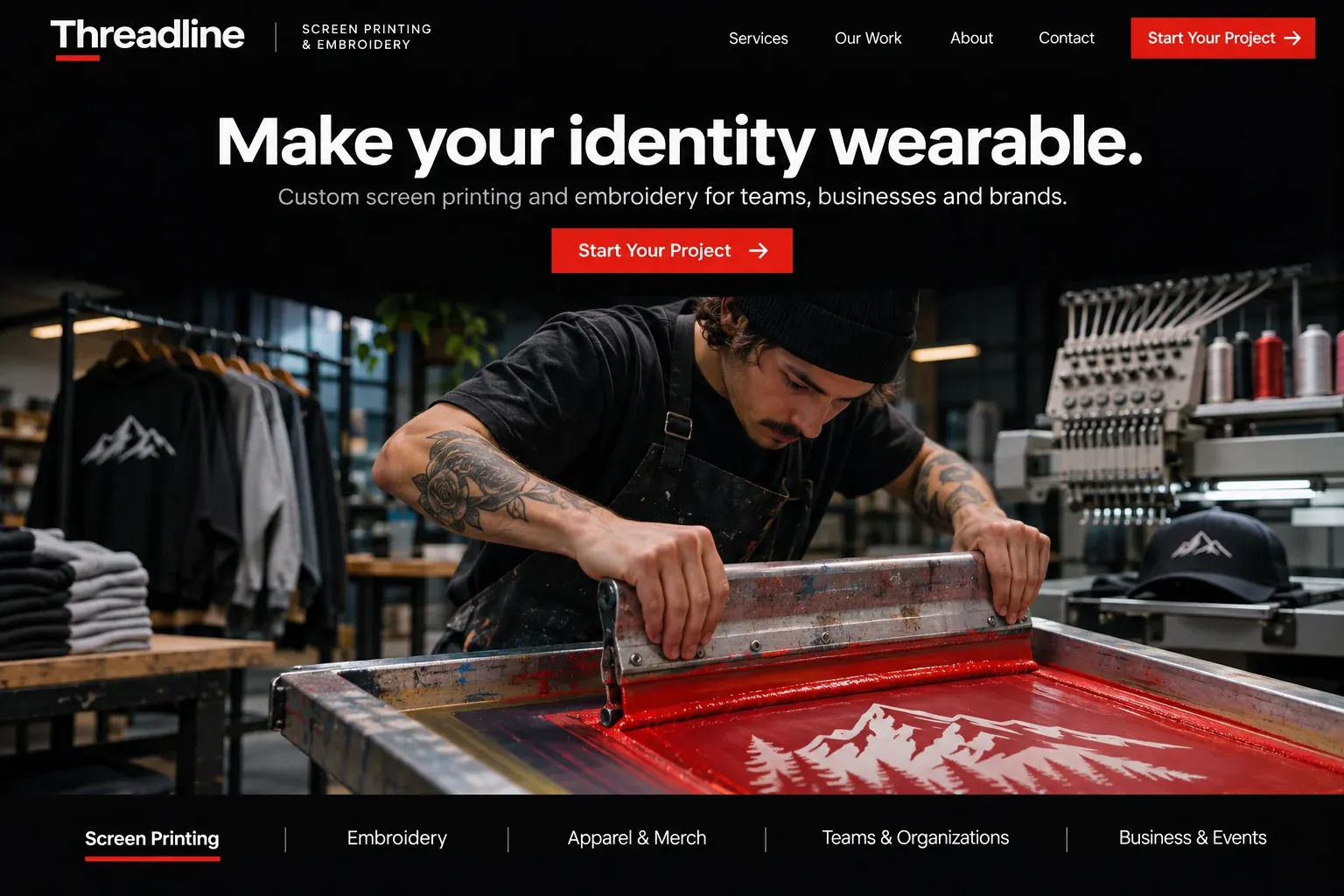
Customers search for the result they want, such as custom team shirts or embroidered work polos, not for a process name. Give each method its own page with close-up photos from your shop, a short description of how it looks and feels, and the orders it suits best. Say honestly where a method is a poor fit, such as fine detail on a textured fabric. That candor saves calls and returns.
Help customers choose the garment
The blank matters as much as the print. A garment guide that groups shirts, hoodies, hats, and bags by use, with notes on weight, fit, and breathability, helps buyers choose before they ask. Link to the supplier catalogs you order from if they offer color and size charts. In a hot climate, mention which fabrics stay comfortable outdoors and which hold up to frequent washing for uniforms.
Collect sizes and artwork in the form
The quote depends on quantity, sizes, ink colors, print locations, and the date. Ask for all of it in one inquiry form, with a simple size breakdown and an artwork upload. Customers who see these fields learn what matters before they press send, and your reply can be a real quote instead of a list of follow-up questions.
Add a short artwork page explaining vector files, color counts, and what you can do with a rough sketch or a phone photo of an old shirt. If you offer design help, say so there. For repeat customers, a reorder form that names the past order saves everyone a lot of time.
Show local teams and businesses your work
Most print shops serve customers within a short drive: schools, leagues, churches, restaurants, contractors, and local brands. Pages for each of those groups, with photos of orders like theirs, give search engines specific topics and give buyers proof. Keep your details consistent with your Google Business Profile, show your reviews, and post fresh work often. That steady proof helps a busy shop be found without any promise of ranking.