Planning guide
What should a promotional products company's website include?
A promotional products website is less a store than a showroom with an advisor attached. Buyers arrive with an occasion and a deadline, not a product number. The site should help them choose, explain how their logo will be applied, and gather what you need to quote. Here is how we plan one, page by page.
Organize products around the buyer's occasion
Most buyers start with a purpose: a booth at an expo, a welcome kit for new staff, shirts for a charity walk, a thank you for top clients. Category pages built around those occasions help them think, and each one can show a handful of items you recommend, with photos from your own orders. If you also offer a full supplier catalog, link to it from these pages rather than copying thousands of items onto the site.
Explain decoration methods with real close-ups
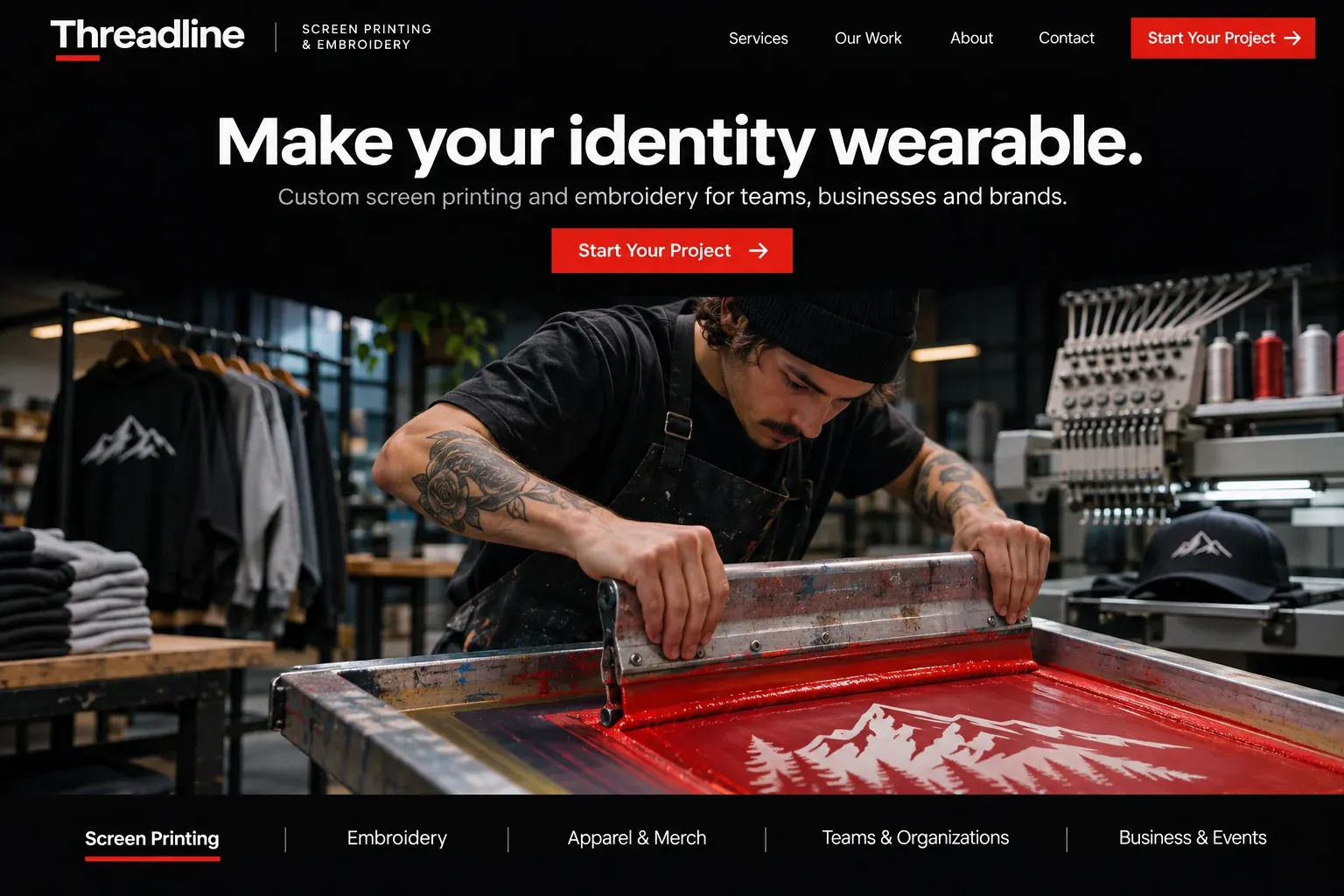
The same logo looks very different stitched on a polo, engraved on a steel tumbler, or printed in full color on a tote. A decoration page with close-up photos of each method answers the questions buyers ask on the phone, and sets fair expectations about detail, color matching, and which items suit which method. Add a short artwork guide covering vector files and brand colors, so fewer orders stall waiting for a usable logo.
Build the inquiry around the deadline
The in-hands date is the most important line on a promotional order, so ask for it first. A good inquiry form also asks for the quantity, the occasion, the items or ideas the buyer has in mind, and lets them attach artwork. Everything arrives in your inbox, and your first reply can include real suggestions instead of a list of questions.
Explain what happens next on a short process page: ideas, a quote, a digital proof, approval, production, and shipping. Buyers who have been burned by a late order will read it closely. Be honest about rush orders, about how proofs affect timing, and about what you need from the buyer to keep the order moving.
Help local organizations find you
Many promotional orders come from nearby companies, schools, churches, and nonprofits who prefer to work with someone they can meet. Keep your name, address, and phone number consistent with your Google Business Profile, list the cities you serve, and ask happy buyers for reviews. Occasion pages give search engines specific topics to match, such as trade show giveaways or custom employee gifts. None of this promises a ranking, but it gives a capable distributor a fair chance.