Planning guide
What should a shoe store's website include?
A shoe store's website has one job that online retailers cannot do: convince shoppers that coming in will solve the fit problem. It should show what you carry, explain how fitting works, and make the visit easy to plan. Here is how to plan the pages, what to show, how shoppers contact you, and how the site gets found locally.
Organize collections the way people shop
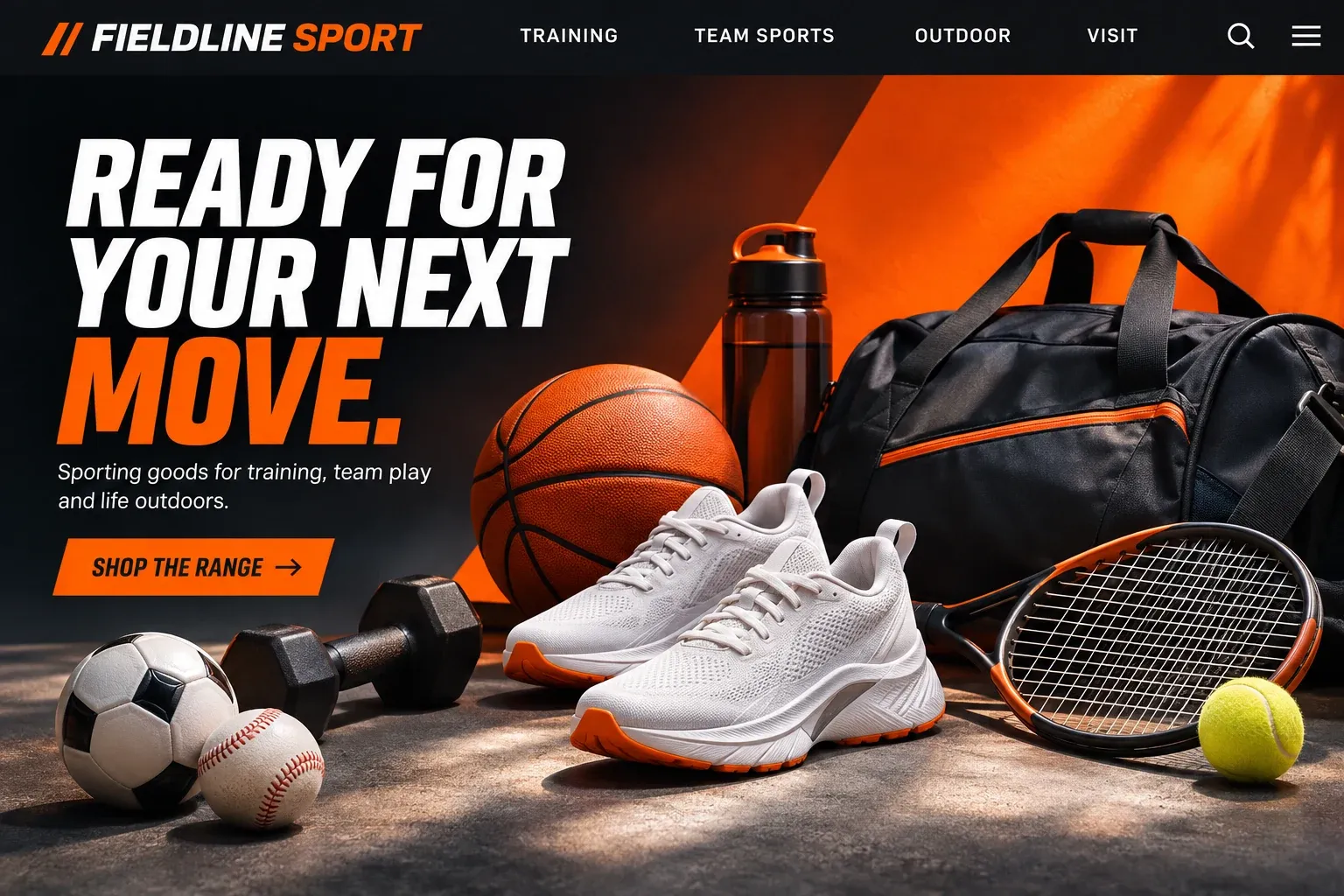
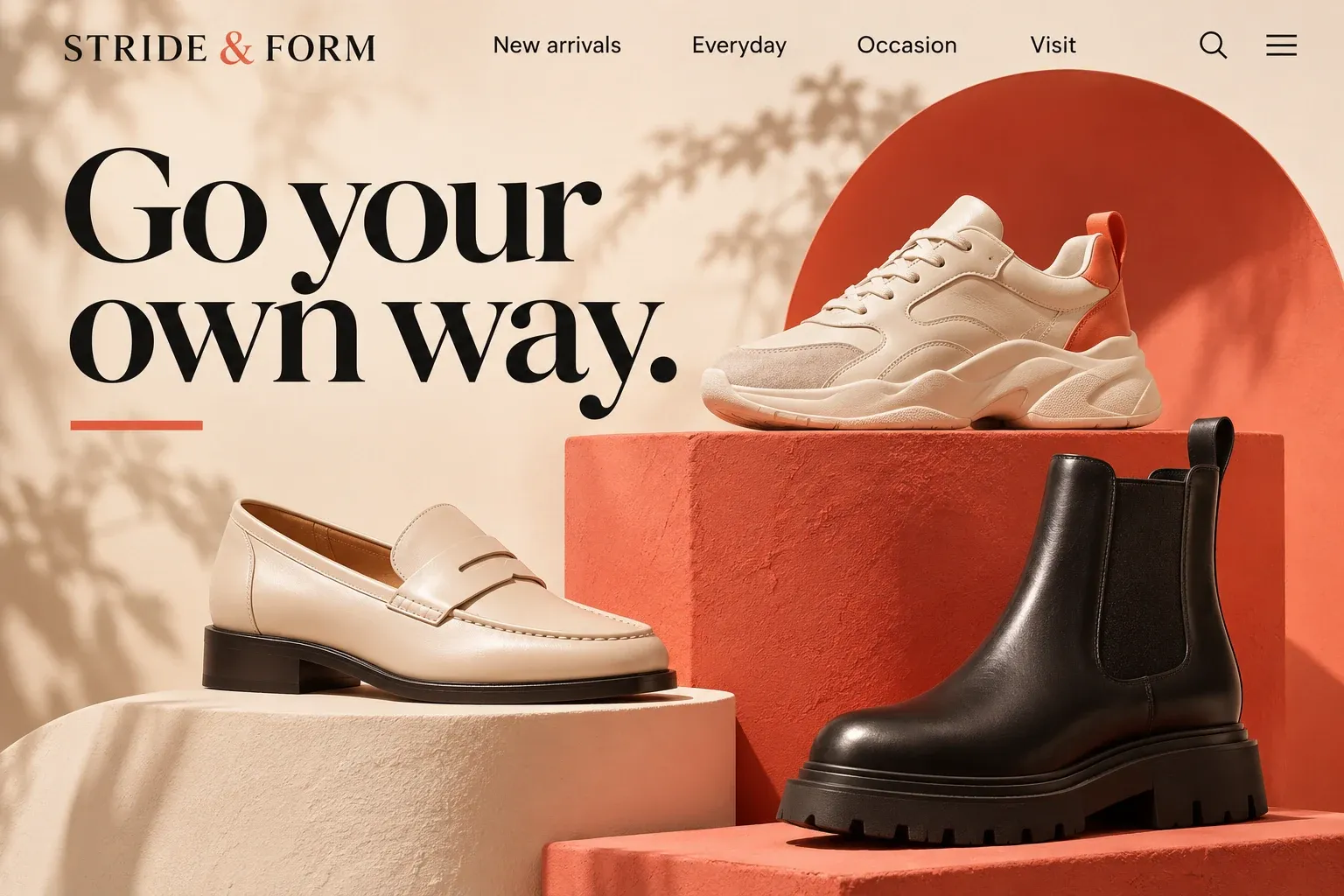
Most shoe searches start with a need: work shoes for standing all day, running shoes, a dress shoe for a wedding, school shoes for a child. Organize pages by purpose first and brand second, and name the widths and size ranges on each page. Use photos taken in your store so visitors see the real shelves. Keep each page current with the season, and remove styles you no longer carry.
Make fit the reason to visit
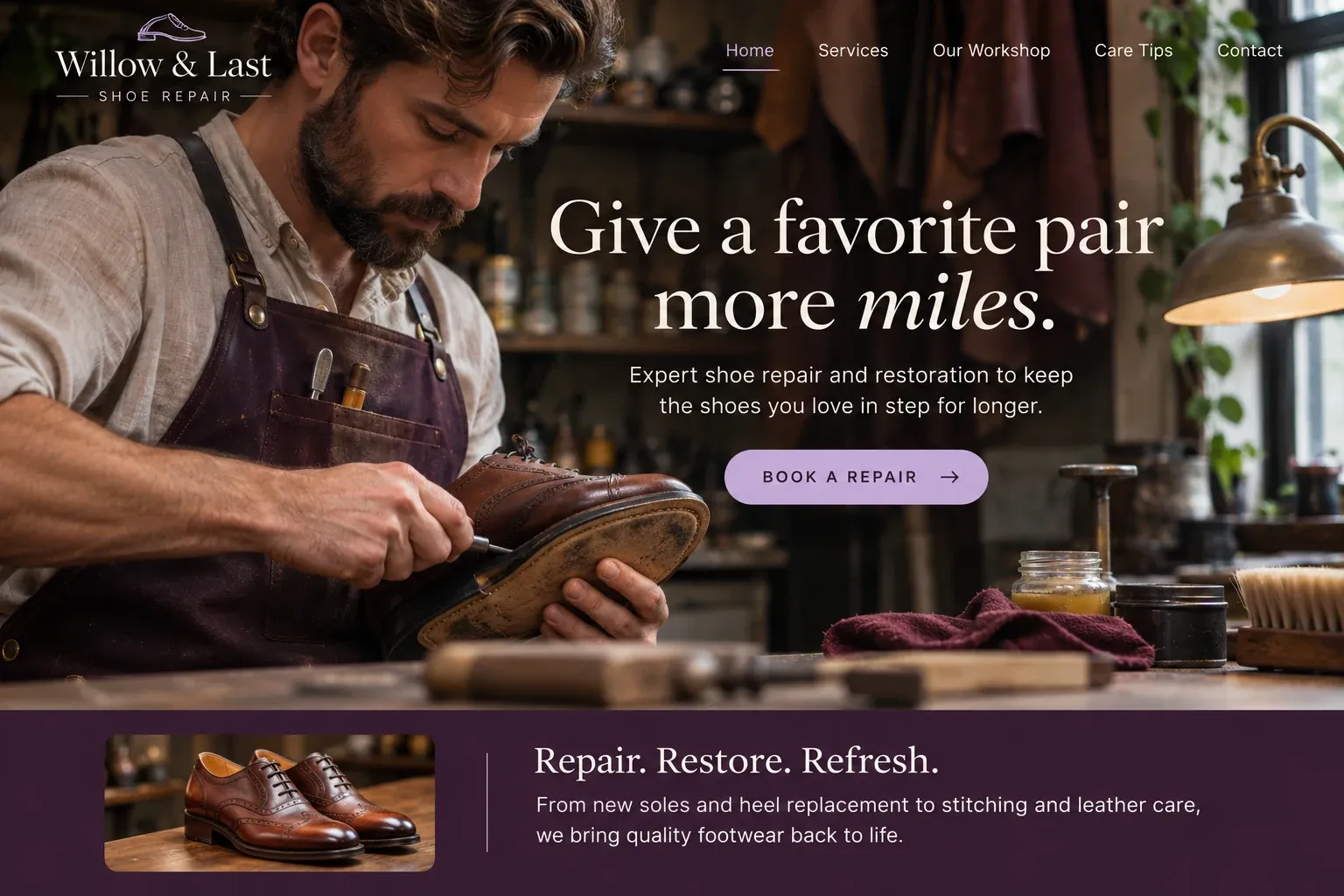
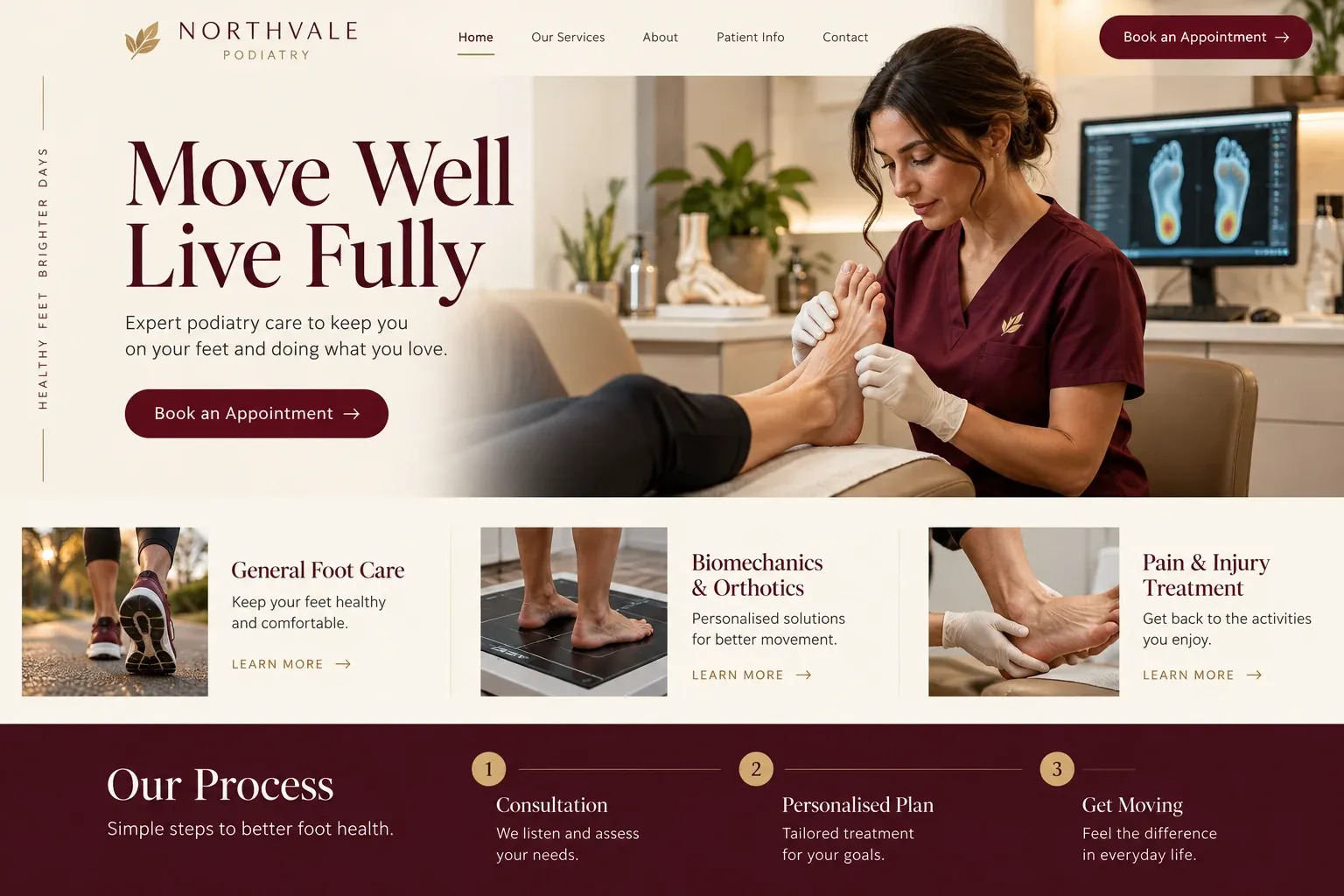
Fit is what a store can do better than a website. Explain how your staff measure length and width, how they handle different sizes between feet, and what customers should bring, such as their usual socks or inserts. Avoid medical claims about any shoe. If a podiatrist or pedorthist works with you, give them a separate page and let them approve their own wording.
Plan how shoppers reach you
Keep hours, address, parking and a tap-to-call number on every page. If you take fitting appointments, add a short request form or link your booking tool. Many shoppers like to call to check whether a style is in their size before driving over, so make the phone easy to find and say when staff answer.
Groups deserve their own path. Schools, sports teams, hospitals and restaurants often need shoes for several people. A group order page with a request form for the number of people, the kind of shoes and the timing lets your team follow up with a plan. If you sell online through Shopify or another platform, link it clearly.
Help local shoppers find the store
People search for shoes by need and place: wide shoes near me, running store in a city, kids shoe store nearby. Keep your business details consistent on the website and your Google Business Profile, and ask fitted customers for reviews. Brand and purpose pages give search engines specific topics. This structure gives an independent store a fair chance next to the chains and online sellers.