Web design for tailors and alteration shops

Websites for tailors who get the details right.

Most alteration customers arrive with a deadline and a garment they love: a wedding suit, a gown, a jacket with sleeves that are almost right. They want to know you can handle it, and how fittings work.

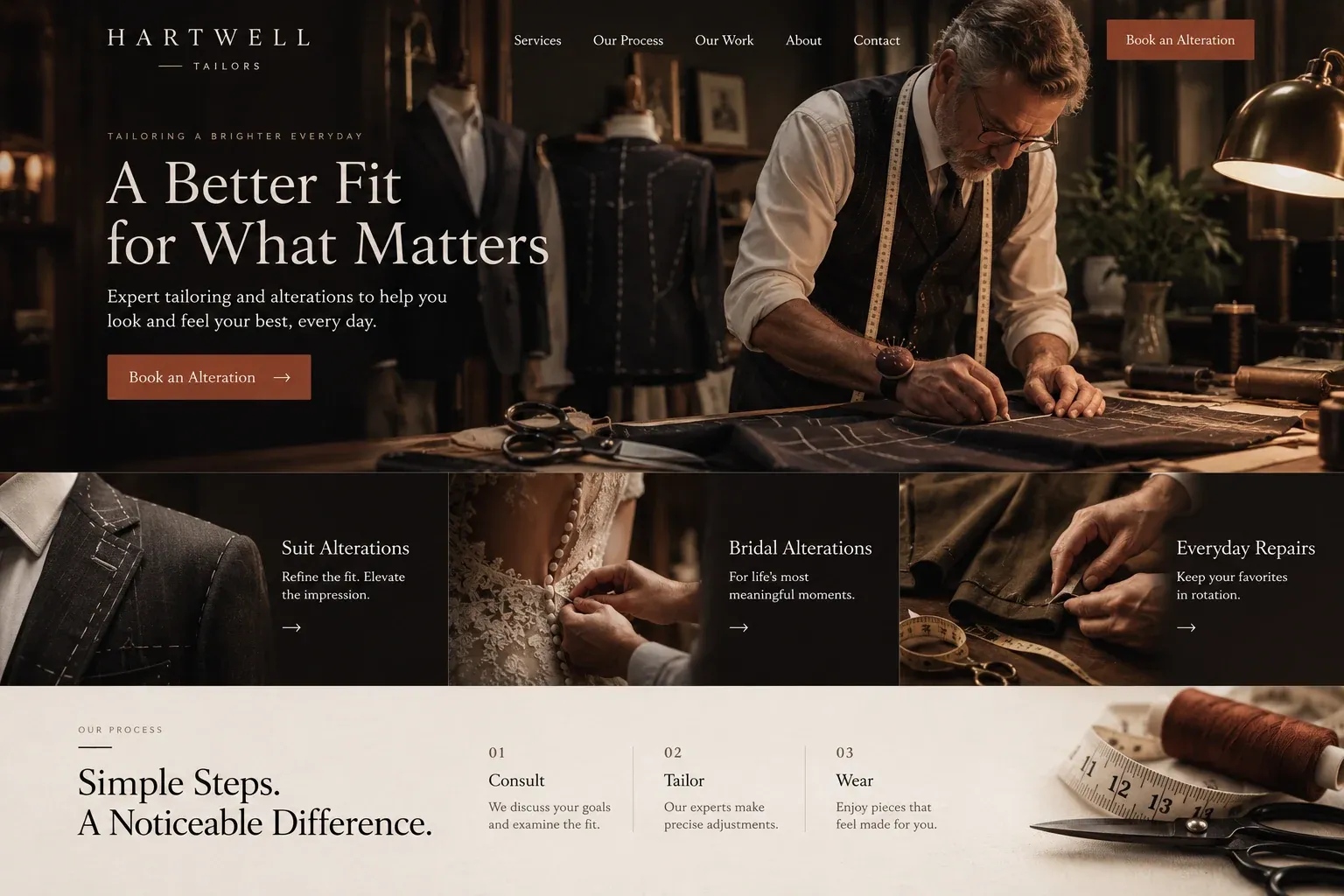
Fictional tailors and alteration shops website homepage design concept
A design concept for a fictional brand. Your site is designed from scratch around yours.

Your customer's story

A father's suit and a son's wedding

Ricardo's son is getting married in March, and Ricardo wants to wear the navy suit he bought for his own wedding thirty years ago. It still fits in the shoulders, mostly. The trousers are another story, and the jacket hangs loose at the waist. His wife says to buy a new one. Ricardo says this one matters, and goes looking for a tailor.

Most alteration shops he finds online show only an address and hours. One tailor's site lists alteration types clearly, from trouser waist and hem to taking in a jacket and adjusting sleeve length, with close photos of finished seams and cuffs. A page explains fittings: bring the shoes you will wear, expect a pinning appointment, then a final try-on before pickup. There is a note on planning ahead for weddings.

Ricardo books a fitting through the shop's online calendar and brings the suit on Saturday with his dress shoes in a bag. The tailor does not have to convince him with a long story. The site shows careful work, names the exact alterations he needs, and explains how fittings happen. A tailoring website should make a customer feel their garment is in good hands.

Why it matters

Why tailors and alteration shops need a website.

Tailoring is trusted work on things people care about, often against a date. Customers want to know whether you handle their kind of garment, from bridal gowns and suits to leather and denim, how fittings work, and how much time to allow. Many alteration shops have little more than a map listing, so a clear website answers questions that would otherwise take a phone call or a wasted trip.

We build tailoring websites with a page for each kind of work: everyday alterations, suits and formalwear, bridal and quinceañera gowns, repairs, and custom or made-to-measure pieces if you offer them. Close-up photos show stitching, hems, and fit. A fittings page explains what to bring and how many visits to expect. Appointments go through a booking link or a short request form, and pickup hours are always easy to find.

What your customers search for

  • tailor near me
  • wedding dress alterations Miami
  • suit tailoring
  • pants hemming near me
  • quinceañera dress alterations
  • leather jacket repair

Your customers

What customers ask before trusting a tailor with a garment

  • Can you alter this kind of garment?

    Alteration categories listed clearly, from hems and waists to gowns, suits, leather, and zippers, so customers know before they come in.

  • How many fittings will I need?

    A fittings page explaining the usual sequence of visits for different jobs, and what to bring, such as the shoes or undergarments for the event.

  • Will it be ready in time?

    A plain note on how far ahead to come in for weddings and events, and whether you offer rush work when your schedule allows.

  • Is the work careful?

    Close-up photos of finished seams, hems, and cuffs, showing the quality of stitching that customers cannot judge from a storefront.

What we build

What a website for tailors and alteration shops should include.

  • Alteration categories

    Hems, waists, sleeves, tapering, gowns, suits, leather, and repairs, each described plainly with a note on what to bring.

  • Fitting process page

    How fittings work for everyday alterations, suits, and bridal gowns, including pinning appointments and the final try-on.

  • Detail photography

    Close photos of your own seams, hems, and finished garments, which show skill better than any description can.

  • Garment appointment booking

    A link to your scheduling tool or a short request form for fittings, with space to describe the garment and the date.

  • Bridal and formal pages

    Separate pages for wedding gowns, bridesmaid dresses, quinceañera gowns, and suits, with advice on when to start.

  • Hours and pickup details

    Drop-off and pickup hours, parking, and how customers are told their garment is ready, shown on every page.

Planning guide

What should a tailor or alteration shop put online?

A tailoring website does not need to be large. It needs to tell customers what you alter, show that your work is careful, explain how fittings and timing work, and make it easy to book or drop in. Here is how we plan a site that does exactly that.

List the work you take on

Customers often do not know whether a shop handles their garment, so they call or simply go elsewhere. Give each category a section or page: everyday alterations, suits and formalwear, bridal and quinceañera gowns, leather and outerwear, repairs, and custom work. Use the words customers use, such as hem, take in, let out, and taper, and say what you do not handle.

Show the stitching up close

Tailoring quality lives in details that a storefront cannot show: an invisible hem, a clean sleeve with working buttons, a gown taken in without puckering. Photograph finished work up close in good light, and show a few full garments on a person or a form so customers see the fit. A short line under each photo naming the alteration helps customers find their own problem. Use only your own work, and ask permission before showing a customer.

Explain fittings, timing, and pickup

A fittings page saves you many phone calls. Explain what to bring, such as the shoes and undergarments for the event, how pinning appointments work, how many visits a gown or suit usually needs, and how customers learn their garment is ready. For weddings, quinces, and galas, give honest guidance on how far ahead to come in, and say whether rush work is ever possible.

Let customers book fittings online through a scheduling tool, or send a short request with a photo of the garment and the event date. Keep drop-off and pickup hours on every page, with parking notes. Many customers stop by on a lunch break, and they need those hours at a glance.

Be the tailor nearby searches find

Alteration searches are urgent and local: "tailor near me", "wedding dress alterations Miami", "suit tailoring Coral Gables". Category pages give those searches something to match, and a Google Business Profile with accurate hours and close-up photos supports them. Ask customers for reviews after big jobs like gowns and suits, when they have something specific to say about your work. Dry cleaners, bridal shops, and formalwear stores often refer customers, so make your site easy to pass along.
In your market

Tailoring for South Florida occasions

South Florida keeps tailors busy with weddings, quinceañeras, galas, and graduations, many of them outdoors in the heat, so customers ask about lighter fabrics and comfortable fits. Linen suits and guayaberas are part of the local wardrobe, and many customers prefer to speak Spanish at the counter. Seasonal residents bring garments for quick adjustments during their stay. We write category pages for this mix and can add a Spanish version of the site.

Questions

Questions tailors and alteration shops ask us.

Should a tailor's website say how long alterations take?

Give honest, general guidance rather than fixed promises: everyday hems are usually quicker, while gowns and suits need more time and fittings. Advise wedding and event customers to come in well ahead, and say whether rush work is sometimes possible. Customers prefer realistic guidance to a promise you might have to break.

Can customers send photos of a garment before coming to the tailor?

Yes. A short request form lets them attach photos of the garment and describe what feels wrong, along with the event date. You can reply with whether it is something you handle and suggest booking a fitting. It saves trips for jobs you would not take.

Do tailors need separate pages for bridal and formalwear?

It helps. Brides, quinceañera families, and wedding parties search specifically for gown and suit alterations, and they have more questions about fittings and timing. A dedicated page with close-up photos of gown work and a clear fitting sequence gives them what they need, and gives search engines a clear topic.

Can an alteration shop's site work in Spanish too?

Yes. We can build a full Spanish version with its own category and fittings pages, written from your notes and approved by you. Many alteration customers are more comfortable describing exactly what they want in their first language, so it is worth having if your counter already works in both.

Let's talk

Ready for a website built for tailors and alteration shops?

Tell us about your business and we will come back with a clear recommendation and a fixed quote. No pressure, no jargon.

Trades we design for

See all 226 trades

226 trades

  • Plumbers website design concept
CallFree quote