Web design for upholsterers

Websites that show what new fabric can do.

A tired sofa or a set of faded dining chairs is often worth saving, but owners are not sure. They want to see transformations, understand fabric choices, and know what the work involves before they book a visit.

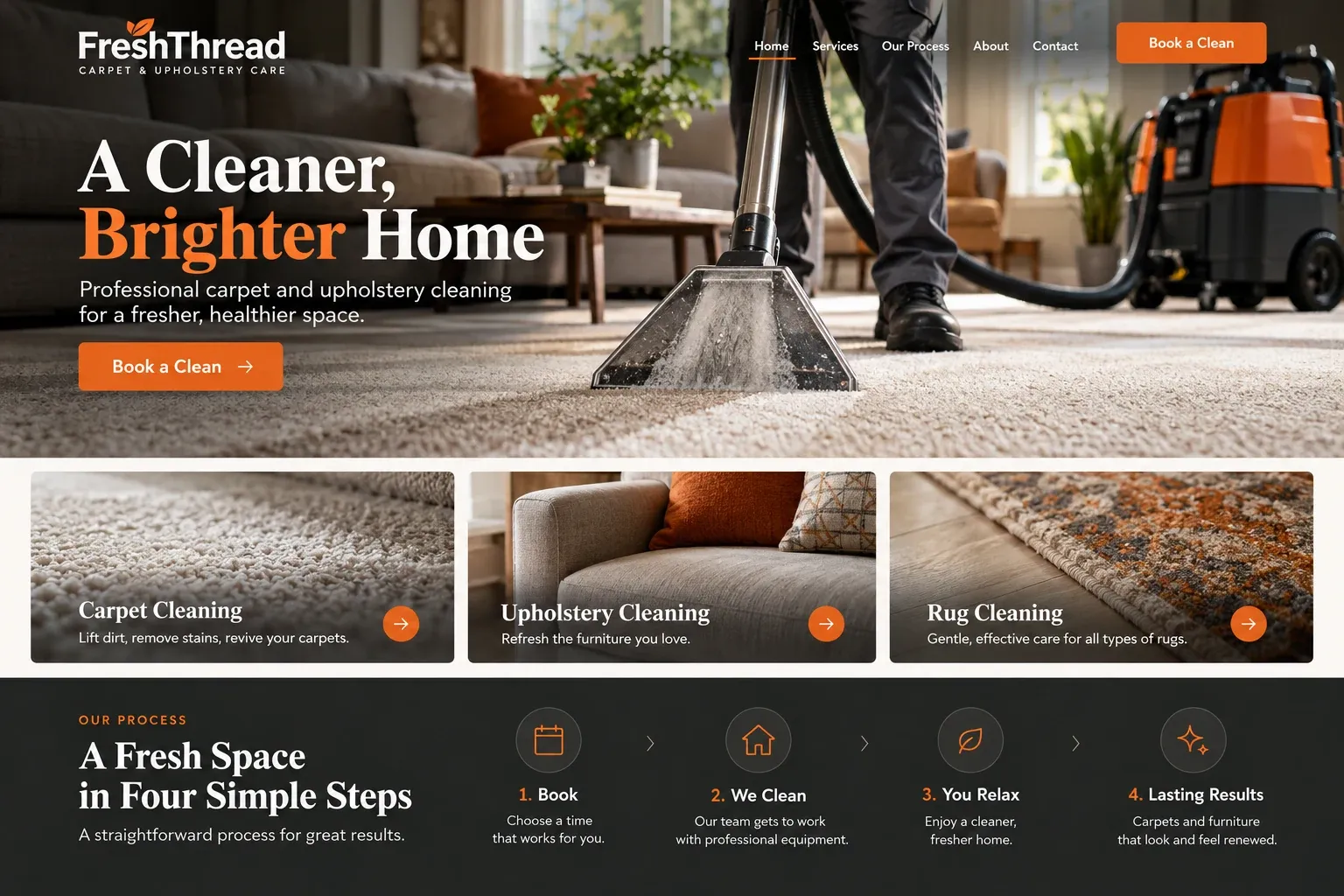
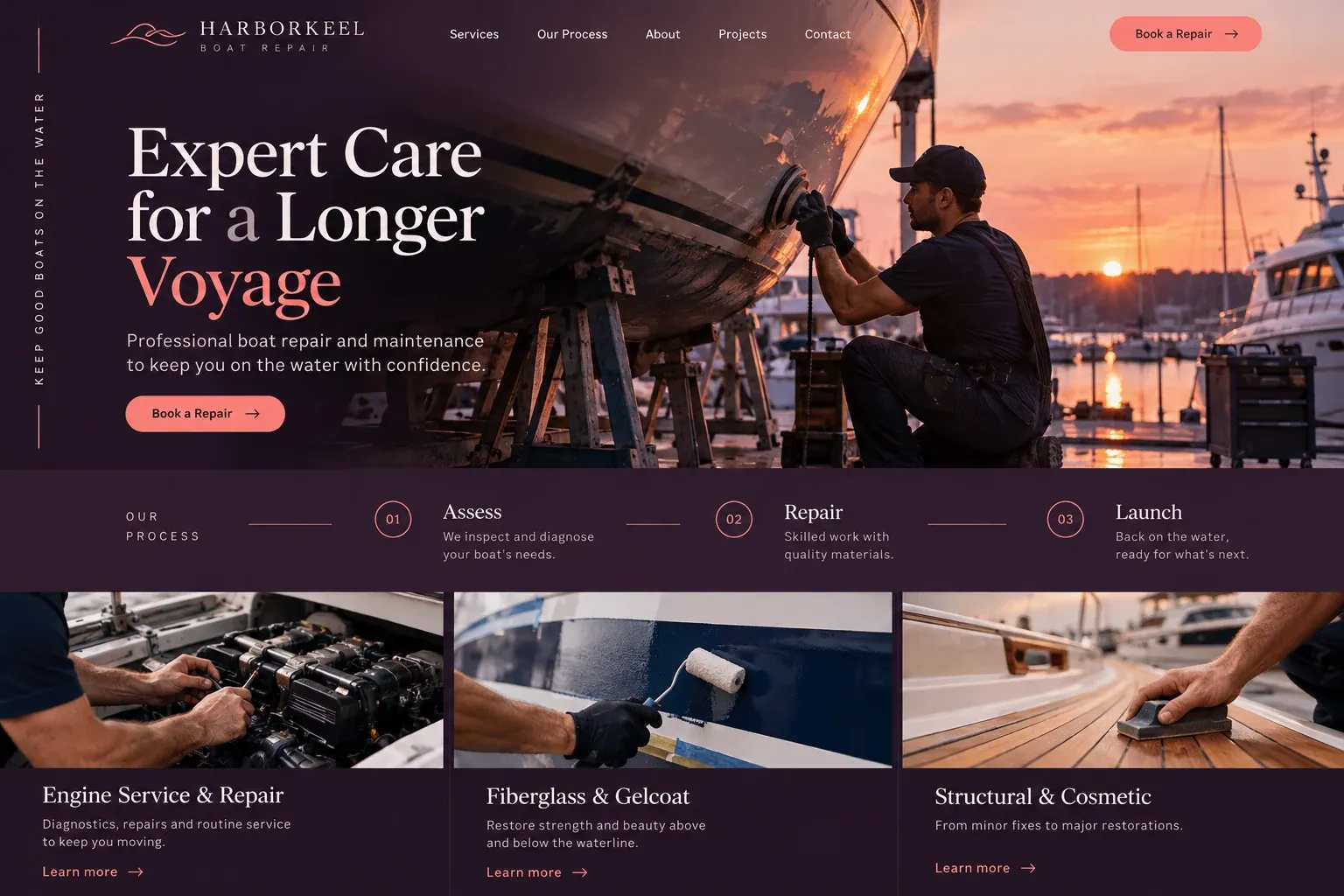
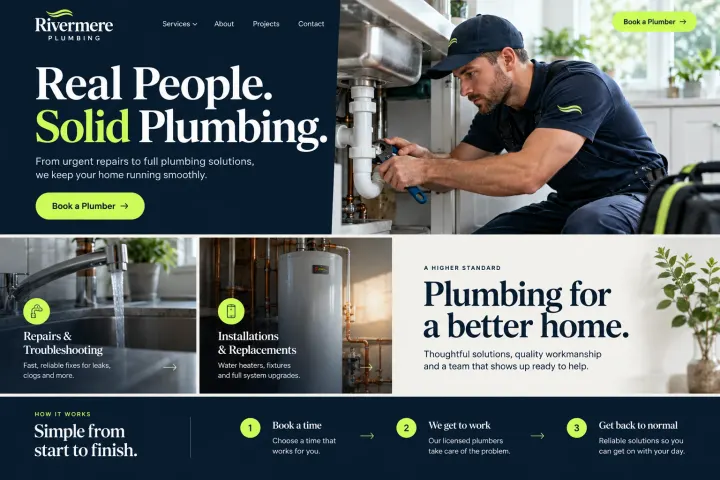
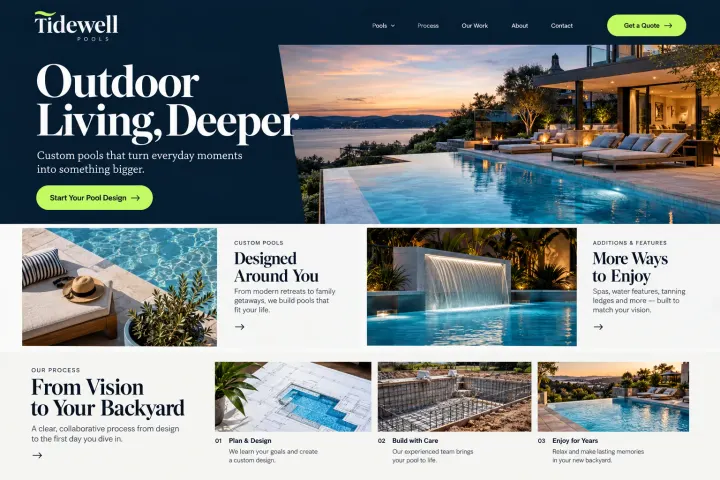
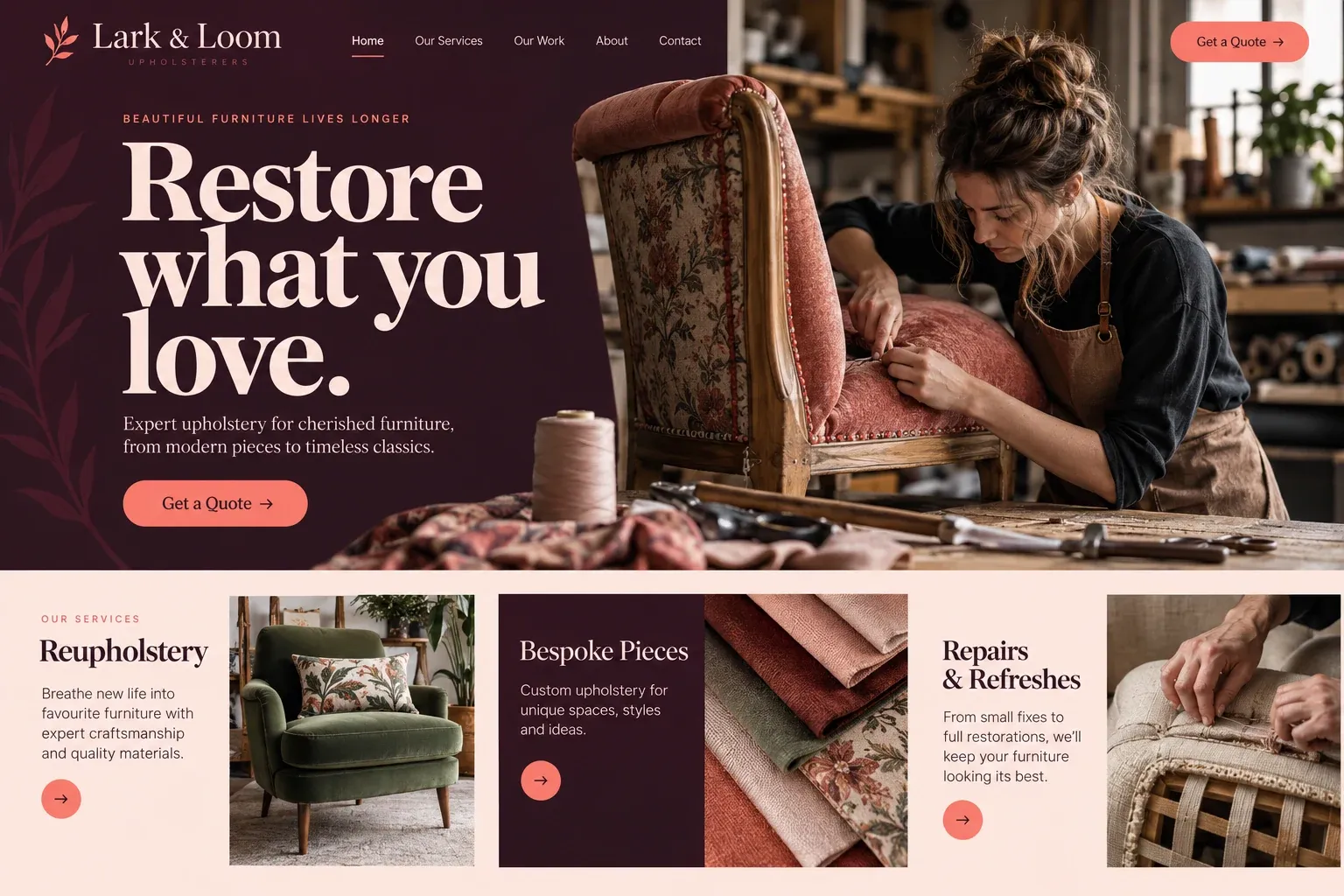
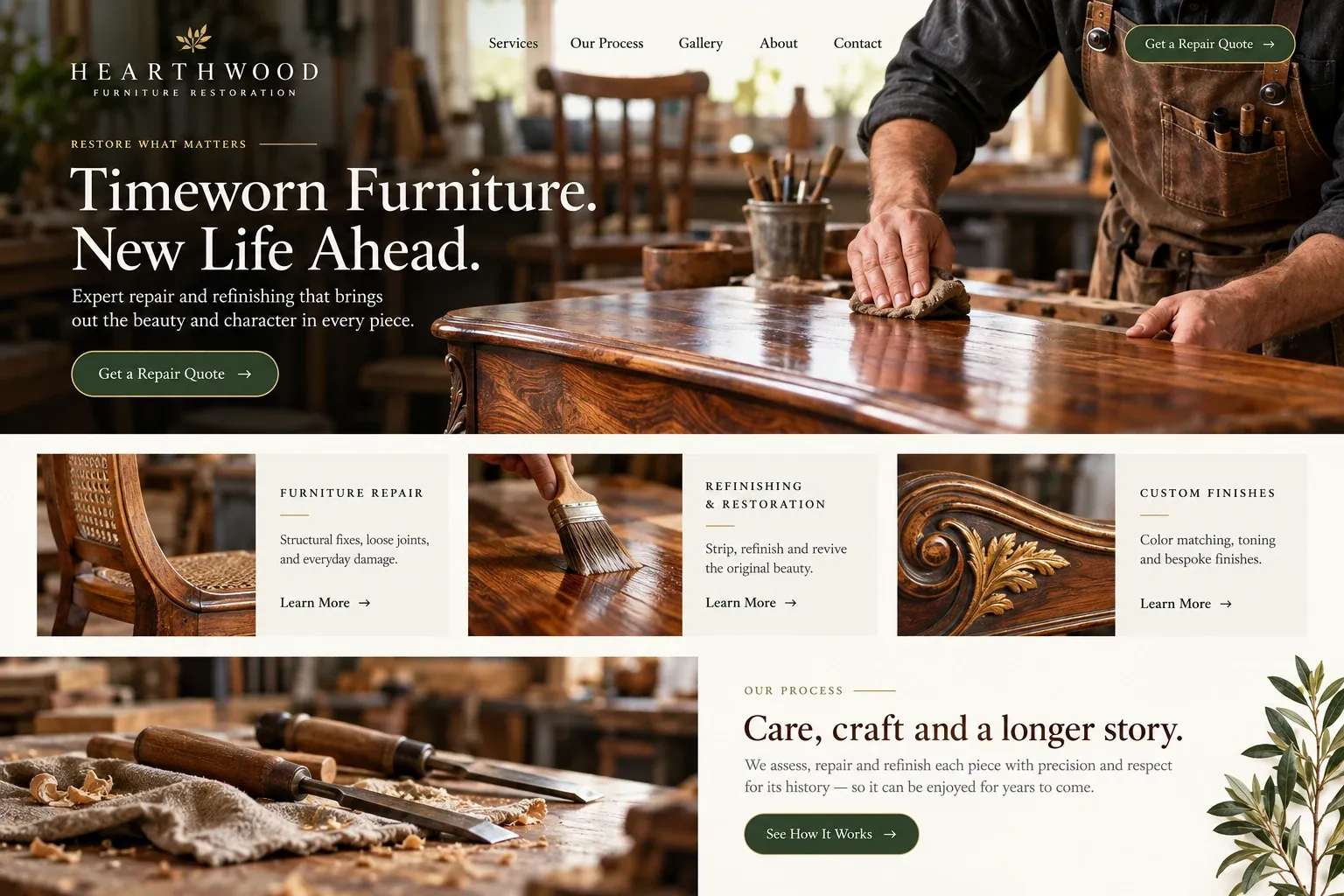
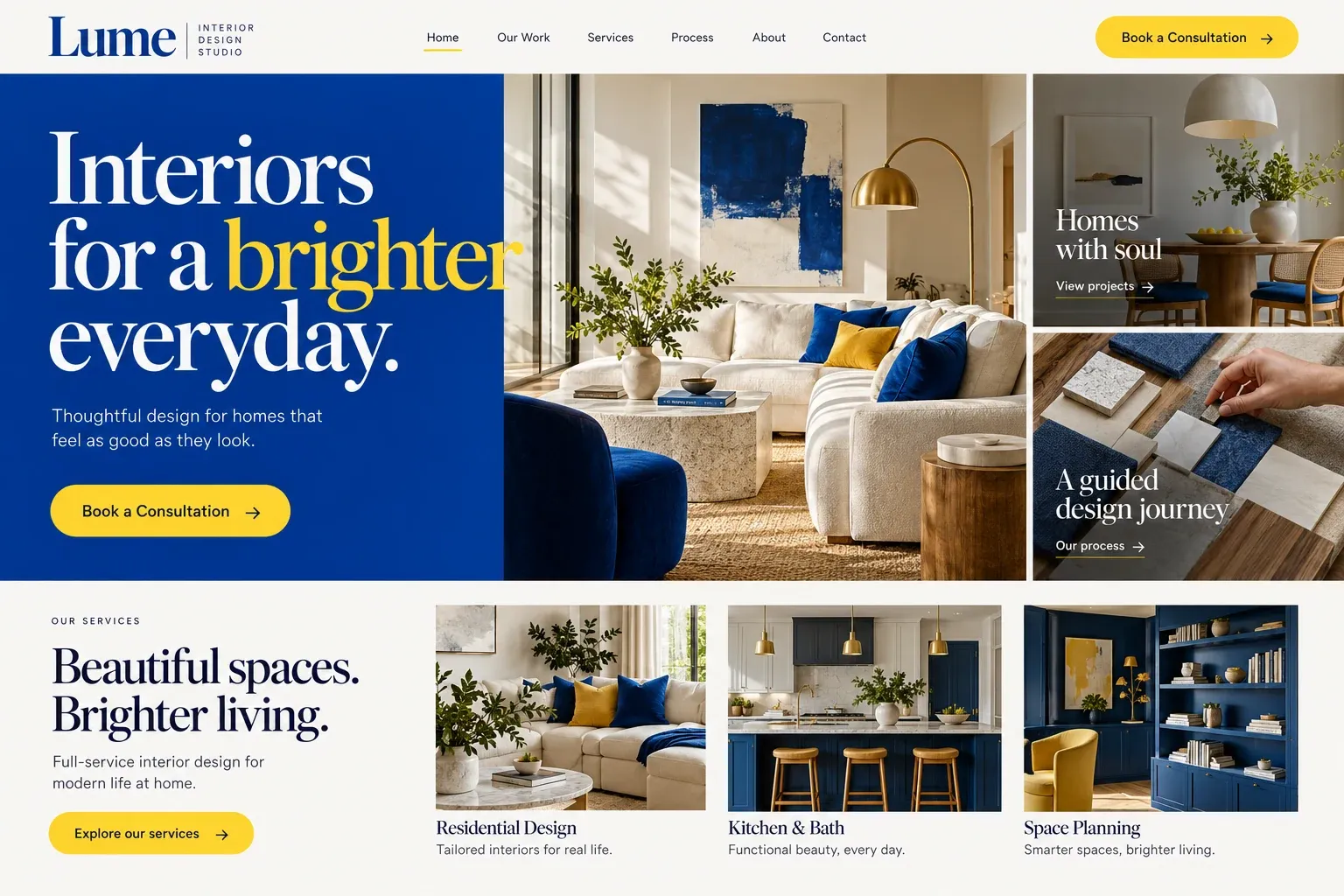
Fictional upholsterers website homepage design concept
A design concept for a fictional brand. Your site is designed from scratch around yours.

Your customer's story

The armchair everyone still fights over

Gloria's armchair has stood in the living room in Kendall for twenty years. It is the seat everyone heads for, deep and comfortable, but the floral fabric has faded to beige on the side facing the window, and the cushion sags in the middle. Her daughter suggests a new chair from a furniture store. Gloria sits in three of them and comes home unconvinced.

She asks her grandson to help her search for reupholstery near home. They find a site with nothing but a logo and a phone number, and another full of photos of boat seats. A third shows living room chairs before and after, explains how it checks the frame and springs, talks through fabric options from sturdy weaves to performance fabrics, and asks for photos and rough measurements.

Gloria sends two photos and the width of the seat. The upholsterer calls back, asks whether she wants to keep the shape of the arms, and offers to bring fabric samples. She was never really shopping for a chair. She was looking for someone who would treat this one as worth the effort, and a website full of old chairs made new again tells her where to look.

Why it matters

Why upholsterers need a website.

Reupholstery is a decision customers make slowly. They weigh it against buying new, worry about fabric choices, and want to know whether the frame is worth saving. They look for transformations of pieces like theirs, a sense of how fabric is chosen, and a clear way to ask about one specific item. A social media page can show pretty results, but it cannot explain the process or collect the measurements and photos you need to quote.

We build upholstery websites around the transformation and the process. Projects are grouped by type, from sofas and dining chairs to headboards, outdoor cushions, and boat interiors if you do them, each with before and after photos and a note on the fabric and construction. A page explains assessment, fabric selection, and the order of work. The inquiry form asks for photos, rough dimensions, and what the owner hopes to change.

What your customers search for

  • upholstery shop near me
  • reupholster sofa Miami
  • dining chair reupholstery
  • outdoor cushion replacement
  • marine vinyl boat seats
  • headboard upholstery

Your customers

What owners want to know before reupholstering a favorite piece

  • Is my chair worth redoing?

    A page on how you assess frames, springs, and padding, and when you will honestly say a piece is not worth the work.

  • Can I bring my own fabric?

    A clear note on customer-supplied fabric, your sample library, and how yardage is estimated, so owners know the options before a visit.

  • What will change, and what stays?

    Before and after projects with notes on shape, foam, cushions, and trim, showing which details were kept and which were rebuilt.

  • Can it stand up to sun and kids?

    A page on fabric types for sunny rooms, outdoor living, pets, and busy families, written in everyday words rather than mill jargon.

What we build

What a website for upholsterers should include.

  • Before-and-after projects

    Sofas, chairs, headboards, and cushions shown before and after, with a note on fabric and construction for each.

  • Fabric selection guide

    Performance, outdoor, leather, and decorative fabrics explained simply, with how samples are viewed and chosen.

  • Construction assessment

    What you check underneath, such as frame joints, springs, webbing, and foam, and how that shapes the recommendation.

  • Item dimensions form

    Type of piece, rough width, depth, and height, cushion count, and photos from the front, side, and back.

  • Outdoor and marine pages

    Patio cushions and boat upholstery on their own pages, if you do them, with the materials suited to sun and salt.

  • Home visits with samples

    How you measure and bring fabric samples to the home, and how large pieces are picked up and returned.

Planning guide

What does an upholstery business need on its website?

An upholsterer's website helps an owner decide that an old piece is worth saving and that you are the person to trust with it. It should show results, explain choices, and make it easy to ask about one particular item. Here we cover pages, photos, the inquiry form, and how the site helps nearby customers and designers find your workroom.

Separate the work customers search for

Owners search by the piece and the job: sofa reupholstery, dining chair seat recovering, headboard upholstery, outdoor cushion replacement, boat upholstery. A page for each type lets you show the right photos and explain what is involved. Add a fabrics page, a page on how the process works, an about page with the workroom, and a contact page built around photos and dimensions.

Show transformations with context

Before and after photos carry the site, but context makes them useful. Note the fabric used, whether the shape changed, what happened to the foam and springs, and any trim like welting or nailheads. Photograph pieces in natural light and include a close-up of seams and corners. Show only your own work, and keep a few pieces where you saved the original shape on purpose.

Ask about the item before the visit

A good upholstery inquiry asks for the type of piece, rough width, depth, and height, the number of cushions, and photos from the front, side, and back. Ask whether the owner has fabric in mind or wants samples, and what bothers them now, such as sagging seats or fading. The request arrives in your email with enough to estimate yardage and labor.

Explain the steps that follow: a visit or a workroom appointment, fabric selection, an estimate, scheduling, and pickup. Mention in general terms that special-order fabrics can take a while to arrive. Owners who understand the sequence feel less nervous about letting a favorite piece leave the house, and your team spends fewer calls repeating the same explanation.

Be found by homeowners and designers

Upholstery customers search locally, and interior designers often look for a workroom they can rely on. A page for designers explains how you handle trade orders and customer-supplied fabric. Keep your Google Business Profile accurate with workroom photos, and ask clients for reviews that mention the piece. Clear service pages give search engines topics to match, though no one can promise a ranking.
In your market

Upholstery in South Florida

Strong sun fades fabric quickly near windows and on patios, and humidity is hard on foam and padding, so owners here ask often about performance and outdoor fabrics. Boat seats and cushions are a steady line of work for many upholsterers, while condo living means service elevators, building rules, and careful pickups. Restaurants and hotels need booths and chairs redone between busy seasons. Many clients prefer Spanish. We write pages for all of this and can add a Spanish version of the site.

Questions

Questions upholsterers ask us.

How should an upholsterer handle customer-supplied fabric on the site?

Say plainly whether you accept it, how much to order, and what happens if the fabric is unsuitable, such as being too thin for a seat. A short note avoids awkward calls later. We can add a simple yardage guide by piece type, labeled as approximate, with a reminder that you confirm the amount.

Can customers send photos and measurements of a chair before a visit?

Yes. The inquiry form can ask for the piece type, rough dimensions, cushion count, and photos from several sides, plus what the owner wants changed. It arrives in your email, so you can estimate yardage and decide whether a home visit or a workroom appointment makes more sense.

Is it worth adding boat and outdoor upholstery pages?

If you do that work, yes. Boat owners and homeowners with patios search for it specifically, with words like marine vinyl and outdoor cushions, and a general upholstery page will not match those searches. Separate pages also let you show the right materials and explain how they hold up in sun and salt.

Can our upholstery site have a page aimed at interior designers?

Yes. Designers want to know whether you take trade work, accept customer-supplied fabric, read their specifications, and keep to a schedule. A short page covering how you work with them, with examples of pieces done for designers who agree to be shown, makes it easier to become their go-to workroom.

Let's talk

Ready for a website built for upholsterers?

Tell us about your business and we will come back with a clear recommendation and a fixed quote. No pressure, no jargon.

Trades we design for

See all 226 trades

226 trades

  • Plumbers website design concept
CallFree quote