Planning guide
How should a tattoo studio website be organized?
A tattoo studio website has to serve two kinds of visitor: the person who knows exactly what they want and needs the right artist, and the first-timer who needs the process explained. Both arrive with an idea they care about. Here is how we plan a site that respects that.
Build the site around the artists
Each artist deserves a page that works like their own portfolio: a short bio, the styles they focus on, and a gallery of their best work, with healed photos alongside fresh ones. A style index can help visitors browse, but it should only point to artists who truly do that style. Note which artists take custom work only and which offer flash. Guest artists get a temporary page with their dates and how to book them.
Photograph healed work, not just fresh ink
Fresh tattoos photograph red and shiny, and experienced clients know it. Healed shots show line quality and how the work settles, which is what they really want to judge. Healed photos also help clients picture how their own piece will age. Shoot in daylight or soft, even light, avoid heavy filters, and keep the angle straight. Ask clients for permission and, where they are happy to share, a healed photo sent a few weeks later.
Make the booking process visible
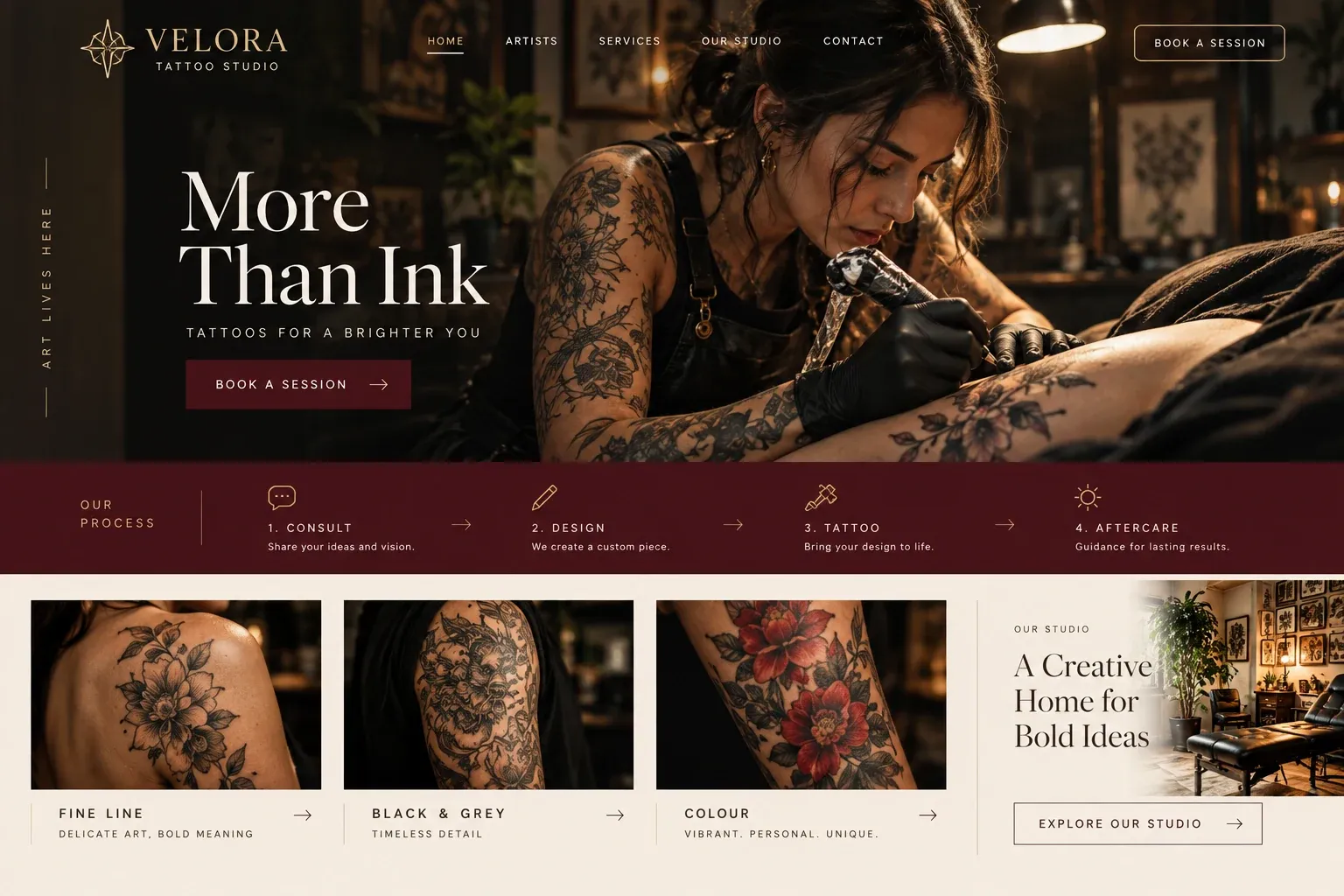
First-timers often hesitate because they do not know how booking works. A process page fixes that: request, consultation, deposit, drawing, session, aftercare, touch-up. State your deposit and rescheduling terms, whether you charge for drawings, how you handle cover-ups, and your age and ID requirements exactly as your studio applies them. Being plain about rules filters out requests you would decline anyway.
The request form is your most useful tool. Ask for placement, approximate size, style, color or black and gray, reference images, and which artist the client prefers. Requests arrive organized, and the artist can answer with real questions rather than starting from nothing. If an artist's books are closed, the form can say so and offer a waitlist instead.
Get found by style and neighborhood
People search for tattoos by style and place: "fine line tattoo Miami", "cover up tattoo artist near me", "Japanese tattoo Wynwood". Artist pages and style pages give search engines those topics. Keep the studio's details consistent with your Google Business Profile, post healed work there too, and ask happy clients to mention their artist and style in reviews. Walk-in days belong on the profile as well.