Planning guide
What should a window tinting website explain?
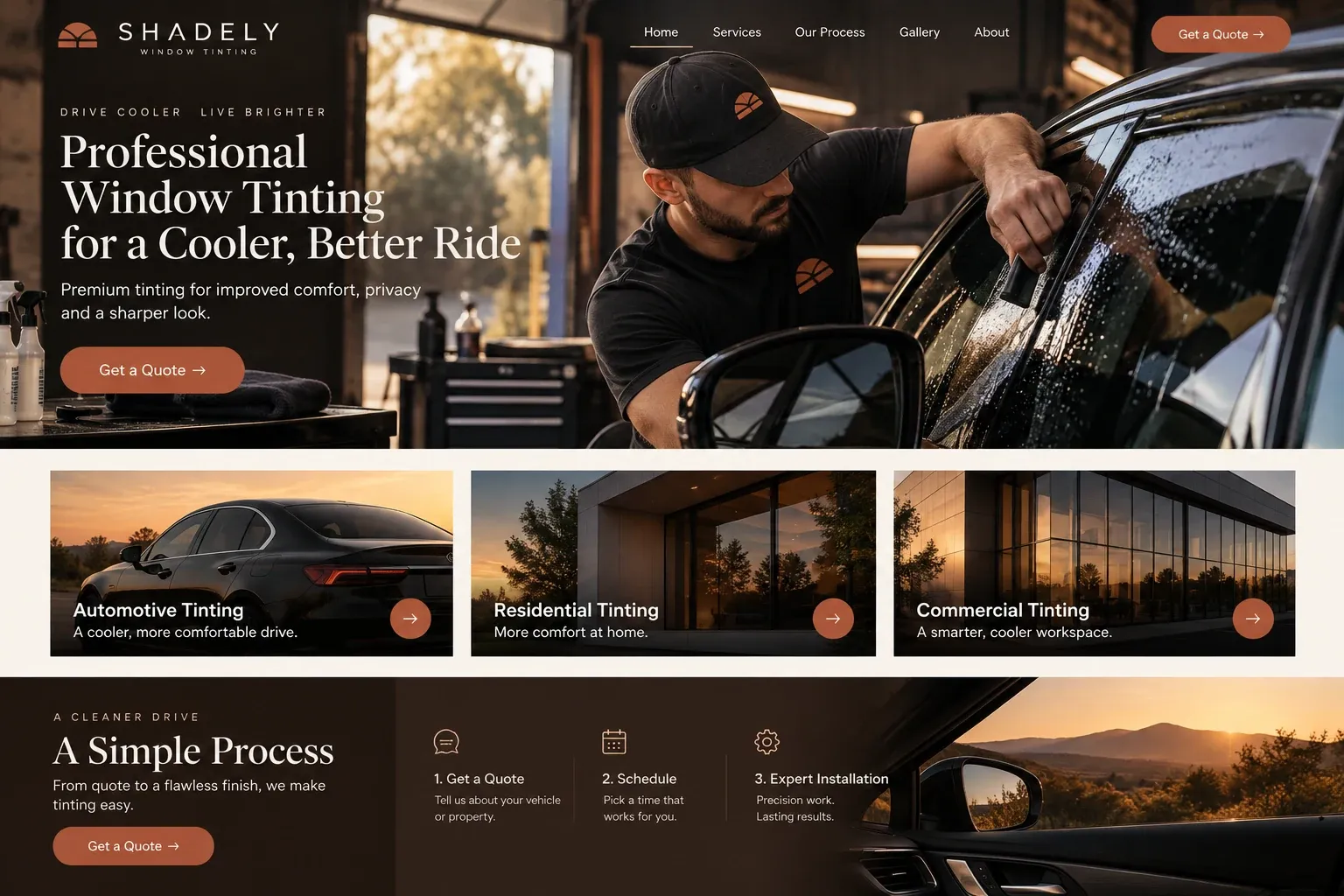
A window tint website has to do more than show dark cars. It should help customers pick a film, set honest expectations about limits and results, and make the appointment easy to plan. Here is how we lay out a tint shop's pages, what to show in the gallery, how booking and aftercare fit in, and how the site supports local search.
Compare films in plain language
Most customers do not know the difference between dyed, carbon, and ceramic film. A comparison page that describes each by how it looks, how it handles heat and glare, and how it holds up over time helps them choose. Use only the performance claims the film maker publishes, and avoid broad promises like a cooler car by a fixed number of degrees. Name the brands you install.
If you offer different film lines, explain who each usually suits: a daily commuter focused on heat, someone who mainly wants privacy, a driver who wants a clear windshield film. That helps visitors arrive with a preference rather than a confused stack of questions. If you keep sample panels or a heat lamp demonstration at the counter, mention it, because many customers like to feel the difference before deciding.
Show installed examples by vehicle
The same shade looks different on a white SUV and a black coupe. Group your gallery by vehicle type, and photograph each car from outside in daylight and from inside looking out. Caption with the vehicle, the film, and the shade. Close-ups of clean edges around the rear glass and the dot matrix show careful installation. Link to Google reviews instead of copying quotes onto the page.
Be careful about tint limits
Florida sets limits on how dark tint can be, and they vary by window and by vehicle type. Rather than publishing a table that could go out of date, the site can say that limits apply and that your installer reviews what is allowed for each vehicle before work begins. If you have a policy on darker requests, state it plainly. That honesty protects both the customer and your shop.
Make booking and aftercare clear
The booking form should ask for the year, make, model, the windows to tint, and the look the customer wants. Say how long the car is usually needed and whether customers can wait on site. Afterward, aftercare matters: keeping windows up while the film cures, cleaning without ammonia, and what haze is normal at first. A page they can open on their phone saves you calls.
For local search, give each service its own page, list the areas you serve, and keep your Google Business Profile current with photos. Customers search "window tint near me", "ceramic tint", and "tint for SUV", and specific pages give search engines something to match. Ask satisfied customers for reviews that mention their vehicle, which helps the next visitor with the same car.