Web design for attractions and water parks

Website design for attractions and water parks.

Families plan a day out around heat, height limits, and how long the lines might be. Your website is where that plan gets made, usually the night before, on a phone.

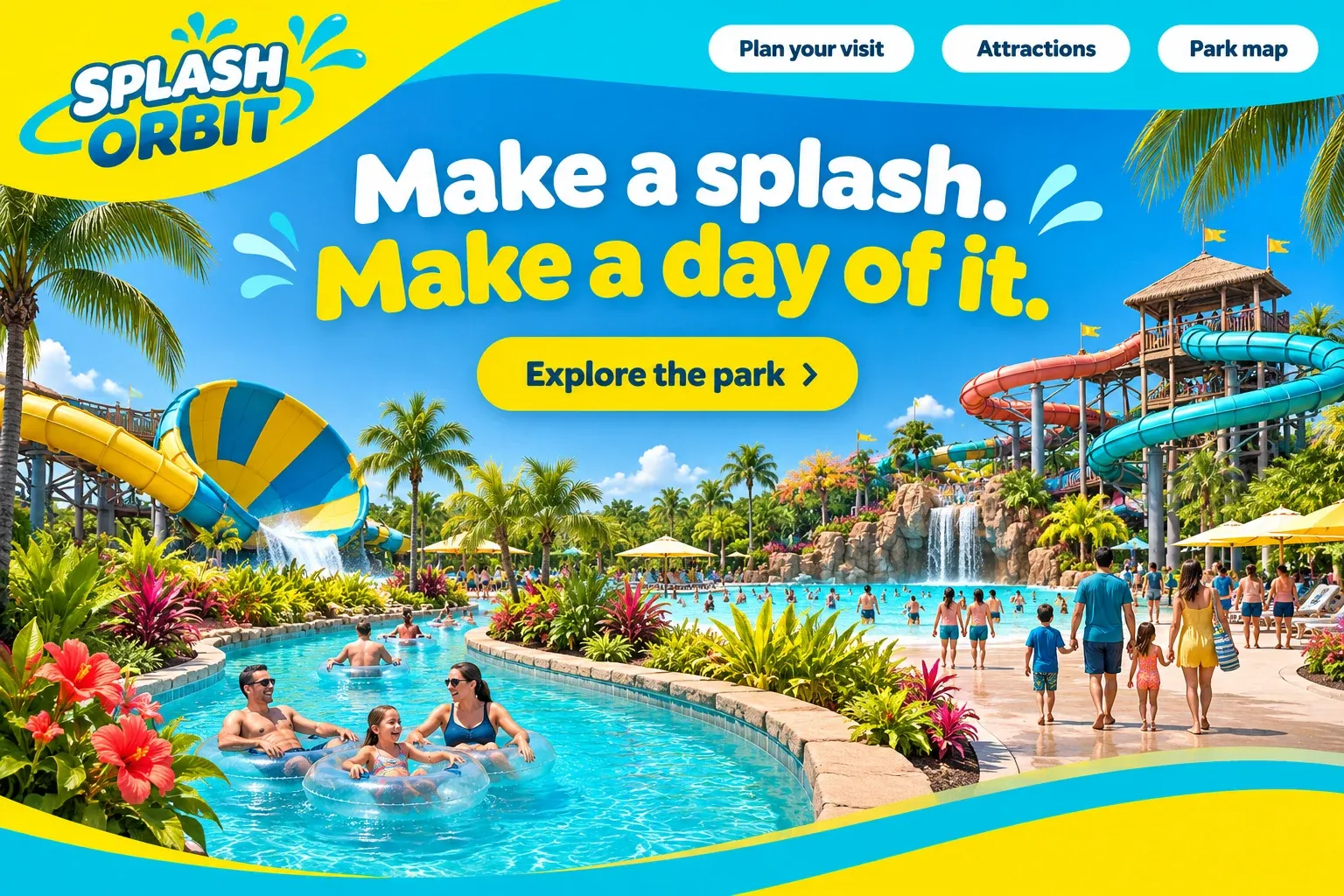
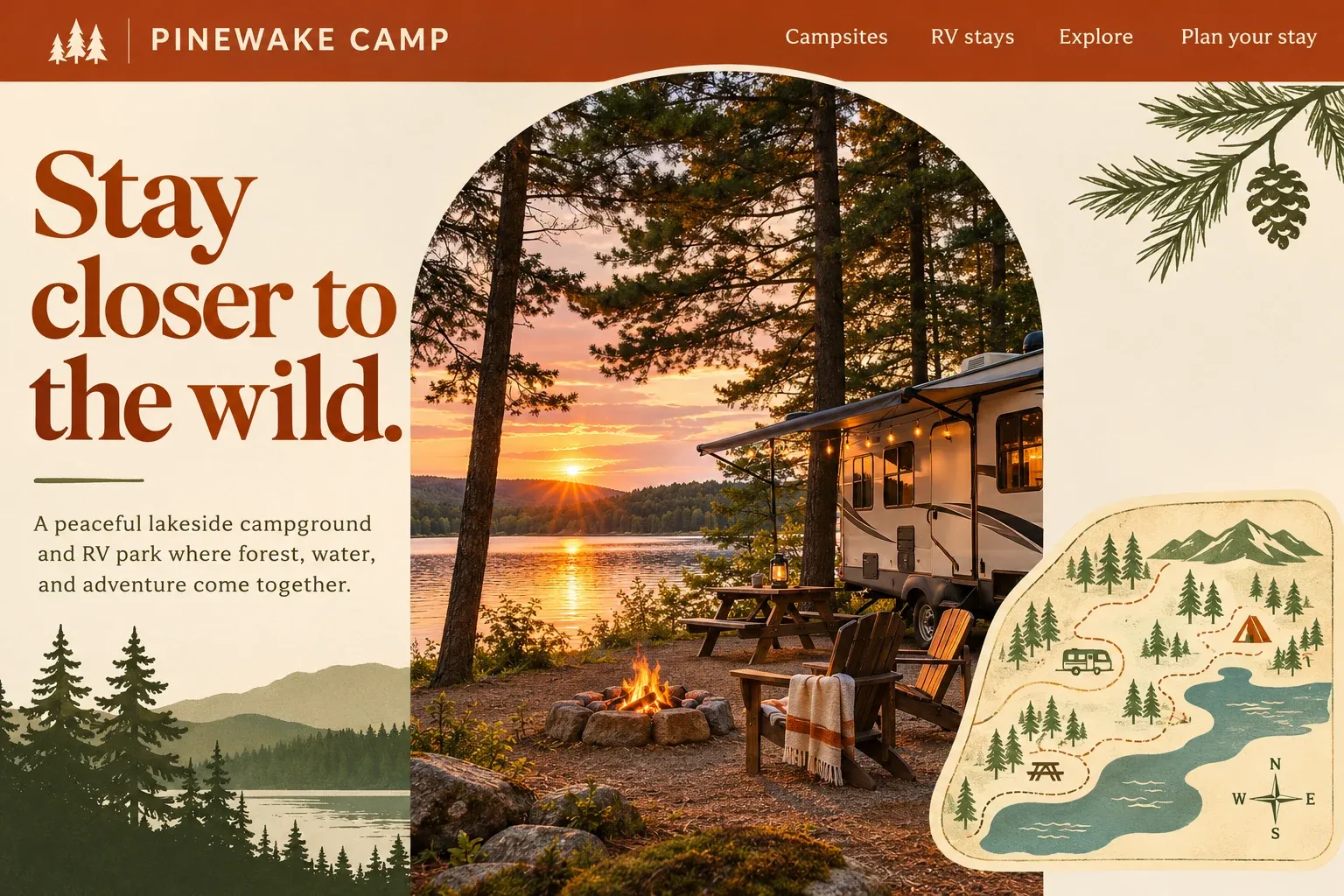
Website design concept for attractions and water parks, an illustration
Illustration only: the design, business name and logo are made up to show the kind of website we can build. Not a real business or client website. Yours is designed from scratch around your brand.

Your customer's story

Saturday plans made on the couch

It is Friday night and Keisha has promised her two boys a day at the water park. Her younger son is small for his age, her mother wants to come along, and nobody knows whether they can bring sandwiches. She settles on the couch with her phone and opens the park's website to plan the day before the kids are up.

She needs answers fast: opening hours tomorrow, height requirements for the big slides, whether there is shade and cabanas, what the rules say about coolers and swim diapers, where to park, and whether tickets should be bought in advance. One park makes her hunt through a PDF. Another lays it all out on a single visitor information page, with a park map and a ticket link at the top.

By the time the boys wake up, she has tickets on her phone and knows which gate to use. Attractions win these Friday night planning sessions by being clear. A park website should open with today's hours and weather notes, then the attraction guide, the map, and every rule a parent worries about, with the ticket link always one tap away.

Why it matters

Why attractions and water parks need a website.

A day at an attraction is a family decision made in advance, often by one parent planning for several people with different ages, heights, and needs. They compare hours, rules, accessibility, food options, and what is open this season. Social posts announce new rides, but they cannot hold a park map, a ride guide sorted by height, and a policy page that answers what guest services hears every morning.

We build attraction websites as visitor guides. Each ride or experience gets its own entry with height and age notes, the map shows where everything is, and an opening calendar shows seasonal hours and closures. Your existing ticketing system stays one tap away from every page, and pages for groups, birthday parties, season passes, and accessibility each give planners the details they need.

What your customers search for

  • water park near me
  • things to do in Miami with kids
  • water park hours
  • birthday party at a water park
  • family attractions near me
  • group tickets for school trips

Your customers

What families check before a day at the park

  • Is it open on the day we want?

    An opening calendar with daily hours, seasonal schedules, and weather closures, kept current by your team and visible from the home page.

  • Can my kids go on the rides?

    An attraction guide with height and age requirements for every ride and pool, so parents can set expectations before the car is packed.

  • What can we bring?

    A plain visitor information page covering coolers, outside food, swimwear rules, lockers, strollers, and what is checked at the gate.

  • Will it work for everyone in our group?

    Accessibility details, shaded rest areas, first aid, and quiet spaces described honestly, plus a park map showing where each one is.

What we build

What a website for attractions and water parks should include.

  • Attraction guide

    Every ride, slide, and pool with photos, height and age requirements, and thrill level, sorted so families can plan by age.

  • Park map

    A clear map of the park with rides, restrooms, food, first aid, lockers, and shade, readable on a phone in bright sun.

  • Opening calendar

    Daily hours, seasonal openings, special event nights, and weather closures shown in one calendar your team can keep current.

  • Visitor information page

    Rules on food, swimwear, lockers, strollers, and bag checks written in plain words, so guests arrive prepared and the gate moves.

  • Group and party pages

    Separate pages for birthday parties, school trips, camps, and company outings, each with an enquiry form for your group sales team.

  • Ticketing link

    Your current ticketing and season pass system linked from every page, so buying never means hunting for a button.

Planning guide

What should an attraction or water park website include?

An attraction website is a planning tool first and an advertisement second. Families, schools, and groups visit it to decide whether the trip works for them, then return on the day for hours and directions. Here is how we would plan the pages, the content, the ticket path, and the parts that help the park get found.

Build around the visit, not the brochure

The core pages follow a guest's questions: the attractions, the map, hours and calendar, visitor information and rules, food and amenities, tickets and passes, groups and parties, and directions. Large parks may need a page per area or per major ride, while smaller attractions can combine them. What matters is that a parent can answer any question in a couple of taps without downloading a PDF.

Show what a day really looks like

Use your own photos and short video of real guests, with permission, on rides, in the wave pool, at the snack bar, and relaxing in the shade. Show quieter corners honestly rather than pretending crowds never happen. Accessibility features, family restrooms, and first aid stations deserve clear photos too. Avoid claims you cannot back up, such as the biggest slide anywhere, and let the experience speak for itself.

Make tickets and group bookings easy

Most parks already use a ticketing platform, so the website's job is to send people there at the right moment with one obvious button. Explain the ticket types in plain words before linking out. Groups need a different path: a short enquiry form for parties, schools, camps, and company outings that asks for the date, group size, and ages, sent straight to the people who plan them.

Weather is part of the plan. Say clearly what happens when lightning closes the slides, whether guests can return another day, and where updates are posted. A visible notice area on the home page, which your team can change on a stormy morning, saves your phone lines from a wave of the same question.

Help visitors and search engines find you

Families search for things like water parks near me, things to do with kids this weekend, and birthday party venues. A page for each experience, party option, and season gives search engines something specific to match. Keep your name, address, and hours consistent with your Google Business Profile, and update holiday hours there as well as on the site. Invite reviews from guests, and reply to them politely.
In your market

Built for attractions in South Florida

Attractions here serve two crowds: local families looking for something to do on a hot weekend, and tourists planning around a short stay. Summer afternoons bring storms and lightning closures, while winter brings visitors from colder places and from abroad. Sun, shade, and hydration are everyday concerns. We write visitor pages that answer weather and heat questions plainly, can add Spanish and other languages, and make the opening calendar easy to update.

Questions

Questions attractions and water parks ask us.

Can our park website connect to our ticketing system?

Yes. We link to the ticketing and season pass platform you already use from every page and from each ticket section, so guests buy through the system your team trusts. The website explains ticket types and rules first, which cuts down on calls asking which one to choose.

How do we post weather closures and changed hours at the park quickly?

We build a notice area at the top of the home page and the opening calendar that your team can update in minutes, or that we update for you. It holds closures, delayed openings, and special event hours, so guests check the site before they drive.

Should we list height requirements for every ride?

Yes. Parents plan around them, and children are disappointed when they find out at the line. We give each attraction an entry with height and age requirements, thrill level, and any safety notices you approve, written in plain words and shown on the park map too.

Can the attraction site handle birthday party and group enquiries?

Yes. Parties, schools, camps, and company outings each get their own page explaining what is included, followed by a short enquiry form asking for the date, group size, and ages. Each form goes straight to the person who handles group sales, with no extra software needed.

Let's talk

Ready for a website built for attractions and water parks?

Tell us about your business and we will come back with a clear recommendation and a fixed quote. No pressure, no jargon.

Trades we design for

See all 436 trades

436 trades

  • Plumbers website design concept
CallFree quote