Planning guide
How can a hotel website encourage direct bookings?
A hotel website competes with booking sites that have bigger budgets and more listings. It wins by being more accurate, more helpful, and easier to trust. Here is how we plan a hotel or motel site, what each room and policy page needs, how booking should connect to your system, and how the site helps travelers find you in search and on maps.
Describe every room accurately
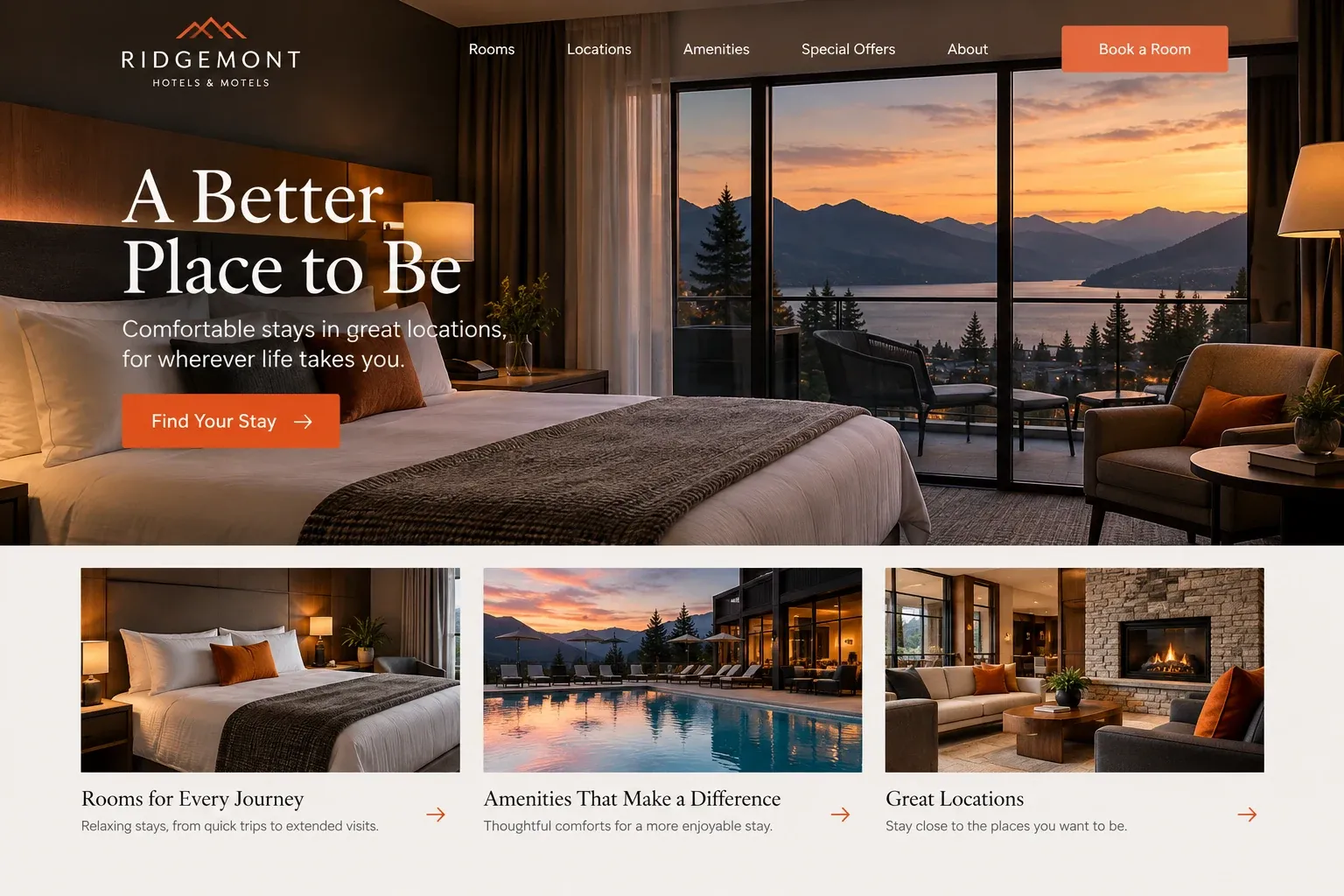
Room pages are where guests decide. Give each room type its own page with current photos, the bed setup, how many people it sleeps, size, view, and in-room amenities. Avoid wide-angle photos that make a room look bigger than it is, because disappointed guests leave the reviews that the next traveler reads. Update photos after renovations and remove amenities you no longer offer.
Answer arrival questions before check-in
The same questions reach the front desk every day: parking, check-in times, early arrival, luggage storage, pets, shuttles, and fees collected at the property. Put the answers on one clear arrival page, linked from the booking button and the confirmation email you already send. Include directions from the airport and any cruise port or highway exit guests are likely to use.
Describe accessible rooms and features precisely, such as roll-in showers, grab bars, and elevator access, so guests who need them can book with confidence. Precise descriptions help more than general statements. Add photos of the bathroom and entrance for those rooms, say how to request one, and keep the page current whenever rooms or facilities change, so a guest who planned around a detail finds it on arrival.
Connect booking to your reservation system
Most properties already use a booking engine or channel manager. The website should send guests to it with a clear Book now button and, where the engine supports it, a date picker on the home page. Rates and availability stay in one system, and the guest sees the rates you set. Explain any perks of booking direct that you actually offer, such as flexible cancellation or free parking.
Help travelers find you on search and maps
Many hotel searches start with a place: a beach, a neighborhood, a port, an airport, or an event venue. A local guide with pages for nearby attractions gives search engines specific matches. Keep your name, address, and phone consistent with your Google Business Profile, add current photos there, and reply to reviews. Rankings cannot be promised, but accurate, helpful pages give a well-run property a fair chance.