Web design for awning installers

Website design for awning installers.

An awning turns a patio that bakes all afternoon into a place people actually sit. Homeowners and shop owners compare styles and fabrics online, then call the installer whose photos look like their building.

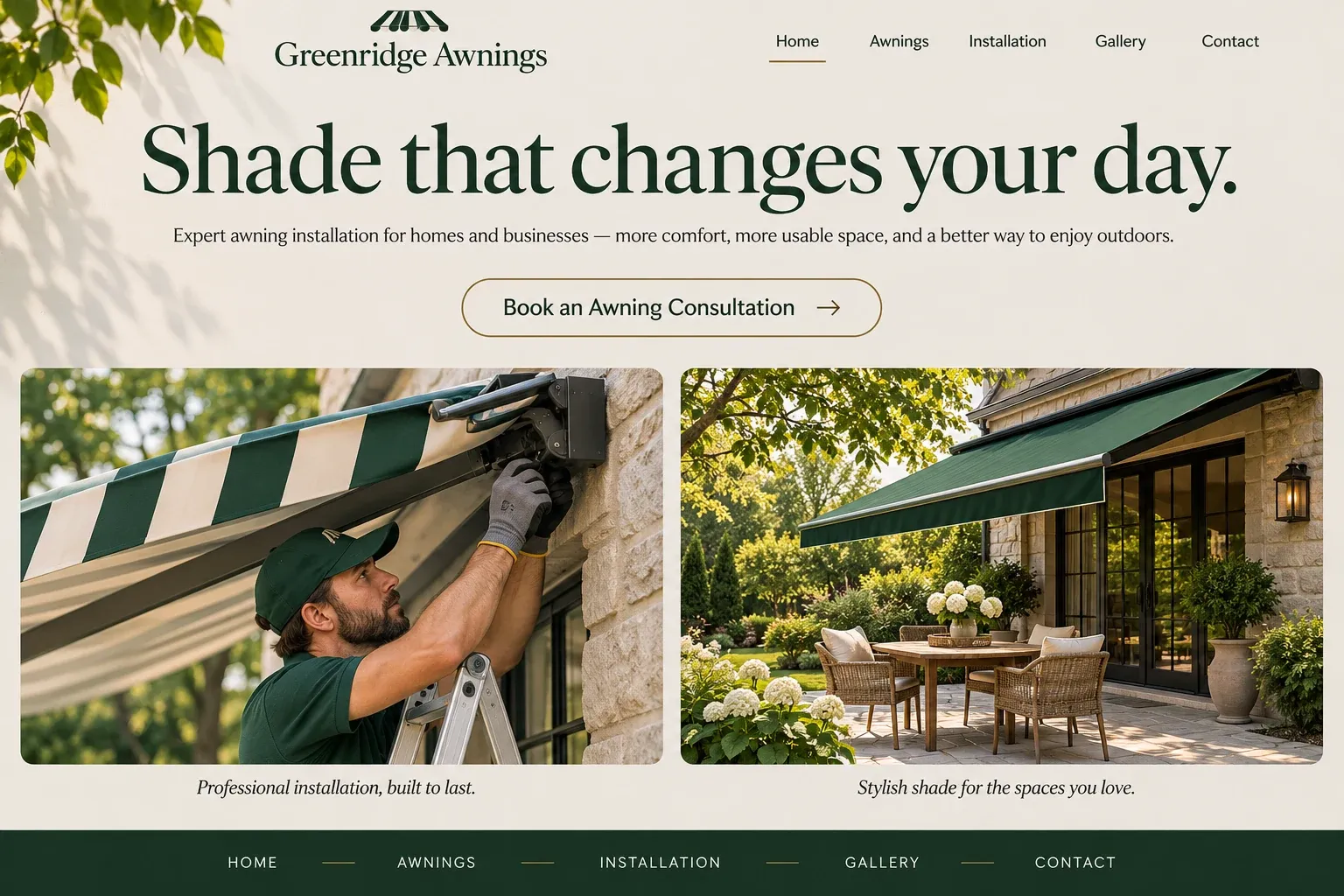
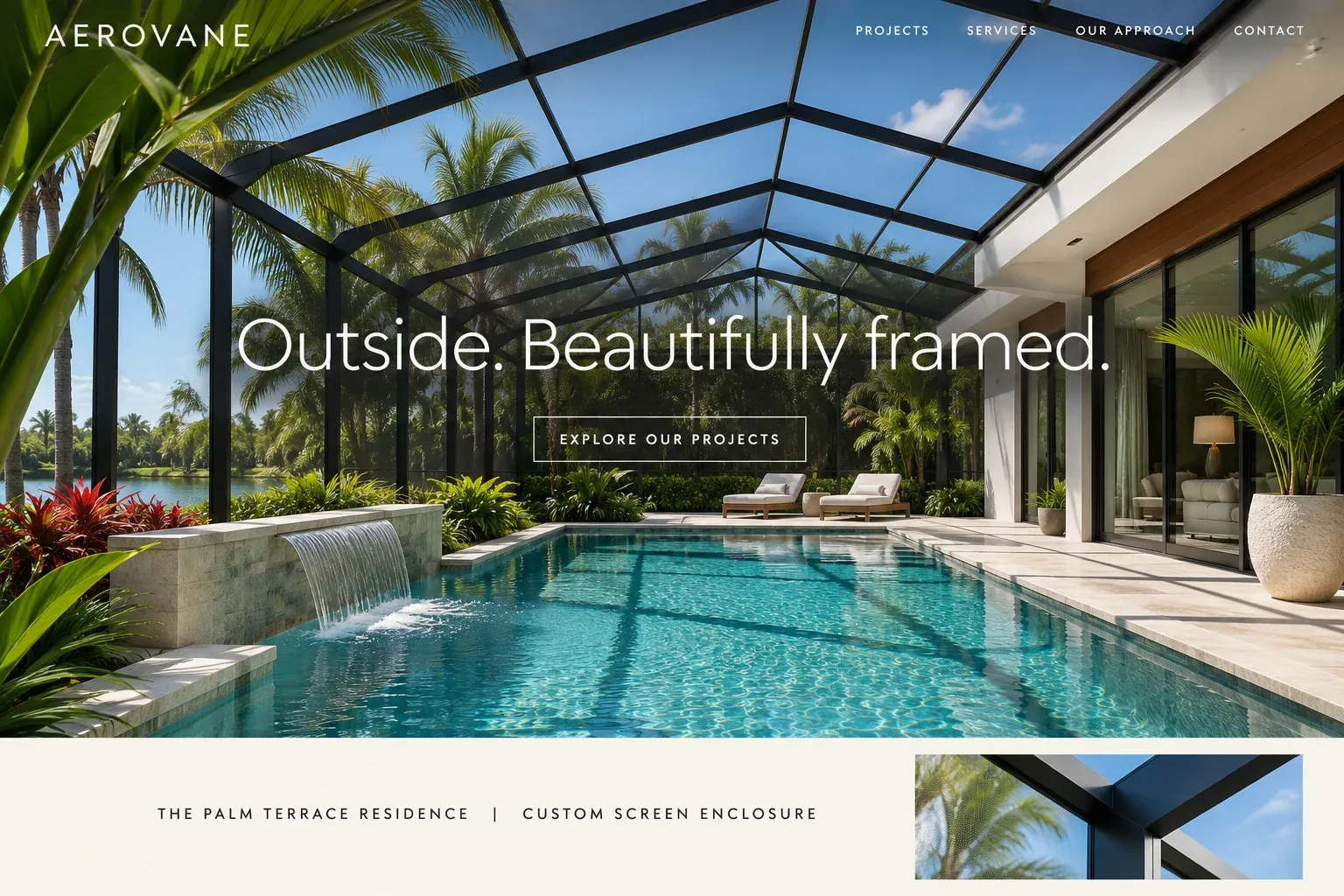
Website design concept for awning installers, an illustration
Illustration only: the design, business name and logo are made up to show the kind of website we can build. Not a real business or client website. Yours is designed from scratch around your brand.

Your customer's story

A patio too hot to use

Every afternoon the sun hits the back of the Herrera house and turns the patio into a griddle. The table and chairs they bought last year sit unused, the sliding door glass is too hot to touch, and the dog refuses to go outside. Over coffee one Sunday, Silvia announces she wants shade, and her husband starts looking at awnings on his tablet.

He finds manufacturers' brochures, a few blurry photos, and one installer whose site shows homes and storefronts with every kind of awning: retractable, fixed, motorized, dome, and window awnings. Each project lists the fabric used, and a page explains how fabric color changes the shade below and how retractables should be handled in wind and storms.

The measurement request form asks for the width of the area, the wall material, and whether they want motorized control, with room for photos. He sends two pictures of the patio at three in the afternoon. An awning installer's website earns that visit by showing shade on buildings like theirs and making the choices understandable.

Why it matters

Why awning installers need a website.

Awnings are chosen by style, fabric, color, and how they handle sun, rain, and wind. Homeowners and business owners compare options online for a while before asking for a measurement. A directory listing cannot show fabric colors, explain retractable versus fixed frames, or present storefront awnings separately from patio shade, and a social media feed rarely tells people what to do when a storm is coming.

We build awning websites that make those choices clear. Style pages cover retractable, fixed, motorized, window, and commercial awnings with your project photos. A fabric page shows colors and patterns and explains how they wear. The outdoor gallery sorts homes, restaurants, and storefronts, and the measurement request form gathers the size, wall type, and photos you need before visiting.

What your customers search for

  • awning installers near me
  • retractable awnings Miami
  • patio awning installation
  • storefront awnings Miami
  • motorized retractable awning
  • awning fabric replacement

Your customers

What customers ask before ordering an awning

  • Which style suits our building?

    Galleries of retractable, fixed, dome, and window awnings on homes and businesses, so visitors find something close to their own walls and rooflines.

  • Which fabric will hold up here?

    A fabric page showing colors and patterns, explaining fading, mildew, and cleaning, with links to the manufacturers' swatch books.

  • What do we do in a storm?

    Clear notes on retracting or removing awnings before storms, wind sensors for motorized models, and what owners should plan for in hurricane season.

  • Can our storefront have our name on it?

    A commercial page showing awnings with lettering and logos for shops and restaurants, plus a note on landlord and city approvals.

What we build

What a website for awning installers should include.

  • Awning style pages

    Retractable, fixed, motorized, dome, and window awnings, each with photos of your installs and where it works best.

  • Fabric choices gallery

    Solid colors, stripes, and patterns photographed in daylight, with notes on fading, cleaning, and replacement covers.

  • Outdoor project gallery

    Patios, pool decks, balconies, restaurants, and storefronts grouped so visitors see buildings like their own.

  • Measurement request form

    A form for width, projection, wall type, and motorized preference, with room to attach photos of the area.

  • Commercial awning pages

    Storefront and restaurant awnings with lettering and logos, plus the approvals business owners ask about.

  • Recovering and repairs

    Pages for replacing faded fabric on existing frames and fixing motors, which bring steady work between new installs.

Planning guide

What should an awning installer's website include?

An awning installer's website sells shade, comfort, and a building that looks better from the street. It should show finished awnings on real homes and businesses, explain styles and fabrics, and make the measurement request simple. Here is how we plan the pages, what to show, and how the site helps an awning company get found by nearby customers.

Give each style and customer its own page

Homeowners search for retractable awnings and patio shade, while business owners search for storefront or restaurant awnings. Give each style its own page with your photos, then separate residential and commercial work, since the questions differ. Add a page for recovering and repairs, which brings owners of older awnings who need new fabric rather than a new frame.

Show fabrics and finished projects

Fabric choice is personal and practical. Show colors and patterns in daylight, explain how they handle fading and mildew, and link to manufacturers' full swatch collections. Close-ups of seams, valances, and hardware show your attention to detail, and a note on cleaning helps owners keep the fabric looking good for longer.

For projects, photograph the building from the street and the shaded area from below, ideally on a sunny afternoon. A short note on the style, fabric, and what the owner wanted helps visitors see their own building in your work. Businesses especially want to see lettering and logos done well, so show storefronts at eye level.

Make measurement requests easy

Ask for the area's width, how far the shade should reach, the wall or roof material, and whether the customer wants a motorized or manual awning. Let them attach photos of the space. For commercial requests, add questions about lettering and approvals. Keep the phone number visible, and say when you call back and when measurement visits happen.

Help nearby customers find you

Awning searches are local and often include a type, such as retractable awnings near me or restaurant awnings. Style pages give those searches clear matches. List the areas you serve, keep your Google Business Profile consistent, and post finished projects there. Photos of a shaded patio or a new storefront awning stand out in map results, where many nearby customers first notice a local installer.

Reviews from homeowners and business owners help each audience trust you, so ask both groups. A homeowner who mentions a cooler patio and a restaurant owner who mentions a storefront that finally stands out say more to the next visitor than any line you could write yourself. Reply to each review briefly and politely.
In your market

Built for awnings in South Florida

Intense sun for most of the year makes shade a practical need, not a luxury, and fabrics face heat, salt air, heavy rain, and mildew. Hurricane season means owners must know when and how to retract or remove awnings, and many choose motorized models with wind sensors. Storefronts, restaurants, and condo balconies often need approvals from landlords, cities, or associations. Many customers prefer Spanish, and some are seasonal residents who order from afar.

Questions

Questions awning installers ask us.

Should our awning website show fabric colors?

Yes. Color is one of the first choices customers make, and a fabric page with photos taken in daylight, labeled by name, helps them narrow options. We link to the manufacturers' full swatch books and note that real samples come to the measurement visit.

How should our site explain what to do with awnings during hurricanes?

We write a clear storm page, approved by you, explaining which awnings retract, which should be removed, how motorized wind sensors help, and whether you offer storm removal and reinstallation. It answers a common worry and can bring in seasonal service work.

Should commercial awnings have their own section?

Yes. Business owners care about lettering, logos, visibility from the street, and approvals from landlords or the city. A commercial section with storefront and restaurant projects, plus its own request form, answers those questions without mixing them into patio shade pages.

Can customers send photos of their patio through the awning site?

Yes. The measurement request form accepts photos and asks for the width and wall type, and everything arrives in your email. Photos help you prepare options before the visit and spot problems early, such as a wall that needs special mounting.

Let's talk

Ready for a website built for awning installers?

Tell us about your business and we will come back with a clear recommendation and a fixed quote. No pressure, no jargon.

Trades we design for

See all 436 trades

436 trades

  • Plumbers website design concept
CallFree quote