Web design for window treatment companies

Website design for window treatment companies.

Blinds, shades, and shutters change how a room feels at every hour of the day. Homeowners shop by looking at rooms, fabrics, and light, then book a measurement visit with the company that made choosing feel easy.

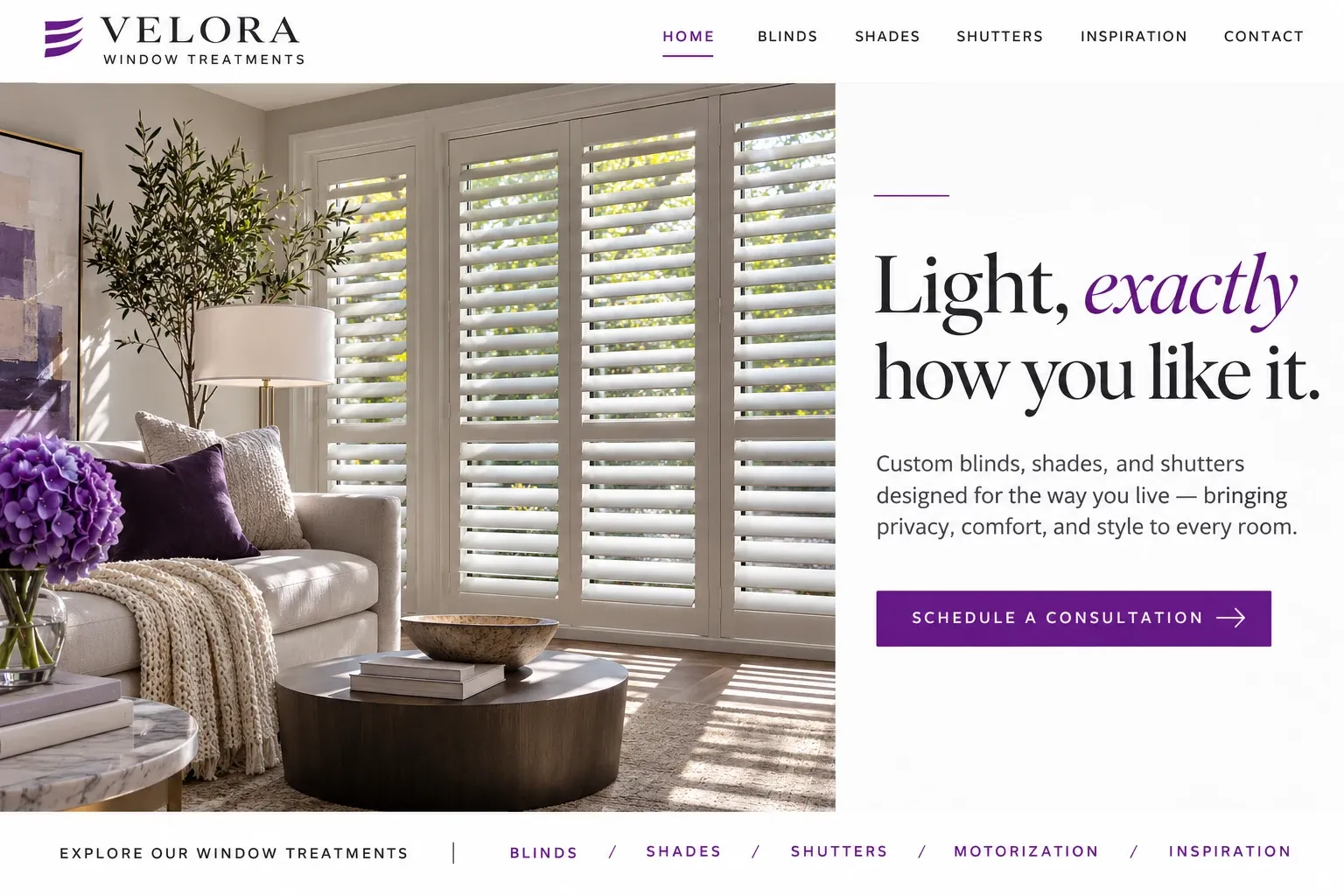
Website design concept for window treatment companies (blinds, shades, shutters), an illustration
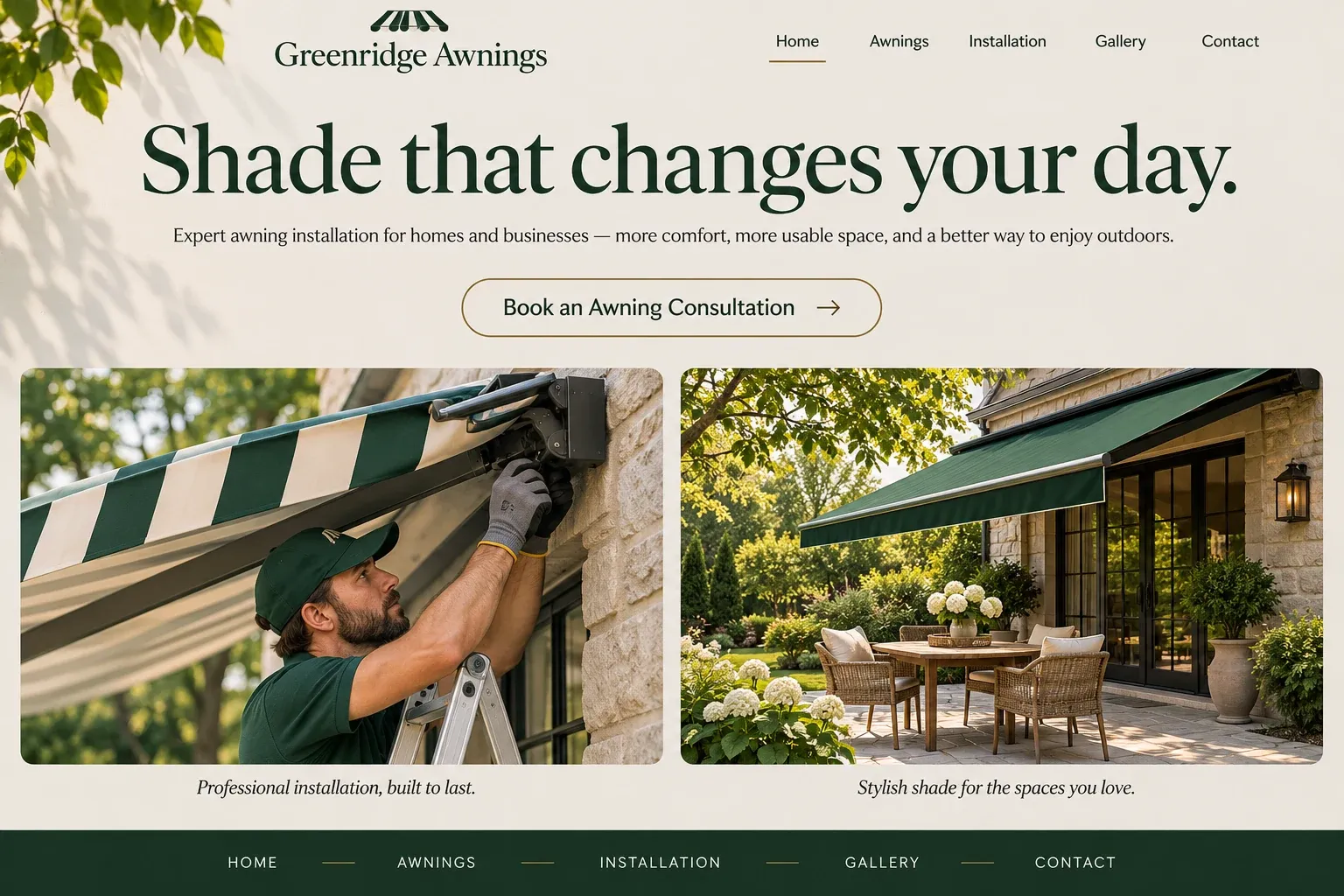
Illustration only: the design, business name and logo are made up to show the kind of website we can build. Not a real business or client website. Yours is designed from scratch around your brand.

Your customer's story

Sun pouring into the bedroom at dawn

Since moving into their new condo, Laura and her partner have been woken at six every morning by sun pouring through the east-facing bedroom windows. The builder left plain vertical blinds that rattle in the air conditioning and block almost nothing. After a week of sleeping with a pillow over her face, Laura starts searching for blackout shades and window treatments nearby.

She finds a wall of product names: cellular, roller, Roman, plantation shutters, sheers, motorized everything. Most sites show catalog photos and nothing about which choice suits which room. One company shows its own installs room by room, explains light filtering and blackout fabrics in plain words, and has a short video of motorized shades closing from a phone.

Its measurement visit form asks which rooms, how many windows, and whether she wants privacy, darkness, or both. She books a Saturday morning. A window treatment company's website earns that visit by helping people understand their options in the rooms where they will actually use them, at the time of day that matters.

Why it matters

Why window treatment companies need a website.

Window treatments are bought room by room, with questions about light, privacy, heat, and style. Customers compare fabrics, opacity, motorization, and companies, and they want to see real rooms, not catalog shots. A social media page shows pretty windows without explaining the difference between light filtering and blackout, and a directory listing cannot show a fabric up close or book a measurement visit.

We build window treatment websites around rooms and choices. Product pages cover blinds, shades, shutters, and drapery, each with your own photos. A fabrics page shows textures and opacity, and a motorization page explains control options. The room gallery groups bedrooms, living areas, and offices, and the measurement visit form asks about rooms and goals, so your consultant arrives with the right samples.

What your customers search for

  • blinds and shades near me
  • motorized shades Miami
  • plantation shutters Miami
  • blackout shades for bedroom
  • window treatments for sliding doors
  • custom blinds installation

Your customers

What homeowners ask before ordering blinds or shades

  • Which style suits this room?

    A room gallery showing bedrooms, living areas, kitchens, and offices, each with the treatment used and why it was chosen for that space.

  • Will it really block the light?

    A fabrics page explaining sheer, light filtering, room darkening, and blackout options, with photos taken in daylight from inside the room.

  • Can they open and close on their own?

    A motorization page covering remotes, apps, wall switches, schedules, and battery or wired motors, with a short video if you have one.

  • How does measuring work?

    A page describing the measurement visit, the samples you bring along, the written quote, ordering, and what happens on installation day.

What we build

What a website for window treatment companies should include.

  • Blind and shade styles

    Roller, cellular, Roman, woven, and vertical options, each on its own page with photos from your installs.

  • Shade fabric samples

    Textures and colors photographed up close and in window light, labeled by opacity from sheer to blackout.

  • Room by room gallery

    Bedrooms, living rooms, kitchens, and offices grouped so visitors see treatments in spaces like their own.

  • Measurement visit booking

    A form asking about rooms, number of windows, goals, and preferred times, sent to your email or scheduler.

  • Motorized shade page

    Remote, app, and voice control explained, with notes on retrofitting existing windows and scheduling shades with the sun.

  • Shutter showcase

    Plantation and interior shutters shown in real homes, with louver sizes, finishes, and how they fit around impact windows.

Planning guide

What should a window treatment company's website include?

A window treatment website helps people choose something they will look at every day. It should show real rooms, explain fabrics and controls in plain words, and make the measurement visit easy to book. Here is how we plan those pages, what photos to use, and how the site helps a blinds and shades company get found by nearby homeowners.

Pages for each product and room

Customers search by product, such as blackout roller shades or plantation shutters, and by need, such as bedroom privacy. Give each product line its own page with your photos, then add a room gallery that shows what works in bedrooms, living rooms, kitchens, and offices. A fabrics page and a motorization page answer the questions that come up in nearly every consultation.

Photograph light, not just windows

The difference between sheer and blackout only shows when light comes through. Photograph installs from inside the room at different times of day, open and closed, and label the fabric. Close-ups of texture and color help people narrow their choices before your visit, which makes the appointment shorter and more useful.

Use your own installs whenever possible. Catalog images look polished, but visitors trust real rooms more, especially ones that look like their own condo or house. Ask clients for permission, and leave out anything that shows personal items or the view that would identify the address. A good phone photo in soft light is enough.

Make the measurement visit easy

Most sales start with a visit to measure and show samples. The booking form should ask about the rooms, the number of windows, goals such as privacy, darkness, or heat control, and preferred times. Let visitors attach photos of the windows. If you use an online scheduler, we link to it, and we keep the phone number visible for people who prefer to call.

Explain what happens after the visit: the written quote, ordering, how long products usually take to arrive, and installation day. Customers who know the steps in advance are less likely to call asking where their shades are. Add a short care page for cleaning fabrics and charging motor batteries, which brings back past customers with questions.

Help nearby homeowners and designers find you

People search for blinds, shades, and shutters near them, often naming a product or a room. Product pages and room pages give search engines specific matches. List your service areas, keep your Google Business Profile consistent, and add installs to it. A short page for interior designers and builders who order through you can bring steady trade work too.
In your market

Built for window treatments in South Florida

Strong sun is the main story here: fading floors, warm rooms, and glare on screens make light control and heat reduction common requests. Impact windows and tall sliding doors call for treatments that fit their frames, and condos with walls of glass often need motorized shades. Seasonal residents want rooms protected from sun while they are away. Customers often prefer Spanish, so the site can be written in both languages.

Questions

Questions window treatment companies ask us.

Should our window treatment website show the brands we carry?

Yes, where they matter to customers. A short mention on each product page, with a link to the manufacturer's fabric collections, helps people who arrive with a brand in mind. The focus stays on your installs and service, which is what sets you apart from a big box store.

How can customers see blind and shade fabrics before the measurement visit?

A fabrics page with close-up photos, labeled by color and opacity, gives them a head start, and a link to the manufacturer's online swatch books adds range. We add a note that screens vary and that your consultant brings real samples to the visit.

Should we explain motorized shades on a separate page?

Yes. Motorization raises its own questions about wiring, batteries, remotes, apps, and schedules, and many customers search for it specifically. A dedicated page with a short video of shades moving answers those questions and gives that search a clear match.

Can interior designers order window treatments through our website?

We can add a page for designers, builders, and property managers that explains how you work with them, with a separate contact form. Their requests arrive marked as trade inquiries, so you can respond with the right samples and terms.

Let's talk

Ready for a website built for window treatment companies?

Tell us about your business and we will come back with a clear recommendation and a fixed quote. No pressure, no jargon.

Trades we design for

See all 436 trades

436 trades

  • Plumbers website design concept
CallFree quote