Web design for banks and credit unions

Website design for banks and credit unions.

Community banks and credit unions compete with national brands that spend heavily on apps and advertising. Their own websites have to make local strengths obvious: real branches, real people, plain service pages, and an easy way to reach someone.

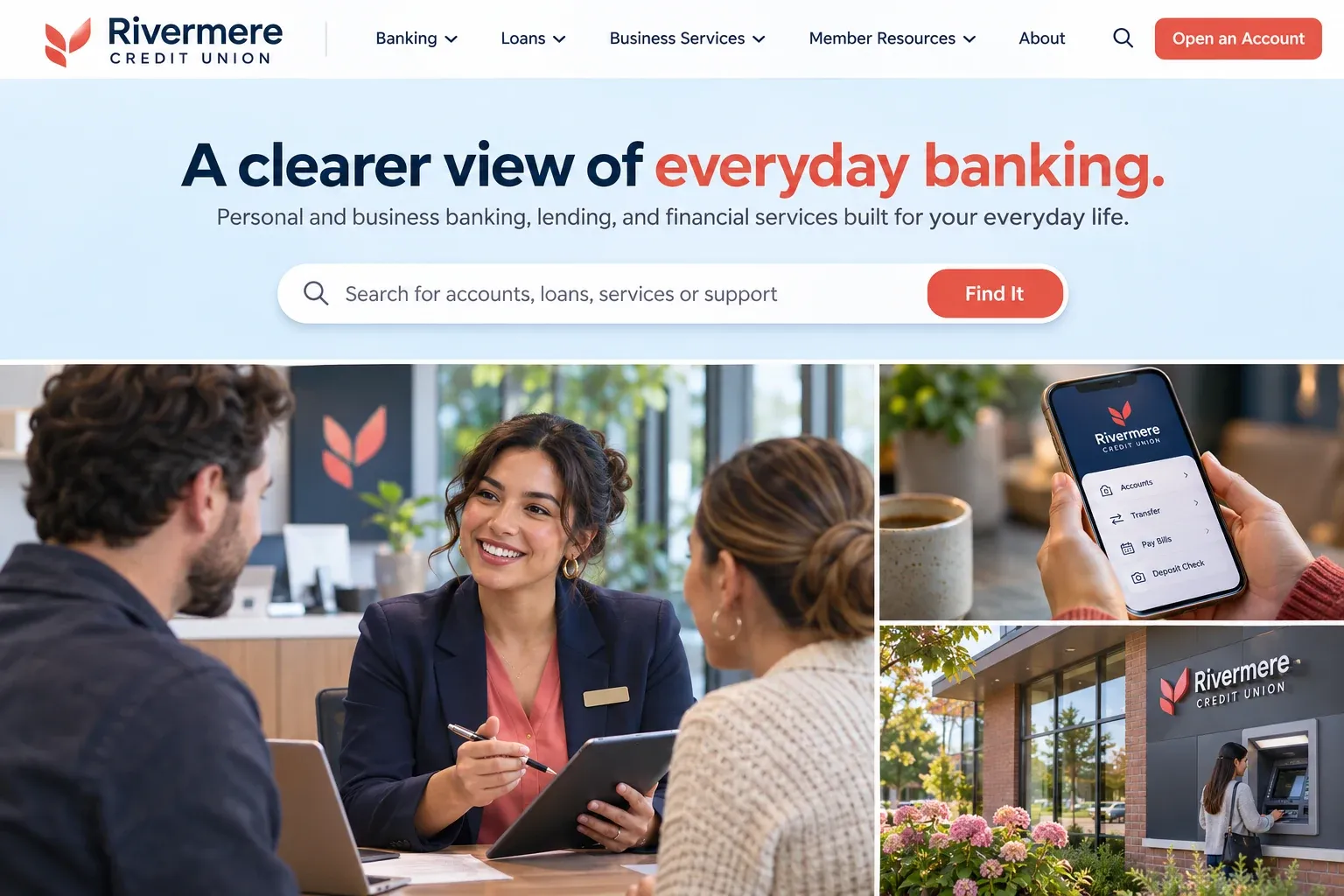
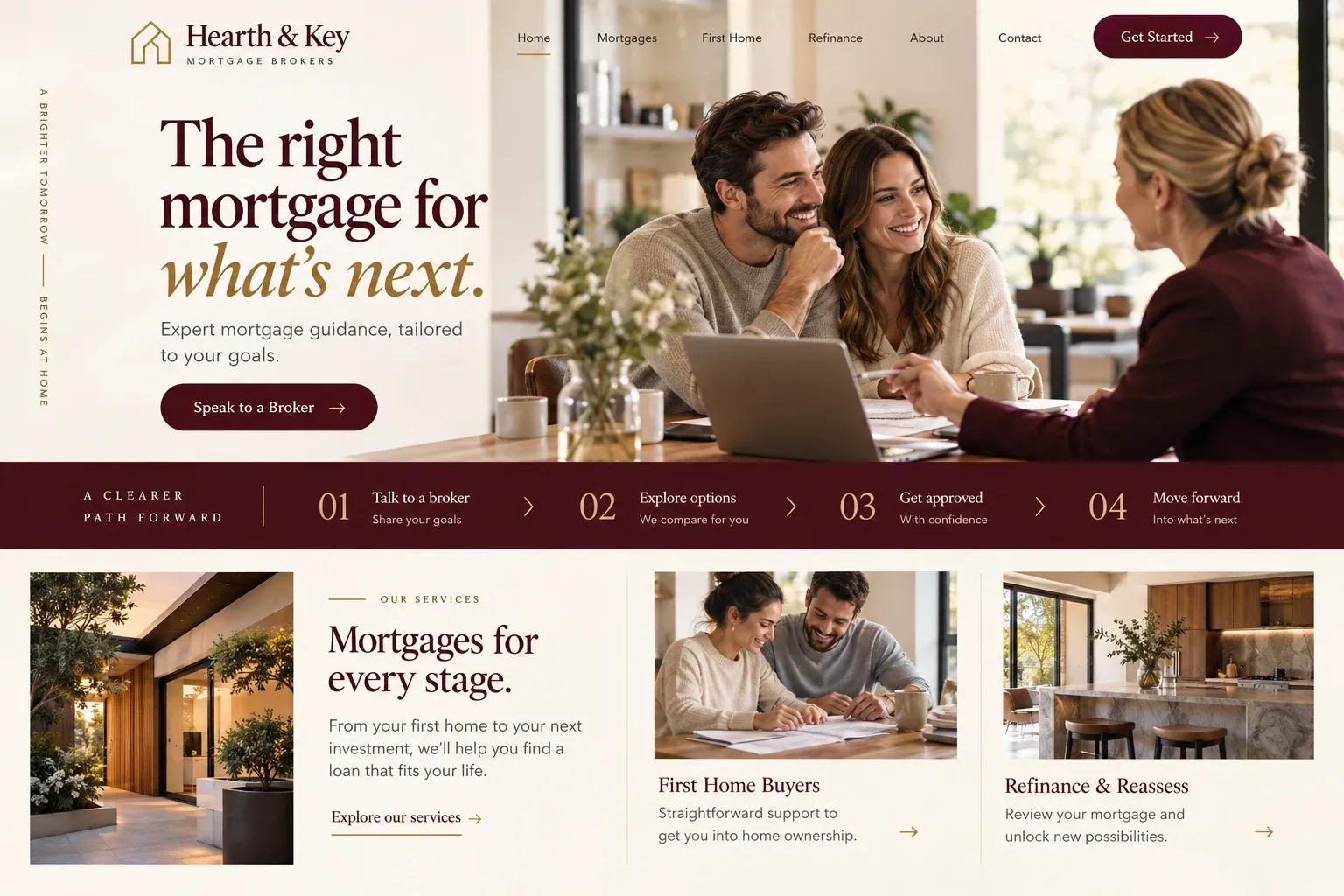
Website design concept for banks and credit unions, an illustration
Illustration only: the design, business name and logo are made up to show the kind of website we can build. Not a real business or client website. Yours is designed from scratch around your brand.

Your customer's story

Choosing a bank after moving to town

Carlos and Ines moved to Miami in the spring for her new job. Their national bank works fine for paying bills, but nobody there can tell them much about buying a condo here, and the wait to speak to anyone is long. A coworker mentions her credit union. That night Ines opens her laptop to find out who can join and what it offers.

The credit union's site loads quickly and answers her first question at the top: who is eligible for membership. It lists the branches with hours and parking, shows checking and savings options in everyday words, and has an education section with short articles on buying a first home. A button for online banking sits in the corner, and the contact page lists a phone line for each department.

Ines books an appointment to open accounts at the branch near her office. A bank or credit union website should work like that one: answer eligibility and branch questions plainly, explain services without jargon, teach something useful, and send people to secure systems for anything private. It should never ask for account numbers or personal financial details through an ordinary form.

Why it matters

Why banks and credit unions need a website.

People choose a bank or credit union for a few practical reasons: convenience, trust, rates, and how they are treated. Most of that judgment now happens online. A directory listing or a social media page shows an address and a few posts, but it cannot explain membership eligibility, list every branch and ATM, describe services in plain terms, or link safely to online banking and loan applications.

We build sites for banks and credit unions around clarity and safety. Branch pages list hours, services, and directions, service pages explain accounts and loans in plain words, and an education section answers the questions members ask at the teller line. Secure tasks, such as logging in or applying, link to the systems you already use. Your compliance team reviews and approves every line before launch.

What your customers search for

  • credit union near me
  • bank near me open Saturday
  • community bank Miami
  • credit union membership eligibility
  • first time home buyer loan Miami
  • business checking account Miami

Your customers

What people check before opening an account

  • Can I join or open an account here?

    A plain eligibility page explaining who can open accounts or join, and what identification to bring, written with your team and approved before publishing.

  • Where is the nearest branch or ATM?

    Branch pages with hours, drive-through and parking details, services offered, and a map, plus a link to your ATM network locator.

  • What accounts and loans do you offer?

    Service pages for checking, savings, auto loans, mortgages, and business banking, each in everyday language with a link to apply securely.

  • How do I reach a real person?

    Phone lines by department, branch numbers, appointment requests, and lost card instructions, all easy to find on any page.

What we build

What a website for banks and credit unions should include.

  • Branch and ATM pages

    Each location with hours, services, directions, and parking, plus holiday closures updated from one place.

  • Plain service pages

    Accounts, loans, and business services explained in short sections, with disclosures and rate sheets linked as your team provides them.

  • Financial education section

    Articles on budgeting, first homes, credit basics, and fraud awareness, written from your notes and approved by your team.

  • Secure banking links

    Online banking login, account opening, and loan applications linked clearly to the secure systems you already use.

  • Appointment request form

    A short request with name, phone, branch, and topic only, so no account or personal financial details travel by email.

  • Fraud and security alerts

    A banner and a page for current scam warnings and how members can report lost cards or suspicious contact.

Planning guide

What should a community bank or credit union website include?

A bank or credit union website is often a member's first branch visit. It should answer practical questions quickly, explain services plainly, teach something useful, and route anything private to secure systems. Here is how we plan the pages, the education content, the contact paths, and the local search basics for a community financial institution.

Pages that mirror how people bank

Start with the questions people actually bring: who can join or open an account, where the branches are, which accounts and loans you offer, and how to log in. That suggests a home page, an eligibility or about page, branch pages, a page for each main service, an education section, and a contact page. Keep each page focused, and link the disclosures and rate sheets your team maintains.

Teach with real education content

An education section is where a community institution can stand apart from national brands. Short, accurate articles on budgeting, buying a first home, building credit, and spotting scams answer questions people search for and bring them to your site. Each article should be written from your team's notes, reviewed by compliance, and dated, so readers know when it was last checked. Linking each article to the matching service page helps both readers and search engines.

Keep private information on secure systems

An ordinary website form should never collect account numbers, Social Security numbers, or income details. Use it only for appointment requests and general questions, with a name, phone, preferred branch, and topic. Account opening, loan applications, and online banking belong in the secure platforms you already use, linked clearly from every page, and the site should say so in a short line.

Put lost card and fraud contact numbers where people find them in a panic, and add a page on current scams. Members who learn from your site that you will never ask for a password by text are harder for criminals to fool, and they call you first when something feels wrong.

Help local members find each branch

People search for a bank or credit union near them, often with words like branch, ATM, or open now. Give every branch its own page with consistent details that match its Google Business Profile, and keep hours current, especially on holidays. A Spanish version serves many members here. Nothing promises a ranking, but consistent branch pages give a community institution a fair chance to appear.
In your market

Built for community banking in South Florida

South Florida's banking customers include longtime residents, new arrivals from other states and countries, seasonal residents with accounts elsewhere, and many business owners who trade with Latin America. Many prefer Spanish, and some Portuguese or Haitian Creole. Hurricane season means branches close and reopen on short notice, and scam attempts often follow storms. We build sites with branch pages that are easy to update, a banner for storm closures, education on local scams, and a Spanish version.

Questions

Questions banks and credit unions ask us.

Can members apply for accounts or loans on our website?

Yes, through the secure application platform you already use. We link to it clearly from every relevant page. The website itself never collects account numbers or personal financial details through an ordinary form, which keeps sensitive data inside your secure systems.

Who approves the wording on a bank or credit union site?

You do, with your compliance team. We write service pages, education articles, and branch details from your notes and documents, and nothing goes live until your team approves it. Disclosures and rate sheets are linked as you provide them, so they stay under your control.

Can the site show branch closures during hurricanes?

Yes. We add a banner you can update quickly, or that we update on request, and a page with branch status and where to get help. Each branch page also shows its regular hours, so the information stays consistent once things return to normal.

Should our bank website include financial education articles?

We recommend it. Short articles on budgeting, credit basics, buying a first home, and avoiding scams help members and bring searchers to your site. We write them from your team's notes in English and Spanish if you want both, and you approve each one before it is published.

Let's talk

Ready for a website built for banks and credit unions?

Tell us about your business and we will come back with a clear recommendation and a fixed quote. No pressure, no jargon.

Trades we design for

See all 436 trades

436 trades

  • Plumbers website design concept
CallFree quote