Web design for financial planners

Website design for financial planners.

Many people find a financial planner at a turning point: a new baby, an inheritance, a business sale, a retirement date that suddenly feels close. They want to know how you work and how you are paid before they share anything.

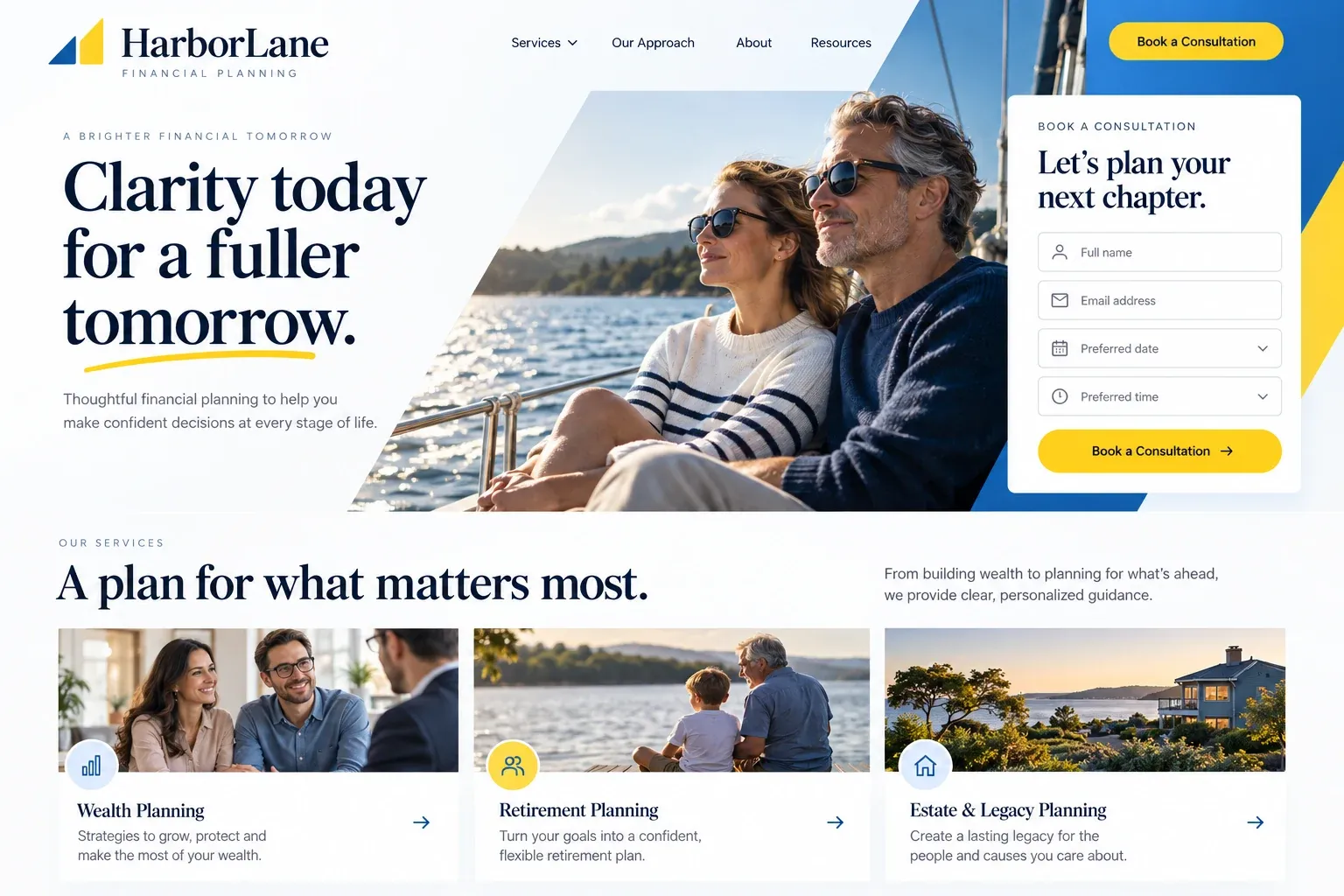
Fictional financial planning firms website homepage design concept
A design concept for a fictional brand. Your site is designed from scratch around yours.

Your customer's story

A retirement date neither of them knows

Gloria is fifty-eight and has worked for the county for most of her career. Her husband, Ray, retired from a shipping company last year. Over coffee one Sunday they realize neither of them knows when Gloria can stop working, what to do with Ray's old retirement account, or whether the house should be paid off first. Their daughter tells them to talk to a planner.

That evening Gloria searches "financial planner near me" and "fee only financial advisor Miami". The first site is all sailboats and confident charts. The second asks for her phone number before showing anything. The third has a page called How we work: who the planners are, their credentials, what a first meeting covers, and a plain explanation of how the firm is paid.

Nothing on it promises returns. It shows a short list of questions to bring and lets her request an introductory meeting with a few fields: names, phone, email, and the main reason for reaching out. She does not have to type a single account balance. A planner's website should earn that first meeting by explaining the process, the people, and the fees, then getting out of the way.

Why it matters

Why financial planners need a website.

Choosing a planner means trusting someone with the biggest decisions a household makes, so people research quietly and for a while. They look up credentials, read about the planner's background, try to understand how the firm is paid, and check whether it works with people in their situation. Many look a firm up after a referral to see if it feels right. A directory profile or social page cannot carry that much careful explanation.

We build financial planning websites that explain before they persuade. Advisor profiles cover education, credentials, and the clients each person works with. The planning process is laid out from introductory meeting to ongoing reviews, and fees are described in your approved words. The meeting request asks for contact details and a general reason only. If your firm has a compliance reviewer, every page goes to them before launch, and nothing promises returns.

What your customers search for

  • financial planner near me
  • fee only financial advisor Miami
  • retirement planning Miami
  • financial planner for business owners
  • how do financial advisors get paid
  • cfp near me

Your customers

What people ask before booking a first meeting with a planner

  • Who exactly would I be working with?

    Profiles with photos, education, credentials such as CFP where held, the kinds of clients each planner serves, and languages spoken.

  • How do you get paid?

    A plain page describing your fee structure, whether flat, hourly, ongoing, or another arrangement, in words your firm has approved, with links to your disclosure documents.

  • What happens in the first meeting?

    A description of the introductory conversation: how long it usually runs, what you will ask, what to bring, and whether there is any cost.

  • Do you work with people like us?

    Pages for the client situations you know, such as pre-retirees, business owners, young families, or people managing an inheritance, without promising outcomes.

What we build

What a website for financial planners should include.

  • Advisor background pages

    Education, credentials, career history, and the clients each planner works with, written from their notes and approved by them.

  • Planning process page

    The path from introductory meeting to data gathering, plan presentation, and regular reviews, shown in clear stages.

  • Fee explanation

    How the firm is paid, described plainly in approved language, with links to the disclosure documents your firm provides.

  • Introductory meeting request

    Names, phone, email, preferred meeting format, and a general reason from a short list. No balances, account numbers, or income figures.

  • Calendar booking link

    If you use an online calendar for first meetings, the site links or embeds it beside the meeting request.

  • Client login links

    Clear buttons to the portals existing clients use, such as account access or document vaults, kept out of the way of prospects.

Planning guide

What should a financial planner's website say to new clients?

A financial planning website does its best work before anyone meets. It should help a prospect understand who you are, how planning works at your firm, and how you are paid, so the first meeting starts with trust instead of suspicion. Here is a practical outline, with notes on what to show and what to leave out.

Lead with the people and the process

Prospects choose a person first. Give each planner a page with a recent photo, education, credentials, career background, and a few lines on the clients they enjoy working with. Then add a process page that walks through the relationship: introductory meeting, gathering information, presenting recommendations, putting them in place, and regular reviews. A home page, about page, process page, fees page, and contact page form a sound base for most firms.

Explain fees in plain words

How a planner is paid is one of the first things careful prospects try to find. Describe your structure clearly, whether it is a flat fee, hourly work, an ongoing arrangement, or something else, using language your firm has approved. Link to the disclosure documents you provide. Visitors who understand the fee before the meeting tend to arrive with better questions, and the people who would never be a fit can self-select out early.

Keep the first request light

A meeting request needs names, a phone number, an email, the preferred format, in person or video, and a general reason picked from a short list such as retirement, a business sale, or an inheritance. Leave out balances, account numbers, income, and Social Security numbers. That information belongs in the secure tools you use after a client engages you, and a short note by the form can say so.

Be careful with the rest of the site, too. Avoid charts that suggest future returns, testimonials your firm has not cleared, and claims you cannot document. If articles or market commentary appear on the site, have the responsible person at your firm review and date each one before it is published.

Help local clients find and check you

Many people want a planner they can meet in person, so local search matters. Keep your Google Business Profile accurate and consistent with the site, list each office, and name the areas you serve. Pages for the client situations you know best give search engines something specific to match. Your firm decides whether and how to display reviews. Make it easy for a referred prospect to confirm your background with a clear about page and profiles.


In your market

Planning for South Florida households

South Florida clients bring particular questions: retirees relocating from the Northeast, business owners planning a sale or succession, families with relatives and assets in Latin America, and households weighing high insurance costs against everything else. Many want to meet in Spanish. Seasonal residents may prefer video meetings for part of the year. Your site can speak to those situations directly, introduce the planners who meet in Spanish, and offer every page in both languages.

Questions

Questions financial planners ask us.

Can our financial planning website list our fees?

Yes, if you want it to, and many prospects look for it. We describe your fee structure in plain language that your firm approves, and link to the disclosure documents you provide. If you prefer to discuss specifics in the first meeting, the page can explain how fees are set without listing numbers.

Who reviews the wording on a planner's website before it goes live?

You do, and anyone at your firm responsible for reviewing marketing. We draft from your notes, avoid return promises and performance claims, and send every page for approval. Edits after launch follow the same path, so nothing new appears on the site until the right person has signed off.

Should prospects be able to book an introductory financial planning meeting online?

Many prospects find that easier than calling. We can link or embed your scheduling tool next to a short request form. Either way, the site asks only for names, contact details, preferred format, and a general reason, never balances or account information, which come later through your secure systems.

How should our planners' profiles describe their experience?

Factually and personally. We list education, credentials your planners actually hold, and career background, then add a few sentences in each person's voice about the clients they work with and why. We leave out superlatives and anything that cannot be documented, and each planner approves their own profile.

Let's talk

Ready for a website built for financial planners?

Tell us about your business and we will come back with a clear recommendation and a fixed quote. No pressure, no jargon.

Trades we design for

See all 226 trades

226 trades

  • Plumbers website design concept
CallFree quote