Web design for insurance agencies

Website design for insurance agencies.

Nobody wakes up wanting to shop for insurance. A renewal notice arrives with a much higher number, a lender asks for proof of coverage, a new business signs its first lease. The agency whose website speaks to that exact moment gets the call.

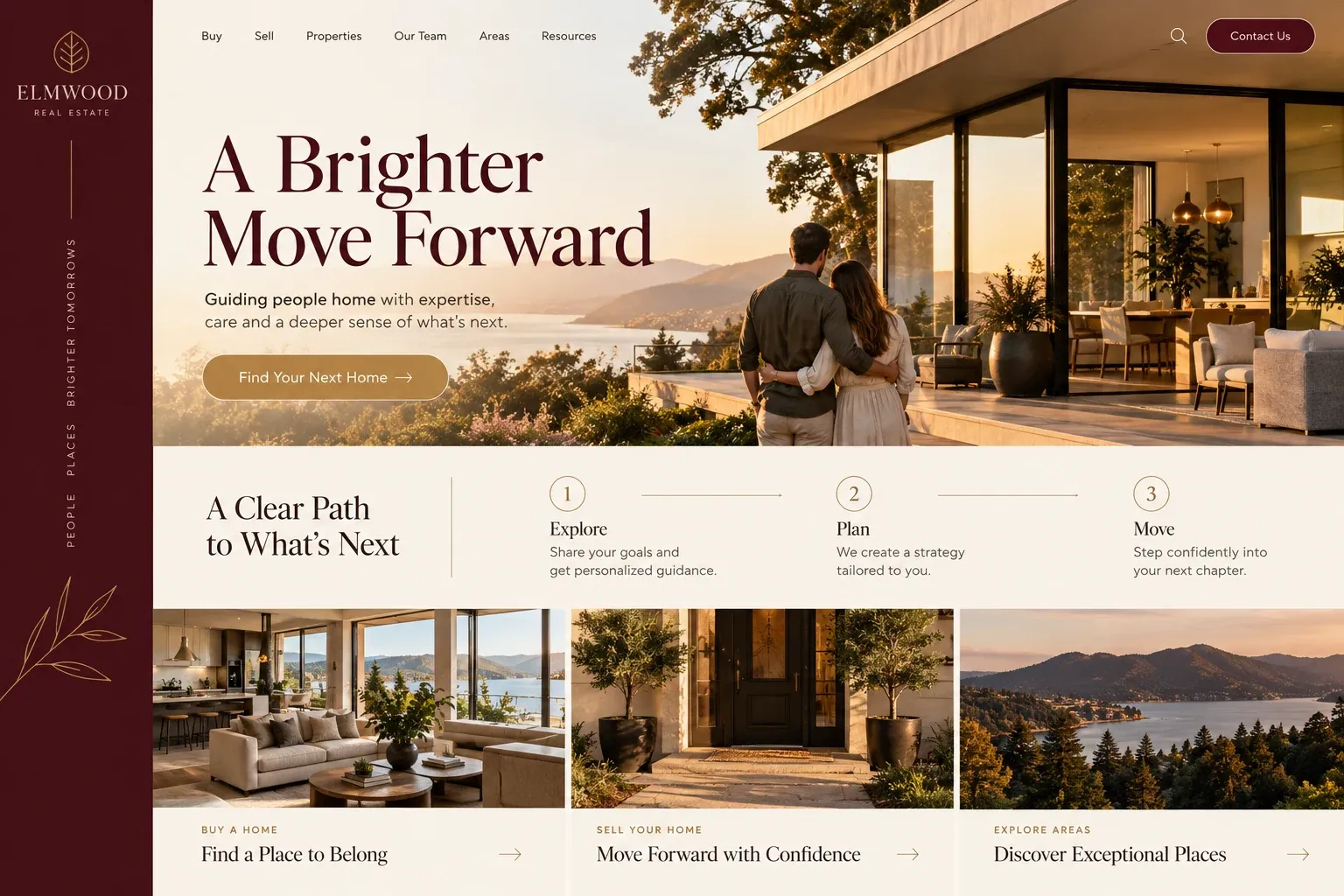
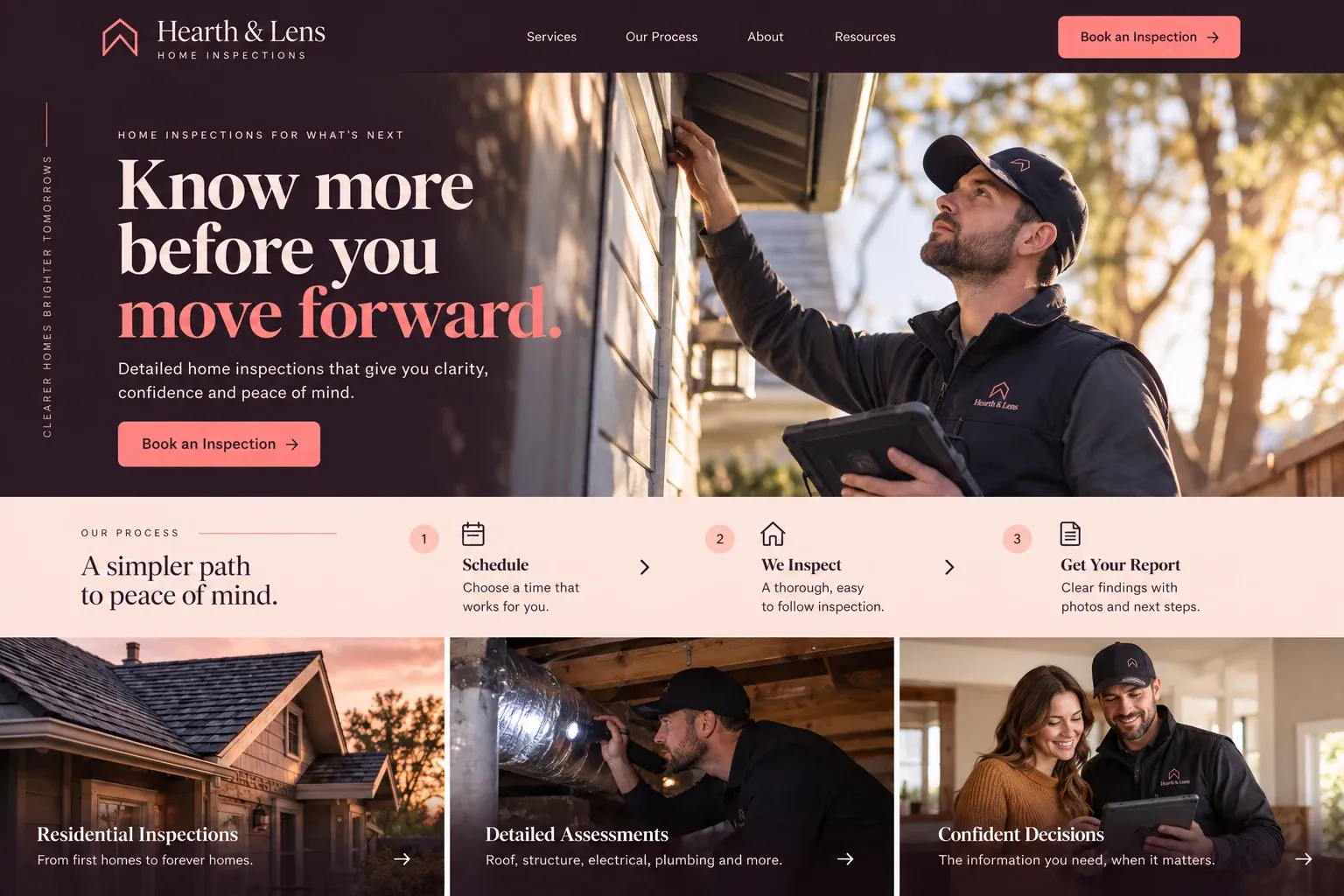
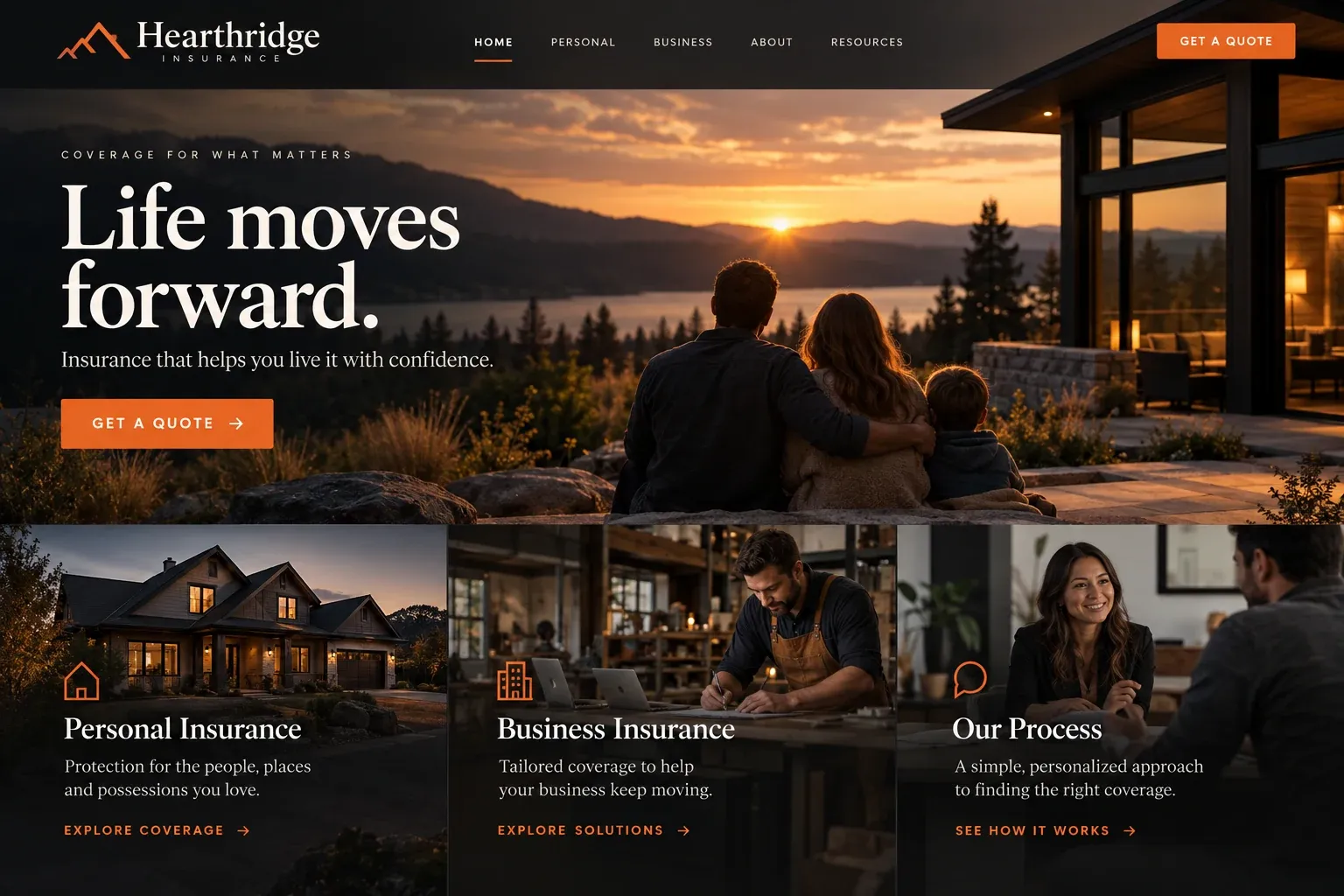
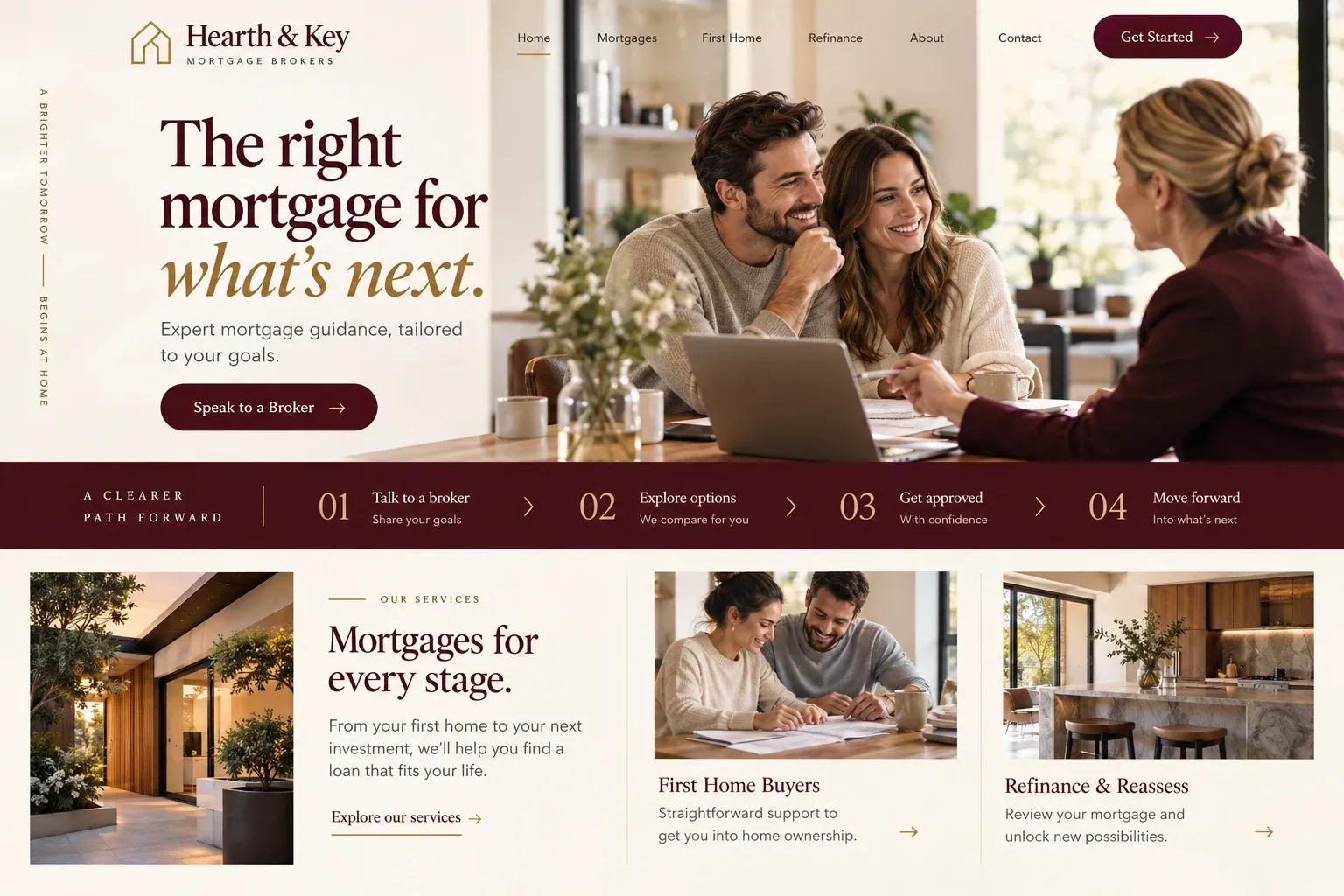
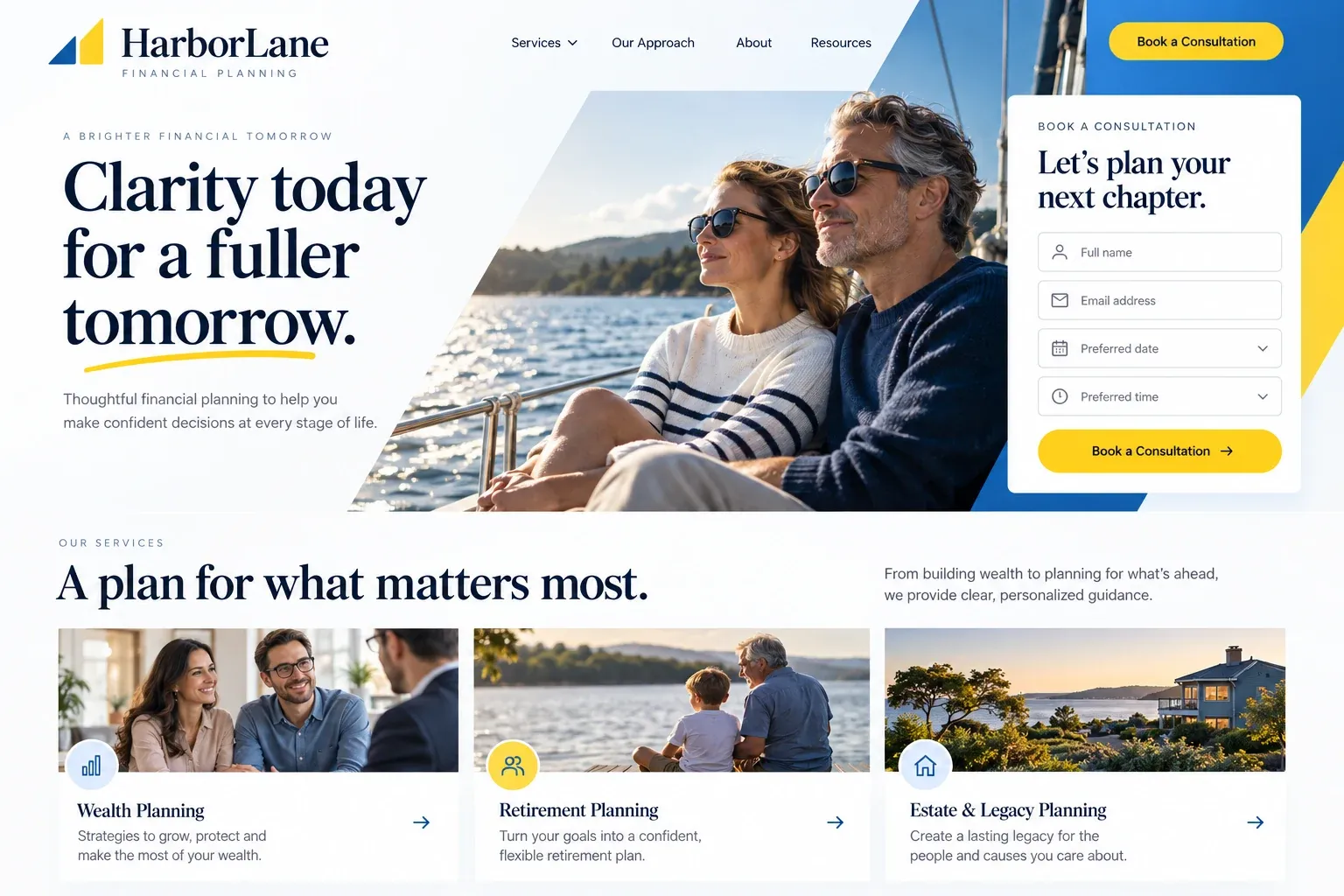
Fictional insurance agencies website homepage design concept
A design concept for a fictional brand. Your site is designed from scratch around yours.

Your customer's story

A nonrenewal letter in the mailbox

Hector and Marisol have owned their house in Westchester for nine years. In June a letter arrives: their homeowners insurance company will not renew the policy. They have until the end of August to find coverage. Their lender will want proof of a new policy, the roof dates from 2012, and neither of them knows whether that matters. Marisol starts searching that night, between loads of laundry.

Big carriers' sites ask her to enter the address, then a dozen details, then her email, before showing anything. Independent agency sites look alike until one has a page titled "Received a nonrenewal notice?" It explains, in plain words, what an independent agent does, which documents may matter, such as a wind mitigation report and a roof inspection, and that an agent will call to talk through options.

The quote form asks for her name, phone, zip code, and what she needs covered, and says the agent will collect details on the call. She sends it, relieved not to retype her life into a stranger's form. An insurance agency's website should do that for people: recognize the situation they are in, explain who you are, and make the next step short and human.

Why it matters

Why insurance agencies need a website.

Insurance shoppers rarely know product names, but they know what changed: a new house, a teenage driver, a nonrenewal, a business lease, a boat. They search for that situation, compare a few agencies quickly, and call the one that seems to understand it. They also check whether you are independent or tied to one carrier, which lines you write, and whether you speak their language. A carrier's app cannot explain your agency, and a directory listing barely tries.

We build insurance agency websites around situations first and products second. Home, auto, flood, business, and life each get pages, and so do moments like buying a home or starting a company. Agents get profiles with license details and languages. Separate routes for a new quote, a policy change, and a claim keep each request with the right person, and every coverage description is reviewed and approved by your agency before launch.

What your customers search for

  • insurance agency near me
  • home insurance Miami
  • flood insurance agent Miami
  • condo insurance quote
  • independent insurance agent
  • commercial insurance for businesses

Your customers

What people want to know before calling an insurance agency

  • Can you help with my situation?

    Pages for real moments, such as buying a home, a nonrenewal notice, a new driver, or opening a business, each pointing to the coverage conversation that fits.

  • Are you independent or tied to one company?

    A plain explanation of how your agency works and, if you choose, the carriers you represent, so shoppers understand what comparing through you means.

  • Who will I talk to?

    Agent profiles with photos, the lines each agent writes, license details, and languages, so a Spanish-speaking caller knows who to ask for.

  • What do I do if I need to file a claim?

    A claims page with carrier claim numbers or links, your office's role in helping, and after-hours guidance, so a storm night is not a scavenger hunt.

What we build

What a website for insurance agencies should include.

  • Situation-based navigation

    Menus built around life events and business moments, not only product names, so visitors find their starting point fast.

  • Coverage line pages

    Home, condo, flood, auto, umbrella, commercial, and life pages, each explaining in plain words what that conversation covers.

  • Short quote request

    Name, phone, zip code, and the kind of coverage needed. The agent gathers the rest on the call, not through a long form.

  • Service request routes

    Separate buttons for policy changes, certificates of insurance, and ID cards, each sending the request to the right staff member.

  • Claims help page

    Carrier claim phone numbers and links in one place, with what your office does to help and how to reach you after a storm.

  • Agent and agency profiles

    Photos, license details, lines written, languages, and how long the agency has served its community, in your own words.

Planning guide

How should an insurance agency organize its website?

An insurance agency's website serves three kinds of visitor: people shopping for coverage, existing clients who need a change or a certificate, and clients with a claim. Each one needs a different door. Here is how to plan the pages, what to show, how to handle requests safely, and how to help local shoppers find the agency.

Organize around situations, then coverage lines

Shoppers think in events: they bought a condo, their teenager got a license, their policy was not renewed, they hired their first employee. Build a handful of situation pages that speak to those moments, each linking to the coverage pages that apply. Then give each line you write its own page, explaining what the conversation with an agent covers. Have a licensed person at the agency review every description before it goes live.

Show the agency behind the logos

Carrier logos alone make every agency look the same. Show your office, your team, and the community you serve. Agent profiles with a photo, the lines they handle, license details, and languages help callers pick a person. If you are independent, explain what that means for the shopper in a sentence or two. Reviews from your Google Business Profile add proof, as long as they are real and current.

Give quotes, changes, and claims separate doors

A quote request should be short: name, phone, email, zip code, and the kind of coverage. Collect driver's license numbers, dates of birth, and property details by phone or through your agency management system, not through an ordinary website form. For existing clients, add simple routes for policy changes, certificates of insurance, and ID cards, so those requests land with service staff instead of producers.

Claims deserve their own page, linked from the top of the site. List each carrier's claim number and online claim link, explain what your office can do to help, and say how to reach you after hours. During storm season, a banner pointing to that page can take pressure off your phone lines on the worst night of the year.

Be visible where local shoppers search

Insurance searches are local and specific: "flood insurance agent Miami", "condo insurance near me", "commercial insurance for contractors". Situation and coverage pages give search engines those matches. Keep the agency's name, address, and phone the same on the site and your Google Business Profile, list the languages you speak there too, and ask satisfied clients for reviews at renewal time. Rankings are never certain, yet a clear structure like this gives a well-known local agency something solid to build on.
In your market

Insurance in South Florida

Insurance is a hard conversation in South Florida. Homeowners face high premiums, carrier changes, and nonrenewals, and flood coverage usually needs a separate conversation. Condo owners have association and master policy questions, boat owners need marine coverage, and many businesses need certificates for clients on short notice. Many callers prefer Spanish or Haitian Creole. We write pages that address these situations plainly, list your agents' languages, and can add a Spanish version of the site.

Questions

Questions insurance agencies ask us.

Should our insurance agency website list the carriers we represent?

That is your decision. Some agencies list carriers to show choice; others prefer to describe themselves as independent without naming companies, since appointments change. Either way, we explain in plain words how shopping through your agency works, and we only use carrier names or logos you confirm you are allowed to use.

Can people get an insurance quote directly on our site?

They can start one. The form asks for a name, contact details, zip code, and the kind of coverage, then an agent follows up. If one of your carriers or comparative raters offers a client-facing quote link, we can add it, but sensitive details stay off the ordinary contact form.

How do we keep claims calls from swamping the agency after a hurricane?

A claims page helps. It lists each carrier's claim phone number and online filing link, explains what your office can do, and gives after-hours guidance. Before and after a storm we can add a banner at the top of every page pointing there, then remove it when things calm down.

Should each insurance agent at our agency have a profile?

Yes, for agents who talk to clients. A photo, the lines they write, their license details, and the languages they speak help callers ask for the right person. Each agent approves their own profile, and when someone joins or leaves, you tell us and we update the page.

Let's talk

Ready for a website built for insurance agencies?

Tell us about your business and we will come back with a clear recommendation and a fixed quote. No pressure, no jargon.

Trades we design for

See all 226 trades

226 trades

  • Plumbers website design concept
CallFree quote