Web design for bathroom remodelers

Website design for bathroom remodelers.

A bathroom is small, used every day, and full of plumbing, tile, and water. People want inspiration, but they also want proof that a remodeler will get the hidden waterproofing right.

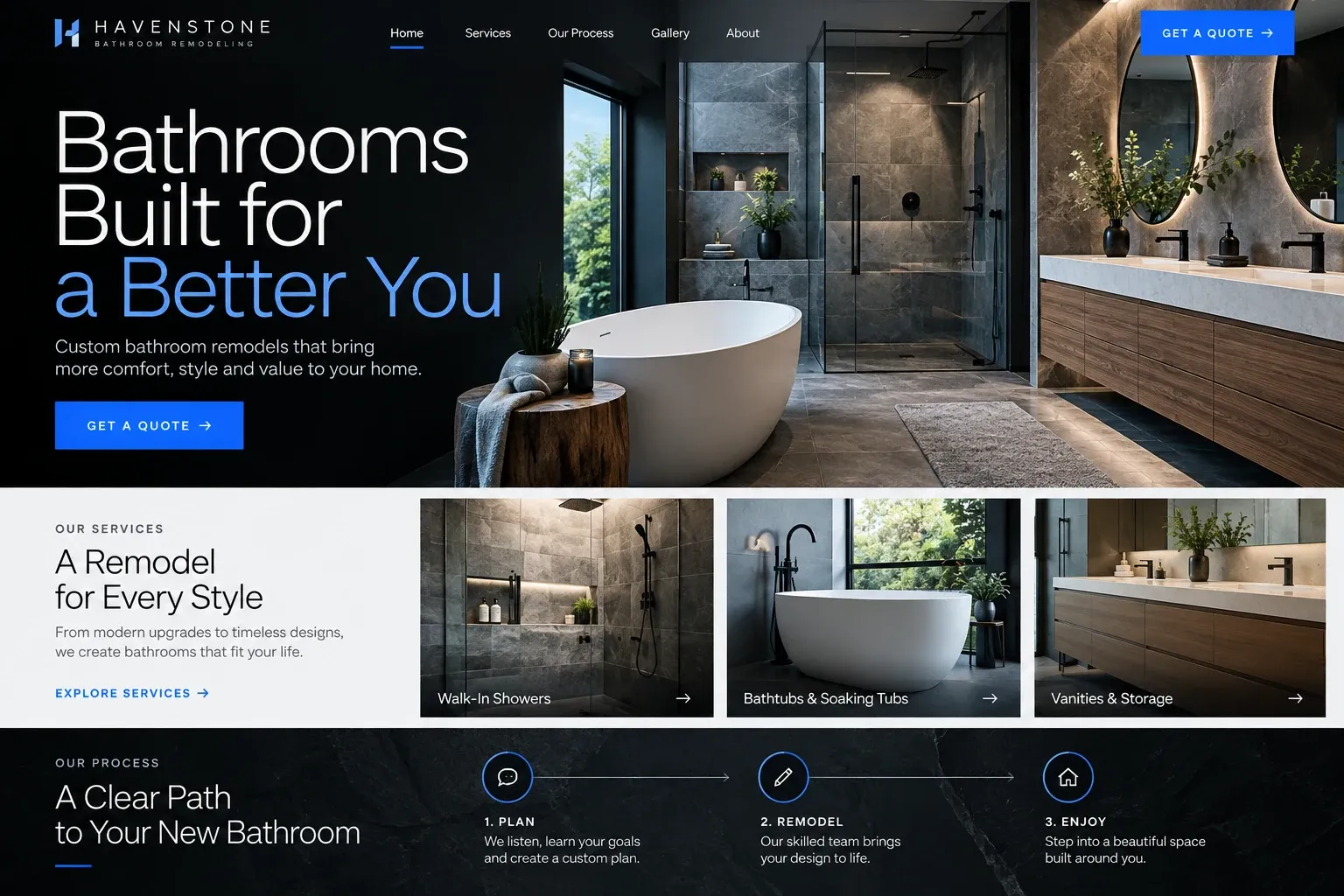
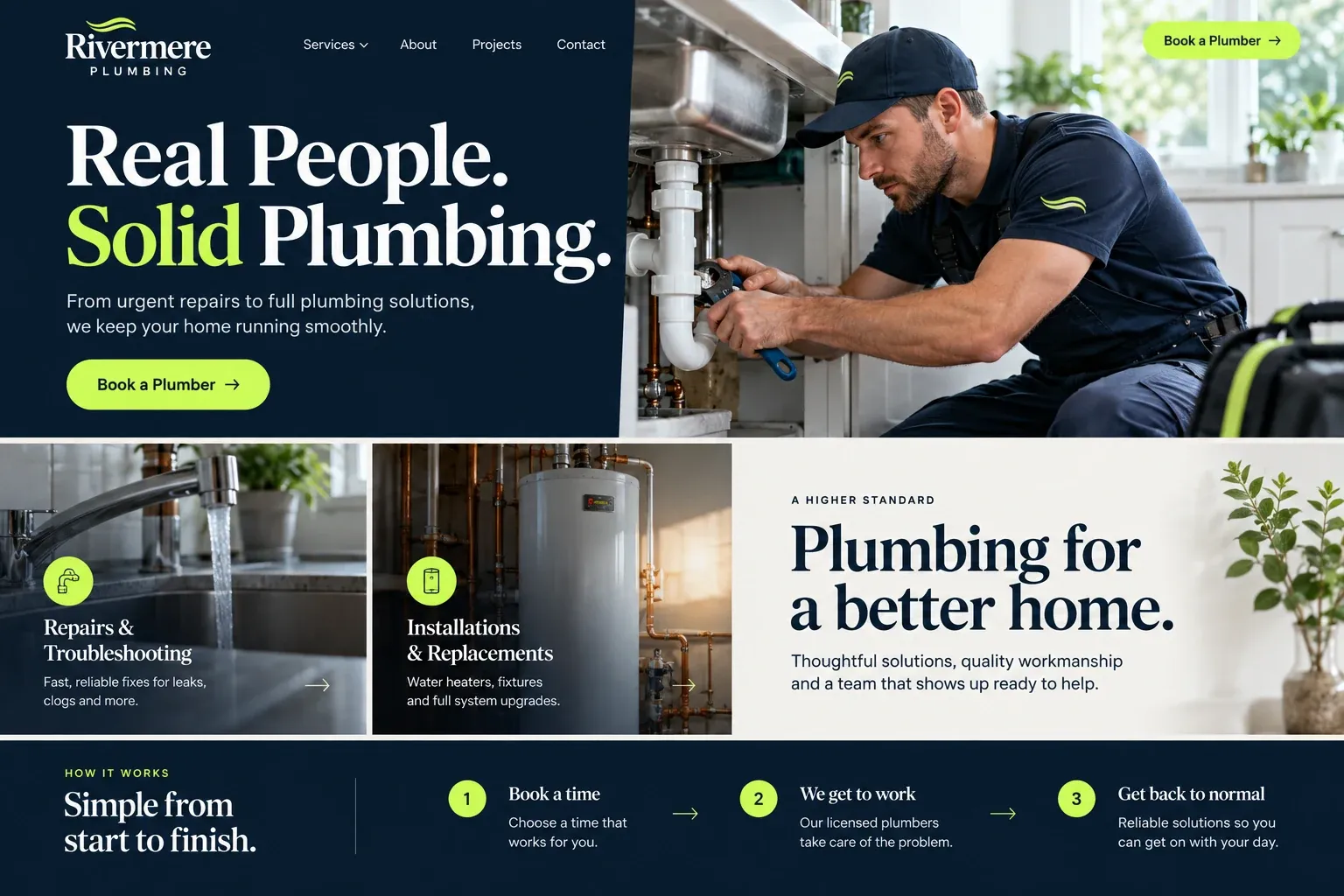
Fictional bathroom remodelers website homepage design concept
A design concept for a fictional brand. Your site is designed from scratch around yours.

Your customer's story

Stepping over the tub got harder

Since his knee surgery, Roberto grips the towel bar every time he steps over the edge of the tub. His wife, Elena, watches from the doorway and holds her breath. The bathroom has not changed since they bought the house: pink tile, a tub with sliding glass doors, a vanity with one drawer. Their daughter, visiting for the weekend, says what everyone is thinking. It is time to redo it.

The daughter searches "tub to shower conversion" on her phone at the kitchen table, reading results out loud. One company only sells acrylic liners that go over the old tub. Another shows magazine bathrooms that look nothing like a small hall bath. Then she finds a remodeler with a page for shower conversions, photos of curbless showers in rooms the size of theirs, and a note on grab bars and a fold-down seat.

That site also explains, in a few lines, how the shower is waterproofed under the tile and what happens at each stage of the work. The project brief form asks who uses the bathroom and what is hard about it now. Elena types that her husband can no longer step over the tub. A bathroom remodeler's site should show the practical thinking behind the pretty tile.

Why it matters

Why bathroom remodelers need a website.

Bathroom projects are small rooms with big consequences. A poorly waterproofed shower can leak for years before anyone notices, and owners know it. So people compare remodelers carefully: they look for rooms like theirs, finishes they like, and signs that the work under the tile is done right. A directory listing cannot show that. A social feed shows glamour shots, but not the footprint, the scope, or how the shower pan was built.

We build bathroom remodeling websites that pair atmosphere with substance. Projects are grouped by size and type, from hall baths to primary suites, with notes on what changed. Pages cover shower conversions, accessible bathrooms, vanities, and tile. A scope comparison explains the difference between a cosmetic refresh and a full gut. The project brief form asks who uses the room and what bothers them about it, with space for photos.

What your customers search for

  • bathroom remodel near me
  • bathroom remodeling Miami
  • tub to shower conversion
  • walk in shower installation
  • small bathroom remodel ideas
  • condo bathroom renovation

Your customers

What homeowners ask before hiring a bathroom remodeler

  • Can you work with a bathroom this small?

    Projects grouped by footprint, so owners of a hall bath or condo bathroom see rooms like theirs and the choices that made them work.

  • How do you keep the shower from leaking?

    A short page on waterproofing, membranes, and slope, written plainly, with photos of the layers before the tile goes on.

  • Is a refresh enough, or do we need a full remodel?

    A scope comparison that explains what a cosmetic update covers and when moving plumbing or replacing a tub becomes a bigger project.

  • Can you make the bathroom safer for my parents?

    A page on accessible features, such as curbless showers, grab bars, comfort-height toilets, and wider doorways, with examples from your own projects.

What we build

What a website for bathroom remodelers should include.

  • Small-space project gallery

    Hall baths, powder rooms, and condo bathrooms shown with their general size and notes on the layout choices made.

  • Finish selection guide

    Tile, vanities, fixtures, and glass options explained in plain words, with where clients see samples and when choices are due.

  • Scope comparison page

    A side-by-side description of a refresh, a remodel, and a full gut, so homeowners can place their own project.

  • Shower conversion page

    Tub-to-shower projects with before and after photos, including low-threshold and curbless options for people who struggle with steps.

  • Waterproofing explained

    Photos of membranes, pans, and slopes during construction, proof of the careful work that disappears under finished tile.

  • Bathroom project brief

    Asks who uses the room, what is hard about it today, the style they like, and timing, with photo uploads.

Planning guide

How should a bathroom remodeler plan its website?

Bathroom remodeling clients look for two things at once: a room they will enjoy every morning and a contractor who will build it to stay dry for decades. A good website shows both, in that order. Below are the pages a bathroom remodeler needs, how to present projects and process, how to start an inquiry, and how to be found by homeowners nearby.

Group projects by room, not by style

Homeowners shop by the room they have. Separate your projects into primary bathrooms, hall baths, powder rooms, and condo bathrooms, and note the general size of each. Give tub-to-shower conversions and accessible bathrooms their own pages, because people search for them directly. Each project page should show the before, the finished room, and a few lines on what the owners wanted, what changed, and which finishes they chose.

Show the layers under the tile

Most of a bathroom's quality is hidden. Photograph the stages: demolition, plumbing rough-in, the waterproofing membrane, the shower pan and slope, then tile. A caption on each, such as membrane on walls and floor before tile, shows a homeowner what they are paying for. It also sets you apart from companies that only post the finished glamour shot and hope nobody asks.

Write a short scope page as well. Explain what a refresh includes, such as a new vanity, fixtures, and paint, and when a project becomes a remodel because the plumbing moves or the tub comes out. Homeowners use this to set expectations and budgets, and your first visit begins with a shared vocabulary.

Ask what the room needs to do

A project brief form works better than an empty contact box. Ask who uses the bathroom, what frustrates them, whether anyone has trouble with steps or balance, the style they like, timing, and a budget range. Let them attach photos of the current room. Keep a phone number on every page too. When the bathroom is for an aging parent, family members often call together, and a friendly voice settles a lot of nerves.

Help nearby homeowners find you

Bathroom searches are local and specific: walk-in shower installation, bathroom remodel near me, tub to shower conversion in a city. A page for each service you want, an area page with the cities you serve, and a Google Business Profile that matches your site give search engines clear signals. Reviews that mention a specific project help most. None of this promises a ranking, but it builds a solid foundation for one.
In your market

Bathrooms in a humid climate

Humidity is constant here, so ventilation, mold-resistant materials, and proper waterproofing matter in every bathroom. Many older homes still have original tile and cast iron drains, and condo bathrooms sit above a neighbor, which makes associations careful about leaks and plumbing changes. Retirees and multigenerational households often ask for accessible showers. Clients are frequently bilingual. We write pages around these local concerns, place your license number where people look, and can add a Spanish version of the full site.

Questions

Questions bathroom remodelers ask us.

What photos work best for a bathroom remodeling website?

Wide shots from the doorway, close-ups of tile work and niches, and a before photo from the same spot. Bathrooms are tight, so a phone's wide lens helps. Add a few in-progress shots of waterproofing. We place each set on a project page with a short note on what changed.

Should our bathroom site talk about accessible showers and grab bars?

If you build curbless showers, grab bars, and wider doors, yes. Families often search for these when a parent's mobility changes. A page describing the features you install, with your own photos, helps them. We avoid medical or compliance claims and describe the work itself, which you approve before launch.

Can homeowners send us photos of their bathroom before a visit?

Yes. The project brief form lets them attach photos of the room, the tub or shower, and the vanity. The form arrives in your email with their answers about who uses the room and what bothers them, so you can prepare options before you go.

How do we explain the difference between a bathroom refresh and a full remodel?

A scope page does it best. We describe what each level usually includes, such as fixtures and paint for a refresh, or new plumbing, waterproofing, and tile for a full remodel, using your actual service list. Homeowners read it before calling and arrive with realistic expectations about the work.

Let's talk

Ready for a website built for bathroom remodelers?

Tell us about your business and we will come back with a clear recommendation and a fixed quote. No pressure, no jargon.

Trades we design for

See all 226 trades

226 trades

  • Plumbers website design concept
CallFree quote