Web design for remodeling contractors

Website design for remodeling contractors.

Remodeling clients are not chasing a look so much as fixing how they live. The contractor whose site shows good judgment about real houses, with real constraints, is the one they trust with walls and budgets.

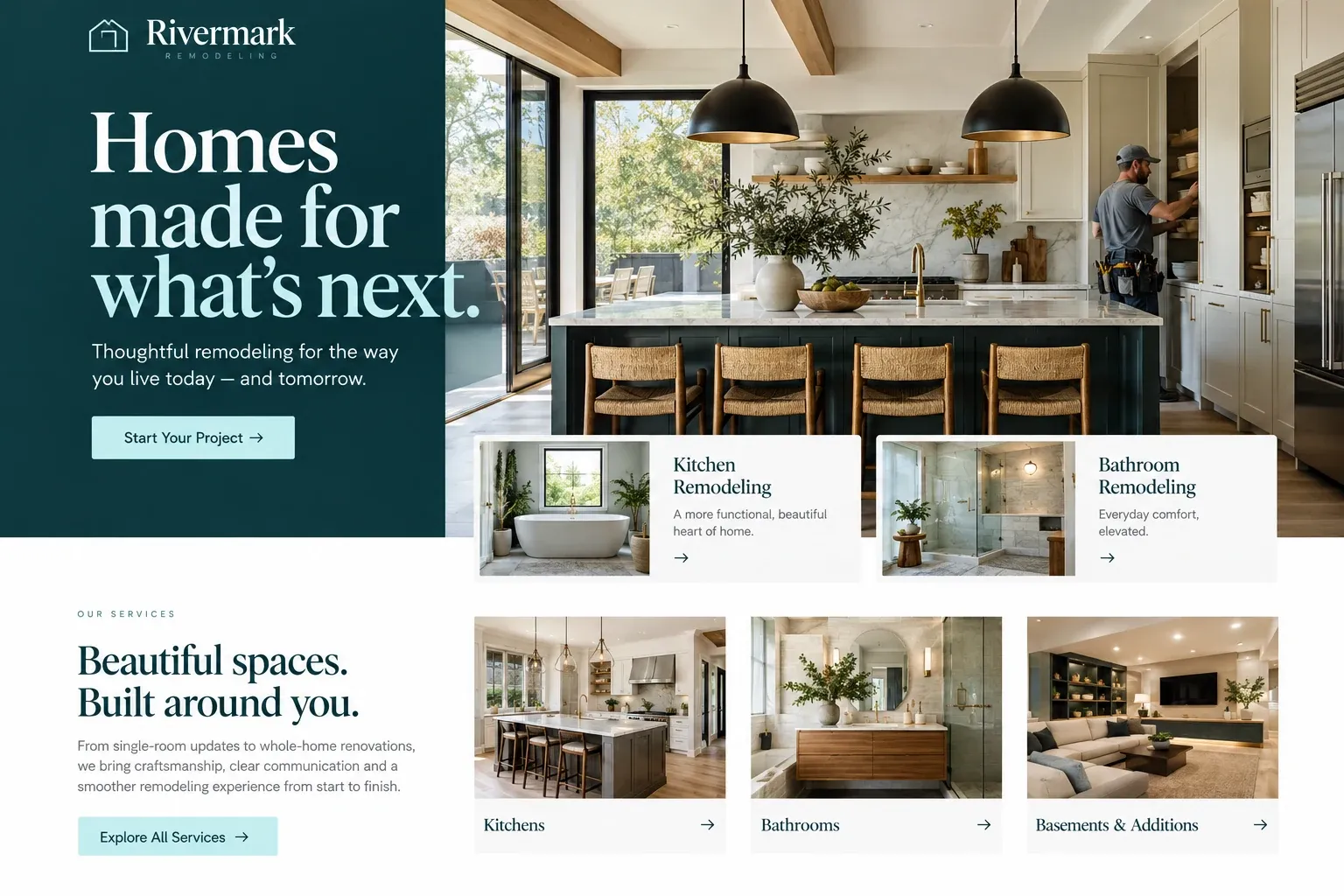
Fictional remodeling contractors website homepage design concept
A design concept for a fictional brand. Your site is designed from scratch around yours.

Your customer's story

The dining table became an office

When the Castillos bought their 1960s ranch house, it fit them perfectly. Ten years and two kids later, the dining table is buried under a laptop, a printer, and school projects. Shoes pile up by the front door because there is nowhere else to put them. The galley kitchen fits one cook at a time. Nobody wants to move. They want the house to work again.

Patricia starts looking at remodelers during lunch breaks. Many sites are wall-to-wall before and after photos with no word on what changed or why. She cannot tell whether those contractors would understand her house. Then she finds one that tells each project as a story: what the family struggled with, which walls moved, what stayed, and how they lived at home while the work went on.

On that site she also finds a page about remodeling an occupied home: dust walls, a temporary kitchen, which rooms close and when. The inquiry form asks what frustrates them about the house today, not just which rooms they want redone. She writes three paragraphs. A remodeler's website should show judgment as clearly as craftsmanship, because judgment is what a family is really trusting.

Why it matters

Why remodeling contractors need a website.

Remodeling is personal and disruptive. People live in the house while you work, so they want to know how you protect floors, contain dust, keep a bathroom usable, and communicate when walls reveal surprises. They compare contractors for weeks, read reviews closely, and look for projects like theirs. A social feed of finished rooms cannot explain how you scope a project, handle change, or plan around a family that still has to get to school and work.

We build remodeling websites around stories, not only photos. Each project explains the problem, the plan, and the result, with before and after images side by side. A page on remodeling occupied homes covers protection, scheduling, and communication. Service pages cover whole-home renovations, additions, kitchens, bathrooms, and condo work. The inquiry form starts with what is not working in the house, which gives your first visit a better conversation.

What your customers search for

  • remodeling contractors near me
  • home remodeling Miami
  • condo renovation Miami
  • whole house remodel
  • home addition contractor
  • remodel while living in house

Your customers

What homeowners ask before they let a remodeler open walls

  • Can we stay in the house during the work?

    A page on living through a remodel: dust barriers, floor protection, a temporary kitchen if needed, and which rooms close at which stage.

  • What happens when you find a surprise?

    A plain explanation of how you handle hidden damage or old wiring behind walls, how you document it, and how changes are approved.

  • Have you solved a problem like ours?

    Project stories organized by the problem solved, such as more storage, an open kitchen, a home office, or room for an aging parent.

  • Who is in charge day to day?

    An introduction to the person who runs each project and how often you update clients, by phone, text, or a project portal.

What we build

What a website for remodeling contractors should include.

  • Before-and-after project stories

    Paired photos with the family's original problem, the changes made, and what the house does better now.

  • Living-at-home planning page

    How you protect the house, contain dust, schedule noisy work, and keep the essentials running while the family stays.

  • Scope examples

    Short descriptions of typical projects, from a single room refresh to a whole-floor reconfiguration, so visitors can place their own plans.

  • Renovation discovery form

    Asks what is frustrating about the home now, which rooms are involved, timing, and budget range, with optional photo uploads.

  • Condo renovation section

    Notes on association approvals, permitted work hours, elevator bookings, and insurance certificates, for owners renovating apartments.

  • Design partner introductions

    If you work with designers or architects, a page explaining when they join the project and how decisions are shared.

Planning guide

What makes a remodeling contractor's website worth reading?

A remodeling website has to persuade people to let a stranger into their daily lives for weeks. Pretty photos start the conversation, but explanations close it. These are the pages a remodeler needs, how to present projects honestly, how to start an inquiry well, and how the site helps local homeowners find you at the moment they begin planning.

Tell projects as problems and answers

Arrange your portfolio around what each family needed. A short project page might say the kitchen was closed off and dark, the family wanted to see the kids from the stove, and you removed a wall, added a beam, and relocated the laundry. Then show the before and after. Visitors recognize their own frustrations and start imagining their own house, which a plain grid of photos rarely achieves.

Explain how the work fits around a family

Homeowners worry about living in a construction zone. A page that explains your approach, such as dust walls, floor protection, daily cleanup, a temporary kitchen, and which rooms close in which order, answers that worry directly. Add how you communicate: a weekly call, a shared schedule, or messages through a project app. Specifics like these make a remodeler look organized, because they are proof of a routine.

Address surprises honestly too. Older houses hide rot, outdated wiring, and plumbing that does not match the drawings. Explain how you document what you find, how changes are priced and approved, and how the schedule adjusts. Clients who read this before signing are calmer when it happens, and the conversation starts from a place of trust.

Design the inquiry to start a real conversation

Instead of a blank message box, ask a few useful questions: what is not working in the house, which rooms are involved, whether the family will live there during the work, timing, and budget range. Let them attach photos or floor plans. These answers arrive in your inbox and help you decide what to bring to the first visit, whether a designer, a tape measure, or both.

Make the business easy to find nearby

Remodeling searches mix a project and a place: kitchen and bath remodeler in a city, home addition contractors, condo renovation near me. Give the projects you want most their own pages, list the areas you work in, and keep your details consistent with your Google Business Profile. Reviews that mention specific projects help other homeowners decide. No website can promise rankings, but this structure gives search engines a clear sense of what you do.

In your market

Remodeling South Florida homes

Many South Florida homes are mid-century concrete block houses, sometimes with terrazzo floors hidden under carpet, while condo towers bring association rules, approved work hours, and elevator bookings. Remodels often include impact windows and doors, and older homes may need electrical or plumbing updates before insurers are comfortable. Clients are frequently bilingual, and some are seasonal owners who renovate while they are away. We write about these realities plainly, show your license number, and can add a Spanish version.

Questions

Questions remodeling contractors ask us.

How should a remodeling contractor show before and after photos?

Side by side, taken from the same angle where possible, with a short caption about what changed and why. We group them by project so visitors see the whole story. Phone photos are fine if they are well lit. The before shots matter as much as the after, so take them on the first morning.

Should our remodeling site cover condo work separately?

If you do condo renovations, yes. Condo owners have specific worries, such as association approvals, noise rules, elevator reservations, and the unit below. A dedicated page that speaks to those shows you know the territory, and it gives search engines a clear match for condo renovation searches.

Can clients send us floor plans and photos through the remodeling website?

Yes. The inquiry form accepts attachments such as photos, sketches, or plans, and everything arrives in your email with the client's answers. For large files, we can add a link to a shared folder you already use. Either way, you see the house before the first visit.

How do we describe a remodeling process without overpromising on timing?

Describe the stages and what affects each one, such as design decisions, permits, material lead times, and what turns up behind walls, rather than promising dates. Typical ranges are fine if you can stand behind them. Homeowners trust a contractor who explains what can change more than one who promises it will not.

Let's talk

Ready for a website built for remodeling contractors?

Tell us about your business and we will come back with a clear recommendation and a fixed quote. No pressure, no jargon.

Trades we design for

See all 226 trades

226 trades

  • Plumbers website design concept
CallFree quote